 how-to
How to Improve Vision for Reading: A Practical Guide
Table of Contents
- Start With the Right Reading Setup
- Why You Get Blurry Vision When Reading
- Eye Exercises That Support Reading Focus
- Reduce Eye Strain From Reading With Better Habits
- Reading Glasses for Blurry Vision: What to Know
- Daily Habits That Protect Long-Term Eye Health
- When to Get an Eye Exam for Reading Problems
- Frequently Asked Questions
Last Updated: October 18, 2026
Start With the Right Reading Setup
Most reading problems start with the setup, not the eyes. Before you blame your vision, check how you read. This guide covers how to improve vision for reading through setup, habits, and the right care. (Source: guidelines from the American Academy of Ophthalmology)
Small changes to your reading station often deliver faster relief than any exercise. Here is where we tell patients to start.
Three fixes matter most:
- Hold reading material 14 to 16 inches from your eyes
- Sit with feet flat and the page slightly below eye level
- Keep light behind you, not in front of you

The Best Lighting for Reading
The best lighting for reading is soft, even, and positioned behind your shoulder. It should light the page, not your eyes.
Avoid direct overhead bulbs that bounce glare off paper. On screens, cut brightness to match the room. A matte screen filter helps too.
One quick test: if you squint at the page, the light is wrong. Move the lamp before you move your chair.
Reading Distance, Font Size, and Contrast
Reading distance and print size work together. If you hold a book closer than about 14 inches, your eyes must focus harder, and strain builds faster. If you push it past 16 inches, small print forces extra effort. Find the distance where the text is clear without squinting, then keep it steady.
Font size is not a default. On paper, 12-point type is a common comfort baseline for adults, but many readers do better at 14 point or larger, especially in low light. On screens, most phones and computers let you increase text size and boldness independently of the app. Use those settings rather than leaning in.
Contrast matters as much as size. Black text on a white or cream background is easiest for most readers. Gray-on-gray or low-contrast dark mode can look stylish but forces your eyes to work harder. If you prefer dark mode, raise the text brightness so the letters stand out clearly.
Screen Settings That Reduce Reading Strain
Digital reading adds its own setup problems: glare, sustained near focus, and reduced blinking. A few adjustments help:
- Match screen brightness to the room; a screen that is much brighter than the surroundings causes glare and fatigue
- Increase text size and line spacing rather than moving closer
- Use a matte screen protector or tilt the screen away from windows and overhead lights
- Enable night mode or a warm color temperature in the evening to reduce glare
- Keep the screen about 20 to 28 inches away on a desktop, and slightly below eye level
A common pattern is that readers blame their eyes when the real problem is a screen that is too bright, too close, or set to small text. Fix the setup first, then judge whether your vision still feels like the limit.
Why You Get Blurry Vision When Reading
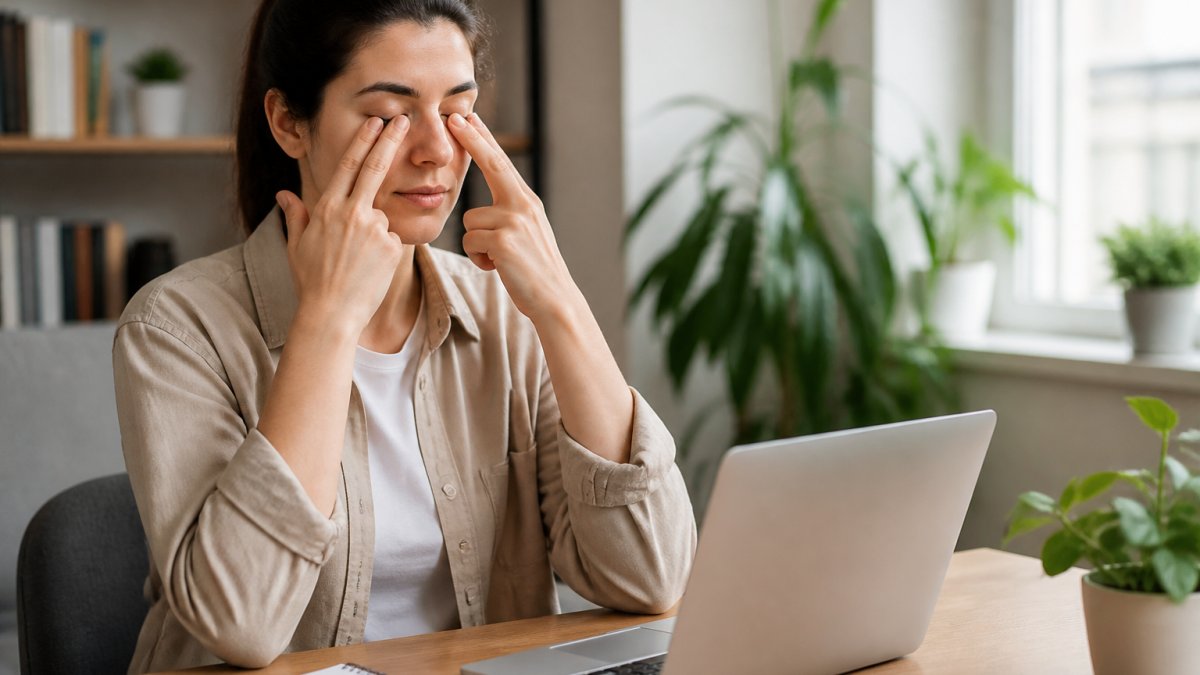
Blurry vision when reading usually comes from tired focusing muscles, dry eyes, or an uncorrected prescription. The cause decides the fix.
Your eyes shift focus constantly between near and far. Reading holds them in near focus for long stretches. That sustained work tires the focusing muscle.
Common causes we see:
- Uncorrected refractive error: the wrong prescription or none at all
- Dry eye: blinking drops during focused reading
- Presbyopia: age-related loss of near focus, common after 40
- Poor lighting or glare: forces extra effort
Eye strain from reading builds slowly. Most people notice it after 30 to 60 minutes, not at the start.
Eye Exercises That Support Reading Focus
Eye exercises can ease strain, but they do not fix a refractive error. Treat them as a comfort tool, not a cure.
Two simple drills help reading focus:
Pencil Push-Ups and Near-Far Focus Drills
Pencil push-ups: hold a pencil at arm's length, focus on the tip, and bring it slowly toward your nose. Stop when it blurs, then move it back. Repeat 10 times.
Near-far focus: look at a near object for 10 seconds, then a far one for 10. Alternate for two minutes.
Other options include the figure eight pattern and palming, which rests your eyes in the dark. Stop any drill that causes pain or headache.
Reduce Eye Strain From Reading With Better Habits
The [20-20-20 rule is the fastest way to cut eye strain](/tag/20-20-20-rule-for-eyes/) from reading. Every 20 minutes, look 20 feet away for 20 seconds.
Build these habits into your reading time:
- Blink fully and often; screens cut blink rate
- Take a screen break every 20 to 30 minutes
- Use good lighting and cut glare
- Keep reading distance steady
- Match font size to your comfort, not the default
Peripheral vision and visual awareness fade during long focus sessions. Glancing around the room now and then keeps them active.
Reading Glasses for Blurry Vision: What to Know
Reading glasses for blurry vision correct near focus, but the right strength depends on your eyes. Over-the-counter readers work for some; others need a prescription.
Store readers are fine for occasional use. They are a poor fit if your two eyes need different strengths or you have astigmatism.
Signs you need a professional fitting:
- Headaches after reading
- One eye feels strained
- Blur returns quickly
- You already wear a prescription
Over-the-Counter Readers vs. Prescription Lenses
Over-the-counter readers come in fixed strengths, typically from about +1.00 to +3.00 diopters in quarter-step increments. They are inexpensive and convenient, and for many adults over 40 with simple presbyopia they are enough for casual reading. Their limits are real, though: both lenses are identical, so they cannot correct a difference between your eyes, astigmatism, or a distance prescription.
Prescription reading glasses are built from your actual measurements. They can correct different strengths in each eye, include astigmatism correction, and be set for the exact distance you read at, whether that is a book, a music stand, or a computer screen. If you already wear distance glasses, bifocals or progressive lenses let you switch between near and far without changing glasses. Properly fitted frames ensure that your vision remains consistently clear, preventing the constant distraction of adjusting your glasses while you focus on the page.
A practical rule many practitioners use: if store readers work comfortably for 15 to 20 minutes but blur or cause headaches after that, the strength or the fit is probably wrong, and a prescription is worth the visit.
Contact Lenses and Other Correction Options
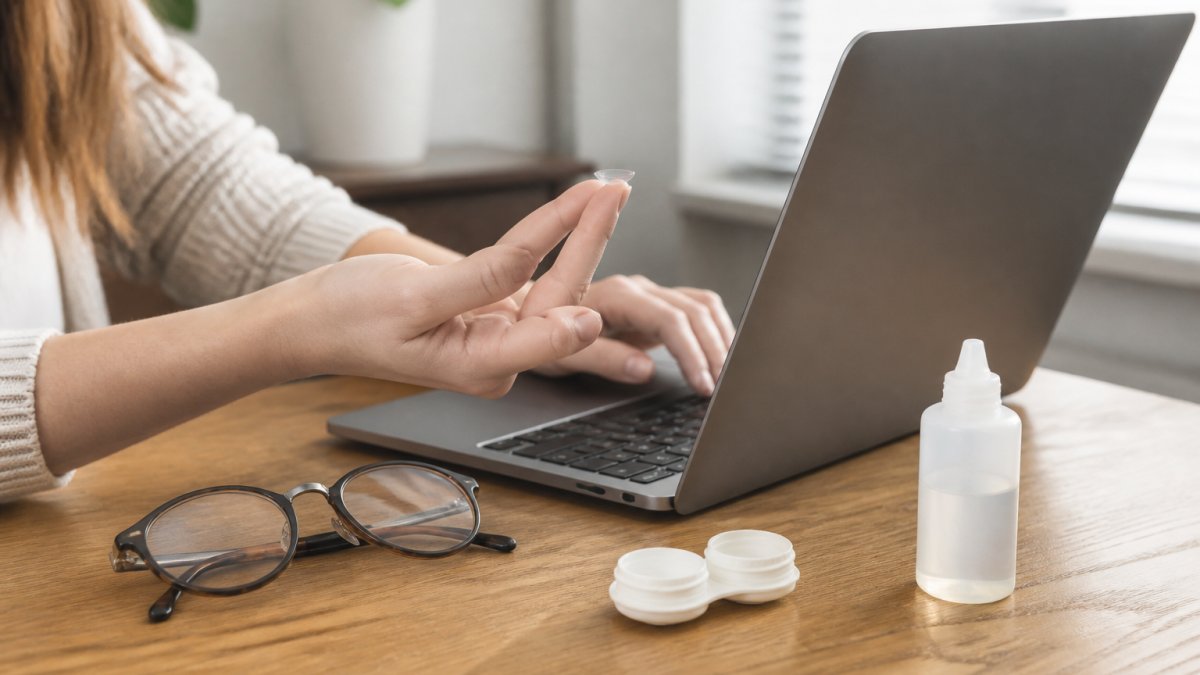
Contact lenses are not only for distance vision. Multifocal contact lenses can correct near and far focus, and monovision, one lens set for near, one for distance, is another option some readers adapt to well. Contacts suit people who dislike glasses frames or need clear vision across a wide field, but they require good hygiene and regular follow-up.
For readers with more advanced vision loss, low-vision aids can make a real difference. These include strong magnifiers, handheld and stand magnifiers, electronic magnifiers that enlarge text on a screen, and high-contrast reading materials. They do not restore normal vision, but they can keep reading comfortable and independent.
Digital Reading and Dry Eye
Screen reading changes the correction question. Sustained near focus on a screen, combined with reduced blinking, often causes dryness and fluctuating blur that glasses alone will not fix. If your vision clears when you blink or use lubricating drops, dryness is part of the problem. Position the screen slightly below eye level, take breaks, and ask your eye doctor whether a different prescription for screen distance would help.
Vision correction options range from readers to prescription lenses to contact lenses to low-vision aids. A comprehensive exam tells you which fits your eyes, your reading habits, and your screen use.
Daily Habits That Protect Long-Term Eye Health
Long-term eye health rests on a few boring, reliable habits. None of them are dramatic, and all of them work.
- Eat leafy green vegetables like kale and spinach, plus orange vegetables
- Get essential nutrients, including vitamins for eye health
- Wear sunglasses with UV protection outdoors
- Stay active; exercise supports general and visual health
- Do not smoke
- Manage chronic conditions like diabetes and high blood pressure
A healthy diet and regular exercise will not reverse blurry vision. They do lower your risk of eye conditions over time.
When to Get an Eye Exam for Reading Problems
Book an eye exam when reading blur lasts beyond a break, or when it comes with headaches, double vision, or eye pain. Do not wait for it to "settle."
Get seen promptly if you notice:
- Sudden blur or vision loss
- Flashes, floaters, or a curtain over your vision
- Eye pain or redness
- New strain that keeps getting worse
A comprehensive exam checks more than your prescription. It assesses overall eye health and catches conditions early, when treatment works best.
At Wilck Schwartz & Novak OD PC, our team uses advanced optometric equipment to check both vision and eye health in one visit. We have served the area since 1964, and many of our patients come from families we have cared for across generations.
Regular preventive care is the most reliable way to protect reading comfort for life. If screen fatigue or dry eye keeps returning, our team can treat eye infections, allergies, corneal abrasions, and dry eye syndrome.
Frequently Asked Questions
Why does my vision get blurry when I read?
Blurry vision when reading usually comes from a few common causes: uncorrected refractive error, eyes that struggle to hold near focus, dry eyes from reduced blinking, or glare and poor lighting. Extended close work can also tire the focusing muscles, so words blur as you read longer. A comprehensive eye exam can separate a simple prescription issue from a focusing or tear-film problem that needs different care.
Can eye exercises improve vision for reading?
Eye exercises can help with specific visual skills like convergence and focusing stamina, and some people notice more comfortable reading as a result. They will not change nearsightedness, farsightedness, or astigmatism, which need corrective lenses. Think of exercises as a complement to proper correction and good reading habits, not a replacement. A doctor can tell you whether a focusing or teaming problem is behind your symptoms.
What is the best lighting for reading?
The best lighting for reading is bright, even, and positioned so it does not shine directly into your eyes or reflect off the page. Aim for a lamp that lights the page from the side or slightly behind you, and avoid reading in dim light or with a single harsh bulb overhead. Matching indoor light to the time of day and reducing screen glare also helps keep reading comfortable.
When should I get an eye exam for blurry reading vision?
Book an exam if blurry reading vision is new, keeps getting worse, or comes with headaches, double vision, eye pain, or difficulty seeing at night. Sudden vision loss, flashes of light, or a curtain over part of your vision needs urgent care right away. Routine exams catch slow changes early, and they are the surest way to know whether reading glasses or another correction is the right next step.
Reading should not hurt. If blur, strain, or headaches keep pulling you away from the page, the cause is worth finding. Wilck Schwartz & Novak OD PC offers comprehensive exams, advanced diagnostic equipment, and dry eye care for the whole family. Schedule an appointment and get a clear answer about your reading vision.