 how-to
How to Schedule Pediatric Eye Exams: A Parent's Guide
Table of Contents
- When to Schedule Kids' First Eye Exam
- Why Pediatric Eye Exams Matter for Your Child's Development
- Signs Your Child May Need an Eye Exam
- Comprehensive Eye Exam vs Vision Screening: What's the Difference
- How to Prepare a Child for an Eye Doctor Appointment
- Step-by-Step: How to Schedule Pediatric Eye Exams
- What to Expect During a Pediatric Eye Exam
- Common Childhood Eye Conditions and When to Act
- Frequently Asked Questions
Last Updated: August 14, 2026
When to Schedule Kids' First Eye Exam
Your child's first comprehensive eye exam should happen between 6 and 12 months of age, even without obvious vision problems. This early screening establishes a baseline for normal eye development and catches potential issues before they affect learning and growth. After that first exam, children typically need eye exams every one to two years, depending on whether they have existing vision issues or risk factors. Your eye care provider will recommend the appropriate schedule based on your child's individual needs.
At Wilck Schwartz & Novak OD PC, we understand that scheduling your child's first eye exam is an important step in ensuring they have the visual resources necessary for normal growth and development. Many families in the area come to us specifically because we create a warm and inviting environment designed to make children feel comfortable during their appointments.
Why Pediatric Eye Exams Matter for Your Child's Development
Vision problems during childhood can silently impact academic performance, social development, and athletic ability. A child who struggles to see the board in class may fall behind academically without anyone realizing the root cause is a refractive error. Comprehensive pediatric eye exams assess overall eye health and screen for conditions like amblyopia (lazy eye), strabismus (eye misalignment), and myopia that require early intervention. The earlier these conditions are detected, the more treatment options are available and the better the long-term outcomes tend to be.
Regular eye exams establish important baseline measurements for your child's visual development. These measurements track changes over time and help your eye care provider identify patterns that might indicate emerging problems.
Signs Your Child May Need an Eye Exam
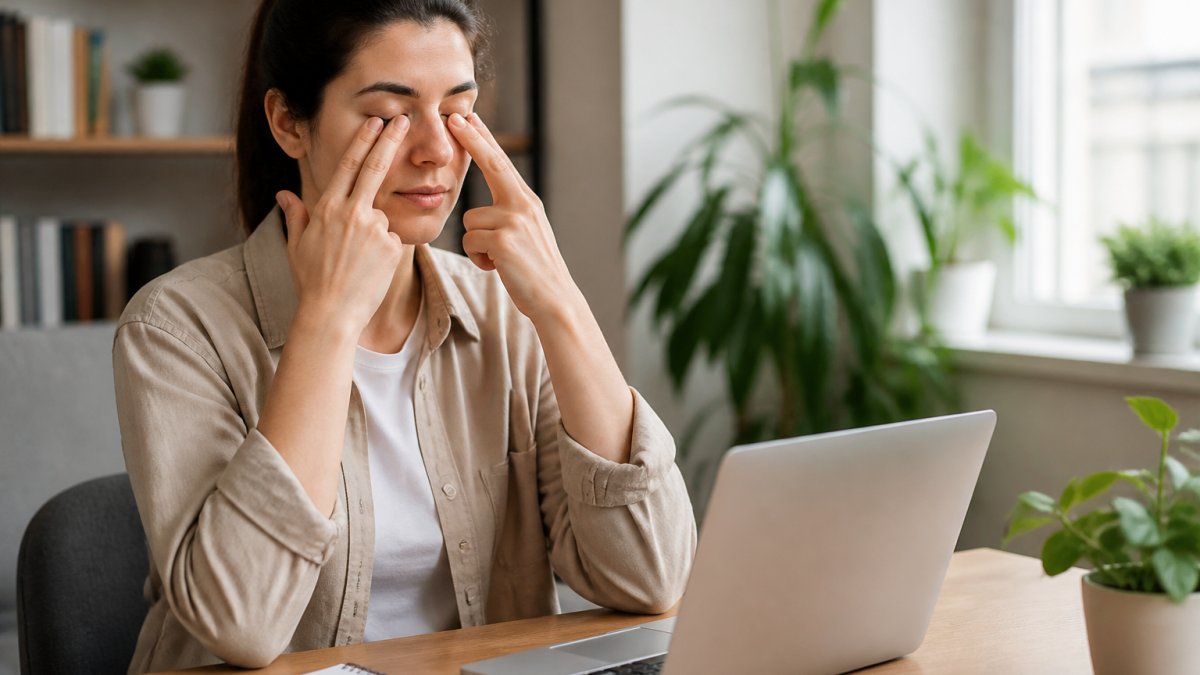
If your child squints frequently, holds books or devices very close to their face, or complains of headaches when reading or doing schoolwork, these are clear signals that something may be affecting their vision. Watch for signs of eye strain, such as rubbing eyes excessively, tilting their head to see better, or closing one eye when looking at distant objects.
Some children develop behavioral issues when struggling to see; they may seem inattentive in class or avoid activities that require clear vision. A child who was previously doing well academically but suddenly starts struggling may have an undetected vision problem.
If you notice your child's eyes don't appear to be aligned (one eye turns inward, outward, or doesn't move in sync with the other), or if you see excessive tearing, redness, or discharge, contact an eye care provider promptly.
Comprehensive Eye Exam vs Vision Screening: What's the Difference
A vision screening is a brief test, often conducted at school or during a pediatric checkup, that checks whether your child can see letters or objects at a certain distance. Screenings are useful for identifying obvious vision problems but they're not comprehensive. A child can pass a vision screening and still have an undetected eye condition because screenings only test visual acuity.
A comprehensive eye examination includes multiple tests that assess visual acuity, eye alignment, focusing ability, depth perception, and color vision. The optometrist or ophthalmologist also dilates your child's pupils to examine the internal structures of the eye and check for diseases or developmental abnormalities. This thorough evaluation can detect conditions that a simple screening would miss.
Many parents assume that passing a school vision screening means their child's eyes are fine. School screenings serve as a first-line check, but they're not a substitute for a comprehensive exam performed by a qualified eye care professional. The American Academy of Pediatrics and the American Optometric Association recommend comprehensive eye exams as the standard for pediatric vision care, not just screenings.
| Aspect | Vision Screening | Comprehensive Eye Exam |
|---|---|---|
| Duration | 5-10 minutes | 30-60 minutes |
| Tests Included | Visual acuity only | Acuity, alignment, focusing, depth perception, eye health |
| Equipment | Basic chart or device | Advanced optometric equipment |
| Pupil Dilation | No | Yes |
| Condition Detection | Only obvious problems | Early-stage and complex conditions |
| Baseline Data | Limited | Detailed measurements for tracking |
How to Prepare a Child for an Eye Doctor Appointment
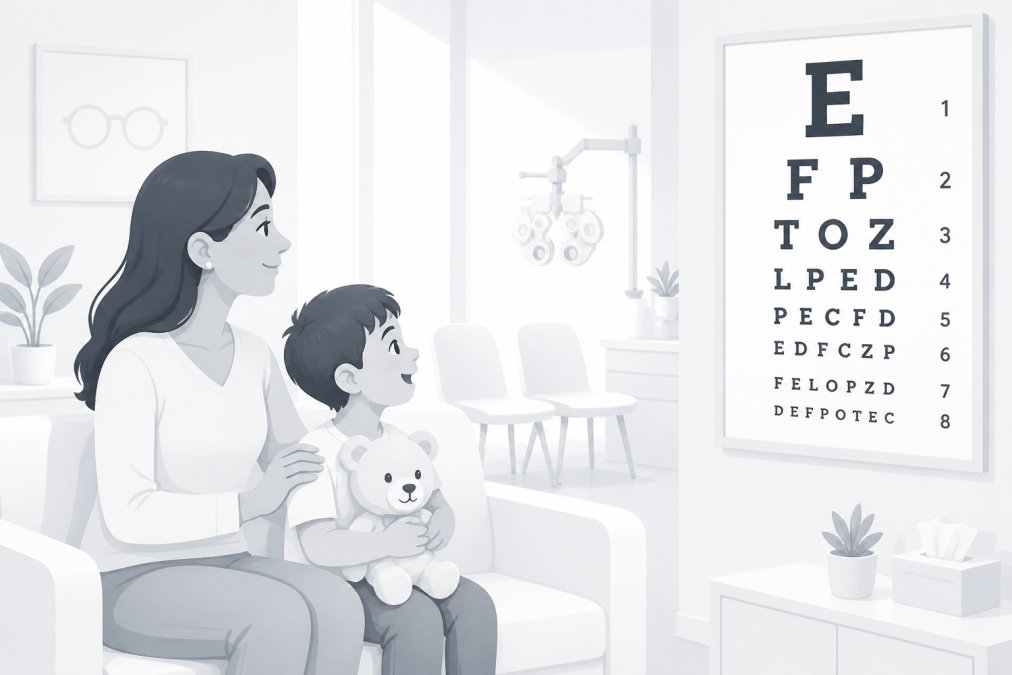
Preparing your child mentally for their appointment significantly reduces anxiety and makes the visit smoother. Start by explaining what will happen in simple, positive language. Tell your child that the eye doctor will look at their eyes to make sure they're healthy and that they can see well. Avoid using words like "shot," "needle," or "pain."
Let your child know that some tests might feel strange but won't hurt. Reading children's books about doctor visits or watching age-appropriate videos about eye exams can help normalize the experience. Visit the office a few days before the appointment if possible, or arrive early on appointment day to let your child become familiar with the environment.
On the day of the appointment, maintain a calm demeanor. Children pick up on parental anxiety, so your confidence will help your child feel more secure. If your child has sensory sensitivities or anxiety disorders, let the office know before the appointment. Many pediatric eye care providers are experienced in working with children who have special needs and can adjust their approach accordingly.
Step-by-Step: How to Schedule Pediatric Eye Exams
Scheduling a pediatric eye exam involves several straightforward steps designed to be simple and efficient.
Step 1: Gather Your Information
Before contacting an eye care provider, collect your child's full name, date of birth, and current address. Have your insurance information ready, including the policy number and group number. If your child has been seen by another eye care provider previously, note the name of that provider and the approximate date of the last exam.
Write down any specific concerns or symptoms you've noticed: vision problems, eye alignment issues, headaches, or behavioral changes that might be related to vision. Note whether your child wears glasses or contacts and whether there's a family history of eye disease or vision problems. If your child has other health conditions or takes medications, have that list available.
Step 2: Contact Your Eye Care Provider
Search for pediatric optometrists or ophthalmologists in your area. Many general optometrists are experienced with children and can provide comprehensive pediatric eye care. When you call to schedule, clearly state that you're looking to schedule a pediatric eye exam and mention your child's age. Ask about availability for new patients and typical wait times.
Ask about the length of the appointment so you can plan accordingly. Pediatric exams typically take longer than adult exams because children need more time to become comfortable and may require additional explanation during testing.
Step 3: Confirm Insurance and Discuss Costs
Before finalizing your appointment, verify that your insurance covers pediatric eye exams. Ask the office staff whether they're in-network with your insurance plan. If they are, you'll typically only pay your copay or coinsurance. Ask about what the exam includes and what costs might be separate.
If you don't have insurance or your insurance doesn't cover pediatric eye exams, ask about self-pay options. Many providers offer discounted rates for uninsured patients or payment plans to make care more accessible.
Step 4: Schedule the Appointment
Once you've confirmed insurance coverage and discussed costs, schedule your appointment. Choose a time that works for your family schedule. Many parents prefer morning appointments when their child is well-rested and less likely to be cranky or tired.
Ask about the office's cancellation policy in case you need to reschedule. Request confirmation of your appointment via phone call, email, or text. Note the appointment date, time, and any instructions about arriving early to complete paperwork.
What to Expect During a Pediatric Eye Exam
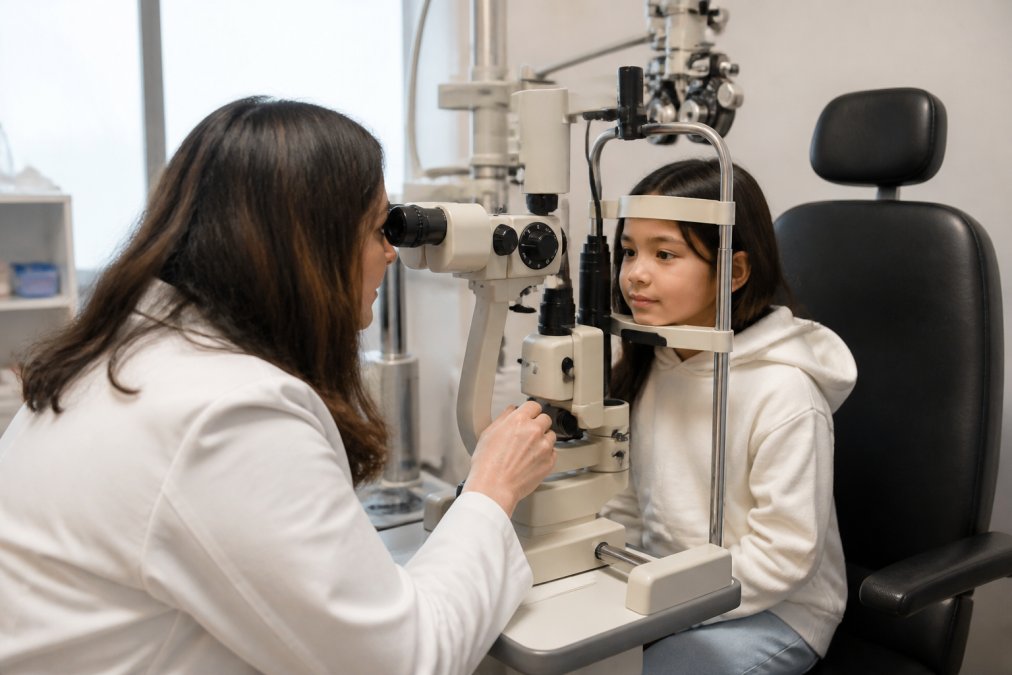
A comprehensive pediatric eye exam follows a structured process designed to assess your child's vision and eye health thoroughly. The exam typically begins with a case history where the eye care provider asks about your child's medical history, any vision concerns you've noticed, family history of eye disease, and current medications.
Visual acuity testing comes next. For young children who can't read letters, the provider uses special charts with pictures or symbols instead. The provider shows your child images at different distances and asks them to identify what they see.
The eye care provider will assess eye alignment and movement, checking for strabismus (misalignment) and evaluating binocular vision. Focusing ability and accommodation are tested to determine whether your child's eyes focus properly at different distances. Color vision testing ensures your child can distinguish colors normally.
The eye care provider will then dilate your child's pupils using special eye drops. This allows them to examine the internal structures of the eye, the retina, optic nerve, and blood vessels. Dilation is an important part of a comprehensive exam because it reveals conditions that aren't visible without it. Your child's vision will be slightly blurry and their eyes will be sensitive to light for a few hours after dilation.
Common Childhood Eye Conditions and When to Act
Several eye conditions are relatively common in children and benefit significantly from early detection and treatment.
Refractive errors (myopia, hyperopia, astigmatism) are the most common vision problems in children. Myopia (nearsightedness) means your child can see nearby objects clearly but struggles to see distant objects like the classroom board. Hyperopia (farsightedness) is the opposite. Astigmatism causes blurred vision at all distances due to an irregularly shaped cornea. These conditions are easily corrected with glasses or contacts, but they must be identified first.
Amblyopia, commonly called lazy eye, occurs when one eye doesn't develop normal vision during early childhood. The brain begins relying on the stronger eye and the weaker eye's vision doesn't develop properly. Early detection and treatment, typically with glasses, patching, or eye drops, can prevent permanent vision loss in the affected eye.
Strabismus is misalignment of the eyes. One or both eyes may turn inward, outward, upward, or downward. This condition affects depth perception and binocular vision. Treatment options range from glasses to eye exercises to surgery, depending on the type and severity.
Myopia management has become increasingly important as childhood myopia rates rise. Early intervention with specialized contact lenses, eye drops, or other approaches can slow myopia progression during the critical developmental years.
When you notice signs of any eye condition, squinting, eye misalignment, excessive tearing, light sensitivity, or behavioral changes related to vision, contact an eye care provider. Early intervention for most childhood eye conditions leads to significantly better outcomes than waiting until problems become more severe.
Scheduling your child's pediatric eye exam is one of the most important preventative health steps you can take. Vision problems caught early are easier to treat and have better long-term outcomes. When you're ready to schedule your child's comprehensive eye exam, Wilck Schwartz & Novak OD PC offers thorough pediatric eye care using advanced optometric equipment and modern technologies. Our team is experienced in working with children of all ages and creates a warm, inviting environment designed to make your child feel comfortable. Schedule an appointment with Wilck Schwartz & Novak OD PC to ensure your child's vision and ocular health are on track for healthy development.
Frequently Asked Questions
When should a child have their first comprehensive eye exam?
The American Academy of Pediatrics recommends that children have their first comprehensive eye exam between 6 and 12 months of age. Early detection during infancy helps identify conditions that could affect visual development. If your child's pediatrician notices any concerns, or if there's a family history of eye disease, schedule an exam even earlier. Regular exams continue throughout childhood to monitor vision changes and ensure healthy ocular development.
What's the difference between a school vision screening and a comprehensive eye exam?
School vision screenings check only whether your child can see clearly at distance, typically using a chart to test visual acuity. A comprehensive eye exam goes much deeper, evaluating eye alignment, focusing ability, depth perception, color vision, and overall eye health. The comprehensive exam uses advanced diagnostic equipment to detect refractive errors, amblyopia (lazy eye), strabismus, and other conditions that a screening might miss. If your child fails a school screening or reports headaches while reading, a comprehensive eye exam is essential to identify the underlying cause.
How often should children have their eyes checked?
Children without known vision problems should have a comprehensive eye exam every 1-2 years. Children with existing eye conditions, refractive errors requiring correction, or a family history of eye disease may need exams more frequently, sometimes annually or even more often depending on their specific situation. Your eye care provider will recommend the right schedule based on your child's individual needs and risk factors.
Do I need a referral from a pediatrician to schedule an eye exam for my child?
No, you do not need a referral from your pediatrician to schedule a pediatric eye exam. You can contact an optometrist or ophthalmologist directly to book an appointment. However, if your pediatrician has expressed concern about your child's vision or referred you to an eye specialist, bringing that information to your appointment helps the eye care provider understand your child's history and any specific concerns to address.
This article was written using GrandRanker