 how-to
Managing Meibomian Gland Dysfunction With Contacts
Table of Contents
- Understanding Meibomian Gland Dysfunction and Contact Lens Wear
- Recognizing Symptoms of MGD in Contact Lens Wearers
- Warm Compress Techniques for MGD Relief
- Daily Disposable Contact Lenses for Dry Eyes
- Lid Hygiene for MGD Patients: A Daily Routine
- Advanced Treatments: Thermal Pulsation and Intense Pulsed Light
- Lifestyle Adjustments to Support Tear Film Stability
- When to Seek Professional Help
- Frequently Asked Questions
Last Updated: October 3, 2026
Understanding Meibomian Gland Dysfunction and Contact Lens Wear
Managing meibomian gland dysfunction with contacts requires understanding what happens to your eyelids when you wear lenses daily. Your meibomian glands produce the lipid layer that keeps your tear film stable. When contact lenses sit on your eye, they can interfere with how these glands function.
At Wilck Schwartz & Novak OD PC, we see patients struggling with this connection regularly. The problem isn't just discomfort, it's that many people don't realize their contact lens wear is accelerating gland dysfunction.
What Happens to Your Meibomian Glands When You Wear Contacts
Contact lenses physically block the gland openings along your eyelid margin. This prevents meibum (the oil your glands produce) from reaching your tear film naturally. Over time, the glands become clogged and inflamed.
The lipid layer of your tear film keeps moisture on your eye. Without adequate meibum, tears evaporate faster. This creates evaporative dry eye, one of the most common complaints among contact lens wearers.
How Contact Lenses Accelerate Meibomian Gland Issues
Lens material matters here. Some materials absorb more tears than others, increasing dehydration. The longer you wear lenses each day, the more stress you place on your glands.
Poor lens hygiene compounds the problem. Bacteria and debris accumulate on lens surfaces, triggering inflammation at the lid margin. This inflammation leads to blepharitis, infection or irritation of the eyelid, which blocks gland ducts further.
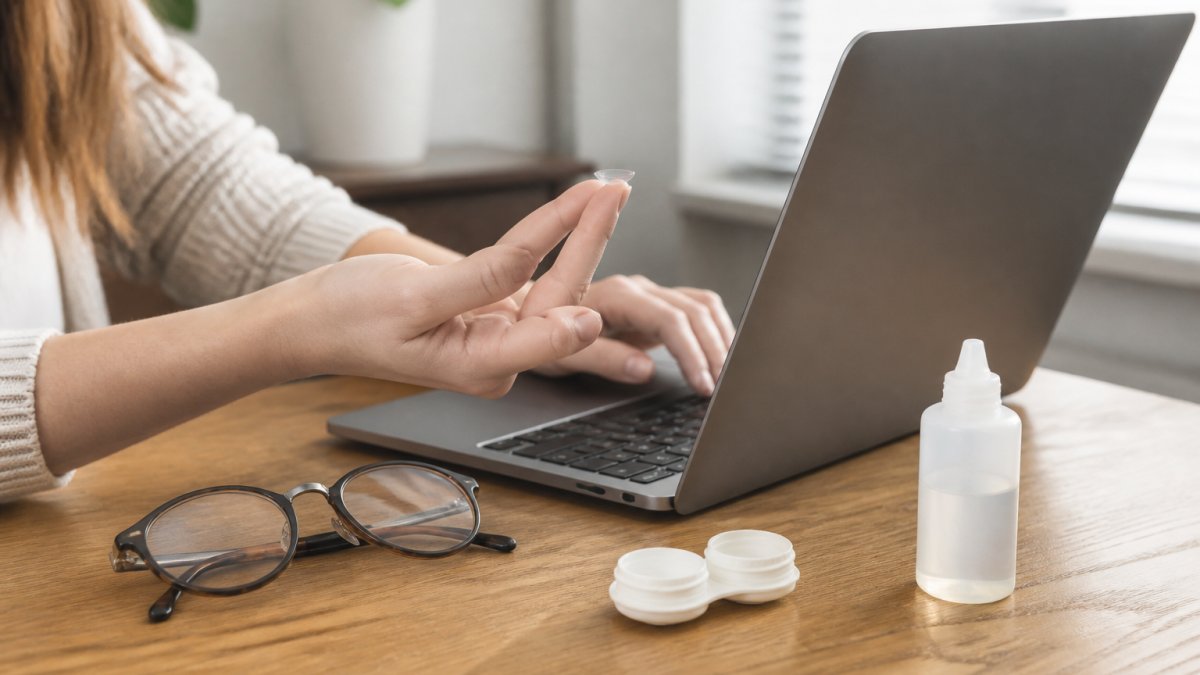
Digital eye strain makes this worse. When you focus on screens, you blink less frequently. Reduced blinking means less mechanical stimulation of your meibomian glands. The glands atrophy from disuse.
Recognizing Symptoms of MGD in Contact Lens Wearers
Meibomian gland dysfunction symptoms in contact lens wearers often feel like lens intolerance. You might experience:
- Lenses feeling uncomfortable by midday
- Redness and irritation at the lid margin
- Grittiness or foreign body sensation
- Blurred vision that improves after blinking
- Discharge or crusting along the lash line
- Increased sensitivity to light
- Difficulty wearing lenses for a full day
Many patients assume their lenses are the problem. In reality, their glands need attention. The key difference: true lens intolerance happens immediately. MGD symptoms typically develop gradually over weeks or months.
Warm Compress Techniques for MGD Relief
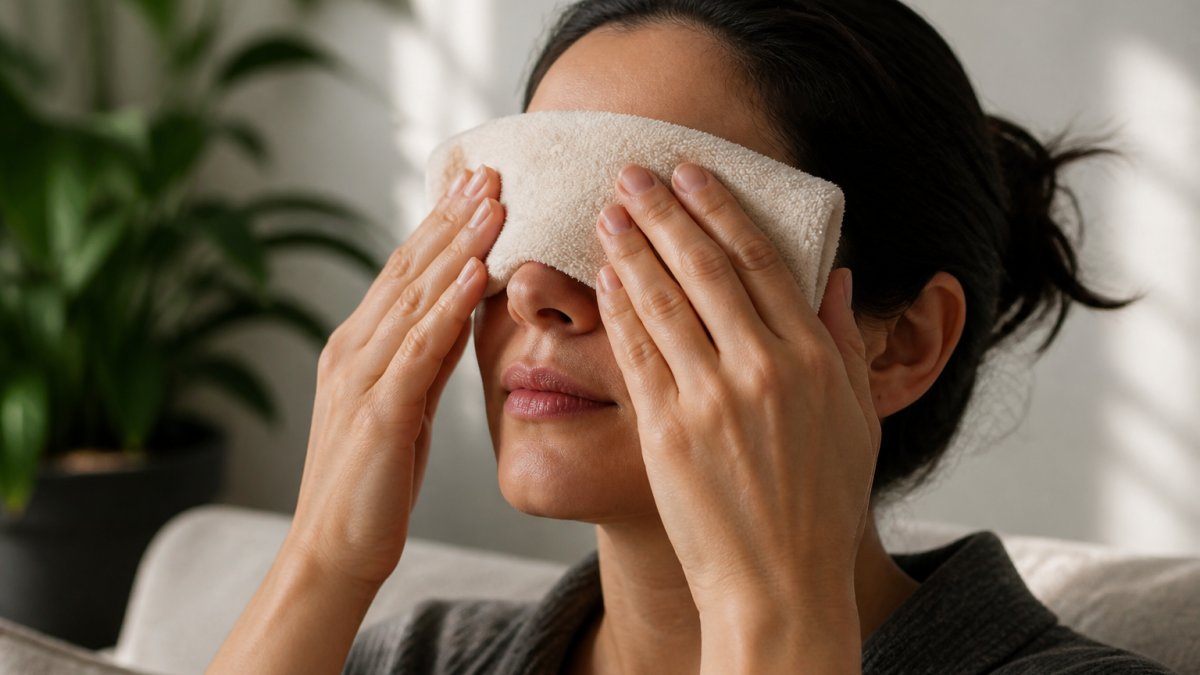
Warm compresses work by softening meibum so it flows more freely. Heat increases gland secretion and helps clear blockages. This is one of the most effective at-home treatments for managing meibomian gland dysfunction with contacts.
How to Apply Warm Compresses Correctly
Use a clean, lint-free cloth or a reusable warm compress pad. Water temperature should feel warm to your inner wrist, not hot enough to burn.
Follow these steps:
- Wash your hands thoroughly
- Apply the warm compress to closed eyes for 10-15 minutes
- Gently massage your upper and lower eyelid margins with light pressure
- Use small circular motions along the lid edge
- Avoid pressing directly on the eyeball
- Repeat on both eyes
The massage is crucial. It manually expresses meibum from the glands. Without massage, the heat alone provides limited benefit.
Timing and Frequency for Best Results
Use warm compresses twice daily for best results. Morning and evening work well for most people.
Consistency matters more than intensity. Daily warm compresses for 2-4 weeks show measurable improvement in tear film stability. Many patients notice relief within 7-10 days.
If you wear contact lenses, apply compresses before inserting lenses. This preps your tear film for the day ahead. Evening compresses help restore your lipid layer after lens wear.
Daily Disposable Contact Lenses for Dry Eyes
Switching to daily disposable contact lenses often reduces MGD symptoms significantly. Here's why this matters for your ocular surface health.
Why Daily Disposables Reduce MGD Symptoms
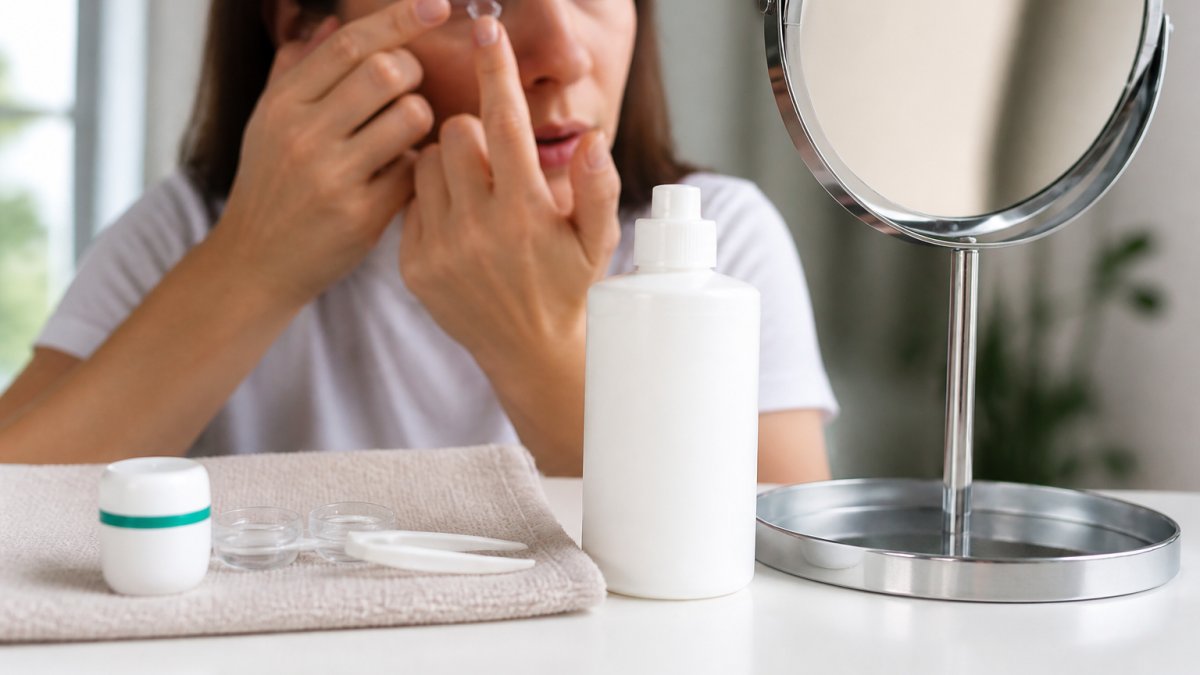
Daily disposables eliminate lens storage and cleaning. You insert a fresh lens each morning and discard it at night. This removes bacteria accumulation that triggers inflammation.
Fresh lenses have optimal water content and surface properties. They deposit fewer proteins and lipids on your eye.
Daily lenses reduce lens-related irritation. There's no buildup of deposits that irritate your lid margin. Less irritation means less inflammation of your meibomian glands.
You also avoid preservatives in lens care solutions. Preservative-free artificial tears work better for dry eyes anyway. Daily disposables let you skip this irritant entirely.
Contact Lens Material Compatibility With MGD
Not all daily disposable materials perform equally for MGD. Silicone hydrogel lenses allow more oxygen to reach your cornea. Better oxygen transmission means less corneal stress and inflammation.
Look for materials with high water content, but not so high that they dry out quickly. Lenses that maintain moisture throughout the day reduce tear evaporation.
Some materials have special surface treatments that reduce protein deposition. These coatings keep your tear film cleaner and more stable.
Ask your eye care provider which daily disposables work best for meibomian gland dysfunction. Material choice directly affects how well your ocular surface tolerates lens wear.
Lid Hygiene for MGD Patients: A Daily Routine
Eyelid hygiene forms the foundation of managing meibomian gland dysfunction with contacts. Poor lid hygiene allows bacteria to colonize your lid margin, blocking glands and causing inflammation.
Step-by-Step Eyelid Cleansing Protocol
Clean your eyelids twice daily, morning and evening. Use this protocol:
- Wash your hands with soap and water
- Dampen a clean washcloth with warm water
- Gently close one eye
- Place the washcloth along your upper lid margin
- Use gentle back-and-forth motions along the lash line
- Repeat on the lower lid margin
- Do the same for your other eye
- Pat dry with a clean towel (Source: American Academy of Ophthalmology's guidelines on meibomian gland dysfunction)
The lid margin is where your meibomian glands open. Cleaning this area removes bacteria and debris that block gland ducts. Gentle pressure helps express meibum naturally.
Some patients benefit from commercial lid wipes designed for this purpose. Look for preservative-free options. These work well if you prefer a structured product over washcloths.
Preventing Blepharitis and Gland Obstruction
Blepharitis develops when bacteria overgrow on your eyelids. This infection causes swelling that blocks meibomian gland openings. Prevention requires consistent lid hygiene.
Never sleep in your contact lenses. This traps bacteria against your eye and lid margin overnight.
Replace your contact lens case every three months. Old cases harbor bacteria that contaminate your lenses. Fresh cases reduce infection risk significantly.
Avoid touching your eyes throughout the day. Your fingers transfer bacteria to your lid margin. This increases inflammation and gland blockage.
If you notice redness, swelling, or discharge at your lid margin, contact your eye care provider.
Advanced Treatments: Thermal Pulsation and Intense Pulsed Light
When warm compresses and lid hygiene aren't enough, advanced treatments can help restore gland function. These in-office procedures address meibomian gland dysfunction more aggressively.
Thermal pulsation therapy uses controlled heat and pressure to clear gland blockages. The device applies warmth to your eyelids while gently pulsing to express meibum.
Intense pulsed light (IPL) therapy reduces inflammation in your eyelids. The light energy targets blood vessels that fuel inflammation.
Both treatments require multiple sessions for lasting results. Most patients need 3-4 sessions spaced weeks apart.
These procedures work best alongside daily warm compresses and lid hygiene.
Lifestyle Adjustments to Support Tear Film Stability
Your daily habits significantly impact tear film stability and meibomian gland health. Small adjustments can make a substantial difference in managing meibomian gland dysfunction with contacts.
Managing Digital Eye Strain While Wearing Contacts
Screen time reduces your blink rate dramatically. Most people blink 66% less when looking at screens.
Set a timer to remind yourself to blink deliberately every 20 minutes. Conscious blinking helps express meibum from your glands.
Follow the 20-20-20 rule: every 20 minutes, look at something 20 feet away for 20 seconds.
Position your screen at arm's length and slightly below eye level. This posture encourages more complete eyelid closure during blinking.
Take breaks from contact lenses on heavy screen days. If you work on computers 8+ hours, consider wearing glasses one day per week.
Omega-3 Fatty Acids and Ocular Surface Health
Omega-3 fatty acids reduce inflammation throughout your body, including your eyelids. These nutrients support meibum quality and tear film composition.
Eat fatty fish twice weekly: salmon, mackerel, sardines, or trout. These contain EPA and DHA, the omega-3 forms your eyes use most effectively.
If you don't eat fish, consider a supplement.
Results take time. Most patients need 4-8 weeks of consistent omega-3 intake before noticing improvement in tear film stability.
Stay hydrated throughout the day. Drink water regularly, at least 8 glasses daily. Systemic hydration supports tear production and meibum consistency.
When to Seek Professional Help
You should schedule an appointment with an eye care provider if:
- Warm compresses and lid hygiene don't improve symptoms after 2-4 weeks
- Your symptoms worsen despite consistent home care
- You develop redness, swelling, or discharge at your lid margin
- Your vision becomes blurry or you experience pain
- You can no longer tolerate your contact lenses comfortably
At Wilck Schwartz & Novak OD PC, we evaluate meibomian gland dysfunction using advanced optometric equipment. We can assess your tear film stability, examine your gland structure, and recommend personalized treatment plans.
Early intervention prevents permanent gland damage. Glands that remain blocked for years may atrophy and stop functioning entirely. Professional evaluation helps you catch problems before they become severe.
| Treatment Approach | When to Use | Expected Timeline |
|---|---|---|
| Warm compresses + lid hygiene | First-line treatment for all MGD | 2-4 weeks for improvement |
| Daily disposable lenses | Concurrent with other treatments | Immediate symptom relief |
| Thermal pulsation therapy | When conservative care plateaus | 3-4 sessions over 8-12 weeks |
| Intense pulsed light | Moderate to severe inflammation | Multiple sessions, results over months |
| Omega-3 supplementation | Ongoing support with all treatments | 4-8 weeks to notice effects |
Managing meibomian gland dysfunction with contacts demands consistency. Your daily routine, warm compresses, lid hygiene, and deliberate blinking, forms the foundation. Advanced treatments accelerate healing when you need additional support. The key is addressing the problem early before your glands suffer permanent damage.
Frequently Asked Questions
Can contact lenses make meibomian gland dysfunction worse?
Yes. Contact lenses can restrict oxygen flow to the cornea and increase tear evaporation, which puts additional stress on meibomian glands already struggling to produce adequate lipid layer. The physical presence of a lens on your eye also reduces blinking frequency and intensity, preventing normal gland expression. Switching to daily disposables or reducing wear hours can minimize this effect, but professional evaluation is essential to determine whether your specific gland obstruction requires treatment beyond lens changes.
What are the best contact lens materials for patients with MGD?
Daily disposable lenses made from silicone hydrogel materials typically perform best for MGD patients because they allow higher oxygen transmission and are discarded before deposits accumulate. These lenses reduce inflammation and bacterial colonization compared to reusable lenses. Materials like lotrafilcon and comfilcon A are designed for enhanced comfort and reduced evaporation. However, the ideal material depends on your individual tear film stability and gland expression status, which requires professional fitting to assess properly.
Is meibomian gland dysfunction permanent?
MGD can range from temporary and reversible to chronic and progressive, depending on the underlying cause and how early you intervene. Gland obstruction caused by blepharitis or poor lid hygiene often improves with consistent warm compresses and eyelid cleansing. However, gland atrophy from years of untreated inflammation or severe contact lens irritation may be permanent. Early detection and aggressive management of inflammation and tear film stability offer the best chance of halting progression and preserving remaining gland function.
How do you express meibomian glands safely?
Professional expression performed by an eye care provider during thermal pulsation therapy or manual expression is safest. At home, you can support gland drainage through warm compresses applied for 10-15 minutes daily, which softens meibum and allows natural expression during blinking. Avoid pressing directly on the lid margin yourself, as improper technique can damage glands further. Gentle lid margin massage performed by a trained professional during your eye exam is far more effective and safer than self-expression.
Contact lens discomfort doesn't have to be permanent. When managing meibomian gland dysfunction with contacts becomes challenging, professional evaluation makes all the difference. Wilck Schwartz & Novak OD PC uses advanced optometric equipment to diagnose gland dysfunction precisely and develop treatment plans tailored to your specific needs. Schedule an appointment today to restore your comfort and protect your ocular surface health for years to come.