 how-to
Finding a Meibomian Gland Dysfunction Specialist Near You
Table of Contents
- What Is Meibomian Gland Dysfunction and Why It Matters
- Recognizing Meibomian Gland Dysfunction Symptoms
- How Meibomian Gland Dysfunction Is Diagnosed
- Treatment Options for Meibomian Gland Dysfunction
- Meibomian Gland Expression and Other In-Office Treatments
- How to Find and Vet a Local Meibomian Gland Dysfunction Specialist
- What to Expect at Your First Appointment
- Frequently Asked Questions
Last Updated: October 6, 2026
What Is Meibomian Gland Dysfunction and Why It Matters
Meibomian gland dysfunction (MGD) is a chronic condition affecting the tiny oil-producing glands along your eyelid margins. These glands secrete lipids that form your tear film's outer layer; when blocked or inflamed, tear quality deteriorates, causing persistent dry eye symptoms. (Source: National Eye Institute's information on dry eye disease)
Meibomian gland dysfunction is one of the most common causes of dry eye disease. Many people experience discomfort, redness, and irritation without realizing the cause stems from their meibomian glands.
The condition develops gradually. Glands may become clogged due to changes in tear composition, inflammation, or bacterial colonization.
Left untreated, meibomian gland dysfunction can worsen, and chronic inflammation may cause permanent structural damage. Early intervention often prevents progression and restores comfortable vision.
Recognizing Meibomian Gland Dysfunction Symptoms
Symptoms vary in severity but typically include irritation, dryness, redness, and a gritty, sand-like sensation, especially toward the end of the day or after screen use.
Common meibomian gland dysfunction symptoms include:
- Persistent dry eye sensation, even after using artificial tears
- Red or inflamed eyelids
- Crusty buildup along the eyelash line
Some patients experience meibomian gland dysfunction without obvious symptoms initially, and it may progress silently until the ocular surface is significantly compromised.
Symptom severity doesn't always correlate with gland damage, mild meibomian gland dysfunction may cause significant discomfort, while advanced changes may feel like little.
How Meibomian Gland Dysfunction Is Diagnosed
Diagnosis requires a comprehensive eye examination beyond a standard vision check, with specialized tests to evaluate your meibomian glands and ocular surface health.
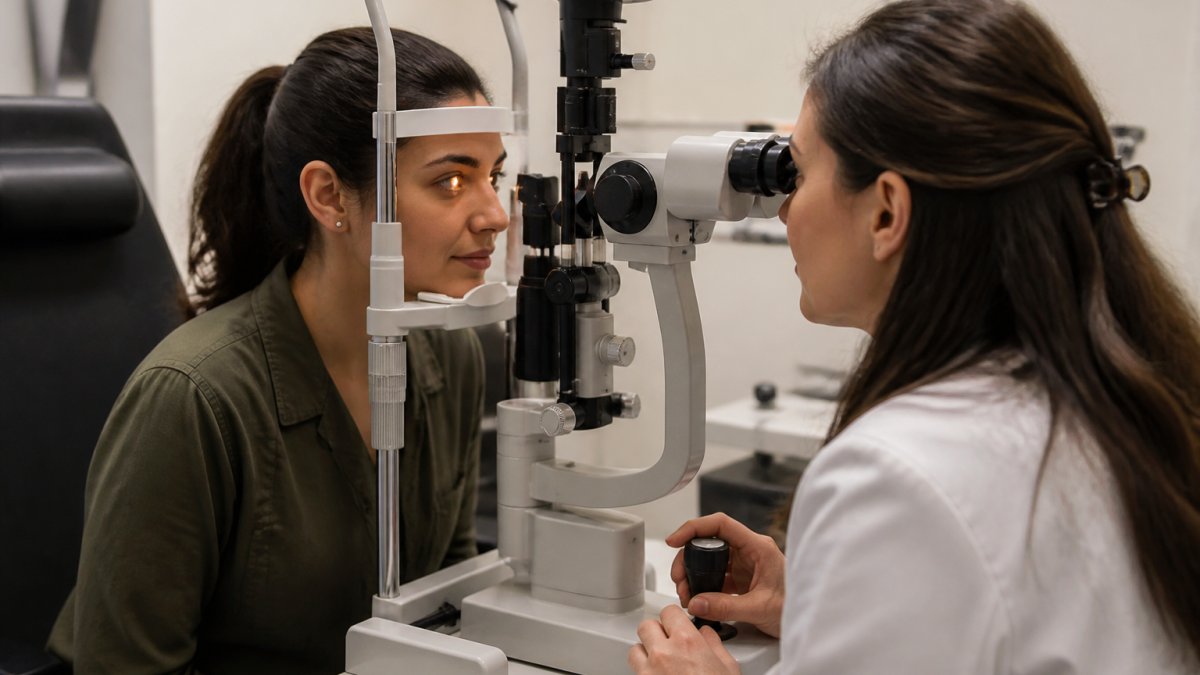
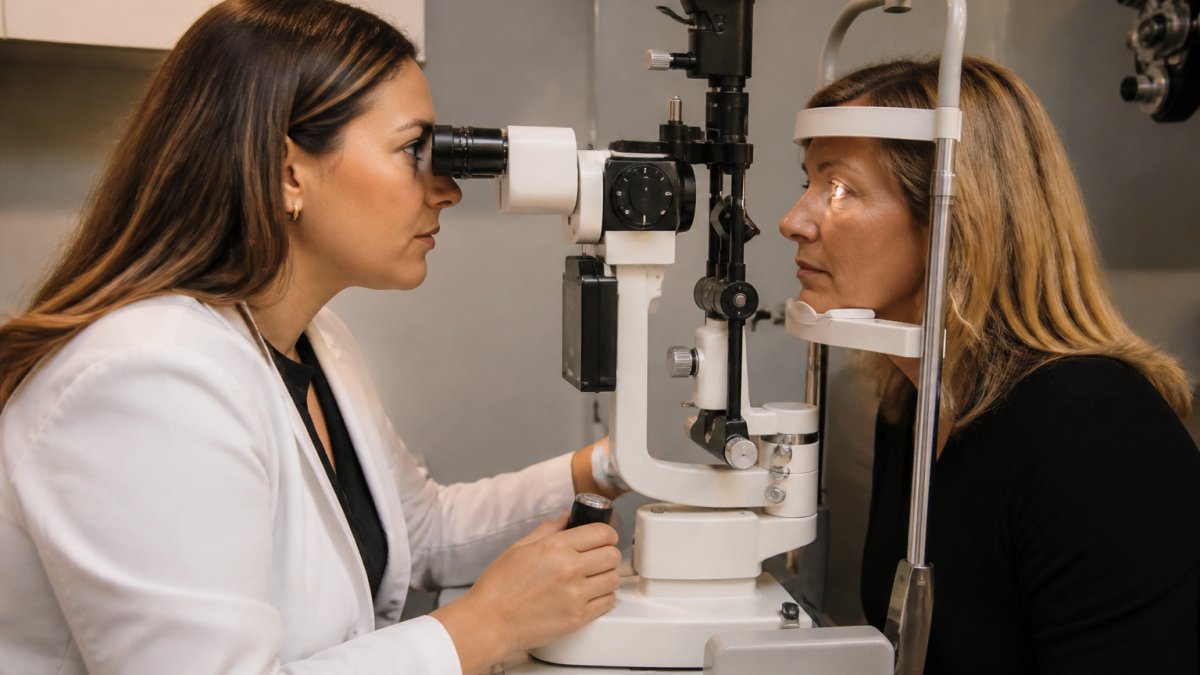
Next comes the clinical assessment. Your eye doctor examines your eyelids under magnification, checking appearance, inflammation, and tear film quality.
Tear film evaluation is crucial for meibomian gland dysfunction diagnosis.
Some practitioners use meibography, which photographs the meibomian glands to assess structure and atrophy, providing objective evidence of gland dysfunction and guiding treatment.
Treatment Options for Meibomian Gland Dysfunction
Treatment depends on severity and underlying cause, typically combining strategies to restore gland function and improve tear film quality.
Mild meibomian gland dysfunction often responds to conservative measures.
Artificial tears and lubricating ointments provide symptomatic relief while your glands recover, though they address symptoms rather than the underlying meibomian gland dysfunction. Your provider can recommend formulations for gland-related dry eye.
Omega-3 supplementation has shown promise for many meibomian gland dysfunction patients, potentially improving meibum's lipid composition and reducing inflammation (pubmed.ncbi.nlm.nih.gov).
For persistent meibomian gland dysfunction, your eye doctor may recommend prescription medications: topical anti-inflammatory drops to reduce gland-damaging inflammation, or oral medications for underlying conditions like rosacea.
Meibomian Gland Expression and Other In-Office Treatments
Thermal treatments use controlled heat to soften meibum and improve secretion.
Intense pulsed light (IPL) therapy can be effective for meibomian gland dysfunction, particularly with concurrent ocular rosacea or blepharitis.
Meibomian gland probing is a more aggressive intervention for severely blocked glands.
The choice between these meibomian gland dysfunction treatments depends on gland severity, your symptoms, and your response to initial interventions.
How to Find and Vet a Local Meibomian Gland Dysfunction Specialist
Most pages list services but don't explain how to choose between two nearby providers who both claim to treat meibomian gland dysfunction. That comparison is where the real decision happens, so here is a practical framework.
Step 1: Build a shortlist of three to five providers
Start with these sources, in this order:
- Your current eye doctor. Even if they don't treat meibomian gland dysfunction in depth, they usually know local colleagues who do and can send records ahead.
- Your primary care physician. Useful when an underlying condition such as rosacea, Sjögren's, or thyroid disease is involved.
- Professional directories. The American Optometric Association and the American Academy of Ophthalmology maintain find-a-doctor tools filterable by specialty and location.
Both optometrists and ophthalmologists diagnose and treat meibomian gland dysfunction. Optometrists often lead ocular-surface clinics running meibography and thermal treatments; ophthalmologists matter more when eyelid surgery, significant ocular rosacea, or procedures outside optometric scope are involved.
Step 2: Screen the website for real signals
A practice that genuinely specializes in this condition will usually show it. Look for:
- A dedicated dry eye or ocular surface page, not a paragraph buried under 'Services.'
- Named diagnostic technology, such as meibography, tear osmolarity testing, or non-invasive tear break-up time.
- Named treatment modalities, plural. Warm-compress advice and artificial tears alone is not a meibomian gland dysfunction practice.
If the only evidence is a stock photo and the phrase 'dry eye,' keep looking.
Step 3: Ask these questions before you book
The answers tell you more than any review score:
- Do you perform meibography in-office, and will I see my own gland images? Being shown your own meibomian gland maps is one of the clearest signs of a specialist practice.
- Which in-office treatments do you offer, and how do you decide between them? A good answer describes candidacy criteria, not a single product.
- How many meibomian gland dysfunction patients do you treat monthly? Volume isn't everything, but a provider who sees a handful is learning on your case.
- What does a typical treatment course look like, and how many visits? You want a plan with a timeline, not an open-ended series.
- What is my out-of-pocket cost after insurance, and do you offer payment plans? Ask before the first procedure, not after.
- Who do I contact between visits if symptoms flare? Chronic conditions need a reachable point of contact.
Step 4: Read reviews for the right things
Star ratings are noisy. Instead, scan reviews for:
- Mentions of dry eye, blepharitis, or meibomian glands by name, evidence the reviewer actually had this condition treated there.
- Comments about the provider explaining findings, showing images, or walking through a plan.
- Follow-up mentions, did the practice check in after a procedure?
A cluster of reviews that all sound like the same person wrote them is a warning sign, not a strength.
Step 5: Weigh access and logistics honestly
Meibomian gland dysfunction is usually managed over months, not a single visit, which changes the math on convenience:
- Distance. A 90-minute drive is tolerable once, but brutal for a six-visit IPL series.
- Scheduling. Ask how far out routine follow-ups are booked.
- Telehealth. Some practices handle intake, history, and follow-up check-ins remotely, reducing in-person trips. Diagnostic imaging and most in-office procedures still require you to be there.
Wilck Schwartz & Novak OD PC provides comprehensive evaluation and management of meibomian gland dysfunction using advanced optometric equipment and cutting-edge technologies, with personalized treatment plans for each patient.
What to Expect at Your First Appointment
A first visit with a meibomian gland dysfunction specialist is longer and more structured than a routine eye exam. Plan on 45 to 90 minutes across five phases; knowing them in advance helps you get more out of the appointment.
Phase 1: Intake and history (10-15 minutes)
You'll complete forms covering your symptoms, how long you've had them, and what you've tried. Be specific: 'My eyes burn by 3 p.m. on workdays and improve on weekends' beats 'my eyes are dry.'
Your provider will also ask about:
- Systemic conditions that affect meibomian gland function, including rosacea, Sjögren's syndrome, thyroid disease, and autoimmune conditions.
- Medications, including antihistamines, antidepressants, and isotretinoin, all of which can reduce tear or meibum production.
- Contact lens wear, previous eye surgery, and prior dry eye treatments.
Bring a list of your medications and a note of any eye drops you use, including how often.
Phase 2: Clinical examination (15-20 minutes)
Your provider examines your eyelids and margins under magnification, looking for:
- Blocked or capped gland openings along the lid margin.
- Thickened, toothpaste-like meibum under gentle pressure.
- Lid margin inflammation, crusting, or collarettes around the lashes that can signal Demodex mites.
They'll also assess tear film break-up time and whether the lipid layer looks thin or uneven.
Phase 3: Diagnostic testing (10-20 minutes)
Depending on the practice, you may have some or all of the following:
| Test | What it measures | Why it matters |
|---|---|---|
| Meibography | Structure of the meibomian glands | Shows gland dropout or atrophy that won't respond to heat-based treatment alone |
| Tear break-up time | Stability of the tear film | Distinguishes evaporative dry eye from aqueous-deficient dry eye |
| Tear osmolarity | Salt concentration of tears | Elevated values suggest ocular surface stress and inflammation |
| Schirmer's test | Aqueous tear production | Rules out a tear-production problem layered on top of gland dysfunction |
| Lissamine green or fluorescein staining | Ocular surface damage | Quantifies how much the surface has been affected |
Ask to see your meibography images. Seeing which glands are healthy, which are blocked, and which have dropped out makes the treatment plan much easier to understand.
Phase 4: Diagnosis and treatment discussion (15-20 minutes)
Your provider will explain what they found, how severe it is, and which treatments fit your pattern. Expect the conversation to cover:
- Home care, warm compresses, eyelid hygiene, lubricating drops, and omega-3 supplementation where appropriate.
- Prescription options, topical anti-inflammatories or oral medications when inflammation or a condition such as rosacea is driving the problem.
- In-office procedures, thermal expression devices, intense pulsed light, or meibomian gland probing, depending on gland structure and severity.
Ask directly: 'What does success look like at 30 days, 90 days, and six months?' A provider who can answer has a plan.
Phase 5: Scheduling and next steps (5-10 minutes)
If an in-office procedure is recommended, it's usually scheduled separately so you have time to consider it. Before you leave, get answers to:
- Cost. Ask for the out-of-pocket amount after insurance for each procedure, not just list price.
- Coverage. Diagnostic testing and medically necessary treatment are often covered, but cosmetic-adjacent procedures may not be. Call your insurer with the specific procedure codes the office provides.
- Referral requirements. If your plan requires one, confirm it's on file before the procedure date.
- Payment options. Many practices offer payment plans or third-party financing for multi-session treatments.
Frequently Asked Questions
What kind of doctor treats meibomian gland dysfunction?
Optometrists and ophthalmologists both diagnose and treat meibomian gland dysfunction. Ophthalmologists are medical doctors who specialize in eye care and can perform surgical procedures, while optometrists provide comprehensive eye exams and manage many dry eye conditions. Some optometrists and ophthalmologists specialize specifically in ocular surface disease and dry eye, making them ideal for MGD care. Ask your primary care doctor for a referral to a dry eye specialist in your area.
What are the main symptoms of meibomian gland dysfunction?
Common meibomian gland dysfunction symptoms include dry, gritty, or burning eyes; excessive tearing; redness; and blurred vision that improves with blinking. Many people experience eye fatigue after screen time and sensitivity to wind or dry environments. Symptoms often worsen throughout the day. If you experience persistent discomfort, schedule an exam with an eye care professional to rule out MGD and other ocular surface conditions.
Can meibomian gland dysfunction be cured permanently?
Meibomian gland dysfunction is typically a chronic condition that requires ongoing management rather than a permanent cure. However, many treatments can significantly reduce symptoms and slow progression. Options range from at-home care like warm compresses and lid hygiene to in-office procedures such as meibomian gland expression, intense pulsed light therapy, and thermal treatments. A specialist can help you develop a long-term management plan tailored to your specific condition.
How is meibomian gland dysfunction diagnosed?
Diagnosis of meibomian gland dysfunction begins with a comprehensive eye examination that includes evaluation of your tear film, eyelid structure, and meibomian gland function. Your eye doctor may use specialized imaging to assess gland blockage and perform tests to measure tear quality and quantity. They will also review your symptoms and medical history. This thorough assessment allows your specialist to confirm MGD and rule out other causes of dry eye or ocular surface disease.