 how-to
Signs School Vision Screening Missed
Table of Contents
- Why School Vision Screenings Fall Short
- Common Signs of Vision Problems School Screenings Miss
- Comprehensive Pediatric Eye Exam vs Screening: What's the Difference
- How Undiagnosed Vision Problems Impact Academic Performance
- Functional Vision Issues Screenings Typically Don't Detect
- How to Schedule a Pediatric Eye Exam and What to Expect
- Creating a Parent Checklist for Your Pediatrician
- Frequently Asked Questions
Last Updated: August 17, 2026
Why School Vision Screenings Fall Short
School vision screenings catch obvious problems, but they're designed to identify only the most basic refractive errors. A child passes the screening, and parents assume their vision is fine. The reality is more complicated.
These screenings typically test only distance visual acuity using a standard eye chart. They miss functional vision issues that don't show up on that single metric. A child can read letters at 20 feet and still struggle with eye coordination, focusing ability, or tracking problems that make reading and learning difficult.
At Wilck Schwartz & Novak OD PC, we've seen this pattern repeatedly. Parents bring children in after school screenings have cleared them, yet the child complains of headaches during homework or loses their place when reading. The screening didn't measure what actually matters for classroom performance.
The gap exists because school screenings are screening tools, not comprehensive evaluations. They're fast, inexpensive, and designed to catch the most common issue: myopia (nearsightedness). They're not designed to detect convergence insufficiency, binocular vision dysfunction, digital eye strain, or the subtle tracking and focusing issues that interfere with academic success.
This is where a comprehensive pediatric eye exam differs fundamentally. A full evaluation tests visual acuity, yes, but also eye alignment, depth perception, focusing ability, eye coordination, and how the visual system works together as a whole. These tests reveal problems that screenings consistently miss.
Common Signs of Vision Problems School Screenings Miss
Parents often notice behavioral or physical clues before they suspect a vision problem. These indicators may not appear during a quick screening, but they're red flags that warrant a comprehensive eye exam.
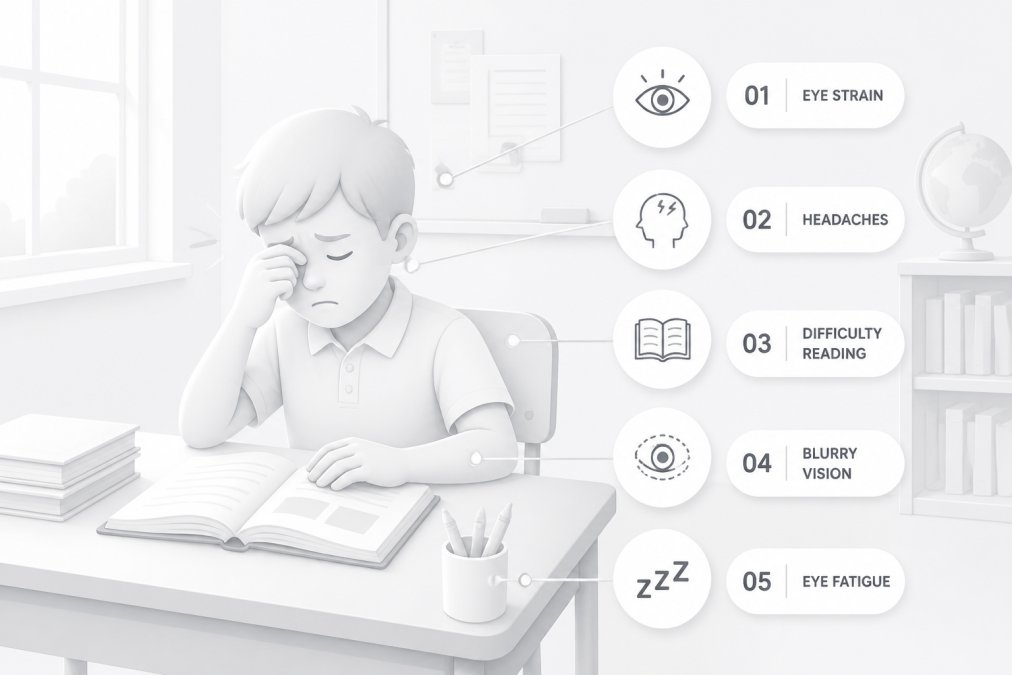
Behavioral indicators of vision issues
A child who struggles with vision often develops coping behaviors. They may tilt their head to one side when reading or looking at the board. This head tilt sometimes compensates for eye alignment issues or focusing problems. Some children squint, even indoors, to sharpen their vision temporarily.
Watch for children who avoid reading or complain it makes them tired. A child who can see letters clearly but has trouble tracking across a line of text might skip words or lose their place repeatedly. They may reread the same line or use their finger to follow along, which can indicate a tracking problem rather than a visual acuity issue.
Behavioral signs also include difficulty copying from the board, even when seated close enough to see it clearly. A child with poor eye coordination or focusing issues may struggle to shift their gaze from the board to their paper and back again. Some children become frustrated with schoolwork quickly, which can mask an underlying vision problem as a behavioral or attention issue.
Physical symptoms and eye strain
Eye strain, or asthenopia, appears as physical discomfort after visual tasks. A child might rub their eyes frequently, blink excessively, or complain that their eyes hurt or feel tired. These symptoms often worsen as the day progresses or after sustained reading or screen time.
Headaches are another common signal. A child with focusing issues or binocular vision dysfunction often develops headaches during or after reading, schoolwork, or screen use. The headaches may be described as pressure behind the eyes or a general head pain that emerges during visual tasks.
Some children experience dry, irritated eyes, especially in classrooms with air conditioning or after extended screen exposure. They might complain of blurred vision that comes and goes, or vision that feels clearer after closing their eyes briefly. These symptoms suggest eye strain or focusing problems that a screening won't detect.
Sensitivity to light is also worth noting. A child who squints in bright classrooms or outdoors, or who prefers dimmer environments, may have focusing or coordination issues. Physical symptoms like these point toward functional vision problems that require a comprehensive evaluation.
Comprehensive Pediatric Eye Exam vs Screening: What's the Difference
Understanding what separates a screening from a comprehensive exam helps parents understand why one might miss problems the other catches.
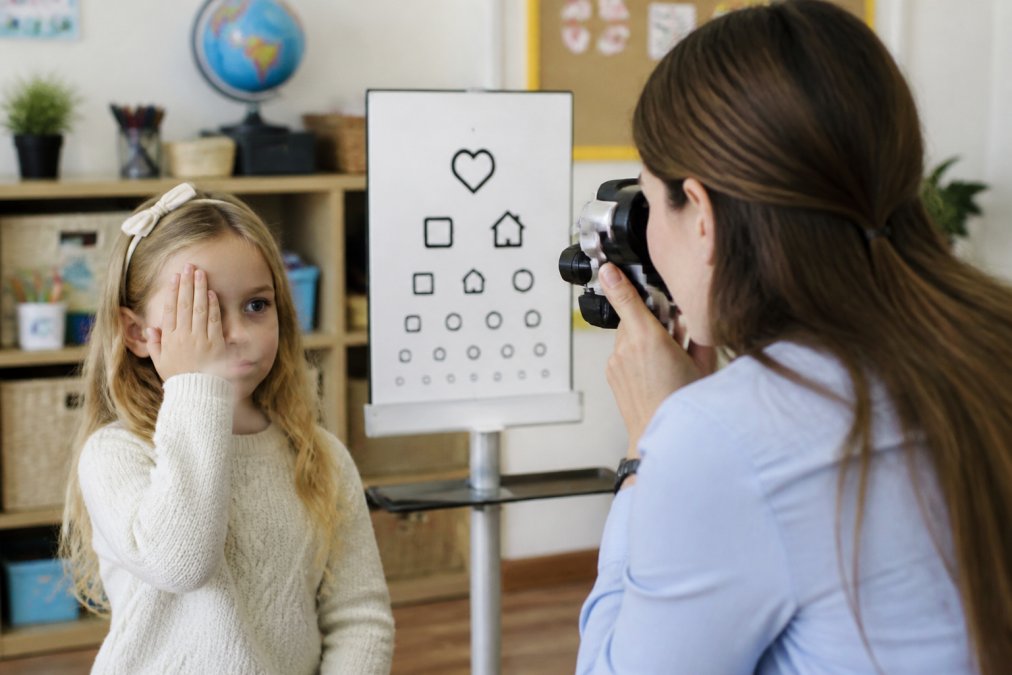
A school vision screening tests a single metric: distance visual acuity. The child reads letters on a chart from a standard distance. If they can read the letters, they pass. The screening takes minutes and costs nothing. It's efficient and catches the most obvious cases of nearsightedness.
A comprehensive pediatric eye exam is fundamentally different. It evaluates the entire visual system. The exam measures visual acuity at multiple distances, not just far away. It assesses eye alignment and how well the eyes work together. The doctor tests focusing ability, tracking, depth perception, and peripheral vision. They examine the health of the eyes themselves, looking for any structural problems or disease.
The comprehensive exam also includes tests for binocular vision dysfunction and convergence insufficiency. These are functional vision problems that affect how the eyes coordinate and focus. A child might have 20/20 acuity but struggle with convergence, making near tasks like reading exhausting.
The exam takes 30-45 minutes, not 5 minutes. It uses specialized equipment to measure precise visual function. The optometrist or ophthalmologist can identify problems that a screening would miss entirely. This is why a child can pass a school screening and still benefit from a comprehensive exam.
How Undiagnosed Vision Problems Impact Academic Performance
Vision is fundamental to learning. When a child's visual system isn't working properly, academic performance suffers in ways that might not be immediately obvious.
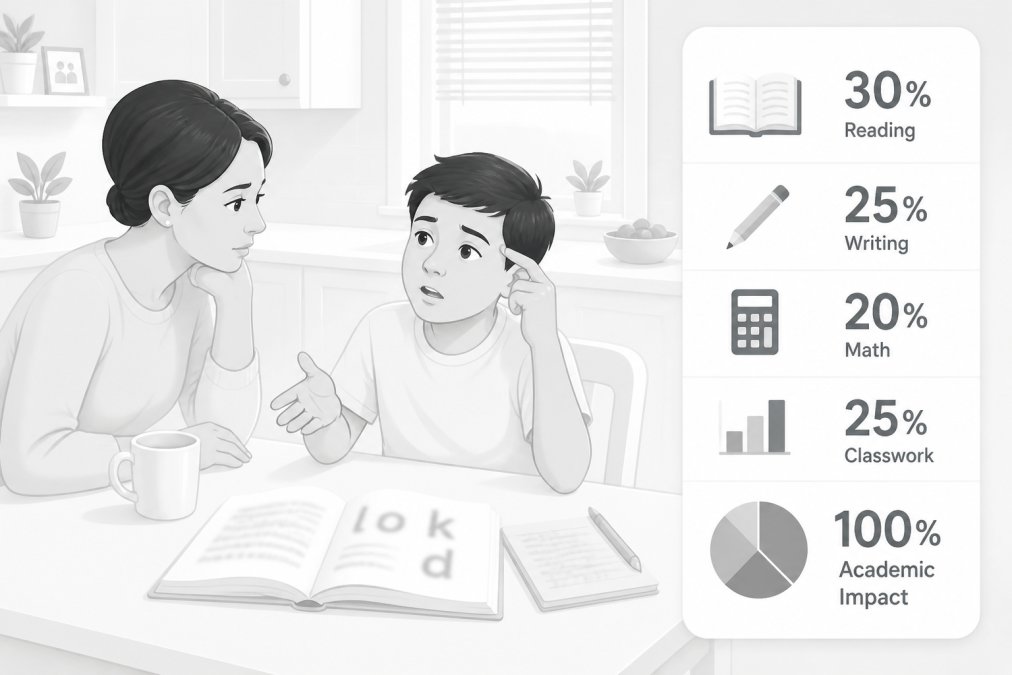
A child with undiagnosed focusing issues or convergence insufficiency finds reading exhausting. Reading requires sustained focus and coordination. When that's difficult, the child reads more slowly, tires quickly, and may avoid reading altogether. Over time, this affects reading comprehension and academic progress in all subjects that depend on reading.
Eye tracking problems create similar issues. A child who struggles to track across a line of text skips words, rereads lines, or loses their place. This makes reading inefficient and frustrating. The child might be labeled as having attention problems when the real issue is visual tracking.
Undiagnosed vision problems also affect handwriting and copying. A child with poor eye-hand coordination or focusing issues may have illegible handwriting or make frequent errors when copying from the board. Teachers might interpret this as carelessness or lack of effort, when it's actually a vision-related motor control issue.
The cumulative effect is significant. A child who struggles visually often falls behind academically. They may develop anxiety around schoolwork. They might be misdiagnosed with attention deficit disorder or learning disabilities when the root cause is actually an undiagnosed vision problem. Early detection and treatment of vision issues can prevent these secondary academic and behavioral problems.
Functional Vision Issues Screenings Typically Don't Detect
School screenings are designed to identify refractive errors (myopia, hyperopia, astigmatism). They miss functional vision problems entirely. These are issues with how the visual system works, not with how clearly a child can see.
Binocular vision dysfunction and convergence insufficiency
Binocular vision dysfunction occurs when the two eyes don't coordinate properly. Convergence insufficiency is a specific type where the eyes struggle to turn inward together for near tasks like reading. A child with this problem can see 20/20 at distance but finds near work exhausting.
The eyes should turn inward smoothly when focusing on something close. In convergence insufficiency, this doesn't happen easily. The eyes may drift outward, forcing the visual system to work harder to maintain focus. This creates eye strain, headaches, and fatigue during reading or close work.
A child with convergence insufficiency might hold reading material farther away than normal, squint during near tasks, or complain of double vision when reading. They might avoid close work or report that words "jump around" on the page. A school screening won't catch this because the child can still see the letters on the distance chart clearly.
Digital eye strain in the modern classroom
Modern classrooms increasingly use screens for learning. Tablets, computers, and smartboards are now standard. Digital eye strain, also called asthenopia, is the result of sustained screen use.
Screen viewing requires sustained accommodation (focusing) and convergence. The eyes must work harder to focus on a screen than on printed material. Additionally, people blink less when looking at screens, which reduces tear film and increases dryness. Extended screen time in the classroom creates real strain on the visual system.
A child experiencing digital eye strain might complain of tired eyes, blurred vision, or headaches after screen-based lessons. They might rub their eyes frequently or have difficulty concentrating on screen-based work. Some children experience temporary blurred vision even after leaving the classroom, as their eyes struggle to refocus on distance objects.
School screenings don't measure digital eye strain or the focusing demand created by screens. A comprehensive exam can identify whether a child's visual system is equipped to handle the demands of a screen-heavy classroom.
How to Schedule a Pediatric Eye Exam and What to Expect
Scheduling an exam is straightforward, but knowing what to expect helps parents prepare their child.
Start by contacting an optometry or ophthalmology practice that offers pediatric services. Many practices, including Wilck Schwartz & Novak OD PC, specialize in children's eye care. When you call, mention that you're scheduling a comprehensive exam for a child and that you'd like to discuss any specific concerns, such as school performance or behavioral signs you've noticed.
Bring your insurance card and any relevant medical history. If the child has had previous eye exams, bring those records. The practice may ask about family history of vision problems, as some conditions run in families.
The exam itself is non-invasive and painless. The optometrist will start with a visual acuity test, but unlike a school screening, they'll test at multiple distances. They'll use specialized equipment to measure focusing ability, eye alignment, and coordination. Some tests involve looking at images or targets; others use automated equipment that measures the eye's optical properties.
The exam includes a dilated eye exam in most cases, where drops are placed in the eyes to widen the pupils. This allows the doctor to see the back of the eye and assess overall eye health. The drops cause temporary blurred vision and sensitivity to light, which resolves within a few hours.
The entire exam typically takes 30-45 minutes. Afterward, the doctor discusses findings with you and recommends next steps. If glasses, contacts, or vision therapy are needed, they'll explain options and benefits.
Creating a Parent Checklist for Your Pediatrician
Before scheduling a comprehensive eye exam, gather information about your child's symptoms and behaviors. This checklist helps you communicate clearly with the eye doctor and ensures nothing gets overlooked.
Vision and Reading:
- Does your child complain of blurred vision at any distance?
- Do they hold reading material closer or farther than typical?
- Do they lose their place when reading or skip lines?
- Does reading cause headaches or eye fatigue?
Classroom and School:
- Has the teacher mentioned difficulty copying from the board?
- Does your child struggle with handwriting or fine motor tasks?
- Are there complaints about seeing the smartboard or screen?
- Has the school screening been performed, and what were the results?
Screen Use:
- How many hours daily does your child spend on screens for school?
- Do they complain of tired eyes, headaches, or blurred vision after screen time?
- Do they rub their eyes frequently or blink excessively?
Physical Symptoms:
- Does your child squint, even indoors?
- Do they tilt their head when reading or looking at the board?
- Are there frequent headaches, especially during or after visual tasks?
- Does your child complain of eye discomfort, dryness, or irritation?
Behavioral Observations:
- Does your child avoid reading or close work?
- Do they seem frustrated with schoolwork that involves reading?
- Have you noticed any clumsiness or poor eye-hand coordination?
- Does your child cover one eye or turn their head to one side when looking at things?
Bring this checklist to the comprehensive eye exam. It provides the eye doctor with specific information about your child's visual function and how it affects daily life. This context helps them identify problems that a screening alone would miss.
School vision screenings serve an important purpose, but they're not comprehensive. They identify obvious refractive errors but miss the functional vision issues that affect many children's learning and development. Behavioral signs like head tilting, eye rubbing, and avoidance of reading, combined with physical symptoms like headaches and eye strain, warrant a professional evaluation.
A comprehensive pediatric eye exam evaluates the entire visual system. It tests focusing ability, eye coordination, binocular vision, and visual processing in ways a screening cannot. If your child is showing signs that a screening might have missed, or if their academic performance doesn't match their ability, a comprehensive exam from a qualified optometrist or ophthalmologist is the next step. At Wilck Schwartz & Novak OD PC, we use advanced optometric equipment to identify and treat the vision problems that impact your child's success. Schedule an appointment today to ensure your child has the visual foundation they need to thrive in school and beyond.
Frequently Asked Questions
Why might a child pass a school vision screening but still have vision problems?
School screenings typically test only visual acuity at distance, whether your child can read letters on a chart from 20 feet away. They rarely assess near-point focusing, eye coordination, binocular vision, depth perception, or visual processing skills. A child might see 20/20 on the chart but struggle with convergence insufficiency, tracking problems, or eye strain during reading. These functional vision issues directly affect learning but are invisible to basic screenings. A comprehensive eye exam evaluates all these components, revealing problems that screenings miss.
What is the difference between a vision screening and a comprehensive pediatric eye exam?
A vision screening tests visual acuity and sometimes checks for obvious eye health problems. A comprehensive pediatric eye exam goes much deeper: it measures refractive error, assesses eye coordination and binocular vision, tests focusing ability and tracking, evaluates peripheral vision, screens for amblyopia and strabismus, and examines the health of the entire eye. An optometrist also considers how vision problems affect learning and development. Screenings are quick checkpoints; comprehensive exams provide a complete picture of your child's visual system and learning-related vision needs.
How can undiagnosed vision problems affect my child's academic performance?
Vision problems directly impact learning. A child with focusing issues or convergence insufficiency experiences asthenopia (eye strain) during reading, leading to headaches, fatigue, and reduced comprehension. Tracking problems cause skipping lines and losing place while reading. Poor depth perception affects math and spatial reasoning. Visual processing delays slow reading speed and comprehension. Teachers may mistake these struggles for attention problems or learning disabilities, when the real cause is undiagnosed vision dysfunction. Early intervention through a comprehensive eye exam can identify these issues and unlock academic improvement.
When should I schedule a comprehensive eye exam for my child after a school screening?
If your child complains of headaches, eye strain, or difficulty reading; squints or tilts their head; struggles academically despite appearing capable; or has behavioral changes in class, schedule an exam even if the school screening was normal. Children should have comprehensive exams every 1-2 years during school years, more frequently if vision problems are detected. Don't wait for the school to flag an issue, parent observation is often the first sign that something's wrong. A pediatric optometrist can assess whether symptoms indicate a vision problem or another learning-related concern.
This article was written using GrandRanker