 comparison
Sunsation Eyewear vs Perspective Family: Which Fits Your Needs?
Table of Contents
- Sunsation Eyewear vs Perspective Family: Overview and Service Comparison
- Comprehensive Eye Exams and Visual Acuity Testing
- Contact Lens Fittings and Hard-to-Fit Cases
- Pediatric Eye Care and Children's Vision Development
- Dry Eye Management and Digital Eye Strain Treatment
- Vision Insurance Accepted by Brooklyn Eye Doctors
- How to Choose an Eye Doctor for Your Family
- Prescription Eyewear Selection and In-House Laboratory Services
- Sunsation Eyewear vs Perspective Family: Making Your Decision
- Frequently Asked Questions
Last Updated: August 4, 2026
Sunsation Eyewear vs Perspective Family: Overview and Service Comparison
Choosing between sunsation eyewear vs perspective family practices involves understanding two fundamentally different approaches to optometric care: one emphasizing fashion and retail convenience, the other focusing on clinical depth and family-centered treatment. This guide walks you through the actual differences that matter: clinical expertise, technology investment, service breadth, and how each practice handles cases that school screenings miss.
What Each Practice Offers
Sunsation Eyewear operates primarily as an optical retail center, emphasizing fashionable frame selection and convenient eyewear dispensing. Their strength lies in trendy collections and accessible pricing for standard prescriptions, though clinical services tend to be simplified with less depth in disease detection and specialty care.
Perspective Family practices position themselves as comprehensive family eye care providers, typically maintaining broader clinical hours, pediatric specialization, and advanced diagnostic equipment. Their model emphasizes thorough examinations, early disease detection, and management of complex conditions.
Wilck Schwartz & Novak OD PC combines clinical rigor with community investment. Since 1964, we've served Brooklyn families with advanced optometric equipment, offering everything from comprehensive eye exams to emergency services for infections and injuries. Our commitment to early detection and precise treatment ensures optimal long-term ocular health.
Key Differences in Clinical Approach
Sunsation Eyewear typically conducts screening-level exams, checking prescription and visual clarity but not investing heavily in detecting underlying ocular disease. Perspective Family practices generally perform more comprehensive assessments with advanced diagnostic imaging and disease screening, though consistency varies by provider.
At Wilck Schwartz & Novak OD PC, comprehensive evaluation is standard. We assess overall eye health with precision, diagnose and manage ocular diseases with greater accuracy, and ensure children have the visual resources needed for normal development.
Comprehensive Eye Exams and Visual Acuity Testing
A comprehensive eye exam extends far beyond reading letters on a chart. It systematically evaluates your entire visual system, from the front surface through the retina, combined with assessment of eye coordination and light response. Advanced practices add optical coherence tomography (OCT) imaging for detailed retinal cross-sections and visual field testing for glaucoma screening.
The exam includes refraction, visual acuity at multiple distances, eye pressure measurement, dilated retinal examination, and detailed review of visual complaints, family history, systemic conditions, medications, and lifestyle factors. A rushed exam may miss early disease signs or fail to address the actual source of visual discomfort.
Detection Beyond School Screenings
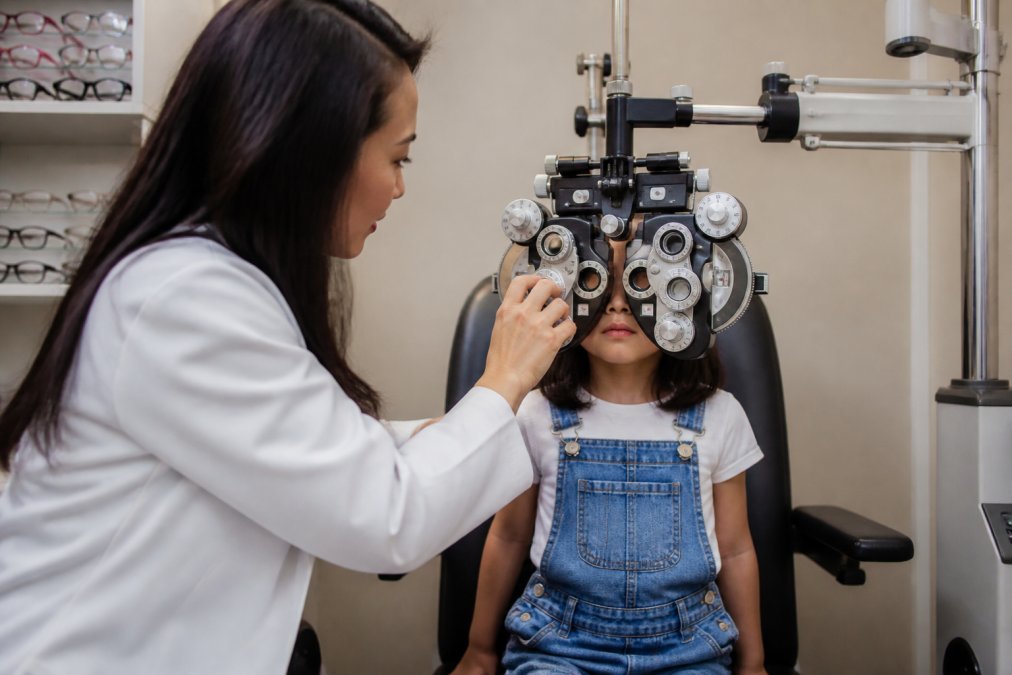
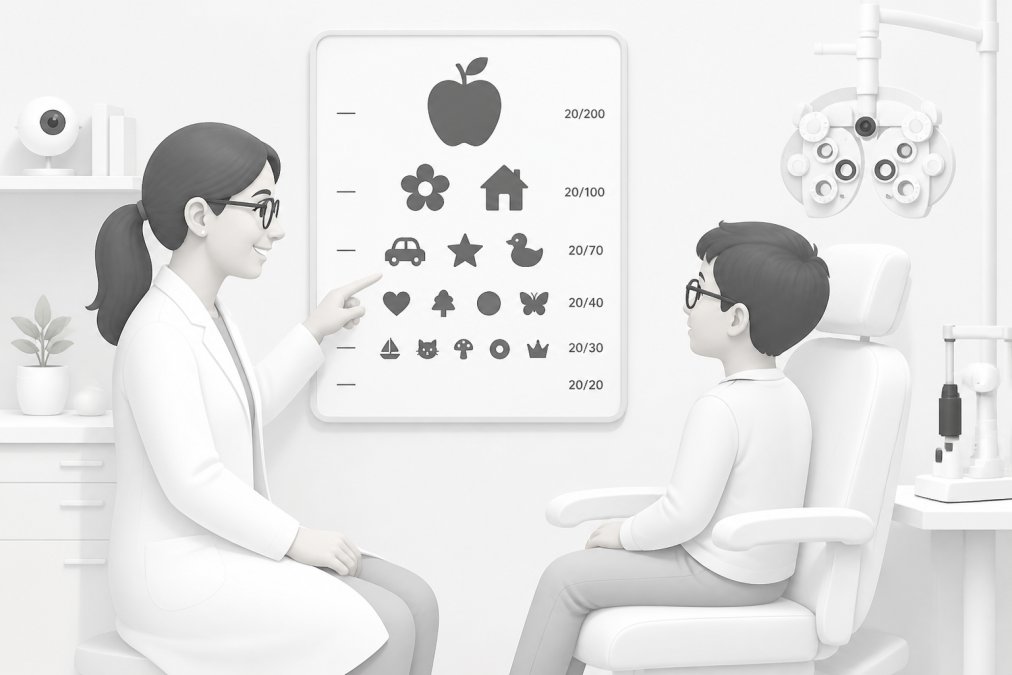
School eye screenings measure distance acuity and basic alignment but do not assess near vision, focusing ability, color vision, peripheral vision, or internal eye health. Many children pass screenings yet have significant vision problems affecting learning and development.
Research shows comprehensive eye exams identify vision problems in 20-30% of school-age children who passed school screenings. Children may have focusing difficulties that don't affect distance acuity, partially compensated hyperopia or astigmatism, or binocular vision problems that screenings never detect.
Wilck Schwartz & Novak OD PC conducts pediatric exams designed to catch these missed cases. We evaluate focusing ability, eye coordination, color vision, and peripheral awareness, ensuring early intervention when problems are most treatable.
Contact Lens Fittings and Hard-to-Fit Cases
Contact lens fitting requires matching lens parameters to each eye's unique shape and visual needs. Hard-to-fit cases include keratoconus, post-LASIK corneas with irregular astigmatism, presbyopia with astigmatism, and severe dry eye. These require specialty lenses and fitting expertise beyond routine dispensing.
Sunsation Eyewear typically handles standard soft lens fits and may refer complex cases elsewhere. Perspective Family practices' depth in hard-to-fit cases varies significantly by provider.
Wilck Schwartz & Novak OD PC treats eye infections, allergies, corneal abrasions, and dry eye syndrome, conditions that often complicate contact lens wear.
Pediatric Eye Care and Children's Vision Development
Children's eyes are developmentally dynamic, still growing and establishing neural pathways that support vision. Pediatric eye care requires understanding developmental milestones and recognizing deviations early.
Amblyopia (lazy eye) develops when one eye sends a blurry or misaligned image, causing the brain to suppress that eye's input. If undetected during the critical developmental window (before age 7-8), amblyopia becomes permanent. School screenings catch obvious strabismus but miss subtle focusing problems and refractive errors that lead to amblyopia.
Uncorrected hyperopia or astigmatism during early childhood can slow reading development. Children don't complain about blurred near vision; they assume everyone sees the same way. Pediatric practices also screen for congenital cataracts, retinoblastoma, optic nerve hypoplasia, and cortical visual impairment, rare but serious conditions requiring early detection.
Sunsation Eyewear is not positioned as a pediatric practice. Perspective Family practices often market pediatric services, but depth varies. Wilck Schwartz & Novak OD PC ensures children have visual resources for normal growth and development through age-appropriate exams, child-friendly equipment, developmental screening, and parent coordination. Our warm office environment helps children feel comfortable, improving cooperation and diagnostic accuracy.
Dry Eye Management and Digital Eye Strain Treatment
Dry eye syndrome ranges from mild temporary dryness to severe ocular surface disease causing pain, vision fluctuation, and light sensitivity. Standard over-the-counter drops provide temporary relief but fail to address underlying causes.
Dry eye has multiple root causes: reduced tear production, poor tear quality, eyelid dysfunction, ocular surface inflammation, and systemic conditions. Meibomian gland dysfunction (blockage of oil-secreting glands) is common and responds poorly to artificial tears alone but improves with warm compress therapy, lid massage, and sometimes in-office treatments like thermal pulsation therapy. Aqueous tear deficiency may respond to topical medications like cyclosporine or lifitegrast.
Digital eye strain, caused by reduced blinking and prolonged near focus during screen work, typically improves with breaks, adjusted screen positioning, and sometimes specialized computer glasses.
Sunsation Eyewear typically offers over-the-counter drop recommendations and perhaps computer glasses. Perspective Family practices may offer more depth depending on individual provider training. Wilck Schwartz & Novak OD PC treats dry eye comprehensively, diagnosing underlying causes using advanced imaging and recommending targeted interventions from lifestyle modifications to in-office procedures. For digital eye strain, we assess workspace ergonomics and provide strain-reduction strategies.
Vision Insurance Accepted by Brooklyn Eye Doctors
Most vision insurance plans cover routine eye exams annually or biennially with copays typically ranging from $10 to $50. Coverage for eyewear varies widely; some plans offer frame allowances while others require out-of-pocket payment. Specialty services may be covered under medical insurance if medically necessary.
Sunsation Eyewear likely accepts major vision insurance plans but may have limited medical insurance relationships. Perspective Family practices typically accept both vision and medical insurance, though coverage specifics depend on contracted networks. Wilck Schwartz & Novak OD PC accepts multiple vision and medical insurance plans. We recommend calling to confirm your specific coverage before your visit and discuss payment options transparently.
How to Choose an Eye Doctor for Your Family
Selecting an eye doctor involves evaluating clinical expertise, equipment quality, patient experience, and practical factors like location and appointment availability.
Evaluating Clinical Expertise and Equipment
Ask potential practices about diagnostic equipment. Advanced practices invest in OCT imaging, visual field testing, corneal topography, and meibography. Inquire about practitioners' credentials and continuing education. Optometrists hold a Doctor of Optometry degree, but post-graduate training varies. Some pursue fellowship training in specialty areas; others attend regular continuing education courses.
Ask about their approach to issues relevant to your family. Their answers reveal whether they have genuine expertise or offer generic services.
Patient Experience and Doctor Attentiveness
A thorough comprehensive exam typically takes 45-60 minutes. If a practice schedules exams in 20-minute slots and consistently runs behind, they're prioritizing volume over depth. Observe whether the doctor listens to your concerns and explains findings clearly. Do they answer questions or rush through? Do they involve children appropriately?
Patient reviews often reveal patterns about wait times, thoroughness, communication clarity, and whether patients felt heard.
Emergency Services and Accessibility
Eye emergencies require same-day or next-day evaluation. Ask whether your potential practice offers emergency appointments or has urgent protocols. Location and appointment availability matter practically; convenient access removes barriers to consistent care.
Wilck Schwartz & Novak OD PC provides emergency services for infections and injuries. We're locally based in Brooklyn, making access straightforward for families in our community. We've served the Brooklyn area since 1964.
Prescription Eyewear Selection and In-House Laboratory Services
Frame Selection and Fashion Options
Sunsation Eyewear's primary strength is frame variety, typically stocking hundreds across multiple price points and styles. If frame selection and fashion are priorities, Sunsation offers genuine advantage.
Perspective Family practices usually carry moderate frame selection. Wilck Schwartz & Novak OD PC offers fashionable frames selected for quality and fit, combined with clinical precision in lens selection.
On-Site Lens Fabrication Benefits
In-house optical laboratories enable faster turnaround for new glasses and easier adjustments. Sunsation Eyewear may have in-house capabilities or outsource fabrication. Perspective Family practices vary in lab capabilities. Wilck Schwartz & Novak OD PC maintains advanced in-house laboratory services, ensuring glasses are fabricated with precision and delivered promptly.
Sunsation Eyewear vs Perspective Family: Making Your Decision
The choice depends on what matters most to your family. If your primary need is fashionable frames for a straightforward prescription with basic eye exams, Sunsation Eyewear delivers convenience and choice. For comprehensive clinical evaluation and broader family services, Perspective Family practices offer greater depth, though quality varies.
For families seeking integration of clinical rigor, advanced technology, pediatric expertise, emergency services, and community commitment, Wilck Schwartz & Novak OD PC combines both approaches. We assess overall eye health with precision, ensure children have visual resources for normal development, diagnose and manage ocular diseases with greater accuracy, and treat infections, allergies, corneal abrasions, and dry eye syndrome. Our commitment to early detection and precise treatment ensures optimal long-term ocular health.
Eye care exists on a spectrum from retail-focused to clinically comprehensive. Where you land should reflect your family's actual vision needs, not just convenience or price.
Frequently Asked Questions
How do professional eye exams catch problems that school screenings miss?
School screenings typically test only distance visual acuity with a basic chart. A comprehensive eye exam includes refraction to measure your exact prescription, assessment of eye alignment and focusing ability, examination of eye structures for disease, and evaluation of how your eyes work together. These additional tests reveal issues like astigmatism, focusing problems, and early signs of eye disease that basic screenings cannot detect. If your child complains of headaches while reading despite normal school results, a full exam can identify focusing or coordination issues affecting near vision.
What makes a contact lens fitting different between practices, and why does it matter?
Contact lens fitting involves measuring corneal curvature, evaluating tear film quality, and testing how different lens materials and designs perform on your eye. Some practices fit only standard lenses from limited manufacturers, while others specialize in hard-to-fit cases using advanced technologies and specialty lens designs. If you've had repeated adjustment visits elsewhere, a practice with expertise in complex fittings can identify underlying issues like dry eye, irregular corneas, or astigmatism that standard lenses cannot address, potentially eliminating the frustration of constant returns.
How does vision insurance work when choosing between eye care providers in Brooklyn?
Vision insurance plans typically cover a percentage of exam and material costs, but coverage varies by plan and provider network status. Some practices participate in specific insurance networks (VSP, EyeMed, etc.), which means your out-of-pocket costs are lower. Before scheduling, verify whether your chosen practice accepts your specific plan and what your copay or coinsurance will be. Ask about coverage limits on frames and contact lenses, as some plans cap annual benefits. A practice's insurance coordinator can help clarify your benefits before your appointment.
What should I expect during a comprehensive eye exam, and how long does it take?
A comprehensive eye exam typically includes visual acuity testing, refraction (determining your prescription), eye pressure measurement, examination of eye structures with specialized equipment, and assessment of how your eyes focus and work together. The optometrist will also ask about your eye health history, current symptoms, and any family history of eye disease. The entire appointment usually takes 45 minutes to an hour. Advanced equipment can provide more detailed imaging of the retina and optic nerve, which takes additional time but provides better early detection of conditions like glaucoma and macular degeneration.
Can dry eye syndrome actually be treated, or do I just manage it with drops?
Dry eye has multiple underlying causes, and treatment depends on the specific cause. Over-the-counter drops provide temporary relief but do not address the root problem. Professional evaluation can identify whether your dry eye stems from insufficient tear production, poor tear quality, eyelid issues, or screen-related strain. Treatment options include prescription eye drops, warm compresses, eyelid massage, dietary adjustments, and in some cases, minor procedures. A practice with expertise in dry eye management can develop a treatment plan tailored to your condition rather than relying solely on temporary symptom relief.
Schedule an appointment with Wilck Schwartz & Novak OD PC today. Whether you're seeking your family's first comprehensive eye exam, managing a complex vision condition, or addressing an eye emergency, we're here to provide the clinical expertise and attentive care your family deserves. Our team has served the Brooklyn area since 1964, and we're committed to ensuring your vision health for generations to come. Call us or visit our website to book your visit.
This article was written using GrandRanker