 comparison
Transition Lenses for Driving: Worth It in 2026?
Table of Contents
- How Transition Lenses Work in Cars
- Why Transition Lenses Don't Darken Behind Your Windshield
- Polarized Sunglasses vs. Transition Lenses for Glare Reduction
- Best Lens Tints for Driving: Comparing Your Options
- Pros and Cons of Transition Lenses for Daily Drivers
- Cost-Benefit Analysis: Are They Worth the Investment?
- Verdict: Should You Switch to Transition Lenses?
- Frequently Asked Questions
Last Updated: August 21, 2026
How Transition Lenses Work in Cars
Transition lenses are photochromic lenses that darken when exposed to ultraviolet light and fade back to clear when UV exposure decreases. Millions of light-reactive molecules embedded in the lens material undergo a chemical transformation when UV rays strike them, causing darkening. Once you move away from the UV source, the molecules revert to their original state and the lens clears again.
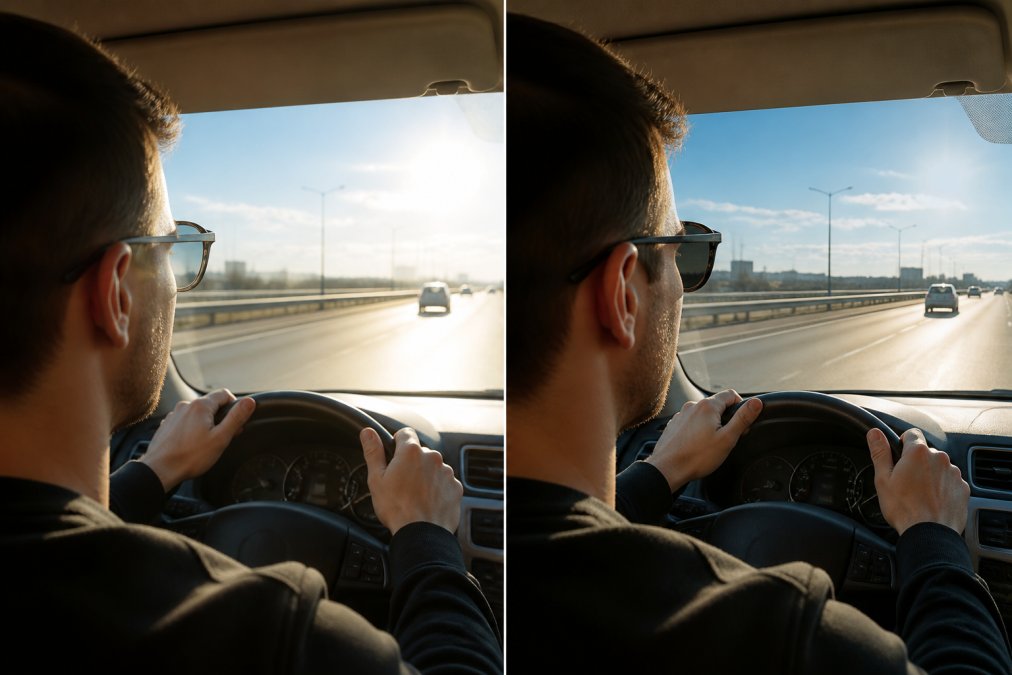
The challenge for transition lenses in cars stems from a fundamental physics principle: automotive windshields already block most UV radiation. Modern windshields are manufactured with built-in UV protection to shield passengers from harmful rays (the CDC). This means the photochromic molecules in your lenses receive minimal UV stimulation while driving, so they stay mostly clear even in bright sunlight. The windshield essentially prevents the lenses from doing their job.
Transitions Signature Gen 8 lenses activate up to 30% faster than previous generations and fade back in less than 5 minutes. However, even with improved speed, these lenses won't darken significantly behind a typical car windshield. If you spend most of your day commuting or making deliveries, standard photochromic lenses may leave you squinting into the sun.
Temperature also affects how quickly transition lenses respond. Cold weather slows the photochromic reaction, while heat accelerates it. On a freezing winter morning, your lenses will darken more slowly than on a hot summer afternoon, even with identical UV exposure.
Why Transition Lenses Don't Darken Behind Your Windshield
Transition lenses don't darken in cars because windshields filter out the ultraviolet radiation that triggers the photochromic response. Automotive glass blocks wavelengths below 380 nanometers, which includes most UVA and all UVB radiation (the FDA). Without sufficient UV exposure, the light-reactive molecules remain inactive.
Laminated safety glass, the standard in all modern vehicles, was designed with UV protection as a primary feature. This protects passengers from sun damage during long drives. The irony is that this same protection prevents your photochromic lenses from functioning as intended. You get UV protection, but you lose the adaptive tinting that makes transition lenses valuable for outdoor use.
Whether it's a sedan with a large windshield or a sports car with a sloped one, the UV-blocking properties of the glass remain essentially the same. The visible light streaming through the windshield can be intense, but visible light alone doesn't trigger photochromic darkening. Only ultraviolet radiation does. This distinction explains why you might feel the need for sunglasses while driving even though your transition lenses appear clear, you're experiencing glare and brightness from visible light, not a failure of the lens technology.
Transitions XTRActive Polarized lenses address this limitation more effectively than standard photochromic options. These lenses darken and activate their polarization even behind a windshield, reducing glare by up to 90% on wet roads and reflective surfaces (peer-reviewed research). This specialized formulation makes them genuinely useful for drivers who spend significant time behind the wheel.
Polarized Sunglasses vs. Transition Lenses for Glare Reduction
When choosing between polarized sunglasses and transition lenses for driving, the key difference lies in how they handle glare. Polarized lenses use a special filter that blocks horizontally-reflected light, the primary source of glare from water, pavement, and metal surfaces. This makes polarized sunglasses exceptionally effective at reducing the specific type of glare drivers encounter most frequently.
Transition lenses rely on darkening to reduce brightness. They don't specifically target glare the way polarization does. A transition lens might reduce overall brightness by 50-70%, but it won't eliminate the blinding reflections from a wet road or the hood of the car ahead of you. For drivers in areas with frequent rain or snow, this distinction becomes critical.
Transitions XTRActive Polarized lenses combine both technologies, offering the best of both worlds for driving-specific needs. They darken behind the windshield and simultaneously apply dynamic polarization, achieving up to 90% glare reduction. This dual approach addresses both the brightness problem and the glare problem simultaneously.
The tradeoff with polarized lenses is that they can sometimes interfere with digital displays. Dashboard screens, GPS units, and other LCD displays may appear darker or show unusual patterns when viewed through polarized lenses.
Standard transition lenses offer versatility that dedicated driving sunglasses don't. You can wear them indoors and outdoors without changing glasses. They provide UV protection even when clear. For someone who needs one pair of glasses for an entire day spanning office work, outdoor errands, and driving, transition lenses eliminate the need to carry multiple pairs.
Best Lens Tints for Driving: Comparing Your Options
Different lens tint colors serve different purposes depending on your typical driving conditions. Gray tints are the most versatile option for general driving. They reduce brightness uniformly across all wavelengths and maintain color accuracy, so traffic lights and road signs appear natural.
Brown and amber tints enhance contrast and depth perception, making them particularly useful in overcast conditions or during dawn and dusk driving. Many drivers find brown tints more comfortable for long highway drives, especially in cloudy weather. Amber tints are even warmer and can be particularly helpful for drivers with light sensitivity.
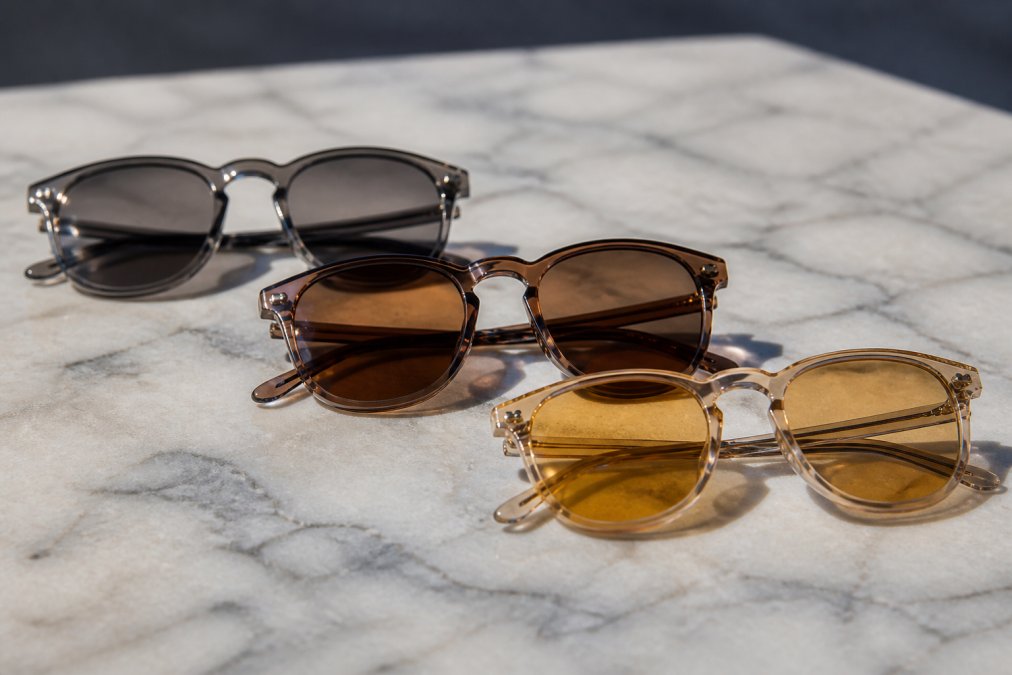
Green tints represent a middle ground between gray and brown, providing good contrast enhancement while maintaining reasonable color fidelity. Transitions Signature Gen 8 comes in seven colors, including traditional gray and brown, plus newer options like graphite green, emerald, and sapphire. ZEISS PhotoFusion X and HOYA Sensity 2 also offer multiple tint choices. professional window tinting.
| Tint Color | Best For | Brightness Reduction | Color Accuracy |
|---|---|---|---|
| Gray | General driving, varied conditions | Uniform across spectrum | Excellent |
| Brown/Amber | Contrast enhancement, overcast conditions | Moderate | Good |
| Green | Balanced contrast and color | Moderate | Good |
| Graphite/Sapphire | Personal preference, fashion | Varies | Varies |
Your tint preference should align with your prescription needs. If you require a strong prescription, the lens material and tint interact in ways that affect both optical clarity and the intensity of the tint. Discussing your specific prescription with an eye care professional ensures you select a tint that works optimally with your correction.
Pros and Cons of Transition Lenses for Daily Drivers
The primary advantage of transition lenses for daily driving is convenience. You wear one pair of glasses for your entire day, commuting, working indoors, running errands, and evening activities. For people who already wear prescription glasses, adding photochromic technology eliminates the need for a separate pair of prescription sunglasses.
Transition lenses provide consistent UV protection throughout the day. Even when clear, they block 100% of UVA and UVB rays. The blue light filtering available in many photochromic formulations adds another layer of protection, particularly relevant for people spending long hours in front of screens. A single pair of glasses versus maintaining multiple pairs appeals to many people from a cost efficiency standpoint.
The significant drawback for drivers is the windshield limitation. Standard transition lenses won't darken adequately behind your car's windshield, leaving you vulnerable to glare and brightness during daytime driving. Many drivers purchase transition lenses expecting them to solve driving-related eye strain and glare problems, only to discover they don't work in the car.
Even specialized driving-focused photochromic lenses like Transitions XTRActive Polarized don't perform perfectly in all situations. Performance varies based on windshield type, vehicle age, and the specific UV-blocking properties of your particular car's glass.
Temperature sensitivity creates another limitation. In cold climates, transition lenses respond more slowly to light changes. During winter driving on a bright day, your lenses might take several minutes to reach full darkness, leaving you temporarily uncomfortable during the transition period.
Cost-Benefit Analysis: Are They Worth the Investment?
Evaluating whether transition lenses justify their cost requires honest assessment of your actual usage patterns. Wilck Schwartz & Novak OD PC can provide specific pricing based on your prescription and lens material choice during a comprehensive eye exam.
For someone who spends most of their day indoors at a desk with occasional outdoor activities, transition lenses provide genuine value. The convenience of not switching glasses, combined with continuous UV protection, justifies the additional cost.
For someone whose primary concern is driving comfort, the cost-benefit calculation shifts dramatically. If you're paying extra for photochromic technology hoping to solve driving glare, you're investing in a feature that won't function as intended behind your windshield. Dedicated polarized sunglasses represent a better value proposition, they cost less and actually solve the driving problem.
For people who drive frequently but also spend significant time indoors, specialized driving-focused photochromic lenses like Transitions XTRActive Polarized offer a middle path. They cost more than standard transition lenses but less than maintaining separate pairs of regular glasses, prescription sunglasses, and driving-specific eyewear.
Quality photochromic lenses last several years with proper care. Most people replace their eyewear every 1-3 years due to prescription changes, fashion preferences, or frame damage rather than lens degradation. Insurance coverage varies significantly, some vision insurance plans cover photochromic lens upgrades partially or fully; others don't cover them at all.
Verdict: Should You Switch to Transition Lenses?
Transition lenses are worth it for daily driving if your lifestyle includes frequent transitions between indoor and outdoor environments and you're willing to accept that they won't fully darken behind your windshield. They excel at providing all-day UV protection and eliminating the inconvenience of carrying multiple pairs of glasses.
Transition lenses are not worth it if your primary motivation is improving your driving experience. The windshield barrier is a fundamental limitation that standard photochromic technology cannot overcome. If driving comfort is your main concern, polarized sunglasses or specialized driving-focused photochromic lenses represent better solutions.
Transitions XTRActive Polarized lenses represent a genuine compromise option. They darken behind the windshield and reduce glare simultaneously, making them suitable for frequent drivers who also want a single pair of glasses for all-day wear.
The decision ultimately depends on your specific daily routine. Ask yourself: Do you spend most of your time indoors or outdoors? How much time do you spend driving? Is glare during driving a significant problem for you? Does the convenience of one pair of glasses appeal to you?
Wilck Schwartz & Novak OD PC can help you evaluate your specific needs during a comprehensive eye exam. The team uses advanced optometric equipment to assess your vision, light sensitivity, and driving requirements. They can discuss which lens options align with your lifestyle and help you understand the realistic performance expectations for different technologies. Schedule an appointment to explore whether transition lenses or alternative solutions best serve your daily needs.
Choosing the right eyewear for your lifestyle requires understanding both the technology and your actual usage patterns. Many drivers discover that their assumptions about how transition lenses work don't match real-world performance behind a windshield. At Wilck Schwartz & Novak OD PC, comprehensive eye exams include detailed discussions about your driving needs, light sensitivity, and lifestyle requirements. The team's advanced optometric equipment ensures precise vision correction, and their expertise in photochromic technology helps you make an informed decision. Schedule an appointment to get personalized guidance on whether transition lenses, polarized options, or specialized driving lenses are right for you.
Frequently Asked Questions
Do transition lenses darken inside a car?
Most standard transition lenses do not darken significantly inside a car because modern windshields block ultraviolet (UV) radiation, which triggers the photochromic reaction. However, specialized driving-focused transition lenses like Transitions XTRActive Polarized are designed to activate behind the windshield by responding to visible light in addition to UV rays. If you spend most of your time driving, a specialized photochromic lens designed for vehicles will perform better than everyday transition lenses.
What is the main downside of transition lenses for driving?
The primary limitation is that standard transition lenses don't darken adequately behind UV-blocking windshields, leaving your eyes exposed to glare and bright sunlight during daytime driving. Additionally, photochromic lenses respond more slowly in warm temperatures and may not reach full darkness in very hot conditions. If glare reduction during driving is your main concern, polarized sunglasses or specialized driving transition lenses offer more reliable protection.
Are transition lenses worth it if I drive daily?
It depends on your priorities. If you want a single pair of glasses for both indoor and outdoor use throughout the day, transition lenses offer convenience. However, if you spend significant time driving and need consistent glare protection, dedicated driving sunglasses or specialized photochromic lenses designed for vehicles (such as Transitions XTRActive Polarized) provide superior performance. Consider a comprehensive eye exam to discuss which option best matches your lifestyle and visual needs.
How do polarized lenses compare to transition lenses for reducing driving glare?
Polarized lenses reduce glare by filtering reflected light from water, snow, and road surfaces, making them excellent for driving in bright conditions. Standard transition lenses provide UV protection but may not darken enough in the car to reduce glare effectively. Transitions XTRActive Polarized combines both technologies, darkening behind the windshield while also polarizing to reduce reflective glare. For pure glare reduction while driving, polarized options are typically more effective than standard photochromic lenses.
This article was written using GrandRanker