 how-to guide
How to Fix Chronic Dry Eyes: 7 Evidence-Based Steps
Table of Contents
- Understanding Chronic Dry Eye Syndrome
- Step 1: Master Your Eyelid Hygiene Routine
- Step 2: Apply Warm Compresses and Unblock Meibomian Glands
- Step 3: Choose the Best Eye Drops for Chronic Dry Eyes
- Step 4: Optimize Your Environment and Screen Habits
- Step 5: Use Natural Remedies for Chronic Dry Eyes
- Chronic Dry Eye Treatment Options: Medical Interventions
- When to See a Doctor for Dry Eyes
How to Fix Chronic Dry Eyes: 7 Evidence-Based Steps
Last Updated: July 19, 2026
Chronic dry eye syndrome affects millions of people. At Wilck Schwartz & Novak OD PC, a locally-owned optometry practice serving Brooklyn since 1964, we've treated countless patients struggling with persistent eye discomfort. The most effective approaches combine multiple strategies tailored to each person's specific situation.
Dry eyes stem from different root causes: some people don't produce enough tears, while others produce tears that evaporate too quickly. This distinction determines which treatments work. Below are seven evidence-based steps that address both symptoms and underlying mechanisms of tear film dysfunction.
Understanding Chronic Dry Eye Syndrome
Chronic dry eye syndrome occurs when your eyes don't produce enough quality tears or your tears evaporate too rapidly. This disrupts the protective tear film that keeps your eyes lubricated and comfortable.
When your tear film breaks down, the corneal surface becomes exposed to irritants and loses its natural protective barrier. This exposure triggers inflammation, which worsens the condition, a vicious cycle that explains why dry eyes often persist without intervention.
There are two primary categories: aqueous deficiency (insufficient tear production) and evaporative dry eye (tears evaporate too quickly due to meibomian gland dysfunction). Many people experience both simultaneously, requiring comprehensive treatment addressing multiple factors.
Digital Eye Strain vs. Chronic Dry Eye: Key Differences
Digital eye strain and chronic dry eye are related but distinct. Digital eye strain occurs when you stare at screens without adequate blinking, reducing tear distribution. It typically improves when you stop screen time.
Chronic dry eye persists regardless of screen use. Your tears lack the right composition or quantity to protect your eyes consistently. People with chronic dry eye experience discomfort during non-screen activities: reading physical books, being outdoors, or resting at home.
The key distinction: digital eye strain is behavioral and temporary; chronic dry eye is physiological and persistent. However, screen time absolutely worsens chronic dry eye.
| Characteristic | Digital Eye Strain | Chronic Dry Eye |
|---|---|---|
| Duration | Temporary (during/after screen use) | Persistent throughout day |
| Root Cause | Reduced blinking frequency | Tear production or composition issues |
| Improves with | Screen breaks, blinking exercises | Medical treatment, lifestyle changes |
| Triggers | Extended screen time | Environmental factors, systemic health |
| Requires | Environmental adjustments | Often requires professional intervention |
Step 1: Master Your Eyelid Hygiene Routine
The foundation of fixing chronic dry eyes is eyelid hygiene. Your meibomian glands, tiny oil-producing glands along your eyelid margins, produce the lipid layer of your tear film. When these glands become blocked or inflamed, your tears evaporate rapidly, creating the burning, gritty sensation characteristic of dry eye syndrome.
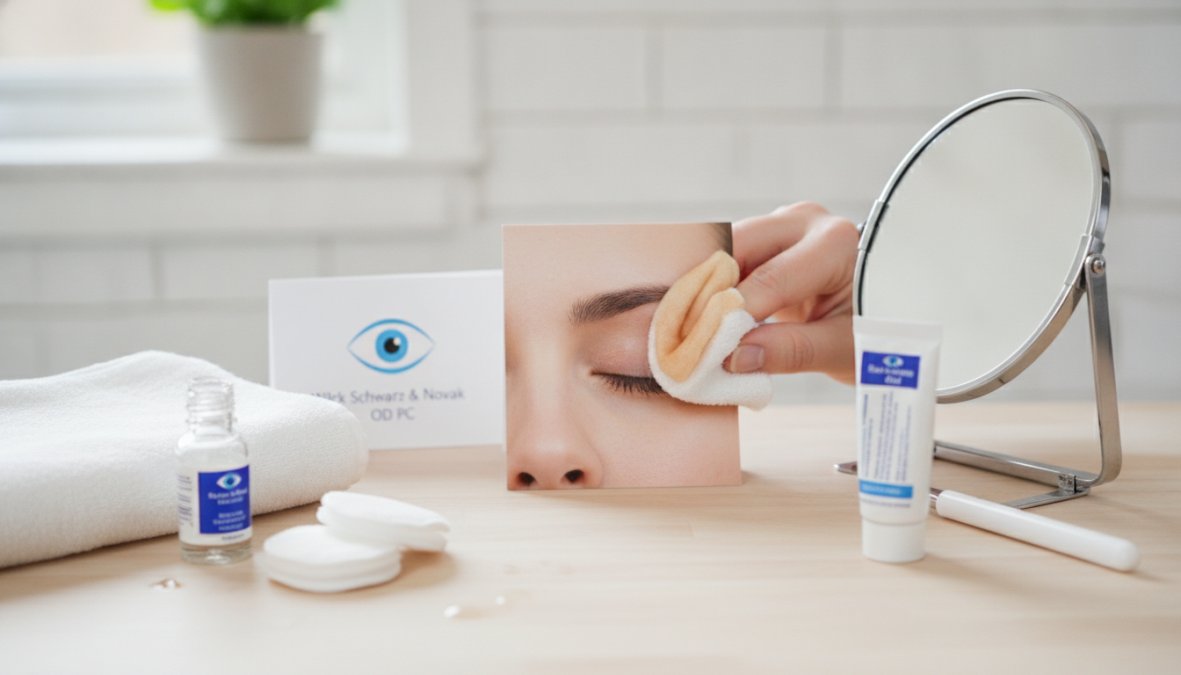
Proper eyelid hygiene unclogs these glands and reduces inflammation. This is the single most important daily habit you can establish.
Step-by-Step Eyelid Hygiene Protocol
Step 1: Prepare warm water (1-2 minutes) Use water around 110°F, warm enough to soften meibum but not so hot it damages delicate eyelid skin.
Step 2: Soak a clean washcloth (1 minute) Use a lint-free, preferably microfiber cloth. Wring out excess water so the cloth is damp but not dripping.
Step 3: Apply the warm compress (5 minutes) Close your eyes gently and rest the warm washcloth against your eyelids for a full five minutes. This duration is necessary for heat to penetrate and soften the meibum inside the glands.
Step 4: Gently massage the eyelid margin (2 minutes) Using your index finger, gently massage along the base of your upper lashes, moving from inner to outer corner. Apply light pressure to encourage drainage, not forceful squeezing. Repeat along the lower lash line.
Step 5: Cleanse the eyelid margin (1 minute) Use a commercial eyelid cleanser or diluted baby shampoo solution (one drop in warm water). Gently wipe along the upper and lower lash lines with a clean cotton swab to remove debris and bacteria.
Step 6: Rinse thoroughly (30 seconds) Rinse your eyelids with clean warm water to remove all cleanser residue.
Frequency: Perform this routine twice daily, morning and evening.
Step 2: Apply Warm Compresses and Unblock Meibomian Glands
Targeted warm compress therapy specifically addresses meibomian gland dysfunction, the most common cause of evaporative dry eye. Heat liquefies thickened meibum, allowing it to flow freely and restore the lipid layer of your tear film.
A dedicated warm compress device (like a Bruder mask) maintains consistent temperature longer than a washcloth, typically retaining heat for 8-10 minutes. Apply once daily for 10-15 minutes, preferably in the evening to clear glands before sleep when tear production naturally decreases.
The mechanism is straightforward: meibomian glands produce lipid-rich secretions that should flow freely, but in dry eye syndrome, these secretions thicken and block gland openings. Heat reduces viscosity, allowing normal drainage.
Step 3: Choose the Best Eye Drops for Chronic Dry Eyes
Not all artificial tears are created equal. The best eye drops depend on whether your primary problem is aqueous deficiency or evaporative dry eye.
For aqueous deficiency, choose drops containing hyaluronic acid or carboxymethylcellulose, which have high water-retention capacity. Apply 4-6 times daily or as needed.
For evaporative dry eye (meibomian gland dysfunction), use drops containing lipids or formulated to minimize evaporation, such as those with mineral oil or castor oil.
Many people benefit from a combination approach: aqueous-replacement drops during the day and lipid-containing drops in the evening.
Preservative-Free vs. Preserved Artificial Tears
This distinction is critical for chronic dry eye management. Preserved drops contain antimicrobial agents that can irritate sensitive eyes with repeated use. If you need drops more than 4-6 times daily, preservatives accumulate and trigger additional inflammation, making dry eye worse.
Preservative-free drops come in single-use vials, eliminating antimicrobial additives. They're more expensive per dose but essential if you have chronic dry eye and need frequent application. Research from the American Academy of Ophthalmology confirms that preservative-free formulations reduce ocular surface toxicity in patients requiring frequent lubrication.
If cost is a barrier, use preserved drops sparingly (3-4 times daily) and supplement with preservative-free drops during peak discomfort. Never use preserved drops more than 6 times daily long-term.
Step 4: Optimize Your Environment and Screen Habits
Your environment directly impacts tear evaporation rate. Indoor heating and air conditioning reduce humidity, accelerating moisture loss from your ocular surface. Extended screen time reduces blinking frequency by 60-70%, further compromising tear distribution.
Environmental optimization won't cure chronic dry eye but significantly reduces symptom severity and prevents flare-ups.
Environmental Optimization Checklist
Humidity management:
- Use a humidifier in your bedroom and workspace (target 40-60% humidity)
- Position yourself away from direct air conditioning vents and heating outlets
- Keep a water bottle nearby and drink consistently
Screen time management:
- Follow the 20-20-20 rule: every 20 minutes, look at something 20 feet away for 20 seconds
- Position your screen 20-26 inches from your eyes and slightly below eye level
- Enable blue light filters on devices
- Set hourly reminders to blink deliberately
Seasonal adjustments:
- Winter: increase humidifier use and reduce time near heating vents
- Summer: wear wraparound sunglasses outdoors to reduce wind exposure
- Windy conditions: wear protective eyewear
Sleep and rest:
- Sleep 7-9 hours nightly (tear production increases during sleep)
- Use a humidifier in your bedroom
- Consider lubricating eye ointment before bed
Step 5: Use Natural Remedies for Chronic Dry Eyes
Natural supplements support the underlying physiology of tear film health. These work best as complementary approaches, not replacements for medical treatment.
Omega-3 Fatty Acids and Flaxseed Oil
Omega-3 fatty acids reduce systemic inflammation and specifically improve meibomian gland function. The lipid composition of meibum depends on adequate omega-3 intake. Studies document that people with chronic dry eye often have deficient omega-3 levels.
Flaxseed oil provides alpha-linolenic acid, which your body converts to EPA and DHA. A typical dose is 1-2 grams daily. Fish oil supplements provide pre-formed EPA and DHA, making them more bioavailable. A dose of 1-2 grams daily of combined EPA/DHA is standard for dry eye management.
Results typically appear after 4-8 weeks of consistent supplementation. This works by slowly improving the lipid composition of your meibum, allowing glands to function more effectively.
Chronic Dry Eye Treatment Options: Medical Interventions
When lifestyle modifications and over-the-counter treatments don't sufficiently control symptoms, prescription medications and advanced therapies address the underlying inflammatory cascade that perpetuates dry eye syndrome.
Prescription Medications and Advanced Therapies
Cyclosporine (Restasis) reduces ocular surface inflammation and increases tear production by suppressing T-cell activation in the lacrimal gland. It requires 2-3 months of consistent use before effects appear and must be used twice daily indefinitely.
Lifitegrast (Xiidra) is a lymphocyte function-associated antigen-1 antagonist that reduces inflammation at the cellular level. Many patients tolerate it better than cyclosporine and see results within 2-4 weeks. It's dosed twice daily.
Corticosteroid drops (like loteprednol) reduce acute inflammation rapidly but shouldn't be used long-term. They're typically used for 2-4 weeks during flare-ups.
Meibomian gland expression is an in-office procedure where controlled pressure mechanically expresses blocked meibum, providing immediate relief but requiring periodic repetition every 3-6 months.
Intense pulsed light (IPL) therapy uses targeted light energy to reduce inflammation and improve meibomian gland function. Multiple sessions (typically 4-6) spaced 2-4 weeks apart produce cumulative benefits lasting 6-12 months.
At Wilck Schwartz & Novak OD PC, we assess which intervention matches each patient's specific dry eye type and severity. The decision depends on your symptoms, tear production measurements, and meibomian gland imaging.
When to See a Doctor for Dry Eyes
Persistent dry eye symptoms lasting more than two weeks warrant professional evaluation. Several red flags indicate you should seek care immediately.
Seek immediate care if you experience:
- Severe pain or light sensitivity (suggests corneal involvement)
- Visible discharge or crusting (indicates infection)
- Recent eye trauma or chemical exposure
- Vision changes that don't improve with blinking
- Redness that worsens despite artificial tears
Schedule an appointment within 1-2 weeks if you have:
- Persistent dryness despite over-the-counter drops
- Symptoms worsening despite environmental optimization
- Dry eye accompanied by dry mouth or joint pain (suggests autoimmune condition like Sjögren's syndrome)
- Recent medication changes (many drugs cause dry eye)
- Symptoms following LASIK or other eye surgery
Professional evaluation includes tear production testing (Schirmer test), tear film analysis, and meibomian gland imaging. These measurements determine whether you have aqueous deficiency, evaporative dry eye, or both, critical information for treatment selection.
The National Eye Institute provides comprehensive information on dry eye diagnosis and treatment. Their clinical guidelines emphasize that chronic dry eye requires individualized assessment.
Wilck Schwartz & Novak OD PC uses advanced optometric equipment to diagnose and manage ocular surface disease with greater precision than standard eye exams. If you've tried over-the-counter treatments without improvement, professional assessment identifies what's driving your symptoms and guides targeted intervention.
Chronic dry eye is treatable, but the approach must match your specific condition. If you've tried artificial tears without lasting relief, the problem likely isn't tear quantity alone, it's tear composition, meibomian gland function, or underlying inflammation. Schedule an appointment with Wilck Schwartz & Novak OD PC to get a comprehensive evaluation using advanced diagnostic equipment and develop a personalized treatment plan. Our team has served the Brooklyn community since 1964, committed to restoring your ocular comfort through evidence-based care.
Frequently Asked Questions
What is the best treatment for chronic dry eyes?
The best approach combines multiple strategies tailored to your specific cause. Most people benefit from warm compresses and eyelid hygiene to unblock meibomian glands, preservative-free artificial tears for lubrication, and lifestyle adjustments to reduce tear evaporation. For persistent cases, prescription medications like cyclosporine or lifitegrast may be recommended by an eye doctor. A comprehensive exam determines whether your dry eye is aqueous deficiency, evaporative, or both, this guides treatment selection.
Can chronic dry eyes be cured permanently?
Chronic dry eye is typically a long-term condition requiring ongoing management rather than a permanent cure. However, many people achieve significant relief and symptom control through consistent eyelid hygiene, environmental adjustments, and appropriate eye drops. Addressing underlying causes, such as managing blepharitis or reducing screen time, can prevent flare-ups. Work with an ophthalmologist or optometrist to develop a maintenance plan that keeps your ocular surface healthy long-term.
Are there natural remedies for chronic dry eyes that actually work?
Yes. Omega-3 fatty acids (found in flaxseed oil and fish oil) support tear film stability and reduce inflammation. Staying hydrated, using a humidifier, and taking regular breaks from screens help prevent tear evaporation. Warm compresses naturally stimulate meibomian gland secretion. While natural remedies work best as part of a comprehensive plan, not alone, they address root causes of dry eye and have clinical support. Combine them with proper artificial tears and eyelid hygiene for best results.
When should I see an eye doctor for dry eyes, and what should I expect?
Schedule an appointment if dry eye symptoms persist beyond two weeks despite self-care, or if you experience pain, redness, blurred vision, or light sensitivity. An optometrist or ophthalmologist will assess tear production, evaluate your tear film, check for blepharitis or MGD, and examine your corneal surface. They may recommend preservative-free drops, prescription medications, or advanced therapies. Early diagnosis prevents complications and ensures you receive the right chronic dry eye treatment options for your specific condition.
This article was written using GrandRanker