 how-to guide
Why Contacts Feel Uncomfortable: 7 Causes & Solutions
Table of Contents
- Why Contacts Feel Uncomfortable: Common Causes Explained
- Contact Lens Discomfort Symptoms: How to Recognize the Problem
- How to Make Contact Lenses More Comfortable: Practical Steps
- Dry Eyes With Contact Lenses Solutions: Effective Remedies
- Best Contact Lenses for Sensitive Eyes: Material Comparison
- Environmental Factors and Allergic Reactions: What to Watch For
- When to See an Eye Doctor About Contact Lens Discomfort
- Troubleshooting Checklist: Identify Your Contact Lens Problem
Last Updated: July 27, 2026
Understanding why contacts feel uncomfortable is essential for anyone who wears them. Contact lens discomfort is one of the leading reasons people stop wearing lenses or switch to glasses. The good news is that most discomfort is preventable or treatable once you understand what's causing it. At Wilck Schwartz & Novak OD PC, we help patients identify the root causes of their lens discomfort and find practical solutions that work.
Why Contacts Feel Uncomfortable: Common Causes Explained
Contact lens discomfort typically falls into a few distinct categories: environmental factors, hygiene issues, fit problems, and underlying eye health conditions. Each cause produces different symptoms and requires a different approach to fix.
Dry Eye Syndrome and Contact Lenses
Dry eye syndrome is the single most common reason contacts feel uncomfortable. When your tear film breaks down, contact lenses sit on a drier surface and create friction, producing the scratchy, burning sensation many people describe. Air conditioning, heating systems, low humidity, reduced blinking during screen time, and dehydration all contribute to dry eye.
Contacts feel uncomfortable with dry eye because the lens absorbs moisture from your tear film. Silicone hydrogel lenses allow more oxygen through, but they can still exacerbate dryness.
Improper Lens Fit and Prescription Issues
Contacts that don't fit your eye correctly will feel uncomfortable no matter what else you do. A lens that's too tight restricts oxygen flow; a lens that's too loose moves around excessively. Even slight prescription errors cause eye muscle fatigue and discomfort, especially with astigmatism corrections.
Your optometrist measures your corneal curvature using keratometry, checks tear film quality, and evaluates how the lens sits on your eye. If you've experienced persistent discomfort, a professional refitting often solves the problem completely.
Hygiene and Cleaning Routine Mistakes
Reusing solution in your lens case instead of emptying it daily allows bacteria, proteins, and debris to accumulate. Never use tap water to rinse contacts or cases, it contains microorganisms that cause serious infections. Sleeping in daily disposable lenses and touching contacts with dirty fingers also cause discomfort and infection risk.
Wash your hands thoroughly with soap and dry them with a lint-free towel before handling lenses. Replace your lens case every three months, as cases harbor bacteria even with proper cleaning.
Contact Lens Discomfort Symptoms: How to Recognize the Problem
Identifying what type of discomfort you're experiencing helps narrow down the cause.
Foreign Body Sensation and Redness
Foreign body sensation, the feeling that something is stuck in your eye, indicates either a lens fit problem, debris under the lens, or corneal irritation. Redness accompanying this sensation suggests inflammation from irritation or infection. If redness appears suddenly and persists after removing your contacts, this signals a potential problem requiring professional attention.
The cornea has no blood vessels, so redness comes from blood vessels in the conjunctiva and sclera surrounding the cornea. Continuing to wear uncomfortable lenses when redness is present can lead to corneal abrasion or more serious complications.
Blurred Vision and Light Sensitivity
Blurred vision while wearing contacts can stem from incorrect prescription, lens deposits, dry eye, or corneal swelling from overwear. If vision blurs gradually throughout the day, dry eye is likely the culprit. Light sensitivity paired with discomfort suggests corneal irritation or inflammation.
Blurred vision can also indicate that your lens has shifted on your eye. Blinking firmly or applying rewetting drops often corrects this temporarily, but it's a sign you need a refitting.
How to Make Contact Lenses More Comfortable: Practical Steps
Optimize Your Cleaning and Storage Routine
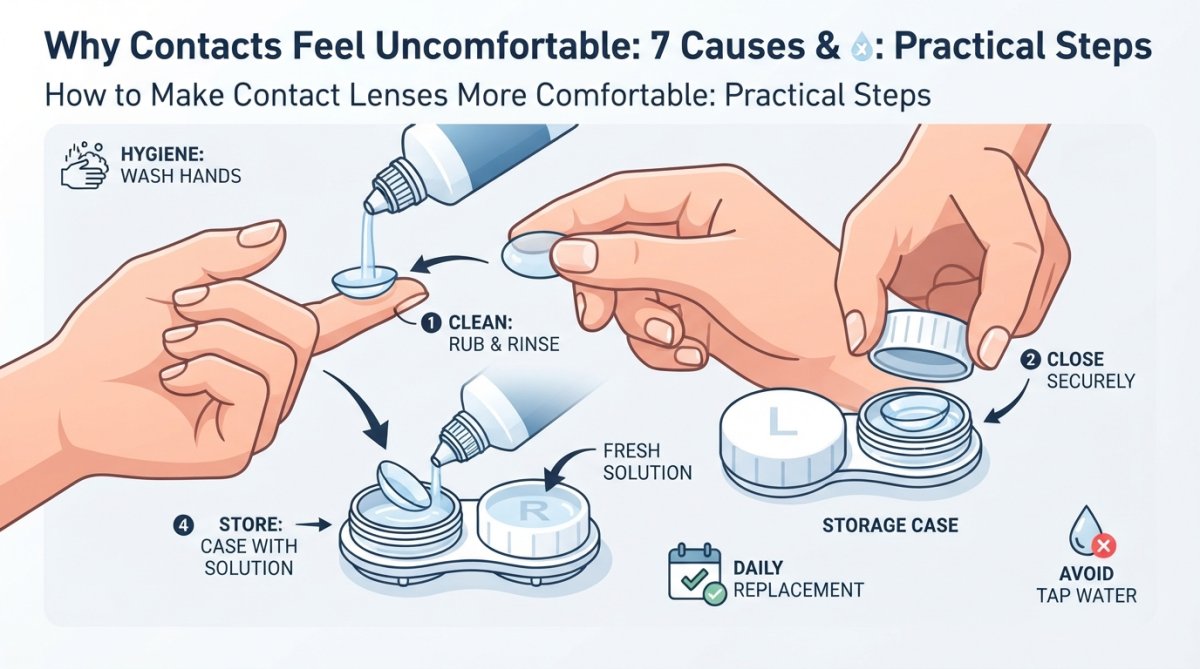
Empty your lens case every single night and never reuse solution. Rinse the case itself with fresh solution, not tap water, and allow it to air dry. When cleaning your lenses, rub them gently between your fingertips for 20-30 seconds on each side using fresh multi-purpose solution, this mechanical action removes accumulated proteins and lipids.
Replace your lens case every three months. Even with perfect care, cases develop microscopic scratches that harbor bacteria. Choose a multi-purpose solution that matches your lens material, as using the wrong solution can cause deposits to form and increase discomfort.
Adjust Your Blinking and Screen Habits
Conscious blinking is one of the easiest ways to improve contact lens comfort immediately. Most people blink 15-20 times per minute, but this drops to 5-8 times when concentrating on screens. Each blink spreads fresh tear film across your eye and under your lens, reducing dryness.
Set a timer to remind yourself to blink deliberately every few minutes during screen work. A full blink means closing your eyes completely for a full second. Take regular breaks from screen time using the 20-20-20 rule: every 20 minutes, look at something 20 feet away for 20 seconds.
Stay hydrated by drinking water throughout the day. Dehydration reduces tear production, making dry eye worse. Most people need 8-10 glasses of water daily, and those wearing contacts should aim for the higher end.
Dry Eyes With Contact Lenses Solutions: Effective Remedies
Saline Solutions and Multi-Purpose Solutions
Rewetting drops designed specifically for contact lens wearers provide immediate relief from dry eye discomfort. These drops are formulated to work with contact lenses and don't damage the lens material. Apply rewetting drops while wearing your lenses whenever your eyes feel dry.
Multi-purpose solutions serve double duty: they clean your lenses and provide a storage medium. Quality multi-purpose solutions contain conditioning agents that keep lenses from drying out. Some formulations include hyaluronic acid or other moisture-retaining ingredients that reduce discomfort throughout the day. Using the same solution brand throughout your routine prevents chemical reactions that can irritate your eyes.
Lens Material and Oxygen Permeability
Silicone hydrogel lenses allow more oxygen to reach your cornea compared to traditional hydrogel lenses. More oxygen means your cornea stays healthier and more comfortable, especially during extended wear. However, silicone hydrogel lenses can be more prone to protein deposits if not cleaned properly.
Some newer silicone hydrogel formulations include wetting agents that reduce dryness throughout the day. These premium lenses cost more but provide noticeably better comfort for people with chronic dry eye. Oxygen permeability is measured in Dk/t values, look for lenses with Dk/t values above 100 if you have dry eye issues.
Best Contact Lenses for Sensitive Eyes: Material Comparison
Silicone Hydrogel vs. Traditional Hydrogel Lenses
Silicone hydrogel lenses transmit five times more oxygen than traditional hydrogel lenses, allowing your cornea to breathe even during extended wear. This improved oxygen flow reduces irritation, redness, and discomfort that accumulates throughout the day. Traditional hydrogel lenses feel softer initially but allow less oxygen through, meaning your cornea becomes increasingly irritated as you wear them longer.
For sensitive eyes, silicone hydrogel is almost always the recommendation. If you wear lenses for 8+ hours daily, silicone hydrogel is the better choice. While more expensive, the improved comfort justifies the higher price for most regular wearers.
Daily Disposables vs. Extended Wear Options
Daily disposable lenses eliminate the need for cleaning and storage, you insert a fresh lens each day and discard it that evening. Because you start with a fresh, clean lens every day, protein deposits and bacteria never accumulate. This removes the main source of discomfort for many people.
The downside is cost. Daily disposables are significantly more expensive than monthly or biweekly lenses when calculated per wear. However, for people with sensitive eyes or chronic discomfort, the comfort improvement justifies the cost. Many people find that switching to daily disposables eliminates their contact lens discomfort entirely.
| Lens Type | Comfort Level | Cost | Best For | Maintenance |
|---|---|---|---|---|
| Daily Disposables | Highest | Higher | Sensitive eyes, busy schedules | None |
| Silicone Hydrogel Monthly | High | Moderate | Regular wearers, dry eye | Daily cleaning required |
| Traditional Hydrogel Monthly | Moderate | Lower | Occasional wearers | Daily cleaning required |
| Extended Wear Silicone | High | Moderate | Overnight wear needs | Rigorous cleaning essential |
Environmental Factors and Allergic Reactions: What to Watch For
Air conditioning and heating systems create dry environments that increase tear evaporation. Indoor humidity often drops to 20-30% in winter or heavily air-conditioned spaces. Pollen, dust, and other airborne particles get trapped under your contact lens, creating foreign body sensation. During high pollen seasons, many contact lens wearers experience increased discomfort.
Allergic reactions to lens solution or lens material cause itching, redness, and discomfort that feels similar to dry eye but doesn't improve with rewetting drops. If your discomfort is accompanied by itching and worsens over time, an allergic reaction may be the culprit. Switching to a different solution brand or lens material often resolves the problem.
Wind and sun exposure also increase tear evaporation and discomfort. Sunglasses help protect your eyes and reduce evaporation, making outdoor wear more comfortable.
When to See an Eye Doctor About Contact Lens Discomfort
Most contact lens discomfort improves with the adjustments and remedies covered above. However, certain symptoms indicate you need professional evaluation immediately.
Signs of Corneal Damage, Infection, and Serious Issues
Seek immediate eye care if you experience sudden pain, significant redness, discharge, or vision loss while wearing contacts. These symptoms suggest corneal abrasion, corneal ulcer, or serious infection. A corneal ulcer can lead to permanent vision loss if untreated.
Persistent redness that doesn't improve after removing your contacts for a full day indicates inflammation or infection requiring treatment. Discharge, especially if it's yellow or green, suggests bacterial infection. Pain that feels sharp or deep in your eye is different from surface discomfort and requires professional evaluation.
Light sensitivity combined with pain and redness is a red flag for corneal damage. Your cornea heals slowly, so damage compounds quickly. Early treatment prevents serious complications.
If you've tried all the remedies above and still experience discomfort after two weeks, schedule an appointment. Your lens fit may need adjustment, your prescription may have changed, or an underlying eye condition may require treatment.
Troubleshooting Checklist: Identify Your Contact Lens Problem
| Problem | Possible Causes | First Step to Try | When to See Doctor |
|---|---|---|---|
| Dry, scratchy feeling | Dry eye, low humidity, reduced blinking | Use rewetting drops, increase water intake, take screen breaks | If persists after 1 week of adjustments |
| Foreign body sensation | Lens fit, debris, protein deposits | Remove lens, rinse thoroughly, reinsert; check for damage | If sensation continues after reinsertion |
| Blurred vision | Dry eye, deposits, incorrect prescription | Apply rewetting drops, ensure lens is clean | If vision doesn't clear or worsens |
| Redness and irritation | Dirty lens, solution reaction, infection | Clean lens thoroughly, try different solution | If redness persists after 24 hours |
| Pain or sharp discomfort | Corneal damage, infection, poor fit | Remove lens immediately, don't reinsert | Immediately, don't delay |
| Itching and watering | Allergic reaction, pollen, solution sensitivity | Switch to different solution, wear glasses temporarily | If symptoms persist after 3 days |
| Lens moves around constantly | Poor fit, low tear volume | Contact optometrist for refitting | Schedule appointment soon |
| Discomfort increases throughout day | Protein deposits, dehydration, dry eye | Clean lens more thoroughly, drink more water | If problem continues after adjustments |
Start with your primary symptom and follow the recommended first step. Wait 24-48 hours to see if the problem improves. If it doesn't, schedule an appointment. Many people assume they need a new prescription when the real problem is something simple like dirty lenses or dehydration.
Contact lens discomfort doesn't have to be permanent. Most cases resolve with proper cleaning, environmental adjustments, and the right lens choice. However, persistent discomfort that doesn't improve after trying these solutions indicates you need professional evaluation. At Wilck Schwartz & Novak OD PC, we specialize in diagnosing and treating contact lens problems that other practitioners miss. Our advanced optometric equipment allows precise lens fitting and tear film analysis, ensuring you get lenses that actually work for your eyes. Schedule an appointment with our Brooklyn optometry practice and discover the difference a proper fitting makes. We've been serving the Brooklyn area since 1964, and our commitment to precision treatment means you'll leave with contacts that feel comfortable all day long.
Frequently Asked Questions
What are the most common reasons why contacts feel uncomfortable?
Contact lens discomfort often stems from dry eye syndrome, improper lens fit, inadequate hygiene practices, or environmental irritants like dust and pollen. Protein deposits on the lens surface, incorrect base curve or lens diameter, and extended wear periods without proper breaks also contribute significantly. If your contacts consistently feel uncomfortable, these factors should be evaluated by an optometrist to pinpoint the exact cause.
Can dry eyes with contact lenses solutions really help, or do I need to switch lens types?
Dry eyes with contact lenses solutions like rewetting drops and multi-purpose solutions can provide immediate relief and improve comfort. However, the underlying cause matters. If dry eye syndrome persists, switching to silicone hydrogel lenses, which offer higher oxygen permeability, or using daily disposables may help. Saline solutions work well for gentle rinsing, while multi-purpose solutions offer deeper cleaning. Consult an optometrist to determine if your tear film quality requires a lens material change.
How do I know if my contact lens discomfort symptoms indicate a serious eye problem?
Seek immediate eye care if you experience persistent redness, severe pain, blurred vision, light sensitivity, or foreign body sensation that doesn't improve with rewetting drops. These may signal corneal abrasion, corneal ulcer, or conjunctivitis. Moderate discomfort from improper fit or dry eye typically improves with adjustments and proper hygiene, but sharp pain, discharge, or vision changes warrant a prompt visit to your optometrist or ophthalmologist.
Are there best contact lenses for sensitive eyes that won't cause discomfort?
Yes, silicone hydrogel lenses are among the best contact lenses for sensitive eyes due to their high oxygen permeability, which reduces irritation and protein deposits. Daily disposables also minimize discomfort by eliminating overnight buildup and reducing allergic reactions. Extended wear lenses may trap more allergens and proteins, worsening sensitivity. Your optometrist can recommend the best lens type based on your tear film quality, sensitivity triggers, and lifestyle needs.
This article was written using GrandRanker