 how-to guide
How to Treat Meibomian Gland Dysfunction: 7 Proven Methods
Table of Contents
- Understanding Meibomian Gland Dysfunction: What You Need to Know
- Recognizing Meibomian Gland Dysfunction Symptoms Early
- At-Home Remedies for Meibomian Gland Dysfunction: Your First Line of Defense
- Best Eye Drops for Meibomian Gland Dysfunction Treatment
- Medical and In-Office Treatments: When to See a Specialist
- MGD's Hidden Impact: Mental Health and Quality of Life
- MGD in Specific Populations: Contact Lens Wearers and Screen-Heavy Professionals
- Common Mistakes to Avoid When Treating Meibomian Gland Dysfunction
How to Treat Meibomian Gland Dysfunction: 7 Proven Methods
Last Updated: July 23, 2026
Meibomian gland dysfunction (MGD) affects millions of Americans, yet many don't realize their chronic eye discomfort stems from these tiny oil-producing glands along the eyelid margin. If standard artificial tears haven't helped, understanding how to treat MGD becomes essential. At Wilck Schwartz & Novak OD PC, we've diagnosed and managed countless MGD patients using at-home strategies and advanced clinical interventions. Below are seven proven treatment approaches, from daily practices to modern in-office therapies that restore comfort and clear vision.
Understanding Meibomian Gland Dysfunction: What You Need to Know
What Happens When Meibomian Glands Fail
Your meibomian glands produce meibum, the lipid-rich oil that forms the outermost layer of your tear film. When these glands become clogged or inflamed, meibum production drops or stops. The result is evaporative dry eye, where tears evaporate too quickly, leaving the cornea exposed and irritated.
The problem isn't usually a lack of tears, it's the deteriorating lipid layer that normally seals moisture against your eye. Without adequate meibum, even normal tear volume can't protect your eyes. This explains why standard artificial tears often fail for MGD patients; the underlying gland obstruction must be addressed directly.
Meibomian gland atrophy, permanent shrinkage of gland tissue, can occur if MGD goes untreated for years. Early intervention prevents this irreversible damage and preserves your eyes' natural ability to produce protective oils.
Recognizing Meibomian Gland Dysfunction Symptoms Early
MGD presents with a gritty or sandy sensation, as though particles are trapped under your eyelids. Redness around the eye margin is common, especially after prolonged screen time. Many people report burning, itching, or eyelid heaviness.
Blurry vision that fluctuates throughout the day is a hallmark sign, your vision may seem clear one moment and hazy the next, reflecting the unstable tear film caused by inadequate lipid coverage. Some patients notice symptoms worsen in the morning or evening after reduced blinking.
Blepharitis, inflammation of the eyelid margin, often accompanies MGD. You may see redness, crusty deposits, or swelling along the lid edge. Styes and chalazia can develop when inflamed meibomian glands become secondarily infected or blocked.
Early recognition matters because treatment is most effective before gland tissue atrophies. If you've experienced these symptoms for more than a few weeks, schedule an eye exam with an optometrist or ophthalmologist.
At-Home Remedies for Meibomian Gland Dysfunction: Your First Line of Defense
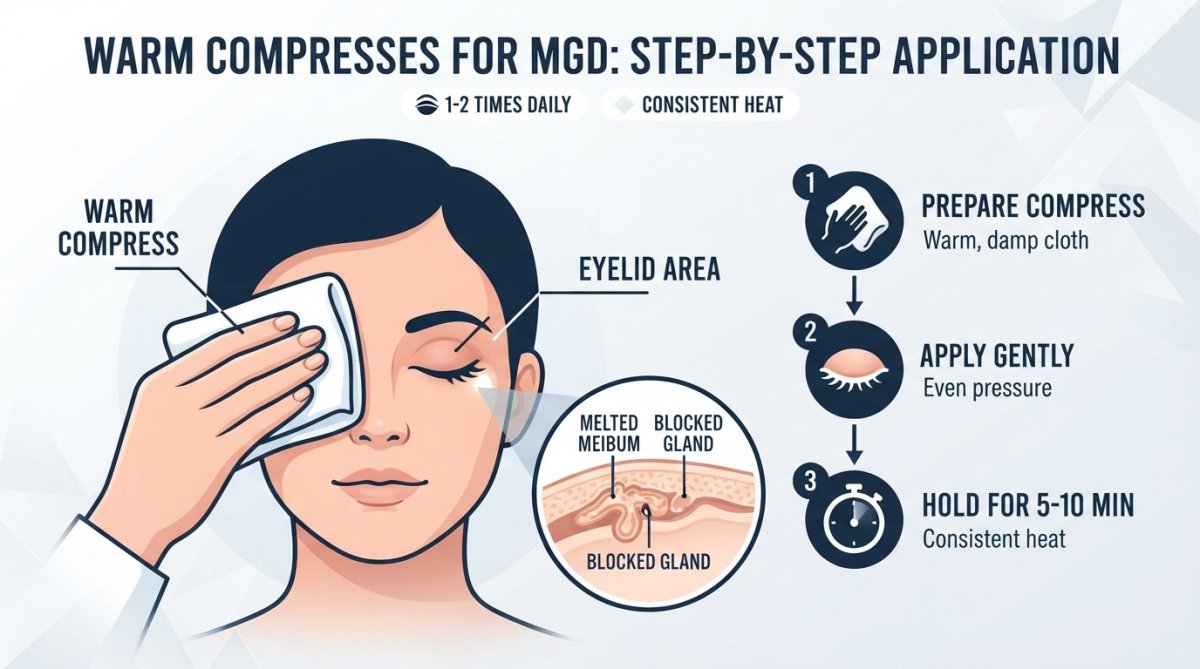
Warm Compresses for MGD: Step-by-Step Application
Warm compresses are the cornerstone of at-home MGD treatment because heat softens meibum, making it easier for glands to secrete oils naturally.
Step 1: Prepare Your Compress (2 minutes) Fill a clean bowl with warm water, approximately 110°F (43°C). Submerge a clean washcloth and let it absorb fully. Wring out excess water so the cloth is damp but not dripping.
Step 2: Apply to Your Eyelids (10 minutes) Close your eyes and place the warm cloth gently over both eyelids. Rest your head back so the compress stays in place without requiring hand pressure. If the cloth cools before 10 minutes, rewarm it and reapply.
Step 3: Gentle Lid Massage (2-3 minutes) After heat softens the meibum, perform gentle massage. With eyes closed, use your index finger to apply light pressure along the upper eyelid margin, moving from inner to outer corner. Repeat 5-10 times, then do the same on the lower lid.
Step 4: Frequency and Duration Apply warm compresses twice daily, morning and evening. Consistency matters more than intensity. Many patients see noticeable improvement within 2-4 weeks.
:::pro-tip Use a reusable compress designed specifically for MGD, like a microwaveable eye mask. These maintain consistent temperature longer than washcloths and fit the eyelid contour better. :::
Eyelid Hygiene and Gentle Lid Scrubs
Blepharitis frequently coexists with MGD. Proper lid scrubs remove debris, crusts, and biofilm from the lid margin without damaging eyelid tissue.
Use a commercial lid cleanser formulated for sensitive eyes, or mix warm water with a tiny amount of baby shampoo. Soak a clean washcloth in this solution. Close your eyes and gently rub the cloth along the eyelid margin using horizontal motions. Spend about 30 seconds on each eyelid, then rinse thoroughly.
Perform lid scrubs once daily, preferably in the evening. Many patients find that combining warm compresses with daily lid hygiene produces faster improvement than either approach alone.
Lifestyle Adjustments to Support Gland Health
Screen time is a major MGD trigger because people blink 66% less when focused on digital devices. Implement the 20-20-20 rule: every 20 minutes of screen work, look at something 20 feet away for 20 seconds.
Humidity matters significantly. Dry indoor environments accelerate tear evaporation. Use a humidifier to maintain indoor humidity between 40-50%.
Dietary omega-3 supplementation supports meibum quality. Research suggests omega-3 fatty acids improve lipid composition in tears. Fatty fish like salmon and sardines are excellent sources.
Contact lens wear can worsen MGD by disrupting the tear film. If you have MGD, ask your eye care provider about switching to daily disposable lenses or temporarily discontinuing wear until symptoms improve.
Best Eye Drops for Meibomian Gland Dysfunction Treatment
Artificial Tears and Lubricating Drops
Not all artificial tears are created equal for MGD. Standard artificial tears provide temporary lubrication but don't address the underlying lipid deficiency.
Lipid-based artificial tears contain oils that supplement the missing meibum layer. These work best after warm compresses, when your own meibum production is highest. Apply 2-4 times daily or as needed.
Hyaluronic acid drops hold water in the tear film and provide longer-lasting lubrication. Many patients tolerate these well and experience sustained comfort for several hours per application.
Avoid drops containing vasoconstrictors, which can worsen dry eye over time. Stick with preservative-free formulations when possible.
Prescription Medications: Antibiotics and Steroids
When inflammation is significant or bacterial overgrowth is suspected, your eye care provider may prescribe topical antibiotics. Azithromycin is commonly used because it has both antibiotic and anti-inflammatory properties. Typical dosing is twice daily for 3 months.
Doxycycline, an oral antibiotic, is prescribed for moderate to severe MGD with blepharitis. At sub-antimicrobial doses (50-100 mg daily), it acts primarily as an anti-inflammatory. Many patients see improvement within 4-6 weeks.
Topical corticosteroid drops reduce acute inflammation and provide rapid symptom relief. However, use steroids short-term (2-4 weeks) under close supervision, as prolonged use increases intraocular pressure risk.
Cyclosporine A (Restasis) is an immunosuppressant drop that reduces T-cell-mediated inflammation. It requires consistent twice-daily use for 3-6 months before full benefits appear.
Medical and In-Office Treatments: When to See a Specialist
Thermal Pulsation Therapy and LipiFlow
When home remedies and topical treatments don't provide adequate relief, thermal pulsation therapy offers a more aggressive approach. LipiFlow applies controlled heat (108°F / 42°C) to the inner eyelid while delivering gentle pulsatile pressure. This combination softens hardened meibum and physically expresses it from obstructed glands.
The procedure takes about 12 minutes per eye and is performed in an outpatient clinic. You remain awake, and discomfort is minimal. Results typically appear within 1-2 weeks and peak around 4 weeks post-treatment. Many patients experience 3-6 months of improved comfort before symptoms gradually return.
The primary advantage is that a single 12-minute treatment delivers more intensive meibum expression than most people achieve with months of home care.
Intense Pulsed Light (IPL) Therapy
IPL therapy uses broad-spectrum light energy to reduce inflammation and improve meibomian gland function. The light heats the meibomian glands, softening meibum and stimulating gland secretion while reducing bacterial load.
Treatment involves 3-4 sessions spaced 2-4 weeks apart. Each session lasts 15-20 minutes and targets the lower eyelid and periocular area. Most patients tolerate it well, with mild redness resolving within hours.
IPL effectiveness is supported by clinical research showing sustained improvement in tear break-up time and meibomian gland morphology. Some studies suggest IPL may be more effective than LipiFlow for patients with severe gland atrophy. The advantage is that it addresses both gland obstruction and the inflammatory cascade that damages gland tissue.
Gland Expression and Meibography Diagnostics
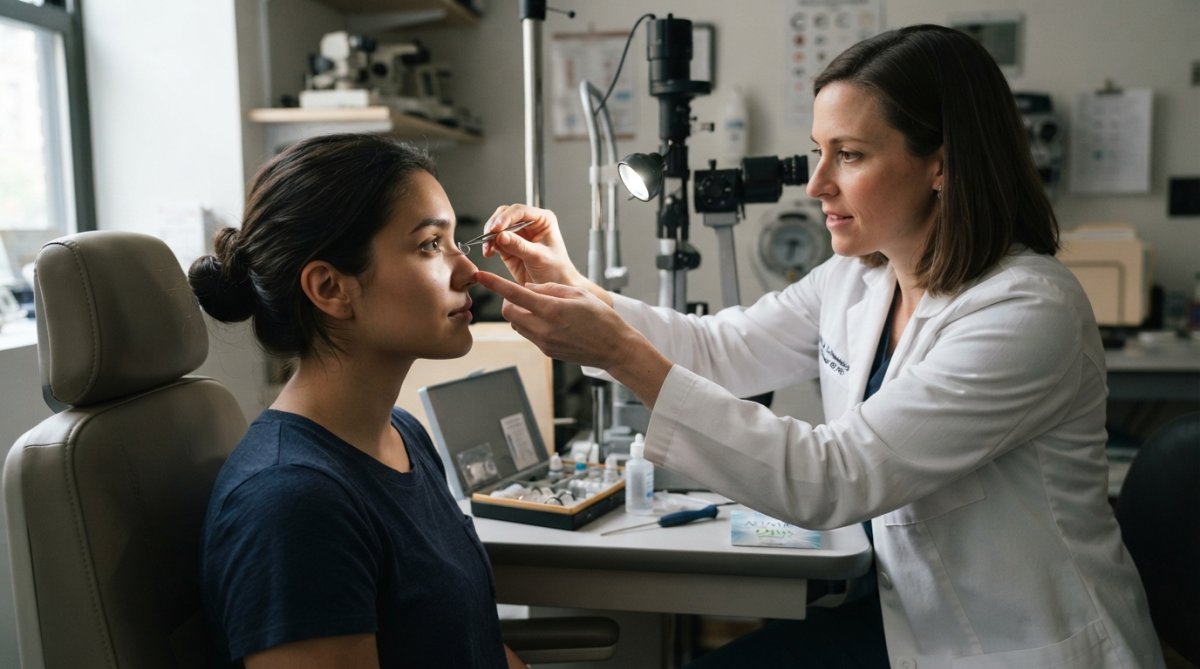
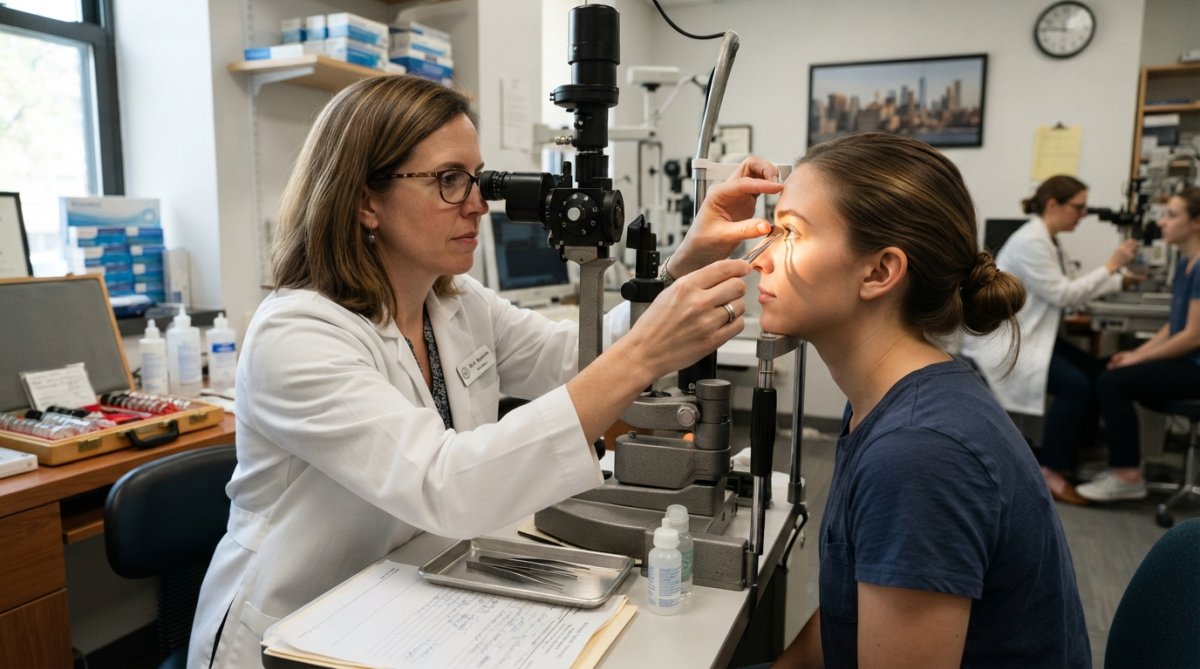
Gland expression is a manual procedure where your eye care provider uses specialized forceps to apply gentle, controlled pressure to the eyelids, expressing meibum from obstructed glands. This is typically performed after warm compresses soften the meibum.
Meibography is a diagnostic imaging technique that visualizes meibomian gland structure and obstruction. Using infrared or thermal imaging, it reveals which glands are functioning normally, partially obstructed, or atrophied. This imaging guides treatment planning.
MGD's Hidden Impact: Mental Health and Quality of Life
Chronic dry eye and MGD carry a psychological burden often unacknowledged in clinical discussions. The constant discomfort, unpredictable symptom fluctuations, and vision instability create anxiety and frustration. Many patients report that MGD impacts their ability to work, read, or drive comfortably.
The unpredictability of symptoms is particularly distressing. Some days are manageable; others are unbearable. This inconsistency makes it difficult to plan activities or maintain productivity.
Depression and anxiety are more common in patients with chronic dry eye than in the general population. This is a natural psychological response to chronic pain and functional limitation. If you're experiencing mood changes alongside MGD symptoms, discussing this with your healthcare provider is important.
MGD in Specific Populations: Contact Lens Wearers and Screen-Heavy Professionals
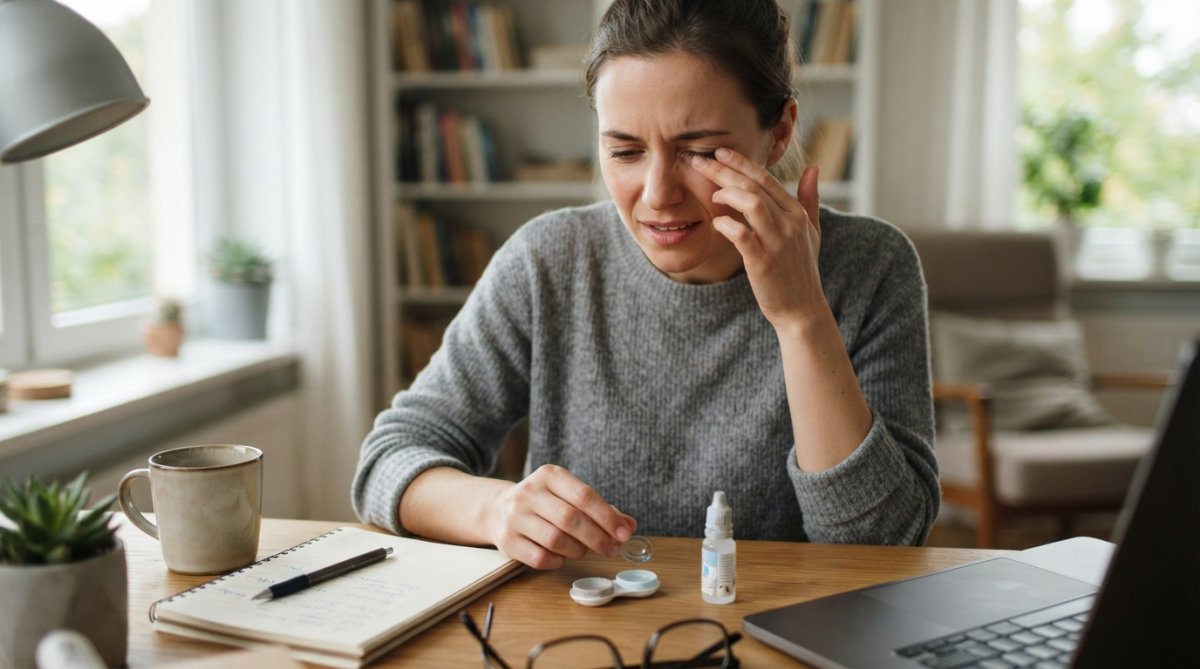
Contact lens wearers face unique MGD challenges. Lenses sit directly on the cornea and disrupt tear film dynamics, reducing oxygen permeability and accelerating tear evaporation. Many contact lens wearers with MGD find that discontinuing lens wear for 2-4 weeks allows their eyes to recover.
If you require vision correction and have MGD, discuss alternatives with your eye care provider. Daily disposable lenses cause less ocular surface disruption than monthly lenses. Glasses are ideal if your refractive error permits.
Screen-heavy professionals are at high risk for MGD due to reduced blinking during focused screen work. These professionals benefit most from aggressive prevention: frequent breaks, environmental humidity control, and possibly prophylactic warm compresses.
Workplace ergonomics matter. Position your monitor at or slightly below eye level, about 20-26 inches away. This natural downward gaze posture promotes more complete blinking.
| Population | Key Risk Factor | Primary Treatment Focus |
|---|---|---|
| Contact lens wearers | Lens-induced tear disruption | Discontinue lenses or switch to daily disposables; warm compresses |
| Screen professionals | Reduced blinking | Frequent breaks (20-20-20 rule); environmental humidity; warm compresses |
| Older adults | Age-related gland atrophy | Aggressive early intervention; IPL or LipiFlow to preserve remaining glands |
| Post-LASIK patients | Corneal nerve damage affecting tear reflex | Intensive lubrication; prescription drops; possible gland expression |
Common Mistakes to Avoid When Treating Meibomian Gland Dysfunction
The most common error is using water that's too hot for warm compresses. Excessively hot water can damage delicate eyelid skin without providing additional benefit. Aim for comfortably warm, around 110°F (43°C).
Another frequent mistake is applying warm compresses inconsistently. One or two applications per week won't clear chronic obstruction. Meibomian gland treatment requires consistent daily application for weeks before you see meaningful improvement.
Over-relying on artificial tears without addressing underlying gland obstruction is another trap. Drops provide temporary comfort but can't restore meibum production or clear blocked glands.
Neglecting lid hygiene while treating MGD is a mistake because blepharitis and MGD frequently coexist. Daily lid scrubs should accompany warm compresses and other treatments.
Finally, delaying professional evaluation is critical. While home remedies help many patients, some have severe gland atrophy or secondary conditions requiring prescription medications or in-office procedures. If symptoms don't improve significantly within 4-6 weeks of consistent home treatment, schedule an eye exam.
Meibomian gland dysfunction is treatable, but success requires understanding the underlying problem and committing to consistent management. Whether you start with warm compresses and lid hygiene or progress to prescription medications and advanced therapies, the goal is the same: restore your eyes' natural ability to produce protective oils and stabilize your tear film.
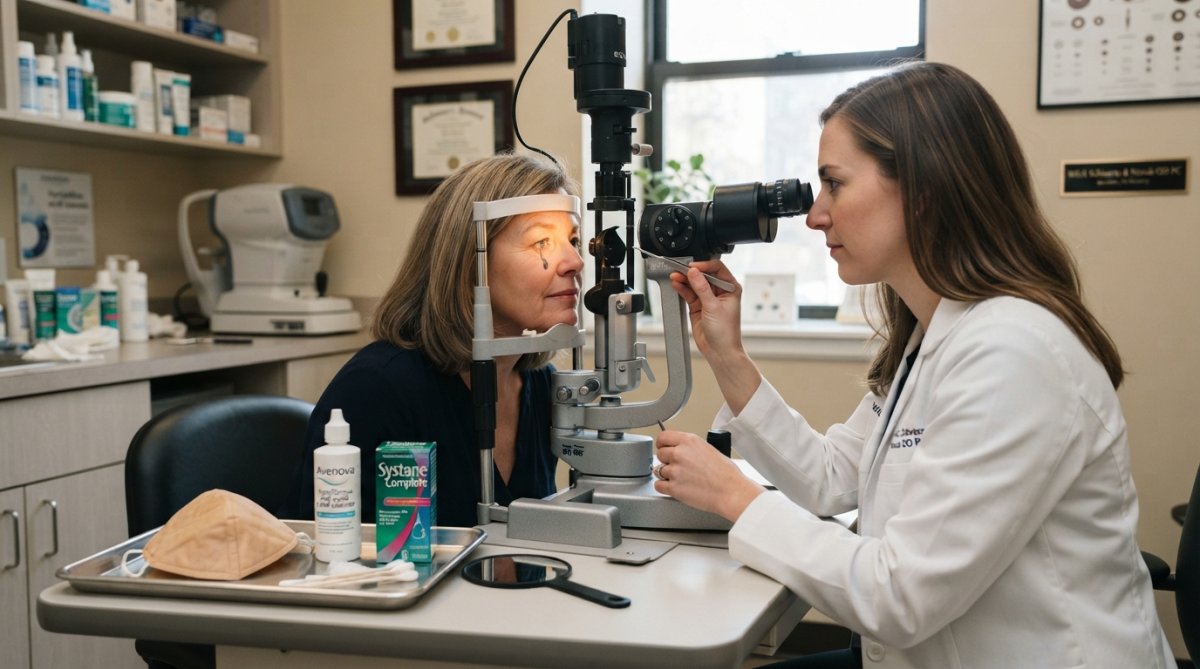
If your symptoms persist despite home care efforts, Wilck Schwartz & Novak OD PC offers comprehensive MGD diagnosis and management. Our team uses advanced optometric equipment to assess gland structure, diagnose obstruction, and recommend personalized treatment plans. We provide prescription medications, in-office gland expression, and guidance on the latest therapies available. Schedule an appointment today and take the first step toward lasting eye comfort.
Frequently Asked Questions
What is the best treatment for meibomian gland dysfunction?
The best treatment depends on severity. Mild cases often respond well to at-home remedies like warm compresses and eyelid hygiene. For moderate to severe meibomian gland dysfunction, medical treatments such as prescription antibiotics (like azithromycin or doxycycline), steroid eye drops, or in-office procedures like thermal pulsation therapy or IPL may be necessary. An optometrist or ophthalmologist can assess your specific condition and recommend the most appropriate approach.
How often should I use warm compresses for MGD?
Most people benefit from applying warm compresses 1-2 times daily, for 5-10 minutes each session. Consistency matters more than frequency. Many patients find morning and evening routines most sustainable. If you have severe meibomian gland dysfunction, your eye care provider may recommend more frequent application during the initial treatment phase, then tapering as symptoms improve.
Can meibomian gland dysfunction be cured permanently?
While complete permanent cure isn't always possible, meibomian gland dysfunction can be effectively managed and symptoms significantly reduced with proper treatment. Early intervention helps prevent permanent gland atrophy. Ongoing maintenance, such as regular warm compresses and eyelid hygiene, is often needed to keep symptoms controlled. Advanced treatments like thermal pulsation can provide long-lasting relief for many patients.
What eye drops are best for treating meibomian gland dysfunction?
Artificial tears designed for evaporative dry eye (which MGD causes) are a good starting point. Look for products that support the lipid layer of your tear film. For moderate to severe cases, prescription options like cyclosporine A or steroid eye drops may be recommended. The best eye drops for meibomian gland dysfunction vary by individual; your eye care provider can recommend drops matched to your tear film composition and severity.
This article was written using GrandRanker