 how-to
How to Perform an Eyelid Massage Correctly (2026 Guide)
Table of Contents
- What Is Eyelid Massage and Why It Matters for Dry Eye
- How to Perform an Eyelid Massage Correctly: Step-by-Step
- How Long to Massage Eyelids: Frequency and Duration
- Best Tools for Eyelid Massage: Fingertips, Cotton Swabs, and Devices
- Meibomian Gland Dysfunction Treatment: Where Massage Fits In
- Massaging Eyelids for Blepharitis and Styes: What to Know
- Safety Precautions and Visual Troubleshooting
- Post-Massage Hygiene and Integrating with Other Dry Eye Therapies
- Frequently Asked Questions
Last Updated: September 20, 2026
What Is Eyelid Massage and Why It Matters for Dry Eye
Eyelid massage is a hands-on technique that helps clear blocked oil glands in your eyelids so your eyes stay moist. Eyelid massage targets the root of most dry eye cases, not just the symptoms.
A few key facts explain why massage helps:
- Meibomian glands number about 25 to 40 in the upper lid and 20 to 30 in the lower lid.
- Each gland opens at the lid margin, right behind the lash line.
- Blocked glands produce thick, cloudy oil instead of clear fluid.
- Gentle pressure pushes that stale oil out so fresh meibum can flow.
How to Perform an Eyelid Massage Correctly: Step-by-Step
Learning how to perform an eyelid massage correctly takes about five minutes and a few simple supplies. The goal is to warm the oil, then push it out with gentle, steady pressure along the lid margin. The single most common mistake is pressing the wrong direction, meibomian glands run vertically through the lid, so your strokes must follow that vertical path, not rub side to side.
Step 1: Wash Your Hands and Prepare a Warm Compress
Start with clean hands. Wash with soap and warm water for at least 20 seconds (the CDC). Dry them with a clean towel.
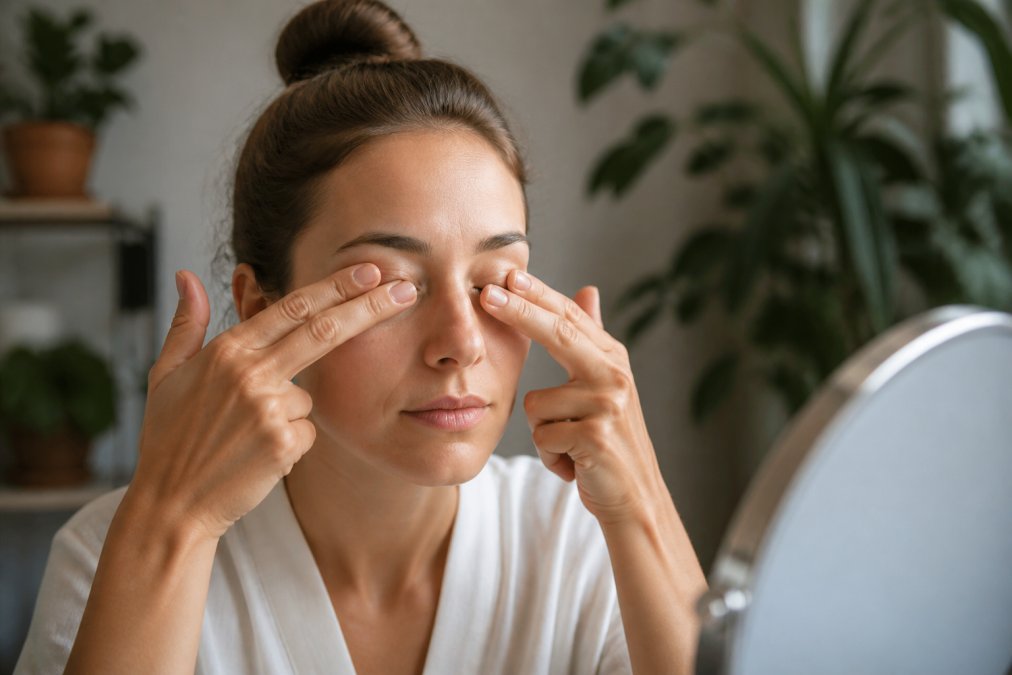
Step 2: Locate the Lid Margin and Apply Gentle Pressure
Find the lid margin, the edge where your lashes meet the eye. Close your eyes.
Step 3: Express Glands in the Correct Direction
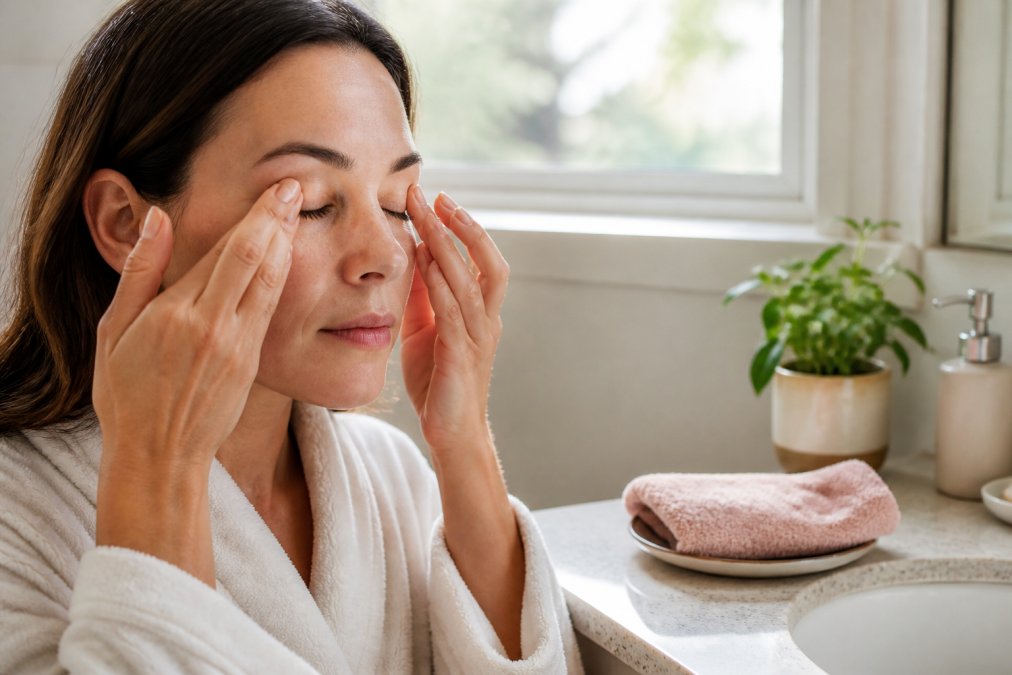
Meibomian glands sit vertically inside the lid, like rows of tiny tubes running from the lid's inner surface down to the margin. To empty them, your stroke must travel along that vertical axis, downward on the upper lid, upward on the lower lid, so the oil is milked toward the opening at the margin.
Work in three passes per lid:
- Warm-up sweep. With a clean fingertip, glide lightly from the brow down to the upper lash line (or from the cheekbone up to the lower lash line). This loosens the lid tissue without squeezing glands.
- Rolling pressure. Place the fingertip just above the upper lash line and roll it downward toward the margin with firm-but-gentle pressure. On the lower lid, roll upward toward the margin. Repeat 5 to 10 times per lid.
- Margin sweep. Finish with a light horizontal sweep along the lid margin from the outer corner toward the inner corner to clear expressed oil away from the gland openings.
- Upper lid: stroke downward toward the lash line.
- Lower lid: stroke upward toward the lash line.
- Keep pressure light and steady.
- Blink between passes to spread the oil.
How to Tell It Is Working
You will not always see a dramatic gush of oil. A common pattern is a thin, clear-to-cloudy bead at the margin after several passes. Cloudy, toothpaste-like meibum is a sign of gland dysfunction and is exactly what you are trying to clear. If nothing comes out after two full sessions, your glands may need longer warming or professional expression.
How Long to Massage Eyelids: Frequency and Duration
Most people should massage their eyelids once or twice a day, for about 30 to 60 seconds per lid, right after a warm compress. Consistency matters more than length. A short daily routine beats one long session each week.
Watch for these signs that you are overdoing it:
- Redness that lasts more than an hour
- Swelling along the lid margin
- New irritation or burning
Best Tools for Eyelid Massage: Fingertips, Cotton Swabs, and Devices
Fingertips work well for most people, but the best tools for eyelid massage depend on your needs and comfort. Some patients need more precision, especially if glands are deeply blocked.
| Tool | How It Works | Best For |
|---|---|---|
| Clean fingertip | Gentle circular pressure on lid margin | Most people, daily routine |
| Cotton swab | Targeted pressure on one gland | Spot-treating a blocked gland |
| Warm compress | Softens meibum before massage | Everyone, before every session |
| Heated eye mask | Steady, controlled warmth | People who need longer warming |
| In-office expression | Doctor-applied pressure | Stubborn or chronic blockages |
Meibomian Gland Dysfunction Treatment: Where Massage Fits In
Meibomian gland dysfunction treatment starts with daily lid care, and massage is a core part of that plan. It is not a standalone cure. It works best alongside other steps.
Think of it as one layer in a routine:
- Warm compresses to soften oil
- Eyelid massage to express glands
- Lid hygiene to clear debris and bacteria
- Lubricating drops for daytime comfort
- Regular eye exams to track progress
Massaging Eyelids for Blepharitis and Styes: What to Know
- Use warm compresses several times a day.
- Massage the lid gently around the bump, not on it.
- Keep the area clean with lid wipes.
- Avoid squeezing or popping the bump.
Most styes clear with home care. If a bump grows, lasts more than a week, or affects your vision, see an eye doctor. Our team treats eye infections and lid conditions.
Safety Precautions and Visual Troubleshooting
Safe eyelid massage comes down to clean hands, light pressure, and knowing when to stop. Most guides list "be gentle" and move on. This section goes further: it explains what each failure looks like, why it happens, and the specific correction. That is the troubleshooting depth most text guides skip.
Pressure Errors and What They Cause
- Corneal abrasion. Caused by pressing directly on the closed eye with a fingernail or a hard tool tip, or by pressing so hard the lid is dragged across the cornea. Signs: sharp pain, tearing, a gritty foreign-body sensation that does not resolve within an hour. Stop immediately and see an eye doctor.
- Lid bruising (ecchymosis). Caused by sustained heavy pressure or by pinching the lid skin between finger and thumb. Signs: a purple or dark-red patch on the lid that appears within minutes. Ice for 10 minutes and skip massage until it fades.
- Gland trauma. Caused by pressing on a single spot repeatedly instead of sweeping along the gland. Signs: a tender, swollen spot that was not there before. This can convert a blocked gland into a chalazion.
Technique Errors and Fixes
- No oil coming out. Usually under-warming, not under-pressing. Extend the warm compress to a full 10 minutes and re-warm mid-session before adding any pressure.
- Pain during pressure. You are pressing too hard. Ease up until you feel only firm contact, not discomfort.
- Redness after massage. Shorten your session to 30 seconds per lid and check with your doctor if it persists past an hour.
- Missing the lid margin. Look in a mirror with good lighting. The margin is the wet-looking line right behind the lashes, not the skin above them.
- Irritation from tools. Switch to clean fingertips and fresh swabs. Reused swabs can introduce bacteria at the gland openings.
When Not to Massage
See your eye doctor before starting if you have glaucoma, corneal conditions, a history of recurrent corneal erosion, or prior refractive or cataract surgery. They can confirm the technique is safe for your eyes.
A Quick Self-Check Before Every Session
Run through this 10-second checklist:
- Hands washed for at least 20 seconds.
- Nails short and filed, no sharp edges near the eye.
- Lids warmed for at least 5 minutes.
- No active infection, injury, or recent surgery.
- Mirror positioned so you can see the lid margin.
If any item fails, fix it before you start. The few seconds it takes are far cheaper than a corneal abrasion.
Post-Massage Hygiene and Integrating with Other Dry Eye Therapies
Cleanup after massage matters as much as the massage itself. Wipe away expressed oil with a fresh lid wipe or a clean, damp cloth. Wash your hands again. Throw away any used swabs. This step lowers the risk of infection and keeps the lid margin clean.
- Preservative-free lubricating drops during the day
- Omega-3 rich foods or supplements, if your doctor suggests them
- Screen breaks to reduce tear evaporation
- Blinking exercises to spread your tear film
- Regular eye exams to track gland health
Frequently Asked Questions
Is it healthy to massage your eyes?
Yes, when done correctly, eyelid massage can help open oil glands and improve tear film stability. It is generally safe for most people, but avoid pressing directly on the eyeball. If you have a stye, chalazion, or recent eye surgery, check with an eye doctor first. Gentle pressure along the lid margin is key.
How do you open oil glands in your eyelids?
Warm compresses soften the meibum, then gentle massage helps express it. Use a clean fingertip or cotton swab to apply light pressure along the lash line, moving in a circular motion. This can help relieve obstructed glands and improve oil secretion for evaporative dry eye.
How long should I massage my eyelids?
A typical session lasts 30 to 60 seconds per eye, once or twice daily. Start with a warm compress for 5 to 10 minutes before massaging. If your eyes feel sore or irritated, reduce frequency and consult an eye care professional.
What are the risks of massaging eyelids incorrectly?
Too much pressure can cause corneal abrasion or bruising. Using dirty hands may introduce bacteria, leading to blepharitis or infection. Always wash hands, keep nails short, and avoid pressing on the eyeball. If you have a stye or chalazion, massage may worsen it, so see a doctor.
Dry eye from blocked glands rarely clears on its own, and guessing at technique can waste weeks of effort. At Wilck Schwartz & Novak OD PC, our team has cared for Brooklyn families since 1964, using advanced optometric equipment to assess gland health and build a plan that fits your eyes. We offer comprehensive eye exams, dry eye management, and emergency care for infections and injuries, all under one roof. Schedule an appointment and get a routine built around your eyes, not a generic one.