 how-to guide
Symptoms of Meibomian Gland Dysfunction: A Patient's Guide
Table of Contents
- Understanding Meibomian Gland Dysfunction: What You Need to Know
- Common Symptoms of Meibomian Gland Dysfunction
- Causes of Meibomian Gland Dysfunction
- Meibomian Gland Dysfunction vs. Dry Eye Disease
- Diagnosing Meibomian Gland Dysfunction
- Meibomian Gland Dysfunction Treatment at Home
- When to See an Eye Doctor for MGD
- The Psychological Impact of Chronic Eye Discomfort
Symptoms of Meibomian Gland Dysfunction: A Patient's Guide
Last Updated: July 21, 2026
Understanding Meibomian Gland Dysfunction: What You Need to Know
Meibomian gland dysfunction (MGD) affects millions of people who don't realize what's causing their eye discomfort. MGD occurs when the small oil glands along your eyelid margins stop working properly, disrupting the protective layer that keeps your eyes comfortable and healthy. This guide covers recognizing and managing MGD, what meibomian glands do, how dysfunction develops, and what you can do at home and when to seek professional care.
What Are Meibomian Glands?
Your eyelids contain roughly 25-40 tiny meibomian glands that produce meibum, a lipid-rich oil essential for tear film stability. These glands sit along the eyelid margin where your eyelashes meet your skin. When you blink, meibum spreads across your eye's surface, creating a protective lipid layer that prevents tears from evaporating too quickly. Without healthy meibomian glands, your tear film becomes unstable and the watery layer evaporates faster than normal, leaving your eye surface exposed and vulnerable.
How MGD Develops
Meibomian gland dysfunction typically develops through obstruction or atrophy. Obstruction occurs when meibum thickens and clogs the gland openings, preventing normal oil secretion, the most common form and often responsive to home treatment. Atrophy is more serious: glands shrink and stop functioning altogether, a process called gland dropout that represents permanent loss of gland tissue. Understanding which type you have matters because treatment approaches differ significantly.
Common Symptoms of Meibomian Gland Dysfunction
The symptoms of meibomian gland dysfunction vary widely between individuals, but most experience some combination of ocular surface discomfort and vision problems. MGD symptoms often mimic other eye conditions, which is why proper diagnosis matters.
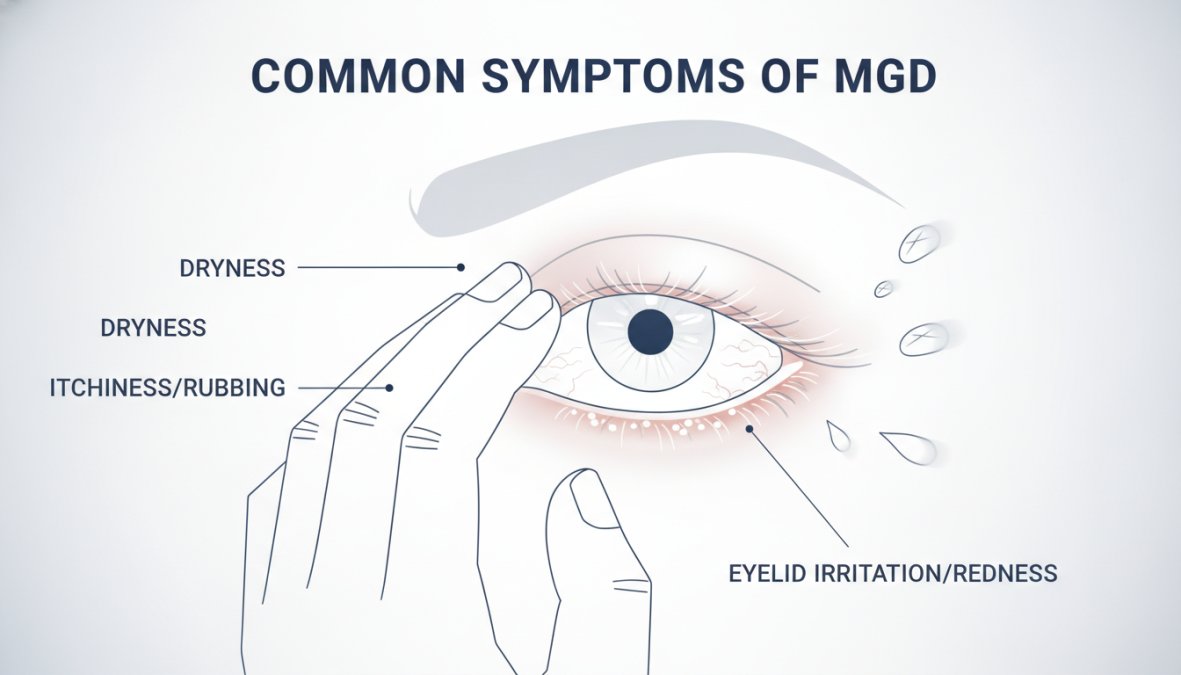
Ocular Surface Discomfort Symptoms
The most common complaint is a persistent gritty sensation, like sand trapped between your eye and eyelid. This happens because the lipid layer is failing and your eye surface becomes irritated. Many patients also report stinging or burning sensations, especially in bright light or windy conditions. Photophobia (light sensitivity) frequently accompanies MGD because inflammation makes your eyes more reactive to environmental triggers.
Eyelid crusting is another telltale sign. You might notice crusty debris along your lash line when you wake up, or small flakes accumulating throughout the day. In more severe cases, the eyelid margin becomes red and swollen, a condition called blepharitis that often coexists with MGD.
Vision-Related Symptoms
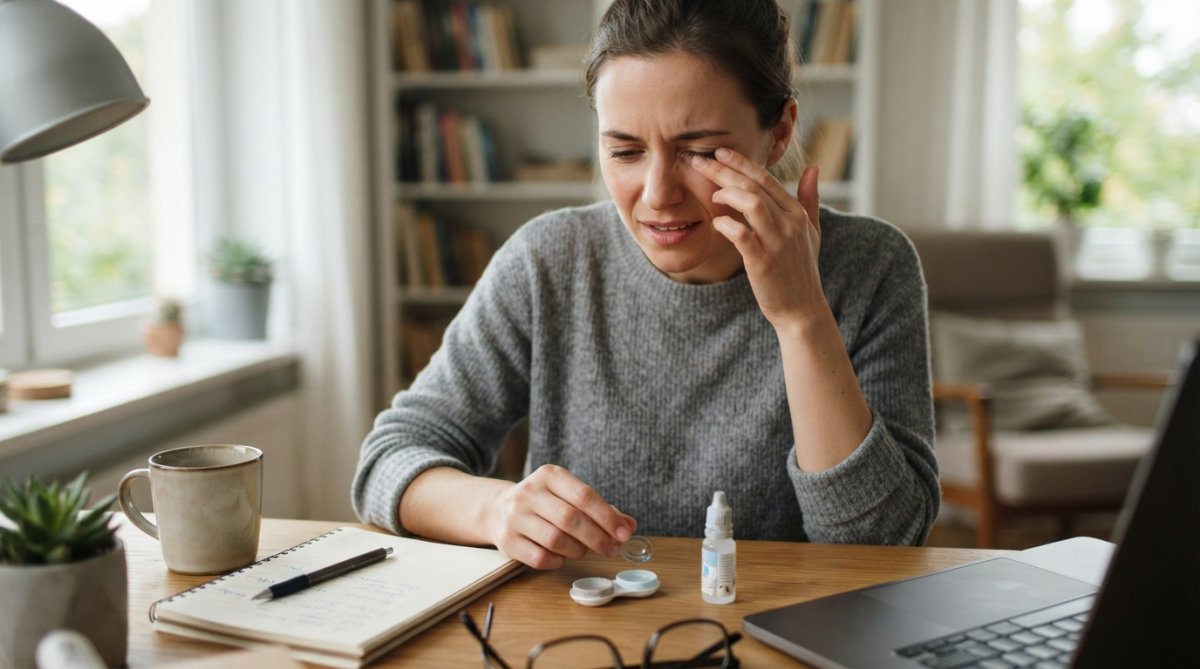
MGD can affect your vision directly. Blurred or fluctuating vision throughout the day is common, your vision clears temporarily after blinking, then blurs again as tears evaporate. Contact lens intolerance is another hallmark symptom. If you've worn contacts comfortably for years and suddenly can't tolerate them, MGD may be the reason. The compromised tear film can't maintain proper contact lens hydration, making lenses feel uncomfortable or causing them to shift on your eye.
Causes of Meibomian Gland Dysfunction
Understanding what triggers MGD helps you address root causes rather than just treating symptoms.
Age, Hormones, and Genetics
Age is one of the strongest risk factors for MGD. Meibomian gland function naturally declines with time as glands become less responsive to stimulation and produce thinner, lower-quality meibum. This is why MGD becomes increasingly common after age 50, though younger people can develop it too.
Hormonal changes play a significant role, particularly in women. Menopause, pregnancy, and hormonal contraceptives all affect meibum composition and gland function. Genetics also matter, if your parents or siblings have MGD or dry eye disease, your risk is higher.
Lifestyle and Environmental Factors
Digital screen use is increasingly recognized as a major MGD trigger. When you focus on screens, your blink rate drops by 50-70%, meaning meibum doesn't spread across your eye surface as frequently. Environmental conditions matter too, dry climates, heated indoor spaces, and air pollution all accelerate tear evaporation and stress your meibomian glands.
Certain medications and medical conditions increase MGD risk. Antihistamines, antidepressants, and blood pressure medications all reduce tear and meibum production. Conditions like rosacea and seborrheic dermatitis increase inflammation in the eyelid area, directly damaging gland function. Poor eyelid hygiene and makeup habits contribute significantly, sleeping in eye makeup clogs gland openings, and heavy eyeliner application, especially on the inner eyelid margin, blocks meibum secretion.
Meibomian Gland Dysfunction vs. Dry Eye Disease
These two conditions are closely related but distinct, and understanding the difference matters for treatment.
Key Differences in Causes and Mechanisms
Dry eye disease is a broader category describing insufficient or poor-quality tears with multiple causes: reduced tear production from lacrimal glands, excessive tear evaporation, or poor tear composition. MGD is one specific cause of dry eye, specifically, evaporative dry eye resulting from lipid layer failure. Some people have dry eye from reduced tear production while their meibomian glands function normally. Others have normal tear production but MGD-related evaporative dry eye. Still others have both problems simultaneously, which creates more severe symptoms and requires different treatment approaches.
How They Often Overlap
In clinical practice, MGD and dry eye disease frequently coexist. The inflammation from MGD can damage your lacrimal glands, reducing tear production. Conversely, dry eye creates inflammation that damages meibomian glands. Research shows that MGD is present in 60-90% of dry eye patients. This overlap explains why many people with dry eye don't improve with tear supplements alone, their underlying meibomian gland dysfunction needs direct treatment.
Diagnosing Meibomian Gland Dysfunction
Proper diagnosis requires more than just asking about symptoms. Your eye care provider uses specific clinical tests to confirm MGD and assess severity.
Clinical Examination Methods
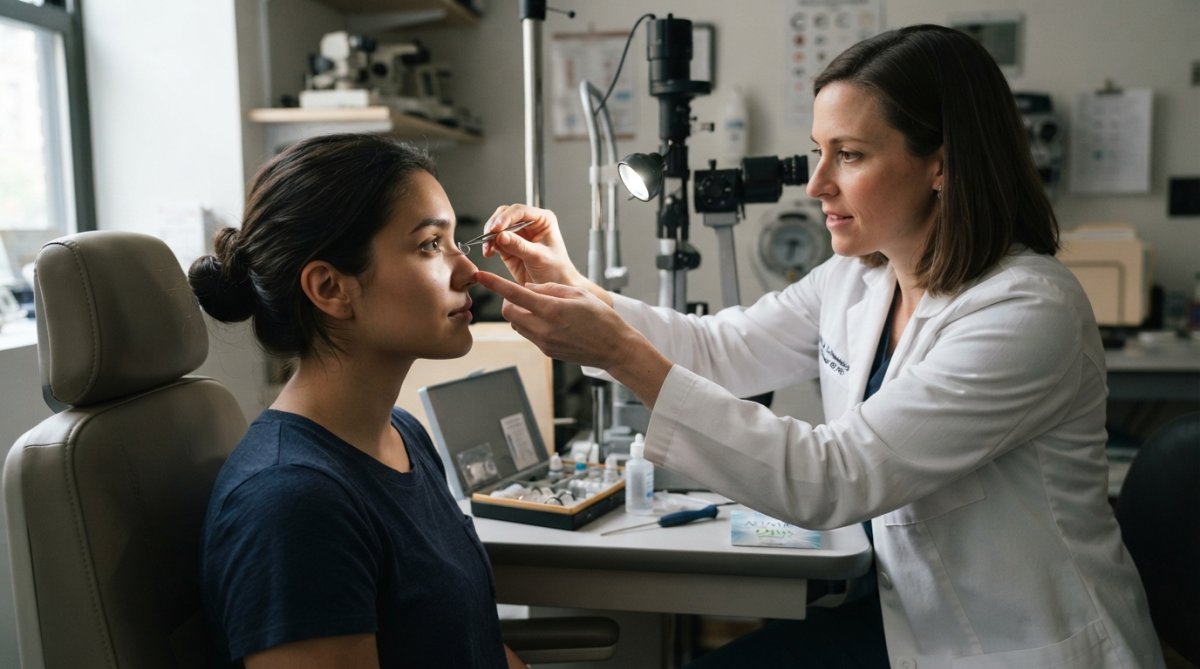
The first diagnostic step is examining your eyelid margins closely. Your eye doctor looks for signs like redness, swelling, crusting, and irregularity of the lid margin. Meibomian gland expression is the next test, your doctor gently applies pressure along your eyelid to see whether meibum expresses easily or whether the glands are clogged. Healthy glands produce clear, lipid-rich secretion; obstructed glands produce little or nothing.
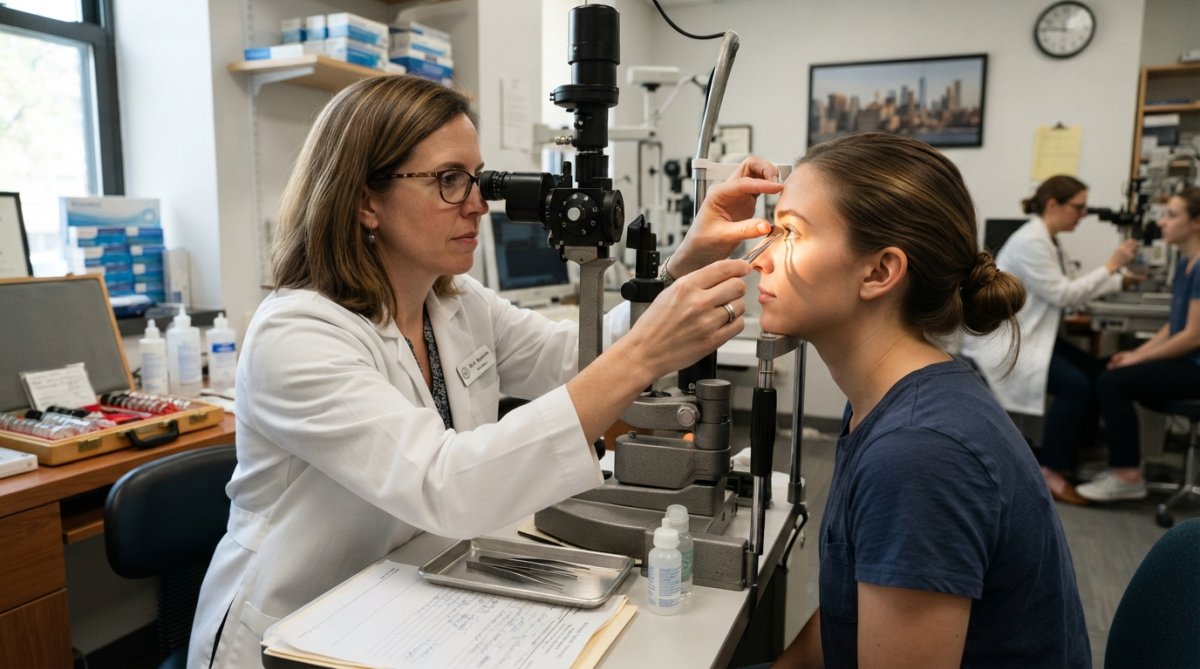
Tear film assessment using a slit lamp examination reveals whether your tears are breaking apart too quickly. Your doctor applies a special dye and measures how long your tears last before breaking, the tear breakup time (TBUT). A short TBUT suggests lipid layer problems from MGD.
Advanced Diagnostic Tools
Meibography is an advanced imaging technique that visualizes your meibomian glands directly. This specialized camera photographs the glands through your eyelid, revealing their structure, number, and any signs of dropout or atrophy. Lipid layer thickness measurement using interferometry shows exactly how thick your meibum layer is, confirming lipid-layer-dependent dry eye from MGD.
Meibomian Gland Dysfunction Treatment at Home
The good news: most cases of obstructive MGD respond well to consistent home treatment. The key is understanding that these are long-term strategies requiring patience and discipline.
Step-by-Step Eyelid Hygiene Routine
A proper eyelid hygiene routine is the foundation of MGD management.
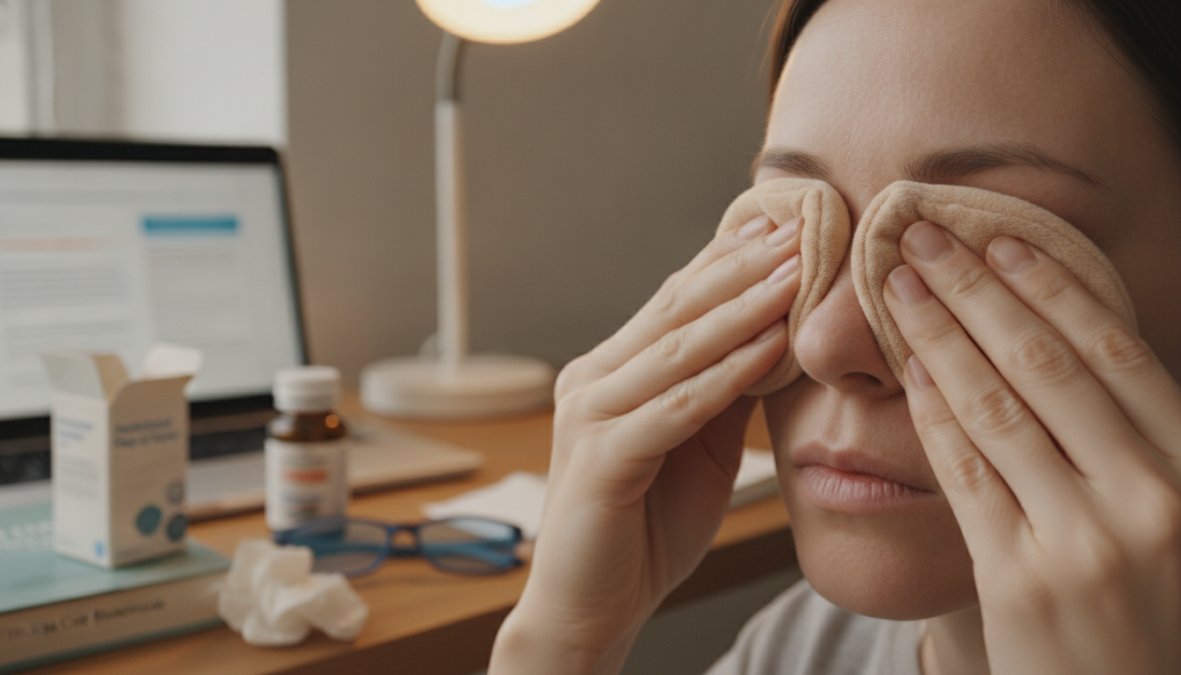
Step 1: Warm compress application (5 minutes) Apply a warm (not hot) compress to your closed eyelids. The heat softens meibum, making it easier to express. Temperature should feel comfortably warm, around 104-108°F. Too hot causes discomfort; too cool provides insufficient benefit.
Step 2: Gentle eyelid massage (1-2 minutes) With your eyes closed, use your fingertip to gently massage along your eyelid margins in small circular motions. This helps loosen thickened meibum and encourages gland secretion. Pressure should be gentle, you're stimulating normal function, not forcing anything.
Step 3: Eyelid cleansing (1-2 minutes) Use a dedicated eyelid cleanser or a clean, lint-free cloth dampened with warm water. Gently wipe along your lash line to remove debris, crusting, and makeup residue. Gentle, deliberate motions work better than harsh rubbing.
Step 4: Optional meibum expression (1-2 minutes) If your doctor has shown you how, you can gently express meibum by placing a clean cotton swab along your lower lid margin and applying gentle upward pressure. Skip this step if it causes discomfort, as forced expression can damage gland tissue.
Perform this routine twice daily: once in the morning and once before bed. Consistency matters more than intensity.
| Step | Duration | Frequency | Key Point |
|---|---|---|---|
| Warm compress | 5 minutes | 2x daily | Heat softens meibum |
| Eyelid massage | 1-2 minutes | 2x daily | Gentle circular motions |
| Eyelid cleansing | 1-2 minutes | 2x daily | Remove debris and crusting |
| Meibum expression | 1-2 minutes | Daily or every other day | Only if comfortable |
Warm Compress and Meibum Expression
The warm compress is your most powerful home treatment tool. Heat increases meibum fluidity and improves gland secretion. Many patients notice symptom improvement within days of starting regular warm compress use, though full benefit takes 4-6 weeks. Reusable gel masks that maintain temperature longer often outperform simple washcloths.
Meibum expression amplifies warm compress benefits by preventing meibum from re-solidifying in the gland. However, aggressive expression damages delicate gland tissue and should be avoided.
Lifestyle Modifications and Symptom Management
Beyond the hygiene routine, lifestyle changes address root causes and prevent symptom flare-ups. Screen time management is critical. The 20-20-20 rule helps: every 20 minutes of screen work, look at something 20 feet away for 20 seconds. This forces blinking and allows meibum redistribution.
Environmental control reduces stress on your meibomian glands. Use a humidifier in dry indoor spaces, especially during winter heating season. Avoid direct air flow from heating vents or air conditioning units. Wear wraparound sunglasses outdoors to reduce wind exposure and tear evaporation.
Dietary modifications support meibomian gland health. Omega-3 fatty acids improve tear and meibum composition. Include fatty fish like salmon, sardines, or mackerel 2-3 times weekly, or take a fish oil supplement.
Makeup and eyelid product choices matter. If you wear eye makeup, use products labeled hypoallergenic and fragrance-free. Avoid pencil eyeliner on the inner eyelid margin, as this blocks meibum secretion directly. Remove all makeup before bed using a gentle makeup remover.
When to See an Eye Doctor for MGD
Home treatment works well for many people, but certain situations require professional evaluation. You should schedule an appointment if symptoms persist despite 4-6 weeks of consistent home treatment. While some cases improve within days, obstruction-related MGD often takes 6-8 weeks to respond fully.
Severe symptoms warrant immediate evaluation. If you experience significant pain, vision loss, or discharge, see an eye doctor promptly. These can indicate complications like hordeolum (stye), chalazion (cyst), or secondary infection requiring professional treatment.
Contact lens wearers with MGD should see their eye doctor before attempting to wear contacts again. Your provider can assess whether your tear film has stabilized enough for contact lens wear and recommend specific lens types and solutions that work better with compromised tear quality.
The Psychological Impact of Chronic Eye Discomfort
Meibomian gland dysfunction affects more than just your eyes, chronic discomfort impacts quality of life, mental health, and daily functioning. Living with persistent eye irritation creates constant background stress. Many people with MGD report anxiety and depression related to their condition. The unpredictability of symptoms creates hypervigilance and anxiety about flare-ups. Social situations become stressful when you worry about how your eyes look or whether symptoms will worsen.
The financial and time burden adds psychological weight. Repeated eye doctor visits, specialized medications, and ongoing treatment costs accumulate. Time spent on daily eyelid care routines represents a significant lifestyle impact.
The good news is that effective MGD treatment often improves psychological symptoms alongside physical ones. As eye discomfort decreases, anxiety decreases. As symptoms become more predictable and manageable, quality of life improves dramatically.
Chronic eye discomfort from meibomian gland dysfunction is manageable with the right approach. Most cases respond well to consistent home treatment, but professional guidance accelerates improvement and prevents complications. If your symptoms persist despite home care efforts, or if you're uncertain whether MGD is causing your eye discomfort, schedule a comprehensive eye exam. Advanced optometric equipment and precise diagnosis ensure you receive the right treatment for your specific situation.
Frequently Asked Questions
What are the early signs of meibomian gland dysfunction?
Early symptoms of meibomian gland dysfunction often include a gritty sensation in the eyes, mild burning or stinging, and slight blurred vision, especially after reading or screen time. Many people notice their eyes feel tired or irritated by the end of the day. The eyelid margin may appear red or slightly swollen. These early signs often develop gradually, and many people dismiss them as normal eye fatigue until symptoms worsen.
Can meibomian gland dysfunction cause blurry vision?
Yes, meibomian gland dysfunction can cause blurred vision. When the meibomian glands fail to produce adequate meibum (lipid layer), the tear film becomes unstable, leading to fluctuating vision and blurriness. This is especially noticeable after extended screen time or reading. The instability of the tear film reduces tear breakup time, making your vision temporarily unclear until you blink and redistribute the tears.
How is meibomian gland dysfunction diagnosed?
Diagnosing meibomian gland dysfunction involves a comprehensive eye exam using specialized tools. Your eye doctor will examine the eyelid margin and glands with a slit lamp, assess tear quality and breakup time, and may use meibography, imaging that visualizes gland structure and dropout. They'll ask about your symptoms, screen time habits, and medical history. Advanced diagnostic equipment helps determine the severity and guide treatment decisions.
Is meibomian gland dysfunction the same as dry eye disease?
No, they're related but distinct. Meibomian gland dysfunction is a specific cause of evaporative dry eye disease. MGD occurs when the meibomian glands don't produce enough lipid layer for the tear film. Dry eye disease is the broader condition, it can result from MGD, reduced tear production, or other factors. Many people have both conditions, but MGD is one underlying cause, not the only cause of dry eye.
This article was written using GrandRanker