 listicle
Alternatives to Couture Optical Exams: What Brooklyn Patients Should Know
Table of Contents
- Why Patients Seek Alternatives to Couture Optical Exams
- In-Office Screening vs. Couture Optical Alternative Approaches
- Optomap vs. Dilation: Understanding Your Retinal Imaging Options
- Online Vision Test Accuracy: Can Digital Exams Replace In-Person Care?
- Comprehensive Eye Exam Cost and Value Comparison
- Advanced Diagnostic Tools: Your Alternative to Basic Vision Testing
- Myopia Control and Non-Surgical Vision Correction Options
- Who Should Choose Which Exam Alternative
- Frequently Asked Questions
Last Updated: August 3, 2026
When families in Brooklyn search for eye care options, many consider established names like Couture Optical. But a couture optical alternative for exams might better serve your family's actual vision needs, especially if you're looking for comprehensive diagnostics, personalized care, and advanced technology in one trusted local practice. At Wilck Schwartz & Novak OD PC, we've spent over six decades refining how thorough eye exams should work. This guide walks you through what separates a couture optical alternative for exams from basic screening, so you can make an informed choice for your family's eye health.
Why Patients Seek Alternatives to Couture Optical Exams
Patients come to us asking for a couture optical alternative for exams because they feel rushed through appointments with minimal explanation, or because school screenings missed real problems. The most common complaint: the exam felt incomplete. A basic refraction determines your prescription, but it doesn't assess your overall ocular health, screen for early disease, or account for how your eyes function in daily life.
A couture optical alternative for exams should include diagnostic imaging, comprehensive health assessment, and a conversation about your visual demands and lifestyle. It should also address what happens after the exam: contact lens fitting that actually works, management of dry eye or other conditions, and follow-up care for any findings that need monitoring.
In-Office Screening vs. Couture Optical Alternative Approaches
Modern in-office screening has evolved far beyond the basic eye chart and phoropter, offering access to tools and protocols that catch problems a standard refraction would miss entirely.
What In-Office Screening Includes
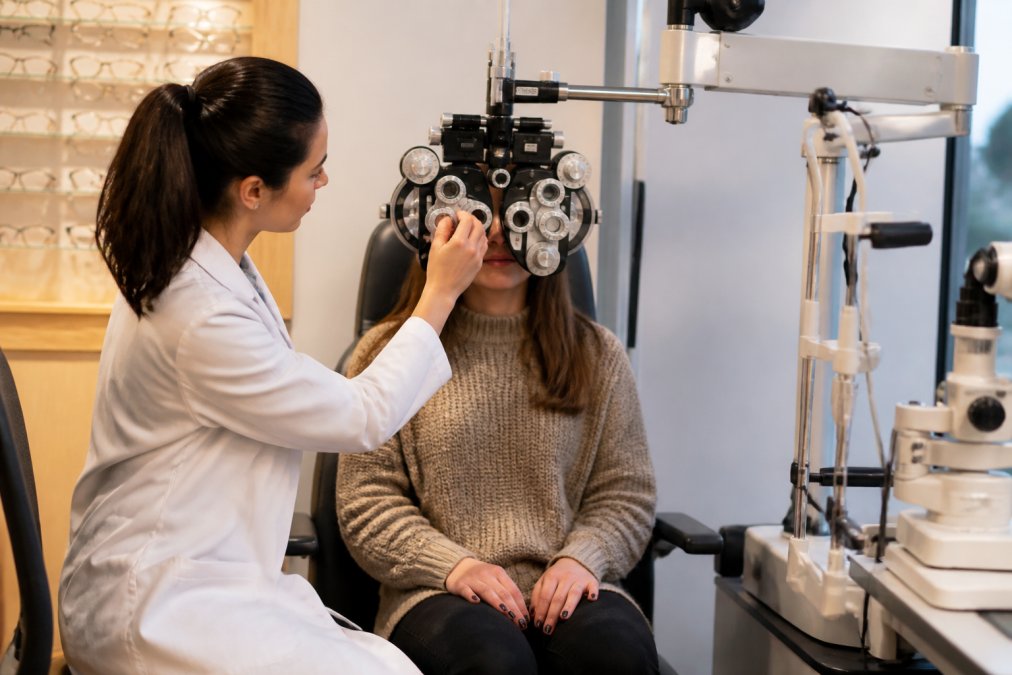
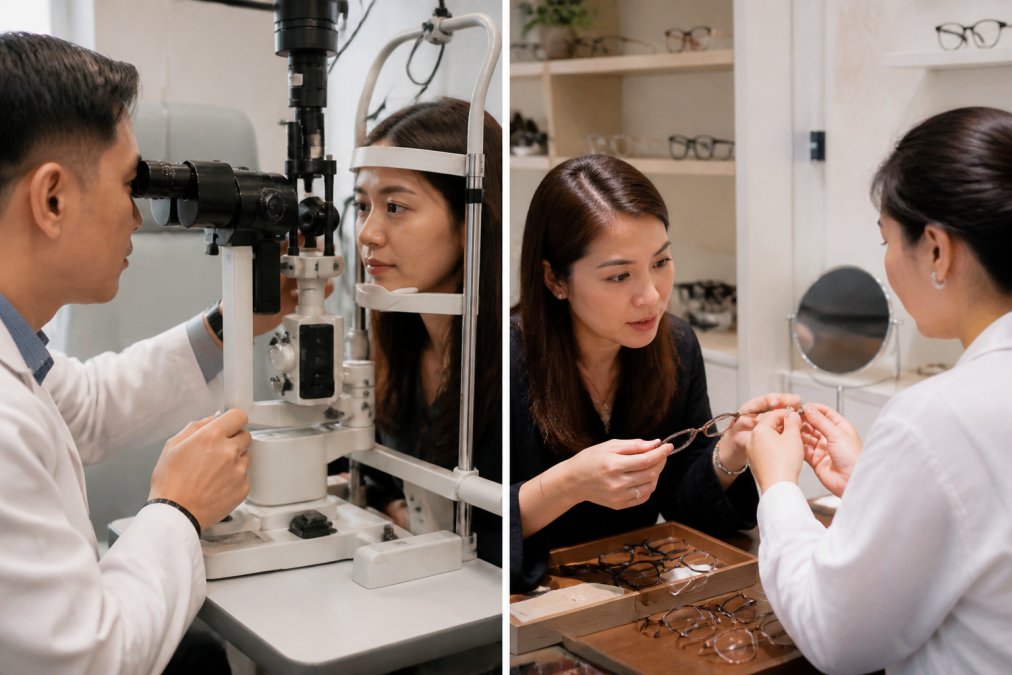
A full in-office exam begins with detailed patient history: your work environment, visual complaints, eye health history, and systemic conditions affecting the eyes. The anterior segment evaluation uses a slit lamp to examine the front of your eye: cornea, lens, iris, and anterior chamber. Visual acuity testing includes assessment at multiple distances, peripheral vision evaluation, and screening for color vision deficiency. Refraction uses both objective measurement (autorefractor) and subjective refinement with a digital phoropter, producing a more accurate prescription than either method alone. Intraocular pressure measurement screens for glaucoma risk, and ocular motility testing checks whether your eyes track smoothly together.
Diagnostic Technology in Modern Eye Care
A couture optical alternative for exams should include diagnostic tools that provide early detection and precise diagnosis. Optical Coherence Tomography (OCT) imaging captures 3D cross-sectional images of the retina and optic nerve, allowing detection of early signs of macular degeneration, diabetic retinopathy, or glaucoma before they cause vision loss.
Ultra-widefield retinal imaging captures up to 82% of the retina in a single non-mydriatic image, eliminating the need for pupil dilation in many cases while revealing peripheral retinal problems that traditional imaging misses. Digital phoropters reduce variability and improve accuracy for complex prescriptions. Contact lens fitting technology now measures corneal curvature precisely, allowing specialists to select the right lens base curve on the first fit rather than multiple adjustments.
Optomap vs. Dilation: Understanding Your Retinal Imaging Options
One of the most common questions patients ask: Do I really need my pupils dilated? The answer depends on what imaging technology your practice uses and your risk profile.
How Optomap Ultra-Widefield Imaging Works
Optomap captures a panoramic fundus image without dilating your pupils, using a scanning laser to image the retina across a 200-degree field of view, roughly 82% of the retina in a single shot. For most routine exams and patients with no risk factors for retinal disease, this non-mydriatic approach is sufficient and far more comfortable.
However, Optomap has a limitation: it doesn't image the far peripheral retina beyond the 200-degree field. In patients with high myopia, a family history of retinal detachment, or previous retinal problems, the far periphery still matters. Additionally, Optomap provides a 2D image, whereas OCT provides 3D cross-sectional detail of retinal layers, crucial for detecting early macular disease.
Traditional Dilation and When It's Still Necessary
Dilation with tropicamide or phenylephrine drops enlarges your pupils, allowing the doctor to view the retina through a wider optical window. Dilation is standard of care for patients with high myopia, diabetes or hypertension, a family history of glaucoma or macular degeneration, and those presenting with visual symptoms requiring detailed posterior segment evaluation. Modern practices use imaging to reduce dilation frequency while maintaining safety, dilating only when imaging findings or risk factors warrant it.
Online Vision Test Accuracy: Can Digital Exams Replace In-Person Care?
Online vision tests typically involve reading an eye chart on your screen and sometimes using a smartphone camera to assess pupil size or eye alignment. What online tests cannot do: they cannot perform a slit lamp examination, measure intraocular pressure, assess your retina with imaging, perform visual field testing, evaluate eye movements, or take a detailed patient history.
Early signs of serious eye disease, glaucoma, macular degeneration, diabetic retinopathy, cataracts, often appear before you notice any vision change. A patient with 20/20 vision can have glaucoma, early macular degeneration, or diabetic retinopathy. Vision acuity and eye health are not the same thing.
If you already have a recent, comprehensive exam on file and your eye health was thoroughly assessed with no disease detected, an online test can work as a low-cost prescription verification tool. However, for pediatric patients, those with complex prescriptions, anyone with a family history of eye disease, or patients experiencing new visual symptoms, online testing is not appropriate.
Comprehensive Eye Exam Cost and Value Comparison
A comprehensive eye exam includes professional time, diagnostic equipment, clinical assessment, and often imaging. The doctor's time, history-taking, slit lamp examination, refraction, retinal evaluation, patient education, typically accounts for 30-45 minutes of a skilled professional's time.
Diagnostic equipment represents a significant investment for the practice. An OCT imaging system costs tens of thousands of dollars. Practices that invest in this technology pass some of that cost to patients in the form of higher exam fees, but the benefit is early detection of disease that would otherwise cost far more to treat.
Most vision insurance plans cover a comprehensive eye exam once per year or once every two years, typically ranging from $100-150 of the exam cost. For patients without vision insurance, a comprehensive exam at a full-service optometry practice typically costs between $150-250, depending on diagnostic imaging included. Contact lens exams carry an additional charge of $50-100 beyond the standard exam.
Advanced Diagnostic Tools: Your Alternative to Basic Vision Testing
The difference between a couture optical alternative for exams and a basic eye exam often comes down to diagnostic capability.
OCT Imaging for Early Disease Detection
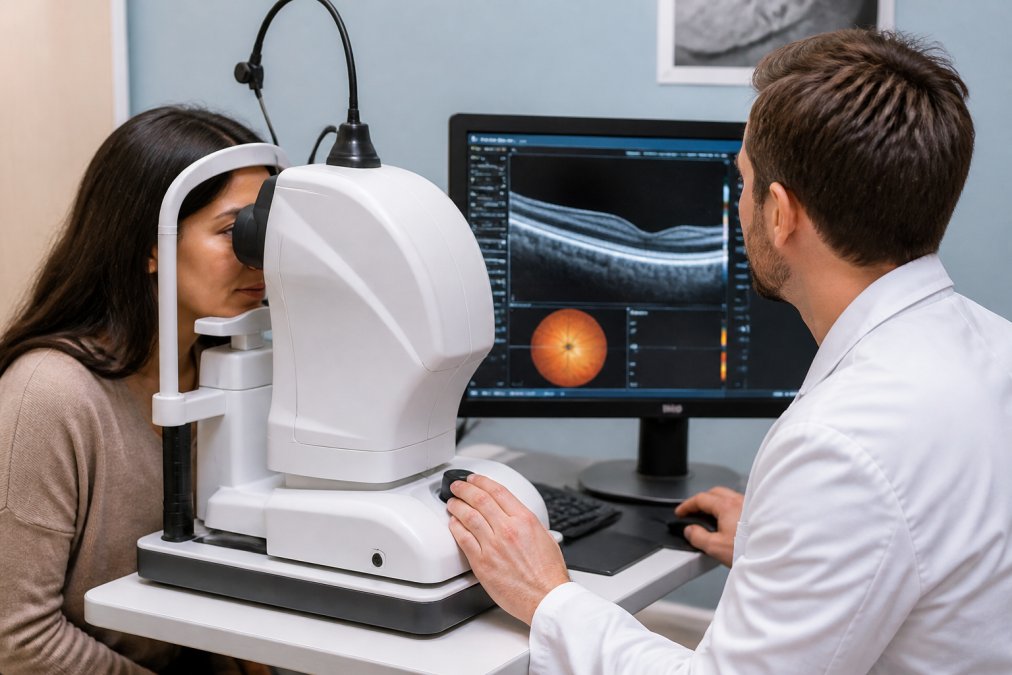
Optical Coherence Tomography provides cross-sectional images of the retina at near-microscopic resolution. For glaucoma screening, OCT measures the thickness of the retinal nerve fiber layer; thinning indicates nerve fiber death and allows earlier intervention. For macular degeneration, OCT reveals subtle changes in the macula's structure before central vision is affected. For diabetic retinopathy, OCT shows macular edema before it causes vision loss. The technology is non-invasive, takes 5-10 minutes per eye, and requires no dilation or contrast injection.
Digital Refraction Systems and Contact Lens Fitting
Digital refraction systems automate the objective measurement phase and allow the doctor to refine the prescription with precision. For contact lens fitting, digital systems measure corneal curvature precisely, calculate the ideal lens base curve, and predict how a specific lens design will fit, reducing the trial-and-error phase that frustrates many contact lens patients.
Myopia Control and Non-Surgical Vision Correction Options
For families with children whose myopia is progressing, a couture optical alternative for exams should include discussion of myopia control strategies.
Orthokeratology (Ortho-K) uses specially designed contact lenses worn overnight to gently reshape the cornea. Research shows that Ortho-K slows myopia progression by 40-50% compared to standard glasses or contact lenses.
Multifocal contact lenses designed for myopia control use peripheral optical zones to slow eye elongation. Studies show a 25-30% reduction in myopia progression compared to standard single-vision lenses.
Low-dose atropine eye drops (0.01%) have shown effectiveness in slowing myopia progression. Atropine requires daily dosing and monitoring, but for children with rapidly progressing myopia, it's a valuable option.
Increased outdoor time is one of the most effective interventions. Children who spend 2+ hours daily in outdoor light show significantly slower myopia progression than those with limited outdoor exposure.
A comprehensive eye exam for a myopic child should include discussion of these options, assessment of progression rate, and a personalized plan to slow myopia development.
Who Should Choose Which Exam Alternative
Not every patient needs the same level of diagnostic intensity.
Pediatric and Adult Patient Considerations
Pediatric patients require comprehensive exams that assess not just vision but visual development. Early detection of refractive error, strabismus, or amblyopia is essential for normal visual development. Children with myopia benefit from myopia control discussion and monitoring.
Adult patients with no risk factors and no symptoms can reasonably have exams every 1-2 years. However, adults with any risk factor, family history of glaucoma or macular degeneration, diabetes, hypertension, high myopia, or previous eye disease should have annual exams with appropriate diagnostic imaging. Contact lens patients need exams that include detailed fit assessment and follow-up.
Seniors Managing Multiple Ocular Conditions
Seniors are at highest risk for serious eye disease: glaucoma, macular degeneration, diabetic retinopathy, cataracts. Annual comprehensive exams with OCT imaging and visual field screening are essential. Seniors often take multiple medications that affect the eyes; a comprehensive eye exam accounts for these factors and monitors for medication-related effects.
Choosing the right eye care practice matters more than most people realize. Your eyes are your primary sense; protecting their health is as important as any other aspect of preventative medicine. A couture optical alternative for exams should offer comprehensive assessment, advanced diagnostic technology, and a doctor who takes time to understand your visual needs and health history. At Wilck Schwartz & Novak OD PC, we've been serving Brooklyn families since 1964 with exactly this approach: advanced optometric equipment, modern diagnostic technology, and a commitment to early detection and precise treatment. Whether you're managing myopia progression in your child, seeking contact lens fitting that actually works, or concerned about your risk for glaucoma, we provide the comprehensive assessment and personalized care plan you need. Schedule an appointment today and experience the difference a truly comprehensive eye exam makes.
| Exam Type | Best For | Key Features | Diagnostic Imaging |
|---|---|---|---|
| Basic Refraction | Healthy adults needing prescription update | Vision acuity, refraction, brief health screening | None or minimal |
| Comprehensive In-Office | All patients, especially those with risk factors | Full history, slit lamp, refraction, retinal assessment, imaging | OCT, ultra-widefield, tonometry |
| Online Vision Test | Prescription verification only, low-risk patients | Chart reading, subjective refraction, no clinical exam | None |
| Myopia Control Assessment | Children with progressing myopia | Full exam plus myopia progression analysis and management options | OCT, corneal topography |
| Senior/Disease Management | Seniors, patients with glaucoma or macular disease | Comprehensive assessment, disease-specific imaging, medication review | OCT, visual field, retinal imaging |
Frequently Asked Questions
Q: How often should I get an eye exam? A: Healthy adults with no risk factors should have exams every 1-2 years. Adults with risk factors (family history of glaucoma, diabetes, high myopia) should have annual exams. Children should have exams annually to monitor visual development and myopia progression. Seniors should have annual exams with appropriate disease screening.
Q: Can I use my online prescription for glasses and contacts? A: Yes, online prescriptions are legal and valid. However, many patients find that prescriptions refined in person feel better than those selected online. Additionally, an online exam cannot assess your eye health. If you have any health concerns or risk factors, an in-person comprehensive exam is essential.
Q: What's the difference between Optomap and dilation? A: Optomap is non-mydriatic ultra-widefield imaging that captures 82% of the retina without dilating your pupils. Dilation enlarges your pupils, allowing the doctor to view the retina with magnification. Optomap is more comfortable and faster; dilation provides a more detailed clinical view. Many practices use both: Optomap for screening and OCT for detailed layer analysis.
Q: Is orthokeratology safe for children? A: Ortho-K is a reversible, non-surgical approach to myopia control. Like any contact lens, it requires proper care and hygiene to prevent infection. When prescribed and monitored by an experienced optometrist, Ortho-K has a strong safety record.
Q: What should I expect during a comprehensive eye exam? A: Expect 45 minutes to an hour. The exam includes detailed history-taking, visual acuity testing, refraction, slit lamp examination, intraocular pressure measurement, retinal assessment with imaging if appropriate, and discussion of findings. You'll leave with a clear understanding of your eye health, any recommended treatment or monitoring, and your updated prescription.
Frequently Asked Questions
How do alternatives to Couture Optical exams differ in what they can detect?
In-office comprehensive exams with advanced diagnostic technology can detect conditions that basic online or retail screenings miss. Tools like OCT imaging capture detailed cross-sectional views of the retina, while Optomap ultra-widefield imaging shows 82% of the retina without dilation. These alternatives to standard Couture Optical approaches enable earlier detection of glaucoma, macular degeneration, and diabetic retinopathy. A thorough clinical assessment also includes visual field testing, refraction measurement, and ocular health evaluation that online vision tests cannot provide.
Is online vision test accuracy sufficient to replace a comprehensive eye exam?
Online vision testing can verify an existing prescription but cannot replace a comprehensive eye exam. These digital alternatives lack the ability to measure eye pressure, assess peripheral vision, examine the optic nerve, or screen for ocular diseases. They also cannot perform contact lens fitting or evaluate binocular vision. For initial exams, disease detection, or when symptoms are present, an in-office comprehensive eye exam with diagnostic technology remains the standard of care. Online tests work best as a convenience option for prescription verification only.
What should I expect to pay for a comprehensive eye exam as an alternative to basic screening?
Comprehensive eye exam costs vary based on the specific tests and diagnostic technology used. Most insurance plans cover routine exams annually, though you may have a copay. Out-of-pocket costs depend on whether you need advanced imaging like OCT or Optomap, contact lens fitting, or disease management. Contact your eye care provider directly for current pricing and insurance details. Many practices offer payment plans or bundle services. The investment in a thorough exam often prevents costly treatment of conditions caught late.
Is Optomap imaging better than traditional dilation for comprehensive eye exams?
Optomap ultra-widefield imaging and traditional dilation serve different purposes. Optomap captures a wider peripheral view without pupil dilation, making it faster and more comfortable for patients. However, dilation still provides detailed views of the lens and allows the eye care professional to examine the vitreous and optic nerve head more thoroughly. Many comprehensive exams use both: Optomap for initial screening and dilation for detailed posterior segment evaluation, especially when disease is suspected. Neither completely replaces the other; together they provide the most thorough assessment.
Can orthokeratology or non-surgical vision correction reduce my need for routine eye exams?
Non-surgical vision correction methods like orthokeratology (corneal reshaping with specialized contact lenses) require MORE frequent monitoring, not less. Patients using these reversible correction methods need regular clinical assessments to ensure corneal health and proper lens fit. Myopia control approaches also require baseline comprehensive eye exams and periodic follow-up to track progression. These alternatives to traditional glasses or standard contact lenses do not eliminate the need for comprehensive eye exams; they actually increase the importance of personalized vision plans and ongoing optometric standards of care.
This article was written using GrandRanker