 listicle
Common Eye Conditions Treated by Optometrists
Table of Contents
- What Can an Optometrist Diagnose?
- Refractive Errors: Nearsightedness, Farsightedness, and Astigmatism
- Dry Eye Treatment and Other Surface Conditions
- Glaucoma Diagnosis and Management
- Cataracts and Age-Related Macular Degeneration
- Diabetic Retinopathy and Other Retinal Conditions
- Optometrist vs Ophthalmologist: Who Treats What
- Urgent Warning Signs That Need Same-Day Care
- Frequently Asked Questions
Last Updated: October 12, 2026
What Can an Optometrist Diagnose?
An optometrist can diagnose refractive errors, dry eye, conjunctivitis, corneal abrasions, glaucoma, cataracts, macular degeneration, and diabetic retinopathy, and can manage many of these conditions directly. Common eye conditions treated by optometrists cover a wider range than most patients expect.
A comprehensive eye exam is where diagnosis starts. That combination catches problems early, when treatment works best, as the National Eye Institute's eye health resources explain.
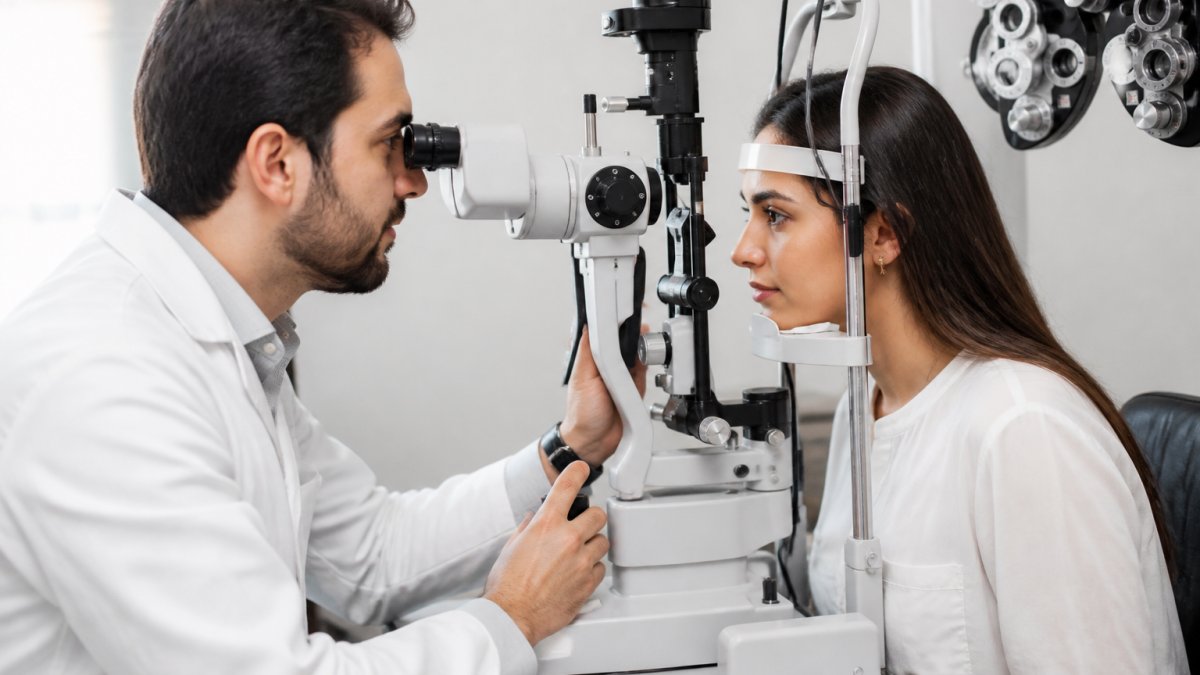
How a Comprehensive Eye Exam Works
A comprehensive eye exam is a series of quick, painless tests that together build a full picture of your eye health. Most visits take under an hour.
- Visual acuity test: reading letters on a chart to measure sharpness
- Refraction: flipping lenses to find your exact prescription
- Eye pressure check: a puff of air or a gentle probe to screen for glaucoma
- Slit lamp exam: a bright light and microscope to inspect the cornea, lens, and iris
- Dilated retinal exam: drops widen your pupil so the doctor can see the back of the eye
Refractive Errors: Nearsightedness, Farsightedness, and Astigmatism
Refractive errors are the most common eye conditions, and they are the easiest to correct. They happen when the shape of the eye or cornea keeps light from focusing squarely on the retina. Nearsightedness (myopia) makes distant objects blurry because light focuses in front of the retina. Farsightedness (hyperopia) makes close work hard because light focuses behind it.
These three are also the conditions optometrists manage most often, and almost always without a referral. An optometrist measures the exact prescription with a refraction, then matches it to the correction that fits your eyes, your work, and your daily habits.
- Myopia: distance blur, squinting, headaches after screen time; often progresses fastest in school-age children
- Hyperopia: eye strain when reading, difficulty focusing up close, fatigue by the end of the day
- Astigmatism: shadowing or ghosting around letters, tired eyes, glare at night
How Optometrists Correct Refractive Errors
Correction is not one-size-fits-all. An optometrist walks through the trade-offs with you:
- Glasses: the simplest and safest option, with lenses tailored for computer work, driving, or reading. Progressives and anti-reflective coatings solve specific complaints rather than just sharpening vision.
- Contact lenses: daily disposables, monthlies, toric lenses for astigmatism, and multifocal lenses for people who need both distance and near correction. Fitting matters as much as the prescription.
- Prescription updates: small changes add up. A prescription that is a year or two out of date can cause the headaches and eye strain people blame on screens.
- Myopia management for children: options such as specially designed contact lenses and atropine drops are used to slow progression, which lowers the long-term risk of high myopia. Ask whether your child is a candidate.
For patients who want to drop the lenses entirely, we offer a free LASIK consultation with pre- and post-operative care and management. An optometrist confirms your prescription is stable, checks that your corneas are healthy enough for surgery, and handles the follow-up visits afterward.
Why the Type Matters
Naming the specific refractive error changes the treatment. Myopia and hyperopia are corrected differently, and astigmatism needs a lens that accounts for the uneven curve. That is why a generic reading-glasses purchase often disappoints: it corrects magnification, not the actual error. A comprehensive exam identifies which condition you have and how much correction each eye needs.
Dry Eye Treatment and Other Surface Conditions
Dry eye treatment starts with finding the cause, not just buying more drops. Screen time, allergies, medications, and eyelid problems all produce different types of dryness, and each responds to a different approach.
Many patients tell us they have tried every drop on the shelf with no relief. That usually means the problem is tear quality or eyelid function, not tear quantity. In those cases, warm compresses, prescription drops, or in-office treatments help far more than another bottle of artificial tears.
Conjunctivitis, Allergies, and Corneal Abrasions
Conjunctivitis, allergies, and corneal abrasions are surface problems optometrists treat every day. Bacterial pink eye needs the right antibiotic drop; viral pink eye mostly needs time. Allergic conjunctivitis calms down with antihistamine drops and trigger avoidance. A scratched cornea needs a prompt exam, because a minor abrasion can become an infection if it goes untreated.
Glaucoma Diagnosis and Management
Glaucoma diagnosis and management center on eye pressure and the optic nerve. Glaucoma damages the optic nerve slowly, often with no symptoms until vision loss is permanent (Glaucoma). That is why screening matters so much.
Optometrists measure eye pressure, photograph the optic nerve, and track changes over time. Treatment usually begins with prescription eye drops to lower pressure. Laser therapy and surgery are options when drops are not enough, and those are handled with an ophthalmology referral. Regular monitoring is the part that protects vision, since damage cannot be reversed once it happens.
Cataracts and Age-Related Macular Degeneration
Cataracts and age-related macular degeneration are the two leading causes of vision loss in older adults, but they affect the eye in completely different ways and follow different care paths. A cataract is a clouding of the lens that makes everything look dim, yellowed, or hazy, and it can make glare and night driving worse. Macular degeneration affects the retina's center, causing blind spots and distorted central vision while side vision usually stays intact.
Optometrists diagnose both during a dilated exam, and both are managed with a monitoring plan rather than a single visit.
Cataracts: Staging and Co-Management
Cataracts develop slowly, and the right step depends on how much they interfere with daily life:
- Early stage: updated glasses, better lighting, anti-glare coatings, and stronger reading light often keep vision comfortable. An optometrist monitors the cataract at each annual exam.
- Moderate stage: prescription changes may help less, and symptoms like halos around lights or faded color become more noticeable. This is when patients often start asking about surgery.
- Advanced stage: when vision interferes with driving, reading, or daily tasks, cataract surgery is the fix. There is no drop or lens that removes a cataract.
Optometrists co-manage cataract care: they confirm the diagnosis, discuss timing, refer for surgery, and handle the pre- and post-operative visits. That co-management is one of the clearest examples of how optometric and surgical care fit together.
Macular Degeneration: Dry vs. Wet
Macular degeneration comes in two forms, and the distinction drives treatment:
- Dry (non-neovascular) AMD: the more common form, caused by thinning of the macula over time. There is no cure, but monitoring, lifestyle changes, and in some cases specific vitamin formulations are used to slow progression. An optometrist tracks changes with retinal imaging and a grid test patients can use at home.
- Wet (neovascular) AMD: abnormal blood vessels grow under the retina and leak. This form can progress quickly, and treatment with injections can slow vision loss. Early detection is what makes treatment possible, which is why sudden distortion or a new blind spot needs prompt assessment.
What Monitoring Looks Like
Both conditions reward consistency. A dilated retinal exam lets the optometrist see the lens and the macula directly, and comparing images year over year shows whether something is stable or changing. For patients with a family history of macular degeneration, or who are over 60, an annual dilated exam is the standard. For cataracts, the cadence depends on how much vision is affected, and the optometrist adjusts it as the cataract matures.
Diabetic Retinopathy and Other Retinal Conditions
Diabetic retinopathy and other retinal conditions need early detection to protect sight. High blood pressure and diabetes damage the tiny blood vessels in the retina, and the damage often starts silently.
Optometrists screen for these changes at every comprehensive eye exam. Warning signs include floaters, flashes of light, and a curtain-like shadow across vision. Retinal tears and retinal detachment are emergencies that need same-day care, because a detached retina can cause permanent vision loss within days.
Optometrist vs Ophthalmologist: Who Treats What
The optometrist vs ophthalmologist distinction comes down to surgery. Optometrists diagnose and manage most common eye conditions, prescribe glasses and contacts, and treat infections, dry eye, and many chronic diseases. Ophthalmologists are medical doctors who perform surgery and handle complex cases.
| Condition | Typically Managed By | Referral Needed? |
|---|---|---|
| Refractive errors | Optometrist | No |
| Dry eye and conjunctivitis | Optometrist | No |
| Glaucoma (early) | Optometrist | Sometimes |
| Cataracts | Optometrist co-manages | For surgery |
| Retinal detachment | Ophthalmologist | Yes, urgent |
Knowing which professional handles what saves you time and worry. Most eye problems never require a surgeon.
Urgent Warning Signs That Need Same-Day Care
Urgent warning signs include sudden vision loss, flashes of light, a shower of new floaters, eye pain, and a curtain across your vision. These are not wait-and-see symptoms.
- Sudden blurred vision or vision changes in one eye
- Severe eye pain or a chemical splash in the eye
- New flashes, floaters, or a shadow over part of your sight
- A red, painful eye with discharge or light sensitivity
- Any eye injury from a foreign object
If any of these appear, call us the same day. We provide emergency services for eye infections, injuries, and urgencies, and quick action often makes the difference in the outcome.
Frequently Asked Questions
What eye conditions can an optometrist treat?
Optometrists diagnose and manage many common eye conditions, including refractive errors like nearsightedness, farsightedness, and astigmatism, plus dry eye, conjunctivitis, eye allergies, and corneal abrasions. They also monitor chronic conditions such as glaucoma, cataracts, and diabetic retinopathy, adjusting treatment plans and coordinating care. When a condition needs surgery or advanced subspecialty care, your optometrist refers you to an ophthalmologist and often handles the follow-up visits afterward.
Can an optometrist treat glaucoma?
Yes. Optometrists commonly manage glaucoma, a group of conditions that damage the optic nerve, often linked to elevated eye pressure. Management typically starts with prescription eye drops, and your optometrist monitors eye pressure, visual fields, and optic nerve health at regular intervals. If drops are not controlling the condition, or if laser therapy or surgery is needed, your optometrist refers you to an ophthalmologist and continues co-managing your care, including follow-up monitoring after procedures.
What is the difference between an optometrist and an ophthalmologist?
An optometrist (OD) provides primary eye care: comprehensive eye exams, prescriptions for glasses and contacts, and diagnosis and management of many eye conditions. An ophthalmologist (MD or DO) is a medical doctor who also performs eye surgery and treats complex or advanced disease. In practice, the two often work together. Your optometrist handles routine care and monitoring, and refers you to an ophthalmologist when surgery or subspecialty treatment is needed.
Can an optometrist treat dry eye?
Optometrists treat dry eye regularly. Treatment depends on the cause, which may include meibomian gland dysfunction, reduced tear production, or environmental triggers. Options range from prescription eye drops and punctal plugs to in-office procedures and at-home lid hygiene routines. Because dry eye is often chronic, your optometrist will typically schedule follow-up visits to adjust the plan based on how your symptoms respond over time.
Protecting your vision comes down to one habit: consistent, thorough exams that catch problems early. Wilck Schwartz & Novak OD PC offers comprehensive eye exams, contact lens fittings, and the diagnosis and management of ocular diseases, all with advanced optometric equipment and a warm, welcoming office. We have served local families since 1964, many of them across three generations. Schedule an appointment with Wilck Schwartz & Novak OD PC and get a clear picture of your eye health.