 listicle
Best Contact Lenses for Dry Eyes: 2026 Guide
Table of Contents
- Understanding Dry Eyes and Contact Lens Wear
- Why Daily Disposable Contact Lenses for Dry Eyes Perform Best
- Top Recommended Contact Lens Brands and Products
- DAILIES Total1: Maximum Surface Moisture
- Acuvue Oasys 1-Day with HydraLuxe Technology: Digital Screen Relief
- Bausch + Lomb INFUSE: ProBalance Technology for Sustained Comfort
- CooperVision MyDay: Smart Silicone for Natural Wettability
- Alcon Precision1: Budget-Friendly Daily Disposable
- Biotrue ONEday: High Water Content for Sensitive Eyes
- Contact Lenses for Astigmatism and Dry Eyes
- Silicone Hydrogel Materials and Oxygen Permeability
- Best Contact Lens Solution for Dry Eyes
- Scleral Lenses for Chronic Dry Eye Disease
- Environmental Triggers and Lifestyle Management
Best Contact Lenses for Dry Eyes: 2026 Guide
Last Updated: July 24, 2026
Finding the best contact lenses for dry eyes requires understanding how lens materials, oxygen permeability, and moisture retention work together to keep your eyes comfortable throughout the day. At Wilck Schwartz & Novak OD PC, we've helped countless patients navigate this challenge. The key insight most guides miss: dry eye isn't just about moisture content, it's about how a lens interacts with your tear film over 16 hours of wear.
Understanding Dry Eyes and Contact Lens Wear
How Dry Eyes Affect Contact Lens Comfort
Dry eye syndrome occurs when your eyes don't produce enough tears or when tears evaporate too quickly. Contact lenses sit directly on your cornea and absorb moisture from your tear film to stay hydrated. When you have dry eyes, this creates a vicious cycle: your tears can't adequately hydrate the lens, the lens becomes uncomfortable, and your eye irritation worsens.
The problem intensifies during extended screen time. When you focus on a computer or phone, your blink rate drops by up to 66%, from a normal 15-20 blinks per minute to just 5-8. Fewer blinks mean less tear distribution across the lens surface, accelerating dehydration and discomfort.
The Role of Tear Film and Corneal Health
Your tear film has three layers: the lipid layer (outermost), the aqueous layer (middle), and the mucin layer (innermost). A healthy tear film protects your cornea and keeps contact lenses lubricated. When you have dry eyes, one or more of these layers is compromised, which means your tears can't effectively coat your contact lenses.
Daily disposable contact lenses work particularly well for dry eyes because you start fresh each day with a clean lens surface. Silicone hydrogel materials allow significantly more oxygen to reach your cornea compared to traditional hydrogels. Higher oxygen permeability (measured in Dk/t) reduces corneal swelling and inflammation, which can exacerbate dry eye symptoms.
Why Daily Disposable Contact Lenses for Dry Eyes Perform Best
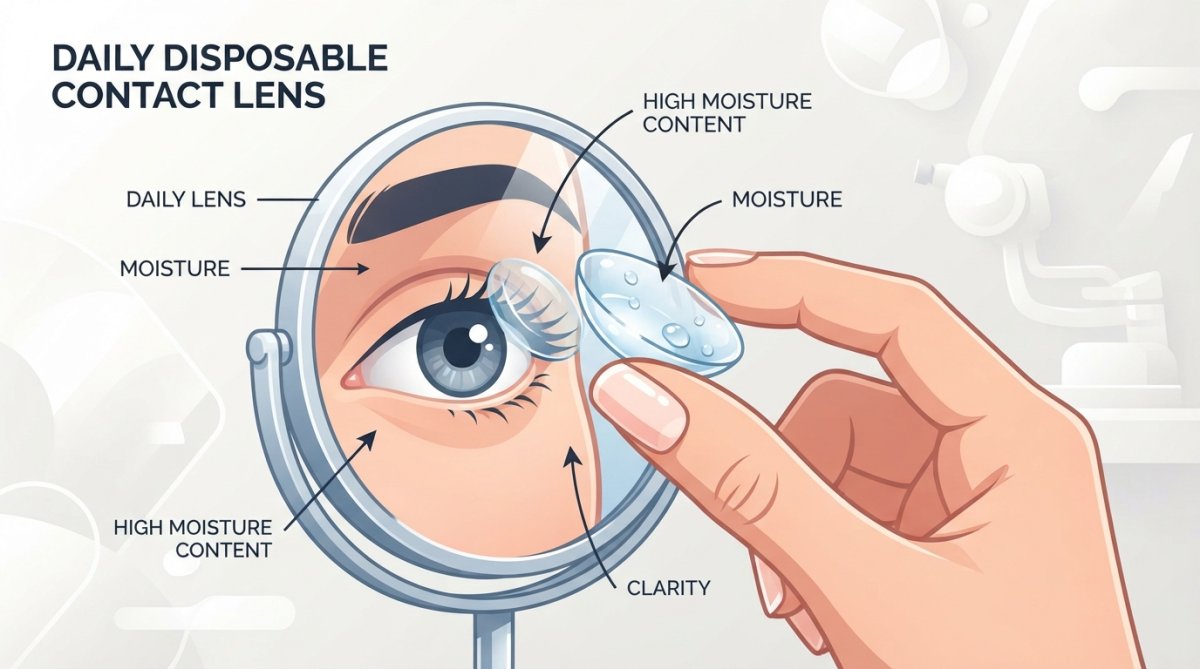
Daily disposables eliminate the need for lens solutions, which can contain preservatives that irritate sensitive eyes. You wear a fresh, sterile lens every single day, which means no protein buildup, no lipid deposits, and no cleaning-related irritation.
The water content of a lens matters, but it's not the only factor. What matters most is how well the lens maintains its moisture throughout the day and how biocompatible it is with your tear film. Daily disposables also offer psychological comfort, knowing you're starting with a pristine lens each morning reduces anxiety and improves compliance.
The trade-off with daily disposables is cost. Monthly lenses are significantly cheaper per wear over time, but for people with moderate to severe dry eyes, the comfort gain justifies the expense.
Top Recommended Contact Lens Brands and Products
1. Wilck Schwartz & Novak OD PC, Professional Fitting and Management
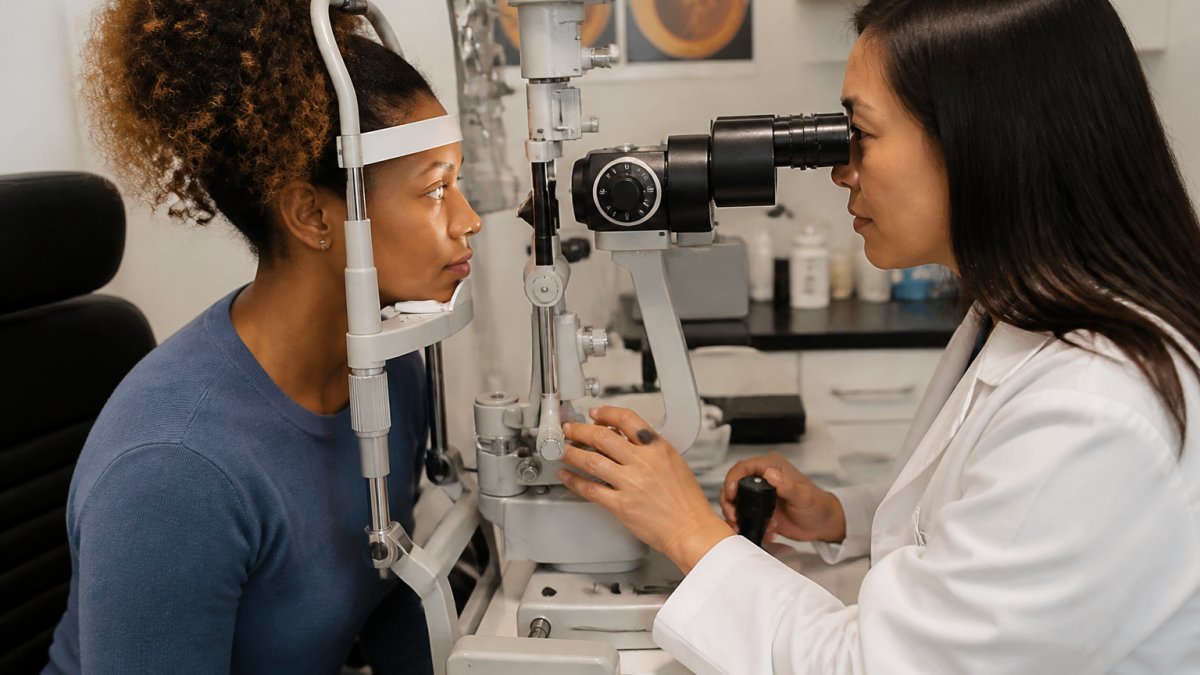
Our top recommendation is professional guidance from an experienced optometrist. At Wilck Schwartz & Novak OD PC, we've been serving the Brooklyn area since 1964, and our approach to dry eye contact lens management combines advanced diagnostic equipment with personalized fitting protocols.
Many patients come to us after trying multiple lenses on their own, frustrated that nothing works. What they don't realize is that dry eye severity varies significantly, and the best lens for one person might be wrong for another. We assess your tear film quality, measure your tear osmolarity, evaluate your meibomian gland function, and test your corneal sensitivity before recommending a specific lens. We also manage the full dry eye picture, not just the contact lens part, some patients need punctal plugs, prescription eye drops, or dietary changes alongside the right lens choice.
2. DAILIES Total1, Maximum Surface Moisture
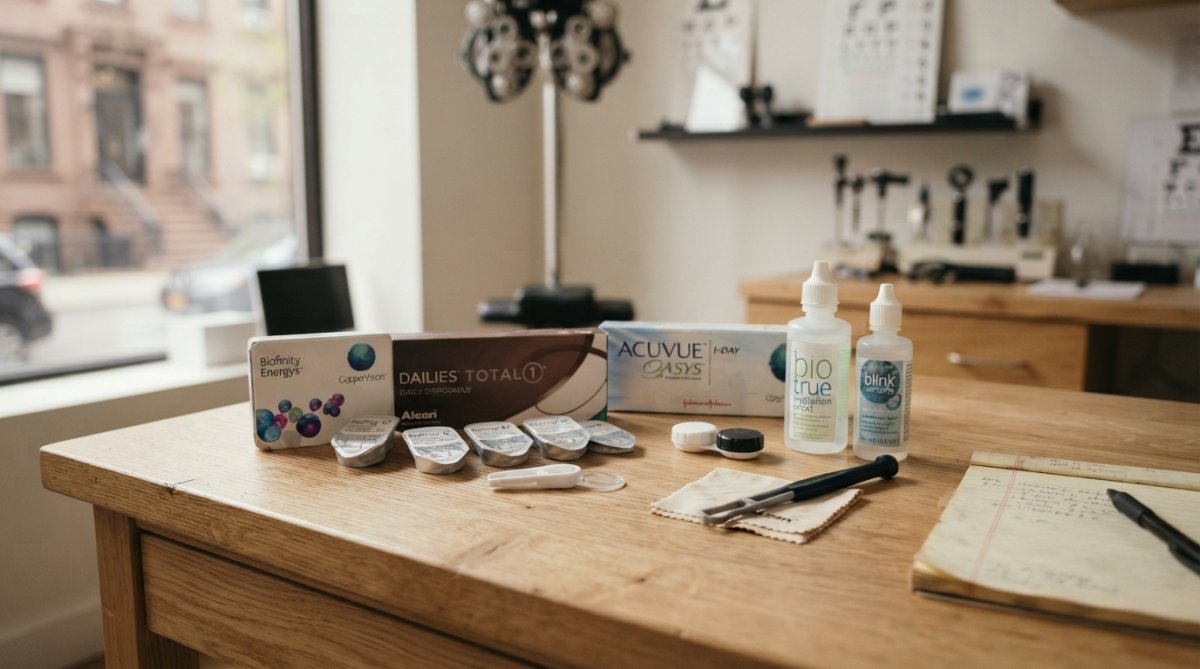
DAILIES Total1 leads the market for dry eye comfort because of its water gradient technology. The lens surface contains nearly 100% water content, while the core maintains structural integrity with appropriate water content for durability. The Delefilcon A material allows 156 Dk/t oxygen transmission, which is excellent for corneal health. SmarTears Technology stabilizes your tear film, reducing evaporation throughout the day.
Pros: Exceptional all-day comfort due to high surface water content; high oxygen permeability promotes eye health; reduces irritation with daily replacement.
Cons: Higher cost than most alternatives; no UV filter.
3. Acuvue Oasys 1-Day with HydraLuxe Technology, Digital Screen Relief
For people who spend 8+ hours daily on screens, Acuvue Oasys 1-Day with HydraLuxe Technology delivers exceptional performance. HydraLuxe Technology incorporates tear-like molecules into the lens material itself, which means the lens actively integrates with your tear film. The Senofilcon A silicone hydrogel material transmits 121 Dk/t oxygen. Class 1 UV protection blocks more than 90% of UVA and 99% of UVB rays.
Pros: Excellent all-day comfort and moisture retention; highest level of UV blocking in a daily disposable lens; reduces eye fatigue for digital screen users.
Cons: Higher cost than other daily disposables; lower water content (38%) than some dry eye lenses.
4. Bausch + Lomb INFUSE, ProBalance Technology for Sustained Comfort
Bausch + Lomb INFUSE uses ProBalance Technology, a proprietary blend of osmoprotectants, electrolytes, and moisturizers inspired by tear film research. This lens maintains 96% of its moisture for a full 16 hours, which is the highest moisture retention of any daily disposable. Many patients report that INFUSE actually improves their dry eye symptoms over time.
Pros: Exceptional and sustained moisture retention throughout the day; designed to promote a healthy ocular surface; high oxygen transmissibility.
Cons: Higher price point compared to some daily disposables; only available as a daily disposable.
5. CooperVision MyDay, Smart Silicone for Natural Wettability
CooperVision MyDay uses Smart Silicone chemistry, which delivers oxygen efficiently while allowing for higher water content than traditional silicone hydrogels. The 54% water content is among the highest available, and Aquaform Technology locks that water into the lens material, ensuring natural wettability throughout the day. The Comfilcon A material allows 160 Dk/t oxygen transmission.
Pros: Efficient oxygen delivery for healthy eyes; natural wettability for all-day comfort; UV protection included.
Cons: Not approved for overnight wear; higher cost than some alternatives.
6. Alcon Precision1, Budget-Friendly Daily Disposable
Precision1 is the most affordable daily disposable option, starting at approximately $45.80 per month. SmartSurface Technology creates a permanent, micro-thin layer of moisture on the lens surface with over 80% water content at the surface. The Verofilcon A material provides a 51% water content core, which balances durability with moisture retention. Class 1 UV-blocking absorbs more than 90% of UVA and 99% of UVB rays.
Pros: Consistent clear vision and dependable comfort; reduces irritation due to less deposit accumulation; high UV protection at the most affordable price point.
Cons: Not approved for overnight wear; monthly cost higher than reusable lenses.
7. Biotrue ONEday, High Water Content for Sensitive Eyes
Biotrue ONEday uses HyperGel material, which combines conventional hydrogel with silicone-hydrogel technology. The result is the highest water content available in a daily disposable at 78%, matching the water content of your cornea itself. This lens is specifically designed for people with sensitive eyes. High Definition Optics provide crisp, clear vision, and UVA/UVB filtering offers protection against harmful UV rays.
Pros: Exceptional comfort due to high water content; mimics the eye's natural biology; includes UV protection.
Cons: Not recommended for overnight wear; oxygen transmissibility (42 Dk/t) is lower than some silicone hydrogel lenses.
Contact Lenses for Astigmatism and Dry Eyes
Astigmatism combined with dry eyes creates a double challenge. Acuvue Oasys 1-Day for Astigmatism with HydraLuxe Technology is the best option for most people with both conditions. The Blink Stabilized Design keeps the lens oriented correctly on your eye, ensuring stable vision throughout the day. The daily disposable format is particularly important for astigmatic dry eyes, as monthly toric lenses accumulate deposits that can shift lens position and reduce comfort.
Silicone Hydrogel Materials and Oxygen Permeability
Oxygen permeability is measured in Dk/t, which indicates how much oxygen passes through the lens material to your cornea. Silicone hydrogel lenses typically range from 100 to 160+ Dk/t, while traditional hydrogels max out around 30 Dk/t.
When your cornea is oxygen-deprived, it becomes inflamed and irritated. Inflammation reduces tear production, which worsens dry eye symptoms. Silicone hydrogels allow enough oxygen to reach your cornea that inflammation stays minimal, which means your tear production remains healthier. When comparing lenses, don't get fixated on Dk/t numbers alone. A lens with 140 Dk/t and poor moisture retention will feel drier than a lens with 120 Dk/t and excellent moisture-locking technology.
Best Contact Lens Solution for Dry Eyes
If you wear monthly contact lenses despite having dry eyes, the solution you use matters significantly. Preservative-free solutions are generally better for dry eyes because preservatives like benzalkonium chloride can irritate the ocular surface. However, the real solution for dry eyes is switching to daily disposables, which eliminate the need for lens solutions entirely.
Compatibility with Lubricating Eye Drops
Many dry eye patients use artificial tears or prescription eye drops throughout the day. If you wear contact lenses, you need drops that are compatible with lens wear. Rewetting drops specifically formulated for contact lens wearers are your safest bet. Systane, Refresh, and Blink all make contact lens-compatible rewetting drops. Avoid using regular artificial tears with contact lenses, as they often contain ingredients that can cloud or damage lens materials.
If you're using prescription dry eye medications like cyclosporine (Restasis) or lifitegrast (Xiidra), discuss timing with your eye doctor. Some patients do better removing their lenses before using prescription drops, while others can use drops with lenses in place.
Preservative-Free Solutions for Sensitive Eyes
Preservative-free solutions come in single-use vials, which eliminates contamination risk and irritation from chemical preservatives. For people with severe dry eyes or contact lens intolerance, preservative-free solutions are worth the extra expense.
Scleral Lenses for Chronic Dry Eye Disease
When standard contact lenses don't work, scleral lenses are an effective option. These large-diameter lenses vault over your cornea entirely, resting on the white part of your eye (the sclera). The space between the lens and your cornea fills with saline solution, which bathes your cornea in moisture throughout the day.
For people with chronic dry eye disease, scleral lenses can be transformative. They provide superior comfort, stable vision, and consistent moisture. The downside is cost, scleral lenses are significantly more expensive than standard contacts, and they require specialized fitting. At Wilck Schwartz & Novak OD PC, we have the advanced equipment and expertise to fit scleral lenses for patients with severe dry eye disease.
Environmental Triggers and Lifestyle Management
Contact lens comfort isn't just about lens selection, it's about managing the environmental and behavioral factors that exacerbate dry eyes.
Digital Screen Time and Reduced Blinking
Screen time is the single biggest environmental trigger for contact lens discomfort. When you focus on a screen, your blink rate drops dramatically. The solution is the 20-20-20 rule: every 20 minutes, look at something 20 feet away for 20 seconds. This forces a complete blink cycle and gives your tear film time to stabilize. Additionally, position your screen slightly below eye level. When your eyes look slightly downward, your eyelids cover more of your eye surface, reducing tear evaporation.
Indoor Climate and Seasonal Factors
Heating and air conditioning both reduce humidity in indoor environments, which accelerates tear evaporation. If you wear contact lenses and live in a dry climate or work in an air-conditioned office, consider using a humidifier in your workspace. Dietary factors matter too. Omega-3 fatty acids support tear film health, and dehydration exacerbates dry eyes. People who drink adequate water and eat foods rich in omega-3s (fish, flaxseed, walnuts) typically have better tear production and more comfortable contact lens wear.
| Factor | Impact on Dry Eyes | Management Strategy |
|---|---|---|
| Screen time | Reduces blinking rate by 66% | 20-20-20 rule; position screen below eye level |
| Indoor heating | Reduces humidity to 20-30% | Use desktop humidifier; take outdoor breaks |
| Air conditioning | Accelerates tear evaporation | Increase breaks; use rewetting drops |
| Dehydration | Reduces tear production | Drink adequate water daily |
| Low omega-3 intake | Weakens tear film lipid layer | Add fish, flaxseed, or supplements |
| Seasonal changes | Winter heating reduces humidity | More frequent outdoor time; humidifier use |
| Reduced blinking | Tear film instability | Conscious blinking exercises; screen breaks |
Finding the best contact lenses for dry eyes requires matching your specific dry eye severity to the right lens technology and wearing schedule. Daily disposables with advanced moisture-retention technology are the clear winner for most people, but individual variation means what works for one person might not work for another. At Wilck Schwartz & Novak OD PC, we assess your tear film quality, measure your tear osmolarity, and test your corneal sensitivity to recommend the exact lens that will work best for your eyes. Schedule an appointment with us to get a professional dry eye evaluation and contact lens fitting that addresses your specific needs.
Frequently Asked Questions
What type of contact lenses are best for dry eyes?
Daily disposable contact lenses are generally best for dry eyes because they eliminate protein buildup and deposits that accumulate in reusable lenses. Lenses made from silicone hydrogel materials with high oxygen permeability, such as those found in DAILIES Total1, Acuvue Oasys 1-Day, and Bausch + Lomb INFUSE, provide superior comfort and moisture retention. Look for lenses with water gradient technology or ProBalance Technology designed to stabilize your tear film.
Are daily disposable contact lenses better for dry eyes than monthly lenses?
Yes, daily disposables are generally superior for dry eye management. Since you discard them after each use, there's no protein buildup or deposit accumulation that can irritate dry eyes. Monthly lenses require daily cleaning and storage, which can introduce irritants. However, monthly options like Bausch + Lomb ULTRA with MoistureSeal Technology may work for some people if you manage your eye care carefully and use compatible lubricating eye drops.
What should I look for in a contact lens solution for dry eyes?
Choose preservative-free solutions when possible, as preservatives can irritate dry eyes. Ensure the solution is compatible with your specific lens material, check with your eye care professional. Look for solutions designed to hydrate and protect the corneal surface. Pair your lens choice with high-quality lubricating eye drops that are contact lens-friendly. Some people find that rewetting drops specifically formulated for dry eye sufferers provide significant relief throughout the day.
Are scleral lenses a good option if I have chronic dry eye disease?
Scleral lenses can be excellent for chronic dry eye disease because they vault over the cornea and create a fluid-filled reservoir that keeps your eye hydrated throughout the day. This design is particularly beneficial if you have severe dry eye syndrome that doesn't respond well to standard contact lenses. However, scleral lenses require professional fitting and more careful maintenance. Consult with an eye care professional to determine if scleral lenses are appropriate for your specific condition.
Can I wear contact lenses if I have dry eyes caused by digital screen use?
Yes, but you'll need to choose the right lenses and manage your environment. Daily disposables with tear-like molecules, such as Acuvue Oasys 1-Day with HydraLuxe Technology or CooperVision Biofinity Energys (monthly option), are designed to reduce digital eye strain. Combine lens selection with lifestyle habits: take regular screen breaks, blink consciously, adjust monitor height, and use lubricating eye drops designed for contact lens wearers. An eye care professional can help you find the optimal solution for your specific situation.
This article was written using GrandRanker