 listicle
Best Eye Doctors in Brooklyn: 2026 Guide
Table of Contents
- Best Eye Doctors in Brooklyn: What Sets Them Apart
- How We Evaluated the Best Eye Doctors in Brooklyn
- Comprehensive Eye Exams in Brooklyn: What to Expect
- Ophthalmologist vs. Optometrist in Brooklyn: Which Do You Need?
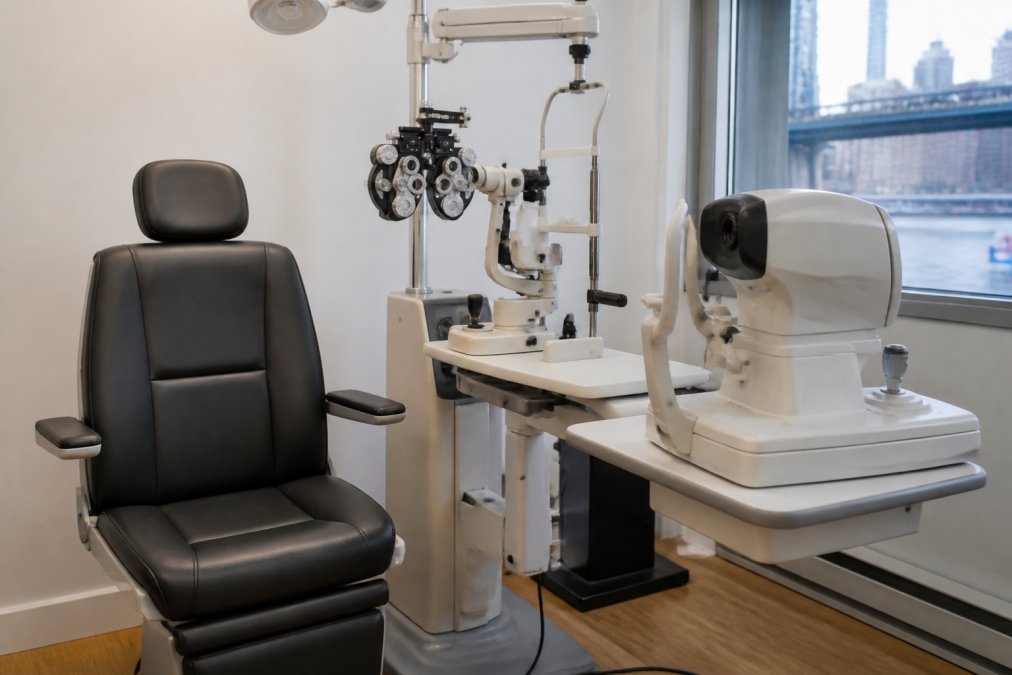
- Eye Exam Brooklyn: Advanced Diagnostic Technology and Precision Testing
- Cataract Surgery Brooklyn: What Patients Should Know
- Glaucoma Treatment Brooklyn: Early Detection and Management
- Specialized Services: From Dry Eye to LASIK and Myopia Control
Best Eye Doctors in Brooklyn: 2026 Guide
Last Updated: July 30, 2026
Finding a provider who combines advanced diagnostic technology with genuine patient care isn't just about getting a prescription, it's about preserving your vision for decades to come. At Wilck Schwartz & Novak OD PC, we understand that Brooklyn residents deserve eye care that goes beyond the standard 10-minute exam. This guide walks you through what separates exceptional eye doctors from the rest, and how to identify practices that will listen to your concerns and invest in your long-term ocular health.
The best eye doctors in Brooklyn offer more than convenience. They invest in state-of-the-art diagnostic equipment, specialize in conditions beyond basic vision correction, and treat emergency situations with urgency.
Best Eye Doctors in Brooklyn: What Sets Them Apart
Top-tier practices invest in advanced diagnostic systems, optical coherence tomography (OCT) imaging, digital retinal photography, visual field testing, and corneal topography, that catch conditions early when treatment is most effective. They spend time understanding your visual history, daily demands, and family eye health patterns. A comprehensive exam at these practices typically runs 45-60 minutes, not the rushed 15-minute appointments at big-box retailers.
Exceptional practices diagnose and manage ocular diseases with greater precision, identifying early signs of glaucoma, diabetic retinopathy, macular degeneration, and dry eye disease, conditions that may show no symptoms until significant damage occurs. The best providers also treat emergency situations seriously, keeping same-day or urgent appointment slots available for corneal abrasions, chemical burns, or sudden vision loss.
Finally, look for practices that assess your overall eye health in context, asking about general health conditions, medications, family history, and lifestyle. This holistic approach catches connections others miss, like how diabetes affects your retina or how certain medications cause dry eye.
How We Evaluated the Best Eye Doctors in Brooklyn
We focused on five concrete criteria that predict quality of care.
Selection Criteria: What Matters Most
Advanced Diagnostic Technology, Practices with OCT imaging, digital retinal photography, and automated visual field testing detect conditions at earlier stages. This investment signals commitment to precision diagnostics.
Board Certification and Credentials, Optometrists with advanced certifications in ocular disease or contact lenses bring specialized expertise.
Comprehensive Service Range, The best practices diagnose and manage ocular diseases, offer emergency care, provide contact lens fitting (including specialty lenses), and discuss surgical options like LASIK or cataract surgery. This range means you're not bounced between multiple providers.
Patient-Centered Care Philosophy, This shows up in appointment length, follow-up communication, and willingness to explain conditions in detail. Practices that rush patients don't belong on this list.
Established Track Record, A practice serving the same community for decades has built relationships with referring physicians, developed expertise through thousands of patient interactions, and earned trust through consistent quality.
| Evaluation Criteria | What to Look For | Why It Matters |
|---|---|---|
| Diagnostic Technology | OCT imaging, retinal photography, visual field testing | Catches early-stage diseases before vision loss |
| Provider Credentials | Specialty training, continuing education | Ensures expertise beyond minimum requirements |
| Service Breadth | Exams, disease management, surgery, emergency care, specialty lenses | Reduces need to see multiple providers |
| Appointment Duration | 45-60 minutes for comprehensive exams | Allows thorough evaluation and patient education |
| Community Presence | 10+ years serving the same area | Demonstrates stability and earned trust |
Comprehensive Eye Exams in Brooklyn: What to Expect
A comprehensive eye exam is far more than reading letters on a chart. You should expect a systematic evaluation of every eye structure and assessment of how your vision functions in real-world conditions.
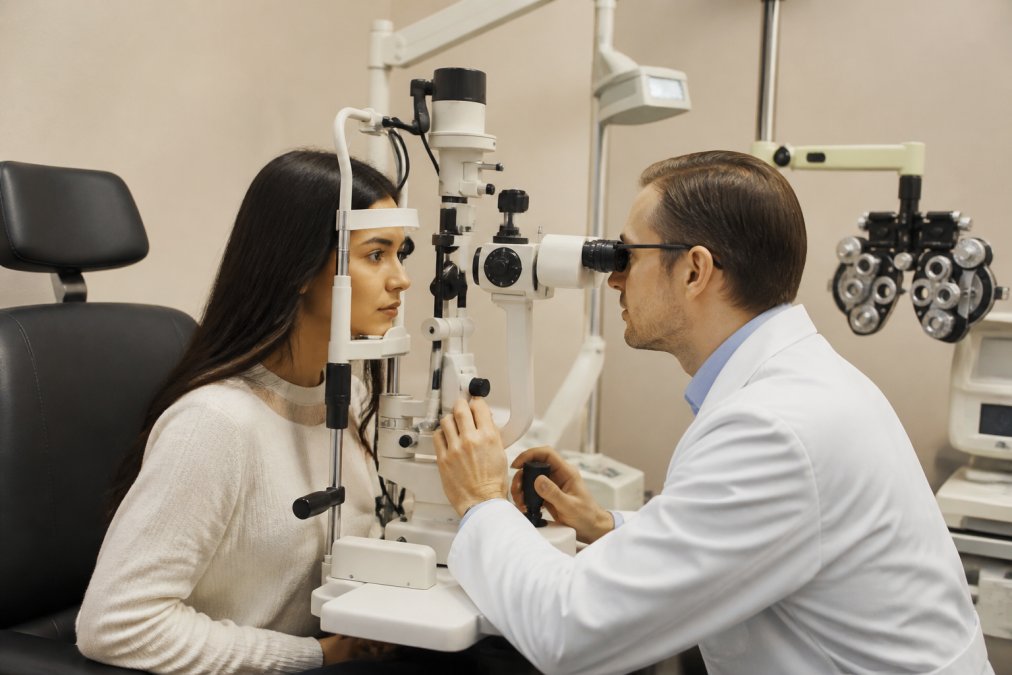
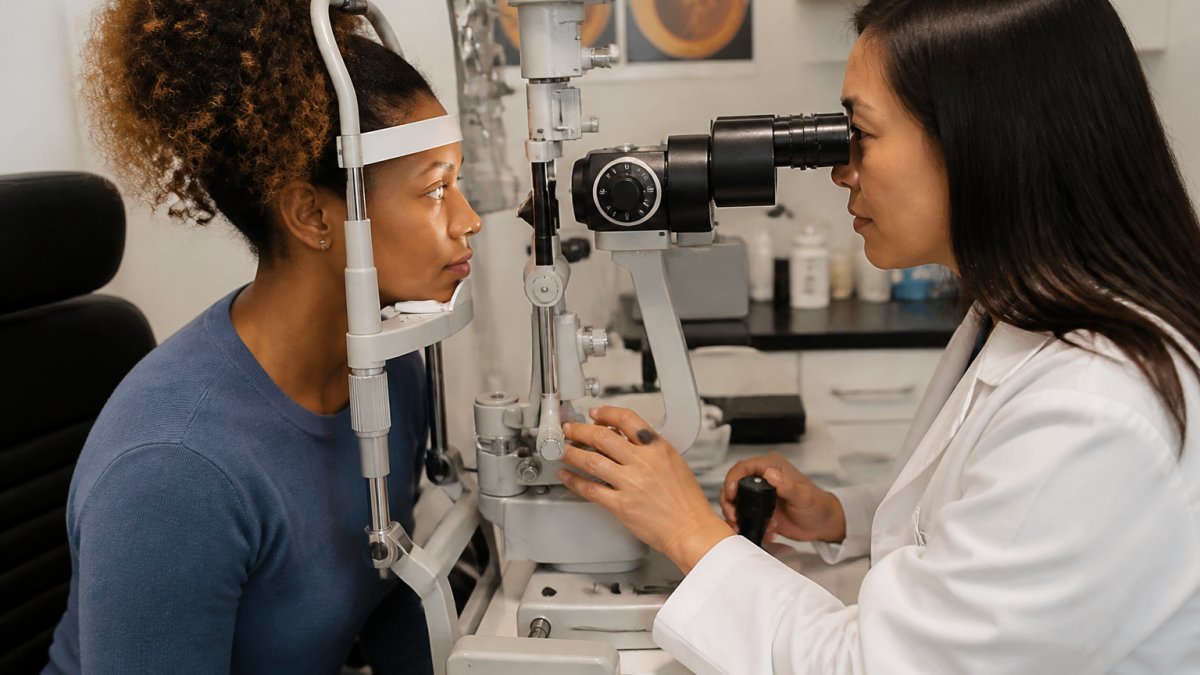
The exam begins with detailed history, your vision concerns, work and hobbies, medical history, family eye disease history, and medications. Visual acuity testing follows, along with automated refraction technology that measures your eye's focusing power. The doctor fine-tunes this with manual testing to find your precise prescription.
The critical part is dilating your pupils, which allows the doctor to see the retina, optic nerve, and blood vessels in the back of your eye, the only place in your body where blood vessels are directly visible without surgery. This reveals early signs of diabetes, high blood pressure, glaucoma, and macular degeneration. Tonometry measures eye pressure, screening for glaucoma. Digital retinal imaging captures high-resolution photos of your optic nerve and macula for future comparison. Visual field testing checks your peripheral vision, important for detecting glaucoma and neurological conditions.
A truly comprehensive exam takes 45-60 minutes because it's not rushed. You should leave understanding your prescription, your eye health status, and any concerns the doctor identified.
Ophthalmologist vs. Optometrist in Brooklyn: Which Do You Need?
Optometrists hold a Doctor of Optometry degree (OD) and are licensed to perform eye exams, diagnose eye diseases, prescribe glasses and contacts, and treat many eye conditions with topical medications. They excel at routine comprehensive exams, contact lens fitting, and managing common conditions like dry eye and mild allergies.
Ophthalmologists hold a medical degree (MD) or osteopathic degree (DO) plus additional eye care training. They can do everything an optometrist does, plus perform eye surgery, inject medications into the eye, and manage complex medical eye conditions.
For routine eye exams and contact lens fitting, an experienced optometrist is often your best choice. For surgical needs, complex disease management, or conditions requiring injectable medications, an ophthalmologist is necessary. Many Brooklyn practices employ both, so you can access the right expertise without changing providers.
Eye Exam Brooklyn: Advanced Diagnostic Technology and Precision Testing
The equipment a practice uses directly determines what conditions they can detect and how early they catch them.
Advanced practices invest in optical coherence tomography (OCT) imaging, which creates cross-sectional images of your retina with microscopic detail. This technology detects diabetic retinopathy, macular degeneration, and glaucoma at stages when treatment can preserve vision. Digital retinal photography captures high-resolution images of your optic nerve and macula, creating a permanent record for comparison at future exams.
Automated visual field testing measures your peripheral vision in detail, checking for the characteristic patterns of glaucoma damage. Corneal topography maps the shape of your cornea, essential for fitting specialty contact lenses and detecting conditions like keratoconus.
When evaluating practices, ask about their diagnostic equipment specifically. Practices that have invested in OCT, digital retinal imaging, and automated visual field testing signal commitment to precision diagnostics.
Cataract Surgery Brooklyn: What Patients Should Know
Cataracts develop when the lens becomes cloudy, scattering light and blurring vision. Surgery is the only effective treatment.
Modern cataract surgery uses ultrasonic energy to break the cloudy lens into tiny pieces, which are then suctioned out. The surgeon implants an artificial intraocular lens (IOL) to restore focusing power. The procedure takes 10-15 minutes per eye, and most patients notice improved vision within days.
The choice of intraocular lens matters significantly. Standard monofocal lenses correct vision at one distance, meaning you may still need glasses for reading or distance vision. Premium IOLs, multifocal lenses, accommodating lenses, or toric lenses for astigmatism, can reduce or eliminate your dependence on glasses after surgery.
Recovery requires careful eye care. You'll use antibiotic and anti-inflammatory drops for several weeks, avoid heavy lifting and strenuous activity, and attend follow-up appointments. Most patients achieve their final vision within 4-6 weeks. Choosing a surgeon matters, look for ophthalmologists who perform high volumes of cataract surgery, use modern surgical equipment, and take time to discuss lens options before surgery.
Glaucoma Treatment Brooklyn: Early Detection and Management
Glaucoma is often called the "silent thief of sight" because it typically causes no symptoms until significant vision loss has occurred. The disease damages the optic nerve, usually due to elevated eye pressure, and this damage is irreversible. Early detection and treatment can slow or stop progression.
Glaucoma screening is critical in comprehensive eye exams. Eye pressure measurement (tonometry) is routine, but tonometry alone isn't sufficient, some people have high pressure without developing glaucoma, while others develop glaucoma with normal pressure readings.
Advanced imaging of the optic nerve head and retinal nerve fiber layer helps detect early glaucoma damage. OCT imaging shows thinning of the nerve fiber layer that may precede visible optic nerve cupping. Visual field testing documents the specific areas of peripheral vision loss characteristic of glaucoma.
Early-stage glaucoma often responds well to topical medications, eye drops that either reduce eye pressure production or increase fluid drainage. If medication and laser treatment don't adequately control eye pressure, glaucoma surgery becomes necessary. Trabeculectomy creates a new drainage pathway for fluid. Newer minimally invasive glaucoma surgeries (MIGS) offer less invasive options with faster recovery.
The key to successful glaucoma management is early detection and consistent follow-up. Once diagnosed, you'll need regular pressure checks and visual field testing to ensure your treatment is working.
Specialized Services: From Dry Eye to LASIK and Myopia Control
The best practices in Brooklyn offer specialized services that address specific eye conditions and lifestyle needs.
Dry Eye Treatment and Ocular Surface Disease
Dry eye has become increasingly common, driven by screen time, aging, certain medications, and environmental factors. Many people treat it with over-the-counter drops, which provide temporary relief but don't address the underlying problem.
Comprehensive dry eye evaluation starts with understanding the type of dryness you're experiencing. Some people don't produce enough tears, while others produce tears that evaporate too quickly. Some have inflammation of the ocular surface. These different types require different treatments.
Advanced practices use tear osmolarity testing and meibomography (imaging of the oil glands in your eyelids) to diagnose the specific cause. For moderate to severe dry eye, in-office treatments can provide lasting relief. Meibomian gland expression manually empties blocked oil glands. Punctal plugs block the tear drainage ducts, keeping tears on the eye longer.
LASIK and Vision Correction Surgery
LASIK permanently reshapes the cornea to correct refractive errors, potentially eliminating the need for glasses or contacts. The procedure uses an excimer laser to precisely ablate corneal tissue, changing how light focuses on the retina.
Candidacy for LASIK depends on several factors. Your cornea must be thick enough to safely reshape. Your prescription must be stable for at least a year. You must have realistic expectations about outcomes, LASIK corrects refractive error but doesn't prevent presbyopia (age-related difficulty focusing on near objects) or address other eye diseases.
Modern LASIK uses wavefront-guided technology to customize the ablation pattern to your eye's unique optical characteristics, producing better visual quality with fewer side effects. Recovery is remarkably fast, with most patients achieving their final vision within 3-6 months. The best LASIK surgeons discuss realistic outcomes, perform thorough pre-operative testing, use modern equipment, and provide meticulous post-operative care.
Myopia Control for Children
Myopia (nearsightedness) has become epidemic in children, with prevalence increasing dramatically over the past two decades. High myopia increases the risk of serious eye diseases later in life, glaucoma, retinal detachment, and macular degeneration.
Myopia control strategies aim to slow the progression of nearsightedness during childhood. Orthokeratology uses specially designed contact lenses worn overnight to temporarily reshape the cornea, providing clear vision during the day without lenses. Studies show this reduces myopia progression by 40-50% compared to standard glasses.
Atropine eye drops, used at low concentrations, slow myopia progression significantly. Multifocal contact lenses or glasses provide different lens powers in different areas, with research suggesting this slows myopia progression. Time outdoors appears protective against myopia development, with children spending 2+ hours daily in natural sunlight showing slower progression.
The best practices for myopia management involve comprehensive evaluation of the child's visual development, discussion of available options with realistic expectations, and regular monitoring to ensure the chosen strategy is working.
Finding the best eye doctors in Brooklyn means prioritizing practices that invest in advanced technology, and treat patient care as more than a transaction. Whether you're managing a chronic condition like glaucoma, considering vision correction surgery, or ensuring your child's visual development stays on track, the provider you choose shapes your eye health outcomes. Wilck Schwartz & Novak OD PC brings together advanced optometric equipment, a commitment to early detection and precise diagnosis, and a warm office environment designed to make comprehensive eye care accessible. When you're ready to experience the difference that genuine expertise and patient-centered care make, schedule your comprehensive eye exam and discover why families across Brooklyn have trusted this practice since 1964.
Frequently Asked Questions
What is the difference between an ophthalmologist and an optometrist in Brooklyn?
Ophthalmologists are medical doctors (MDs or DOs) who diagnose and treat all eye diseases, perform surgery, and prescribe medications and glasses. Optometrists are licensed healthcare professionals who perform eye exams, prescribe glasses and contact lenses, and diagnose common eye conditions, but cannot perform surgery. Both are qualified to provide comprehensive eye care; your choice depends on whether you need surgical intervention or specialized medical treatment for complex conditions.
How do I choose the best eye doctor in Brooklyn for my family?
Consider whether you need an optometrist for routine exams or an ophthalmologist for surgical care. Look for board-certified providers with advanced diagnostic technology, experience with your specific needs (pediatric care, dry eye, myopia control), and convenient neighborhood access. Check whether they accept your vision insurance and offer transparent pricing. Read patient reviews emphasizing personalized care, listening skills, and thoroughness. Many Brooklyn practices have served families for decades, offering continuity of care across generations.
What should I expect during a comprehensive eye exam in Brooklyn?
A comprehensive eye exam includes vision testing, eye pressure screening for glaucoma, retinal examination, and assessment of eye health and overall vision. Advanced practices use digital technology for detailed imaging. The exam typically takes 30-60 minutes. Your eye doctor will discuss your medical history, any vision problems, and lifestyle factors. They'll explain findings clearly and discuss treatment options. Post-procedure recovery expectations vary by service; routine exams require no recovery, while surgical procedures involve specific aftercare instructions.
Do eye doctors in Brooklyn accept vision insurance, and what are typical costs?
Most Brooklyn eye care practices accept major vision and medical insurance plans. Costs vary significantly based on the type of exam, diagnostic testing, and whether you need glasses, contacts, or surgery. Routine eye exams typically start around $89-$178 for self-pay patients, with additional fees for specialized testing or contact lens fittings. Contact your chosen practice directly for current pricing and to verify your specific insurance coverage, as costs depend on your plan and deductible.
Are there eye doctors in Brooklyn specializing in glaucoma treatment and cataract surgery?
Yes. Many Brooklyn ophthalmology practices specialize in glaucoma screening and management, including advanced diagnostic technology for early detection. Cataract surgery is widely available at established practices and specialty centers like Mount Sinai's New York Eye and Ear Infirmary in Midwood. Board-certified ophthalmologists perform these procedures with state-of-the-art surgical technology. Ask your primary eye care provider for a referral to a specialist if you need surgical intervention or complex disease management.
This article was written using GrandRanker