 ultimate-guide
Comprehensive Eye Exam in Brooklyn: What to Expect
Table of Contents
- What Is a Comprehensive Eye Exam?
- What to Bring to an Eye Exam Appointment
- What Happens During Your Comprehensive Eye Exam
- How Long Does an Eye Exam Take?
- Vision Insurance Coverage for Eye Exams
- Why Annual Eye Exams Matter for Your Health
- Pre-Appointment Preparation and What to Expect After
- Schedule Your Comprehensive Eye Exam Today
- Frequently Asked Questions
Last Updated: August 10, 2026
What Is a Comprehensive Eye Exam?
A comprehensive eye exam is a thorough evaluation of your eye health and vision that goes far beyond a simple vision screening. It's the foundation of preventative eye care, designed to detect not just refractive errors (needing glasses or contacts) but also early signs of serious eye diseases and systemic health conditions that show up in your eyes first.
During a comprehensive eye exam in Brooklyn, an optometrist evaluates your visual acuity, eye pressure, peripheral vision, and the health of your retina and optic nerve. This is different from the basic screenings many people get at school or work, which only check whether you can read letters on a chart. A comprehensive exam catches what those screenings miss: early glaucoma, diabetic eye disease, cataracts, macular degeneration, and even signs of high blood pressure or diabetes.
At Wilck Schwartz & Novak OD PC, a locally-owned optometry practice serving Brooklyn since 1964, comprehensive eye exams use advanced optometric equipment to assess your overall eye health with precision. The exam typically includes visual acuity testing, refraction (to determine your prescription), intraocular pressure measurement, and retinal imaging, all tools designed to catch problems before they affect your vision.
What to Bring to an Eye Exam Appointment
Preparation makes your appointment more efficient and helps your optometrist provide better care. Here's what you should bring when you schedule your comprehensive eye exam in Brooklyn.
Insurance card and photo ID are essential. Your optometrist needs to verify coverage and confirm your identity. If you're unsure whether your vision insurance covers comprehensive exams, bring your policy information so the office can check before your appointment.
A list of current medications matters more than many people realize. Medications for blood pressure, diabetes, autoimmune conditions, and even antihistamines can affect your eyes and how they respond during testing. Write down prescription medications, over-the-counter drugs, and supplements you take regularly.
Your glasses or contact lenses should come with you. Even if you're getting a new prescription, your optometrist needs to see what you're currently wearing to understand your vision history and any adjustments you've made over time.
A list of eye-related symptoms or concerns gives your optometrist context. Note any recent changes: blurred vision, floaters, flashes of light, dry eyes, eye pain, or difficulty seeing at night. If you've had previous eye exams elsewhere, bring those records or authorize the office to request them, your optometrist benefits from seeing your vision history.
Your family eye health history is surprisingly important. If parents, siblings, or grandparents have had glaucoma, macular degeneration, cataracts, or blindness, tell your optometrist. Many eye diseases have genetic components, and knowing your risk helps guide screening decisions.
What Happens During Your Comprehensive Eye Exam
A comprehensive eye exam follows a logical progression, starting with your history and moving through increasingly detailed testing. Understanding what happens during each step removes anxiety and helps you get the most from your appointment.
Your optometrist begins by reviewing your medical history, current medications, and any eye symptoms you've experienced. This conversation is not perfunctory, it shapes which tests are prioritized and how your results are interpreted. Be honest about screen time, dry eye symptoms, and any family history of eye disease.
Visual Acuity and Refraction Testing
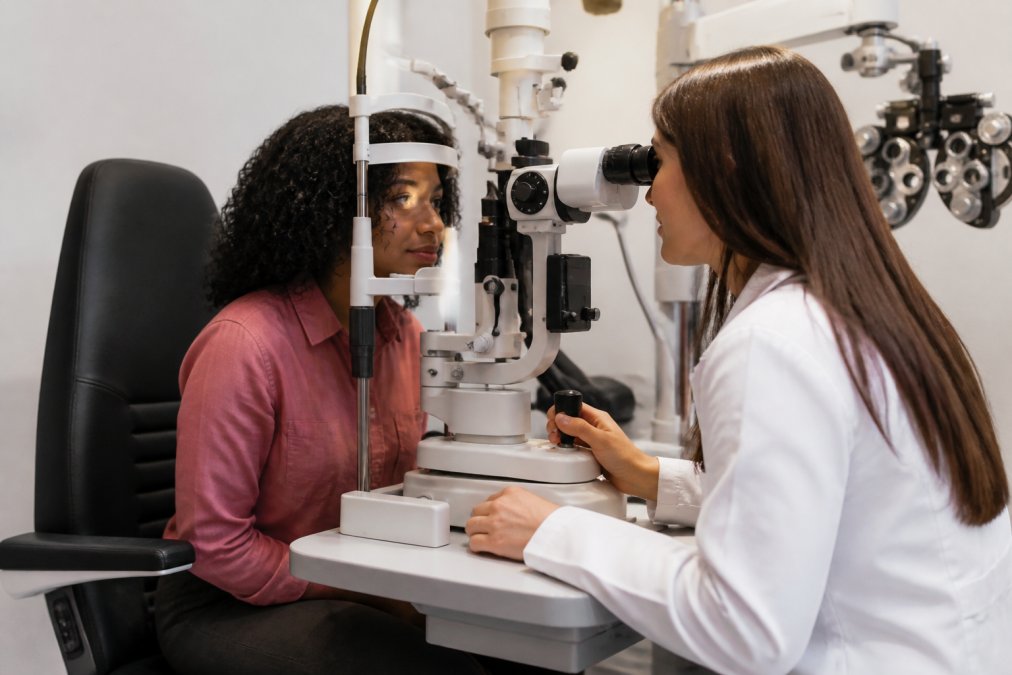
Visual acuity testing measures how clearly you see at distance and near. You'll read letters on a chart (the familiar "E" chart) at 20 feet, which establishes your baseline. Your optometrist then uses a refraction test, moving different lenses in front of your eyes, to determine your exact prescription for glasses or contacts.
The refraction process involves looking through a machine called a phoropter while your optometrist asks, "Is it better with this lens or this one?" This isn't guesswork. Your responses guide precise measurement of your refractive error (myopia, hyperopia, or astigmatism). Modern practices like Wilck Schwartz & Novak OD PC often use automated refraction equipment first to establish a baseline, then refine it manually for accuracy.
Many patients don't realize that refraction errors change gradually over time. A prescription that worked perfectly five years ago may no longer be optimal. This is why annual exams matter, they catch shifts in your vision before you've adapted to blurred sight.
Intraocular Pressure and Glaucoma Screening
Intraocular pressure (IOP) measurement is critical because elevated pressure is the primary risk factor for glaucoma, an eye disease that damages the optic nerve silently and irreversibly. Most people with glaucoma don't know they have it until significant vision loss occurs.
Your optometrist measures IOP using a tonometer, a quick, non-invasive test. Some practices use air-puff tonometry (you feel a brief puff of air), while others use applanation tonometry (a gentle probe touches the eye after numbing drops). Normal IOP ranges from 12 to 22 mmHg, but your optometrist considers your individual risk factors, family history, age, ethnicity, when interpreting your results.
If your IOP is elevated, your optometrist may recommend additional glaucoma screening or referral to a specialist. Early detection and treatment prevent vision loss.
Retinal Imaging and Dilated Eye Exam
Retinal imaging uses advanced technology to photograph the back of your eye, capturing detailed images of your retina and optic nerve. This allows your optometrist to document the health of these structures and compare images year to year, catching subtle changes that indicate developing disease.
A dilated eye exam follows, where your optometrist instills dilating drops to widen your pupils. This gives a clearer view of your retina, optic nerve, and blood vessels. The dilation lasts a few hours, so plan accordingly: your vision will be blurry up close, and bright light will feel uncomfortable. Bring sunglasses or request them from the office.
During the dilated exam, your optometrist looks for signs of diabetic retinopathy, macular degeneration, retinal tears or detachments, and other conditions. If you have diabetes, this part of the exam is especially important, diabetic eye disease often shows no symptoms until vision is already compromised.
Binocular Vision and Peripheral Vision Assessment
Binocular vision testing checks how well your eyes work together. Your optometrist assesses your eye alignment, focusing ability at different distances, and how your eyes track moving objects. Problems with binocular vision can cause eye strain, headaches, or difficulty with depth perception.
Peripheral vision testing (often called a visual field test) measures your ability to see to the sides while looking straight ahead. This detects blind spots that might indicate glaucoma, retinal disease, or neurological issues. Modern practices use automated visual field testing, where you respond to lights appearing at different locations in your peripheral vision.
How Long Does an Eye Exam Take?
A comprehensive eye exam typically takes 45 to 90 minutes, depending on the complexity of your eye health and whether additional testing is needed. This is significantly longer than a basic vision screening, which might take 10 minutes.
The timeline breaks down roughly like this: 10-15 minutes for history and initial assessment, 15-20 minutes for refraction and visual acuity testing, 10-15 minutes for pressure measurement and glaucoma screening, and 15-30 minutes for retinal imaging and dilated exam. If your optometrist identifies concerns requiring additional testing, like a visual field test for suspected glaucoma or imaging for a retinal issue, add another 15-30 minutes.
First-time patients often take longer because your optometrist is establishing a baseline and getting to know your eye health history. Follow-up exams may be quicker if no new issues arise. At Wilck Schwartz & Novak OD PC, the team schedules appointments with enough buffer to avoid rushing, ensuring thorough evaluation rather than clock-watching.
Vision Insurance Coverage for Eye Exams
Vision insurance coverage for comprehensive eye exams varies widely depending on your specific plan. Most plans cover routine comprehensive exams fully or with a copay, but some require a deductible or coinsurance.
Check your insurance card or contact your plan directly to confirm:
- Whether comprehensive exams are covered (vs. basic vision screenings only)
- What your copay or coinsurance is
- Whether you need a referral from your primary care doctor
- Whether your optometrist is in-network
Many plans cover one comprehensive eye exam per year. If you need exams more frequently due to a specific condition (like diabetes or glaucoma), your optometrist can document medical necessity, which often qualifies for additional covered visits.
If you don't have vision insurance, ask about the office's pricing and payment options. Some practices offer discounts for uninsured patients or flexible payment plans. Wilck Schwartz & Novak OD PC works with patients to make eye care accessible, recognizing that preventative exams are an investment in long-term health.
Why Annual Eye Exams Matter for Your Health
Annual comprehensive eye exams do more than keep your vision sharp, they're a window into your overall health. Your eyes can reveal early signs of conditions you may not know you have: diabetes, high blood pressure, high cholesterol, autoimmune disease, and even certain cancers.

Diabetic retinopathy, for example, often appears in the eye before a person is diagnosed with diabetes. Hypertensive retinopathy shows up as bleeding or swelling in the retina, signaling dangerously high blood pressure. Your optometrist can spot these changes before symptoms develop, prompting you to see your primary care doctor for further evaluation.
For children, annual exams ensure their visual development is on track. Undetected vision problems during critical developmental years can interfere with learning and coordination. Many children don't realize they see differently than their peers until an exam reveals the problem.
For seniors, annual exams catch age-related conditions early: cataracts, macular degeneration, presbyopia (difficulty focusing up close), and glaucoma. Early intervention preserves vision and independence.
The common mistake is waiting for vision problems to develop before scheduling an exam. By then, damage may already be done. Silent eye diseases like glaucoma cause irreversible vision loss before any symptoms appear. Annual exams catch these diseases in early stages when treatment is most effective.
Pre-Appointment Preparation and What to Expect After
Preparing for your exam and knowing what to expect afterward helps you get maximum value from your visit.
Before your appointment: Wear comfortable clothing and avoid heavy makeup around your eyes, which can interfere with some tests. If you wear contact lenses, your optometrist may ask you to stop wearing them for a day or two before your exam, as contacts can temporarily change your corneal shape and affect refraction accuracy. Bring your current glasses or contacts, insurance information, and a list of medications.
During the exam: Ask questions. If your optometrist finds something concerning, ask what it means and what the next steps are. If you don't understand your new prescription or why a test was performed, speak up. This is your health.
After the exam: Your pupils will remain dilated for 3-5 hours. Your vision will be blurry up close, and bright light will be uncomfortable. Wear sunglasses and avoid driving if possible. Don't rub your eyes, the dilating drops can temporarily irritate them.
If your optometrist prescribed glasses or contacts, you can usually order them immediately through the office or take your prescription elsewhere. Your optometrist will discuss any findings, whether you need vision correction, whether you have early signs of disease, or whether follow-up testing is needed.
If dry eye, digital eye strain, or other conditions were identified, your optometrist may recommend specific treatments or lifestyle adjustments. Common recommendations include artificial tears, anti-glare screen filters, the 20-20-20 rule (every 20 minutes, look at something 20 feet away for 20 seconds), or adjusting your screen brightness and distance.
Schedule Your Comprehensive Eye Exam Today
A comprehensive eye exam is one of the most important preventative health decisions you can make. It protects your vision, catches disease early, and reveals information about your overall health that you might not get anywhere else.
Wilck Schwartz & Novak OD PC brings nearly 60 years of optometric expertise to Brooklyn families. Using advanced optometric equipment and modern diagnostic technology, the team provides thorough, personalized eye care for every age, from children's vision development to seniors managing age-related eye conditions. Whether you need a routine comprehensive exam, contact lens fitting, emergency care for an eye infection or injury, or a LASIK consultation, Wilck Schwartz & Novak OD PC delivers the depth of evaluation and precision of care that makes a real difference.
Don't wait for vision problems to develop. Schedule your comprehensive eye exam in Brooklyn with Wilck Schwartz & Novak OD PC and take control of your eye health today.
Frequently Asked Questions
What is included in a comprehensive eye exam?
A comprehensive eye exam includes visual acuity testing, refraction assessment to determine your prescription, intraocular pressure measurement for glaucoma screening, retinal imaging, and a dilated eye exam to evaluate the health of your retina and optic nerve. Your optometrist will also assess binocular vision, peripheral vision, and screen for common eye conditions like cataracts, dry eye syndrome, and diabetic eye disease. This thorough evaluation goes far beyond basic vision screenings, providing a complete medical evaluation of your ocular health.
How long does a comprehensive eye exam take?
A comprehensive eye exam typically takes 45 minutes to an hour, though the exact duration depends on your individual needs and whether additional diagnostic testing is required. If you're a new patient or have complex vision concerns, your appointment may take slightly longer. Arriving 10-15 minutes early for paperwork ensures your appointment stays on schedule. Contact our Brooklyn office to confirm timing when you schedule.
Does vision insurance cover comprehensive eye exams in Brooklyn?
Most vision insurance plans cover comprehensive eye exams, though coverage varies by plan. Many plans cover one exam per year at no cost or a minimal copay. We accept various vision insurance providers and can verify your coverage before your appointment. If you're uninsured or have questions about your specific plan, our team can discuss payment options and pricing when you call to schedule. Always check with your insurance provider for the most current coverage details.
How is a comprehensive eye exam different from a school or workplace vision screening?
Vision screenings check only basic visual acuity, whether you can see letters on a chart clearly. A comprehensive eye exam includes detailed refraction testing, diagnostic imaging, intraocular pressure measurement, and a thorough evaluation of your eye's internal and external structures. This depth allows us to detect early signs of glaucoma, cataracts, diabetic eye disease, and other conditions that screenings often miss. Many patients discover serious eye health issues during a comprehensive exam that were never flagged by routine screenings.
A comprehensive eye exam is more than a routine checkup, it's an investment in your long-term vision and overall health. Wilck Schwartz & Novak OD PC combines advanced diagnostic technology with personalized care to ensure you receive a thorough, accurate evaluation. Book your appointment today and discover why families throughout Brooklyn have trusted this locally-owned practice since 1964.
This article was written using GrandRanker