 ultimate-guide
Eye Exams for Kids: What Parents Need to Know
Table of Contents
- Why Comprehensive Eye Exams Matter for Children
- Signs Your Child Needs an Eye Exam
- Vision Screening vs. Comprehensive Eye Exam: What's the Difference
- What to Expect at a Child's First Eye Exam
- Common Childhood Eye Conditions and Early Detection
- Digital Eye Strain and Screen Time: A Growing Concern for School-Aged Children
- Preparing Your Child for Their First Eye Exam
- Vision and Learning: How Eye Health Supports Academic Success
- Frequently Asked Questions
Last Updated: August 16, 2026
Why Comprehensive Eye Exams Matter for Children
Vision development is inseparable from childhood growth. An eye exam for kids isn't just about whether your child can read the board at school, it's about ensuring their visual system develops normally, which directly affects learning, coordination, and overall development.
School screenings catch obvious problems like severe nearsightedness, but they miss nuances. They don't measure how well your child's eyes work together, whether focusing skills are developing properly, or if subtle refractive errors are straining their system. A comprehensive pediatric eye exam assesses binocular vision, eye tracking, focusing ability, and color vision, all critical for normal development.
Early detection matters because childhood is when the visual system is still forming. Conditions like amblyopia (lazy eye), strabismus (eye misalignment), and uncorrected refractive errors can permanently affect vision if caught too late. The window for intervention closes around age 7 or 8, making early evaluation protective, not just preventative.
At Wilck Schwartz & Novak OD PC, we've worked with families across Brooklyn for decades. The families who bring their children in for comprehensive exams early catch problems that school screenings miss entirely.
Signs Your Child Needs an Eye Exam
Your child won't always tell you something is wrong with their vision. Kids adapt to what they see and assume everyone experiences the world the same way.
Watch for these specific signs that suggest an eye exam for kids should happen sooner rather than later:
- Squinting or tilting their head to see clearly, a compensation strategy, not a habit
- Sitting very close to screens or holding books inches from their face, distance adjustment to compensate for focusing problems
- Complaining of headaches during or after reading, often indicates eye strain from uncorrected refractive error or focusing difficulties
- Covering one eye while watching TV or reading, suggests one eye isn't pulling its weight, a sign of amblyopia or strabismus
- Difficulty tracking moving objects, poor eye tracking can affect sports performance and reading fluency
- Bumping into things or poor depth perception, indicates binocular vision problems
- Rubbing eyes frequently or complaining of tired eyes, digital eye strain or focusing fatigue
- Avoiding activities that require clear vision like reading, drawing, or sports, often because the task is visually uncomfortable
- Behavioral issues at school, sometimes what looks like attention problems is actually a child struggling to see the board or focus on work
If you notice any of these, schedule an appointment promptly.
Vision Screening vs. Comprehensive Eye Exam: What's the Difference
A vision screening measures one thing: visual acuity, how clearly your child can see letters or images at a standard distance. School nurses and pediatricians perform these in minutes. They're useful for catching obvious problems, but they're a snapshot, not a full picture.
A comprehensive eye exam for kids evaluates the entire visual system:
- Visual acuity at multiple distances
- Refractive error (nearsightedness, farsightedness, astigmatism)
- Eye alignment and binocular vision (how well the eyes work together)
- Eye tracking and focusing ability
- Color vision
- Overall eye health and ocular development
The comprehensive exam takes 30 to 45 minutes because it's thorough. An optometrist uses specialized equipment to measure how light focuses on the retina, assess eye muscle coordination, and check for conditions that affect vision development.
A child can pass a vision screening and still have significant problems. Strabismus doesn't always show up on a basic acuity test. Amblyopia develops silently, the child sees fine with one eye, so screening misses it. Focusing difficulties don't affect distance vision but make reading exhausting. A comprehensive exam catches these; a screening doesn't.
If your pediatrician has only done a basic screening, that's not a substitute for a comprehensive pediatric eye exam.
What to Expect at a Child's First Eye Exam
Knowing what happens during an eye exam for kids helps you prepare them and reduces anxiety.
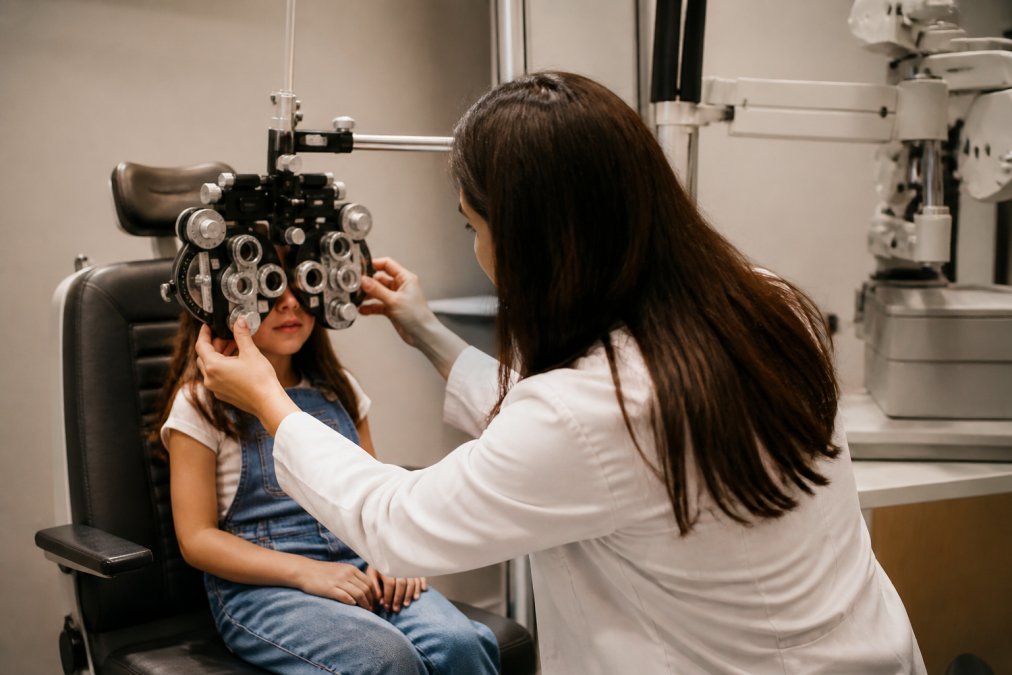
The appointment starts with history. The optometrist will ask about your child's development, any vision concerns you've noticed, family history of eye problems, and previous exams. Be specific about headaches, squinting, or anything that prompted the visit.
Visual acuity testing follows. For younger children who can't read letters, the optometrist uses picture charts or shape matching. Older children read standard eye charts.
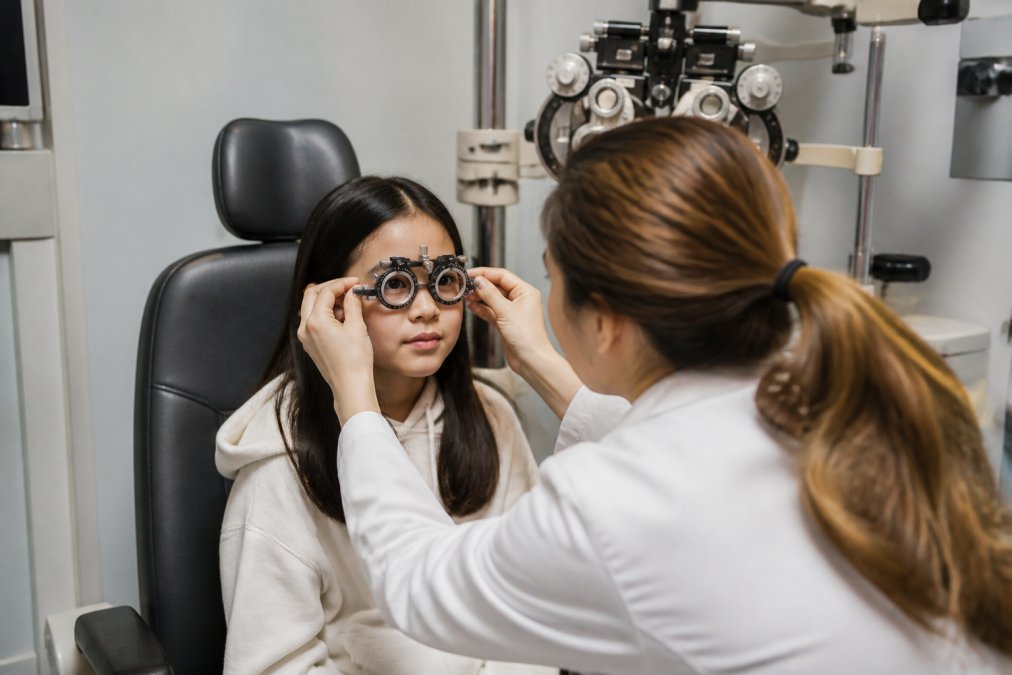
Refraction determines if your child needs glasses or contacts. The optometrist uses a phoropter and shows your child different lens combinations, asking which one makes things clearer. This is painless.
Eye alignment and binocular vision testing assesses whether your child's eyes point in the same direction and work together smoothly using cover tests, prism measurements, and tracking exercises.
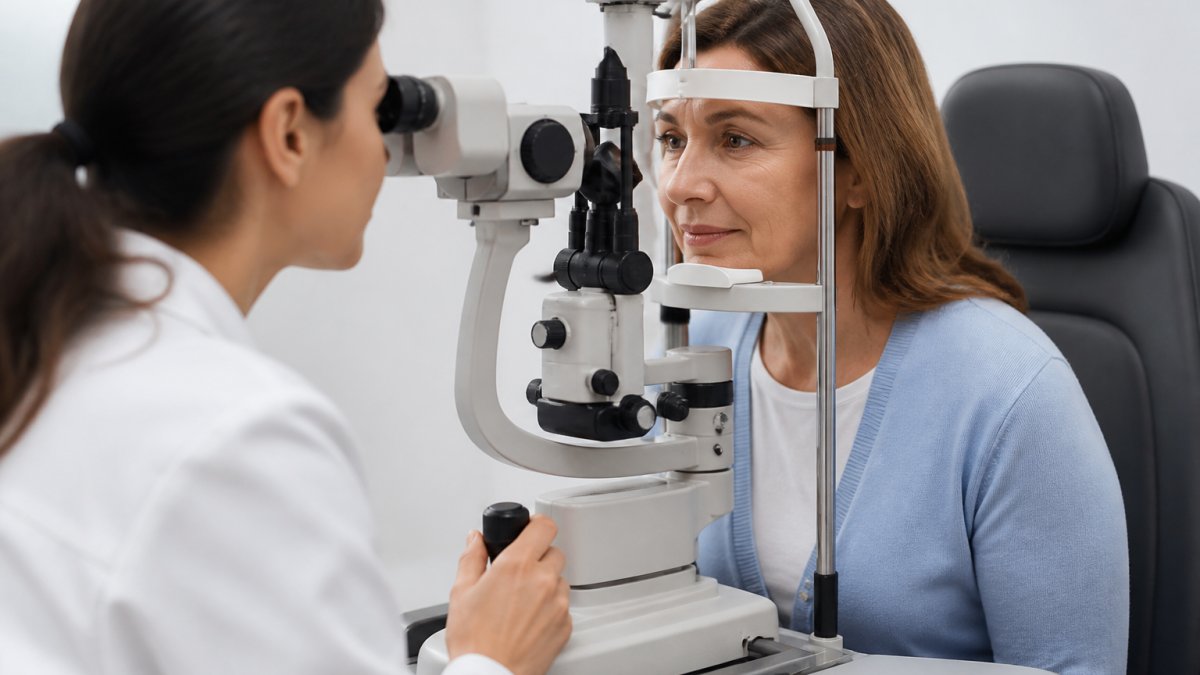
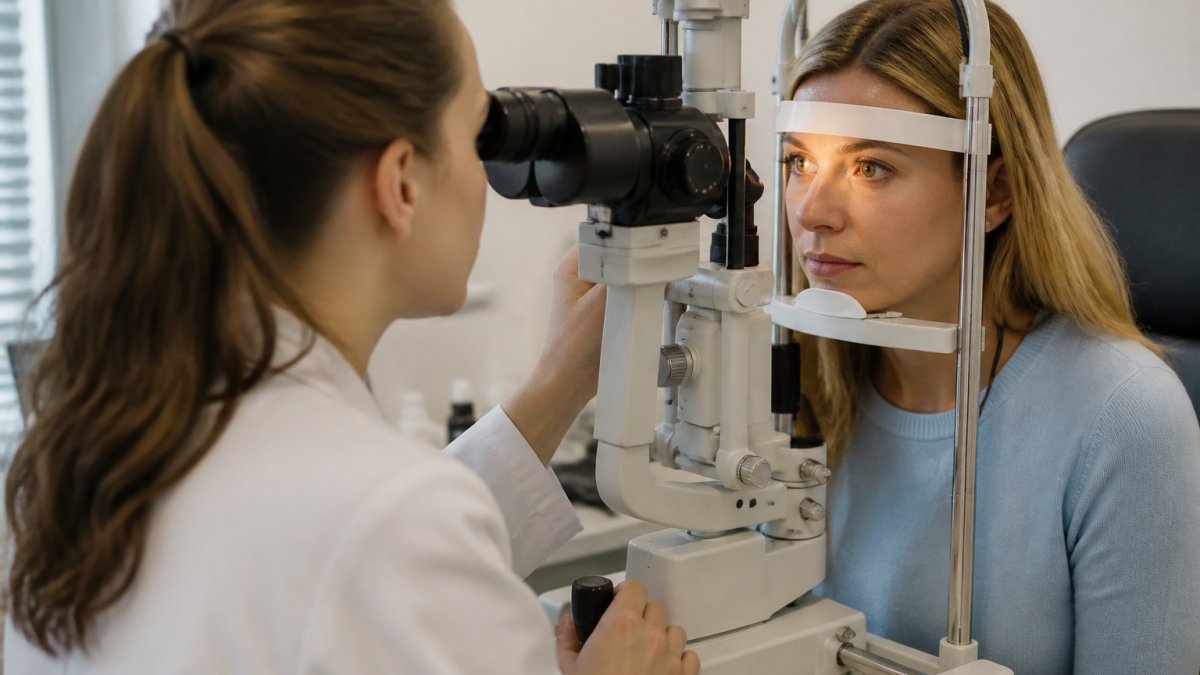
The optometrist examines the front of the eye with a slit lamp and dilates the pupils to see the back of the eye and optic nerve. Dilation takes about 20 minutes to wear off.
Throughout the exam, the optometrist watches how your child responds, how their eyes move, and whether they show signs of strain or discomfort.
How Long Does a Pediatric Eye Exam Take
Most comprehensive pediatric eye exams take 30 to 45 minutes from start to finish. The actual exam portion typically runs 20 to 30 minutes, with the remainder spent on check-in, paperwork, and discussing results.
Initial appointments take closer to 45 minutes because they include more detailed history-taking. Follow-up exams are usually faster.
Don't rush this appointment. A thorough pediatric eye exam can't be hurried. If an office promises to complete a comprehensive exam in 10 minutes, that's a red flag.
Common Childhood Eye Conditions and Early Detection
Certain conditions are common in childhood and respond best to early intervention.
Refractive errors, nearsightedness, farsightedness, and astigmatism, are the most common childhood eye problems. They're easily corrected with glasses or contacts, but if left uncorrected, they cause eye strain, headaches, and difficulty in school.
Amblyopia (lazy eye) develops when one eye doesn't see as clearly as the other, so the brain favors the stronger eye. If caught by age 7 or 8, it's treatable with glasses, patching, or other interventions. After that window closes, vision loss is permanent.
Strabismus (eye misalignment) means the eyes don't point in the same direction. This affects depth perception and binocular vision. Treatment options range from glasses to eye exercises to surgery, depending on severity.
Astigmatism causes blurred vision at all distances because the cornea is irregularly shaped. Moderate to severe astigmatism causes eye strain and headaches.
Color vision deficiency (colorblindness) is usually genetic and permanent, but identifying it early helps teachers and parents make accommodations.
Early detection through a comprehensive pediatric eye exam prevents complications and supports normal development.
Digital Eye Strain and Screen Time: A Growing Concern for School-Aged Children
Screen time has become unavoidable for school-aged children. Remote learning, homework on tablets, video calls, and recreational use add up to hours daily, creating digital eye strain.
Digital eye strain happens because screens demand sustained focus at a fixed distance. Children blink roughly 66% less often when staring at screens, causing the tear film to break down faster and resulting in dryness and discomfort.
Symptoms include tired eyes, headaches, blurred vision, dry eyes, and neck or shoulder pain from poor posture. Many parents attribute these to normal tiredness, but they're often signs of visual stress.
During an eye exam for kids, the optometrist can assess your child's focusing system and determine whether they have the visual stamina for sustained screen use. Some children's eyes fatigue faster than others, and some have focusing difficulties that screens exacerbate.
The 20-20-20 rule helps: every 20 minutes of screen time, take a 20-second break and look at something 20 feet away. Encourage better posture, screen at arm's length and slightly below eye level, and ensure adequate lighting to reduce glare.
If your child complains of eye strain after screen time, mention it during their eye exam. The optometrist can assess whether glasses, a modified prescription for near work, or other strategies would help.
Preparing Your Child for Their First Eye Exam
Preparation reduces anxiety and helps your child cooperate during the appointment.
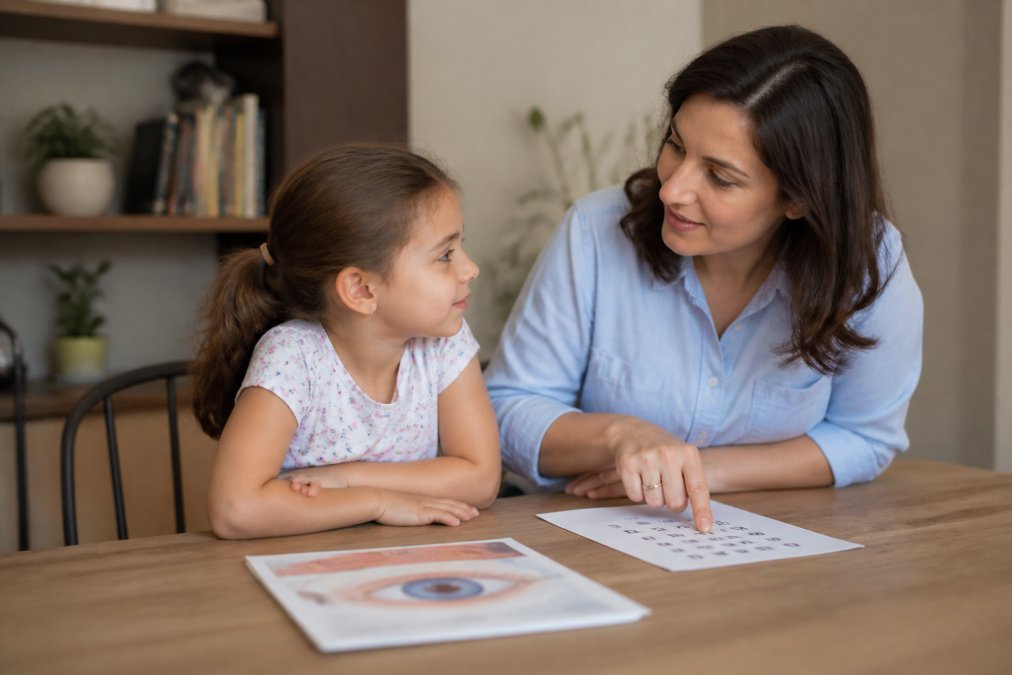
Explain what will happen in simple, concrete terms. Say something like: "The doctor will show you different pictures and ask which ones look clearer. They'll shine a light in your eyes to see inside. It doesn't hurt."
Read a children's book about eye exams if available. Some optometry offices have videos on their websites showing what a pediatric exam looks like.
Visit the office ahead of time if possible. Let your child see the waiting room and exam room to remove the "unknown" element that fuels anxiety.
Play "eye doctor" at home where you pretend to look in your child's eyes with a flashlight. Make it playful, not clinical.
Reassure your child that the exam is about helping them see better and making sure their eyes are healthy.
Arrive early enough that your child doesn't feel rushed. Bring any previous exam records or glasses. Dress your child comfortably.
If your child has anxiety around medical settings, let the optometrist know before the exam starts. Many pediatric practices have strategies for anxious children.
Vision and Learning: How Eye Health Supports Academic Success
Vision problems affect how well your child learns. Reading requires coordinated eye movements, sustained focus, and the ability to track across a line of text. If your child has uncorrected refractive error, binocular vision problems, or focusing difficulties, reading is exhausting. They might read slowly, skip lines, lose their place, or avoid reading altogether. Teachers sometimes interpret this as a learning disability or attention problem when the real issue is vision.
Math and visual learning depend on depth perception and spatial processing. Strabismus or binocular vision problems interfere with this.
Classroom participation suffers when a child can't see the board clearly. Over time, this compounds and they disengage.
An eye exam for kids that identifies and corrects vision problems often leads to immediate improvements in academic performance. Teachers report that children who get glasses or address focusing problems show better attention, improved reading fluency, and higher engagement in class.
Children with undiagnosed vision problems often develop behavioral issues because they're frustrated or falling behind. Once vision is corrected, behavior often improves because the underlying cause is addressed.
Vision support is foundational to academic success.
At Wilck Schwartz & Novak OD PC, we understand that an eye exam for kids is about more than checking if they need glasses. It's about supporting their development, protecting their vision during the critical years when their visual system is forming, and setting them up for academic and athletic success. Our team uses advanced optometric equipment to assess your child's vision thoroughly and takes time to explain findings and answer your questions. If you've noticed any signs that your child might benefit from an eye exam, or if it's simply time for their routine assessment, schedule an appointment with us. We're here to ensure your child's eyes are healthy and their vision is supporting everything they do.
Frequently Asked Questions
What's the difference between a school vision screening and a comprehensive eye exam for kids?
School screenings check basic visual acuity, whether your child can see the 20/20 line on a chart. A comprehensive pediatric eye exam goes much deeper. It evaluates eye muscle coordination, focusing skills, binocular vision, color vision, and overall ocular health. The optometrist uses advanced equipment to detect refractive errors, amblyopia (lazy eye), strabismus, and other conditions that a screening might miss. Many children pass school screenings but still have undetected vision problems affecting their learning.
At what age should my child have their first comprehensive eye exam?
The American Optometric Association recommends that infants have their first eye exam by 6 months of age, with follow-up exams at age 3 and before starting school. After that, children should have comprehensive eye exams every 1-2 years, or more frequently if they have vision problems, a family history of eye disease, or if they spend significant time on screens. Early detection during these critical developmental years ensures your child's eyes develop properly and catches problems before they affect learning and development.
How long does a pediatric eye exam take?
A comprehensive pediatric eye exam typically takes 45 minutes to an hour, depending on your child's age and whether additional testing is needed. The exam includes visual acuity testing, eye muscle coordination assessment, focusing ability evaluation, and an internal and external eye health check. For younger children who may need more time to feel comfortable, or if dilated drops are used to examine the back of the eye, the appointment may run longer. We recommend scheduling adequate time and arriving a few minutes early to complete any necessary paperwork.
Can a comprehensive eye exam catch vision problems that school screenings miss?
Yes. School screenings are designed to identify children with significantly reduced vision, but they don't assess eye muscle coordination, focusing skills, binocular vision, or depth perception, all critical for learning and development. A comprehensive exam uses specialized equipment and techniques to detect refractive errors, amblyopia, strabismus, and other conditions that affect how your child's eyes work together. Many children with undetected vision problems report headaches while reading or difficulty concentrating, symptoms that a screening won't reveal but a comprehensive exam can address.
This article was written using GrandRanker