 ultimate_guide
How to Find Comfortable Contact Lenses: A Complete Guide
Table of Contents
- Understanding Contact Lens Materials and Comfort
- Daily vs. Monthly Contact Lenses for Comfort
- Professional Contact Lens Fitting: The Foundation of Comfort
- Best Contact Lenses for Dry Eyes and Moisture Retention
- Contact Lens Comfort Tips for Daily Wear Success
- Advanced Comfort Solutions: Addressing Specific Needs
- The Adjustment Period: What New Wearers Should Expect
- How to Find Comfortable Contact Lenses: Your Action Plan
Finding Comfortable Contact Lenses: A Complete Guide
Last Updated: July 29, 2026
Finding comfortable contact lenses requires understanding lens materials, fit specifications, and your individual eye health needs. The difference between frustrating wear and comfortable all-day vision comes down to material choice, professional fitting, and daily habits.
Understanding Contact Lens Materials and Comfort
The material your lenses are made from determines how much oxygen reaches your cornea and how well they retain moisture. Two primary categories dominate: silicone hydrogel and traditional hydrogel.
Silicone hydrogel lenses allow significantly more oxygen to pass through to your cornea, typically achieving Dk/t values of 100 or higher compared to traditional hydrogels at 20-40. This increased oxygen permeability means fewer end-of-day discomfort symptoms and longer comfortable wear periods. Traditional hydrogel lenses excel at moisture retention with water content of 55-60%, making them ideal for part-time wear or sensitive eyes, but lower oxygen permeability can lead to corneal swelling during extended wear.
The Role of Oxygen Permeability (Dk/t) in Lens Comfort
Oxygen permeability (Dk/t) measures how efficiently oxygen moves through the lens to your cornea. The FDA considers Dk/t of 24 the minimum for safe daily wear, but research from American Academy of Ophthalmology guidelines on contact lens safety suggests values above 100 provide substantially better corneal health and comfort. Premium daily disposables typically range from 130-150.
When oxygen flow is restricted, your eyes compensate by increasing tear production and blinking frequency, creating a cycle of dehydration and discomfort. A lens with Dk/t of 140 will feel noticeably more comfortable than one with Dk/t of 60, especially for 12+ hour daily wear.
Daily vs. Monthly Contact Lenses for Comfort
Daily disposable lenses eliminate cleaning and storage, providing a fresh, sterile lens each morning with zero protein buildup, bacterial colonization, or lens-related infections. Many patients report daily disposables feel noticeably fresher than monthly lenses. Monthly replacement lenses cost significantly less per lens but require disciplined daily cleaning, and comfort typically declines as the month progresses due to protein deposits and bacterial biofilm accumulation.
A practical middle ground exists: wear daily disposables on weekdays when comfort matters most, and switch to monthly lenses on weekends. This hybrid approach provides daily disposable comfort when needed while keeping overall costs manageable.
Professional Contact Lens Fitting: The Foundation of Comfort
About 60% of comfort problems stem from improper fit rather than material issues. A perfectly fitted lens in the "wrong" material often feels better than a poorly fitted lens in the "right" material.
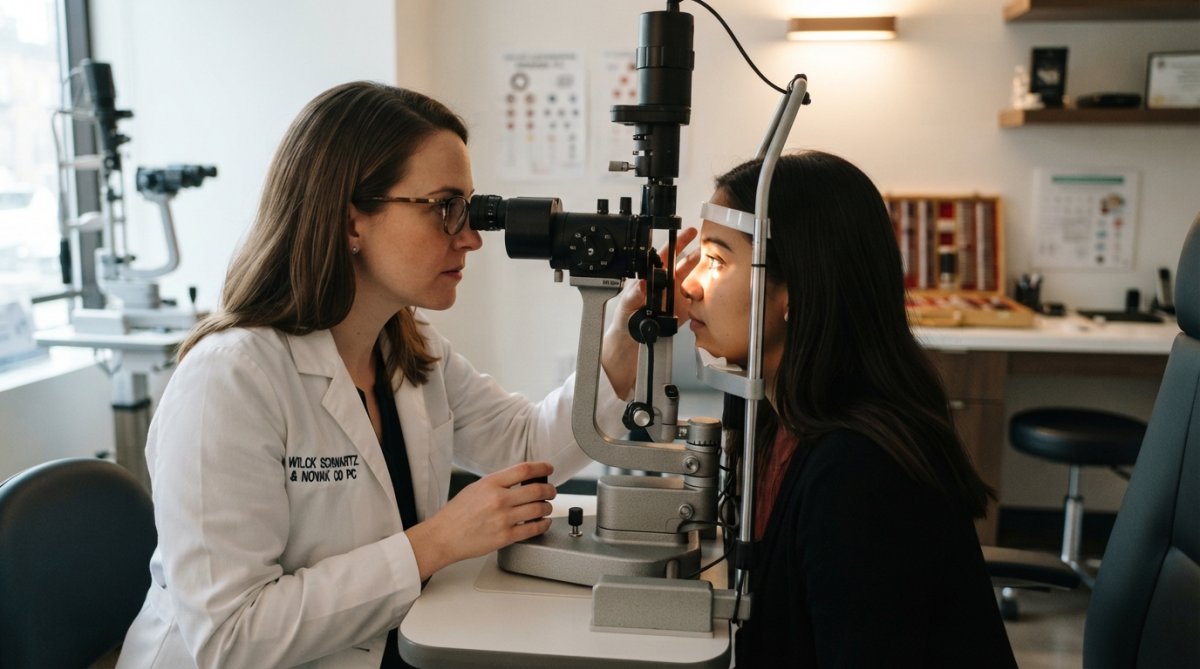
Professional fitting measures your cornea's curvature using a keratometer or corneal topographer, determining your base curve, the curvature of the lens's inner surface. Your provider also measures corneal diameter, evaluates tear film quality, and assesses how your eyelids interact with the lens during blinking. Trial fittings let you wear candidate lenses while your provider observes positioning, movement, and vision quality.
Why Lens Diameter and Base Curve Matter
Lens diameter (typically 13.5-14.5mm) determines corneal coverage, while base curve (typically 8.0-9.0mm) must match your corneal curvature. Mismatching creates mechanical irritation that no premium material can overcome. Many online retailers stock only common fits, leaving people with steeper or flatter corneas struggling to find comfortable lenses without professional fitting.
How to Identify if Your Lenses Fit Properly
A properly fitted lens should feel invisible within minutes of insertion. Watch how your lens moves during blinking, it should move 0.5-1.5mm, enough for fresh tears but not excessive sliding. Vision should be crisp immediately after blinking. If vision blurs slightly after each blink, the lens is moving too much.
Best Contact Lenses for Dry Eyes and Moisture Retention
Dry eye syndrome affects approximately 16 million Americans. Work with your provider to determine whether your dry eye is aqueous-deficient (low tear volume) or evaporative (normal volume but excessive evaporation). Treatment differs accordingly: aqueous-deficient dry eye may benefit from artificial tears, prescription eye drops, or punctal plugs, while evaporative dry eye may improve with warm compresses, eyelid hygiene, or omega-3 supplementation.
Choose contact lenses specifically formulated for dry eye wearers: look for high water content (55-60%), enhanced wettability, or moisture-retaining compounds like hyaluronic acid or polyvinylpyrrolidone (PVP). Brands like BioTrue and Dailies Total1 specifically target dry eye wearers.
Surface Wettability and Tear Film Compatibility
Surface wettability determines how well your tears spread across and adhere to the lens. Manufacturers achieve wettability through inherently wettable materials, hydrophilic polymer coatings, or moisture-retaining compounds. Your tear film composition matters equally, if your tears are lipid-rich or mucin-deficient, they may not spread evenly across certain materials.
Your eye care provider can assess tear film quality using the Schirmer test (measuring tear volume) or tear osmolarity testing (measuring tear concentration), enabling recommendations for compatible lens materials.
Contact Lens Comfort Tips for Daily Wear Success
Proper Lens Hygiene and Cleaning Solutions
Always use fresh solution each time you store your lenses. Never reuse old solution, bacteria and fungi multiply in stale solution, leading to infections and irritation. Empty your lens case daily, rinse with fresh solution (not tap water), and let it air dry. Replace your lens case every three months.
Match your solution to your lens material. If you experience persistent irritation despite proper cleaning, consider hydrogen peroxide-based solutions, which are more effective at removing protein deposits than multipurpose solutions.
Lifestyle Factors: Screen Time, Environment, and Blinking Rate
When you focus on a screen, your blinking rate drops dramatically, sometimes to just 3-4 blinks per minute versus your normal 15-20. Implement the 20-20-20 rule: every 20 minutes, look at something 20 feet away for 20 seconds. This forces a complete blink cycle and allows tear film redistribution.
Environmental factors matter significantly. Dry climates, heated indoor spaces, and air conditioning accelerate tear evaporation. Keep artificial tears at your desk and use them proactively throughout the day. Wind accelerates tear evaporation, so consider wearing sunglasses outdoors on windy days.
Medication and Systemic Health Impact on Lens Comfort
Many medications reduce tear production or alter tear composition, making contact lens wear uncomfortable. Common culprits include antihistamines, decongestants, antidepressants, and blood pressure medications. Systemic conditions like Sjögren's syndrome, rheumatoid arthritis, lupus, and thyroid disorders can cause dry eye. Hormonal changes during menopause or while taking certain contraceptives often increase dry eye symptoms. Dehydration reduces tear production, aim for consistent hydration throughout the day.
Advanced Comfort Solutions: Addressing Specific Needs
Toric Lenses for Astigmatism and Multifocal Options for Presbyopia
Astigmatism requires toric lenses, which have different powers in different meridians. Toric lenses must maintain specific orientation on your eye, if they rotate, your vision blurs. Well-fitted toric lenses provide excellent comfort and vision.
Presbyopia (age-related difficulty focusing on near objects) requires multifocal contact lenses, which incorporate multiple powers within a single lens. These come in simultaneous vision, alternating vision, and blended vision designs. A well-fitted multifocal pair provides the convenience of contacts without reading glasses.
Makeup, Skincare, and Contact Lens Compatibility
Most makeup is compatible with contact lens wear, but waterproof mascara poses risks. Waterproof formulations contain oils and waxes that deposit on lenses, causing haziness and discomfort. Switch to water-resistant mascara instead. Avoid tightlining (eyeliner on the inner rim), which deposits particles directly onto your lens. Apply makeup after inserting lenses and remove lenses before removing makeup.
Budget-Friendly vs. Premium Comfort Tiers
Budget-tier lenses use simpler materials and less sophisticated manufacturing. Mid-tier lenses (premium monthly replacements or standard daily disposables) offer noticeably better comfort. Premium-tier lenses use the most advanced materials, highest Dk/t values, and modern moisture-retention technology. Your decision should depend on your specific needs and budget.
The Adjustment Period: What New Wearers Should Expect
Most new wearers experience mild discomfort during the first few days as your cornea adapts to the lens. Your vision may feel slightly different initially, and some new wearers experience mild lens awareness. This usually decreases significantly after a few days.
However, persistent pain, significant redness, vision loss, or discharge should prompt immediate contact with your eye care provider. Most new wearers need to practice insertion and removal technique, developing muscle memory within a week or two.
How to Find Comfortable Contact Lenses: Your Action Plan
Step 1: Schedule a Professional Fitting with an Optometrist
Professional fitting is non-negotiable. A professional fitting involves measuring your corneal curvature, evaluating your tear film, assessing your eyelid anatomy, and performing trial fittings with candidate lenses. Schedule with an optometrist or ophthalmologist experienced in contact lens fitting.
Step 2: Discuss Your Lifestyle and Comfort Priorities
Have a detailed conversation about how many hours per day you'll wear lenses, what environments you'll be in, whether you have dry eye symptoms, and what matters most to you. Tell your provider about medications you take and systemic health conditions you have.
Step 3: Trial Wear and Honest Feedback
Your provider will fit you with trial lenses and ask you to wear them for a few minutes while they observe how the lenses sit on your eye, how they move during blinking, and how your vision looks. Your provider may send you home with trial lenses to wear for a day or two. When you return, provide honest feedback about your experience.
Step 4: Optimize Your Lens Care Routine
Once you've found comfortable lenses with good vision, optimize your daily care routine. Use the lens solution recommended by your provider. Develop a consistent insertion and removal routine. Use artificial tears throughout the day, particularly during extended screen time or in dry environments.
| Step | Duration | Key Action |
|---|---|---|
| Professional fitting | 60-90 minutes | Corneal measurements, tear film evaluation, trial fittings |
| Lifestyle discussion | 15-20 minutes | Explain daily wear patterns, comfort priorities, health factors |
| Extended trial wear | 1-3 days | Wear trial lenses during normal activities, assess real-world comfort |
| Follow-up evaluation | 30-45 minutes | Report feedback, adjust fit if needed, finalize lens choice |
| Care routine optimization | Ongoing | Establish consistent insertion/removal habits, proper cleaning protocol |
Finding comfortable contact lenses requires matching the right lens material and design to your specific eye anatomy, tear film characteristics, and lifestyle demands. Professional fitting is the foundation that separates comfortable all-day wear from frustrating experiences. At Wilck Schwartz & Novak OD PC, we combine advanced optometric equipment with personalized attention to ensure you find lenses that feel like you're not wearing anything. Schedule an appointment with our Brooklyn optometry practice today, and let's find the comfortable contact lenses that work for your life.
Frequently Asked Questions
What are the most comfortable contact lenses for dry eyes?
Silicone hydrogel lenses with high oxygen permeability (Dk/t values) and moisture-retaining properties tend to be more comfortable for dry eyes. Look for lenses designed with surface wettability enhancements and those specifically formulated to maintain tear film stability. Brands like Dailies Total1 and Air Optix are often recommended. However, the best lens for your dry eyes depends on your individual tear chemistry and corneal health, which is why a professional fitting with an optometrist is essential to find your ideal match.
Should I choose daily or monthly contact lenses for comfort?
Daily disposables offer superior comfort for many wearers because you start with a fresh lens each day, eliminating protein deposit buildup that can cause irritation. They require no cleaning solution maintenance, reducing the risk of contamination. Monthly replacement lenses may be more economical but require diligent hygiene and can accumulate deposits over time, potentially reducing comfort. Your lifestyle, budget, and lens care commitment should guide this decision, discuss both options with your optometrist during your fitting.
How do I know if my contact lenses fit properly?
A proper fit means the lens moves slightly with blinking, sits centered on your cornea, and covers your iris completely. You shouldn't feel the lens throughout the day, experience excessive tearing, or have persistent redness. Your optometrist will evaluate lens diameter and base curve to ensure correct positioning. If you experience discomfort, frequent slipping, or the lens feels too tight, contact your eye care provider immediately, improper fit can compromise corneal health and reduce comfort significantly.
Can medications or health conditions affect contact lens comfort?
Yes. Systemic medications like antihistamines, decongestants, and certain blood pressure medications can reduce tear production, increasing dry eye symptoms while wearing lenses. Conditions such as diabetes, rheumatoid arthritis, and thyroid disorders can also impact tear quality and comfort. Inform your optometrist about all medications and health conditions during your fitting. They may recommend specific lens materials, wearing schedules, or supplemental eye drops to optimize comfort based on your individual health profile.
How does screen time affect contact lens comfort?
Extended screen time reduces your natural blinking rate, which decreases tear film distribution across the lens surface, causing digital eye strain and dryness. This is especially problematic with contact lenses, as reduced blinking allows protein deposits to accumulate faster. To combat this, practice the 20-20-20 rule: every 20 minutes, look at something 20 feet away for 20 seconds. Take regular breaks, stay hydrated, and use rewetting drops designed for contact lens wearers. Discuss your screen-heavy lifestyle with your optometrist to select lenses with optimal moisture retention.
What's the difference between silicone hydrogel and hydrogel contact lenses?
Silicone hydrogel lenses allow significantly more oxygen to reach your cornea due to their advanced material composition, promoting better corneal health and comfort during extended wear. Traditional hydrogel lenses transmit less oxygen but may feel slightly softer initially. Silicone hydrogel's superior oxygen permeability (higher Dk/t values) makes them ideal for all-day comfort and reduces eye irritation. Most modern comfortable lenses are silicone hydrogel. Your optometrist will recommend the best material based on your prescription, eye health, and lifestyle needs.
Are there contact lenses compatible with makeup and skincare products?
Yes, but compatibility matters. Oil-based makeup and skincare products can coat lens surfaces, reducing clarity and comfort. Choose water-based or silicone-based makeup formulas instead. Apply makeup after inserting lenses and remove lenses before taking off makeup to minimize product transfer. Avoid products with heavy fragrance or irritating chemicals near your eyes. If you wear toric lenses for astigmatism, be extra cautious, any coating affects their precise positioning. Always wash your hands thoroughly before handling lenses, and consult your optometrist about specific product recommendations.
This article was written using GrandRanker