 how-to
How to Improve Indoor Air Quality for Dry Eyes
Table of Contents
- Why Indoor Air Quality Matters for Dry Eye Syndrome
- The Ideal Indoor Humidity for Dry Eyes
- Choosing the Best Air Purifier for Dry Eyes
- Natural Remedies for Dry Eyes at Home
- Managing Ventilation, Air Drafts, and HVAC Systems
- Seasonal Air Quality Adjustments and Cleaning Chemicals
- When to See an Eye Doctor for Dry Eye Relief
- Frequently Asked Questions
Last Updated: September 16, 2026
Why Indoor Air Quality Matters for Dry Eye Syndrome
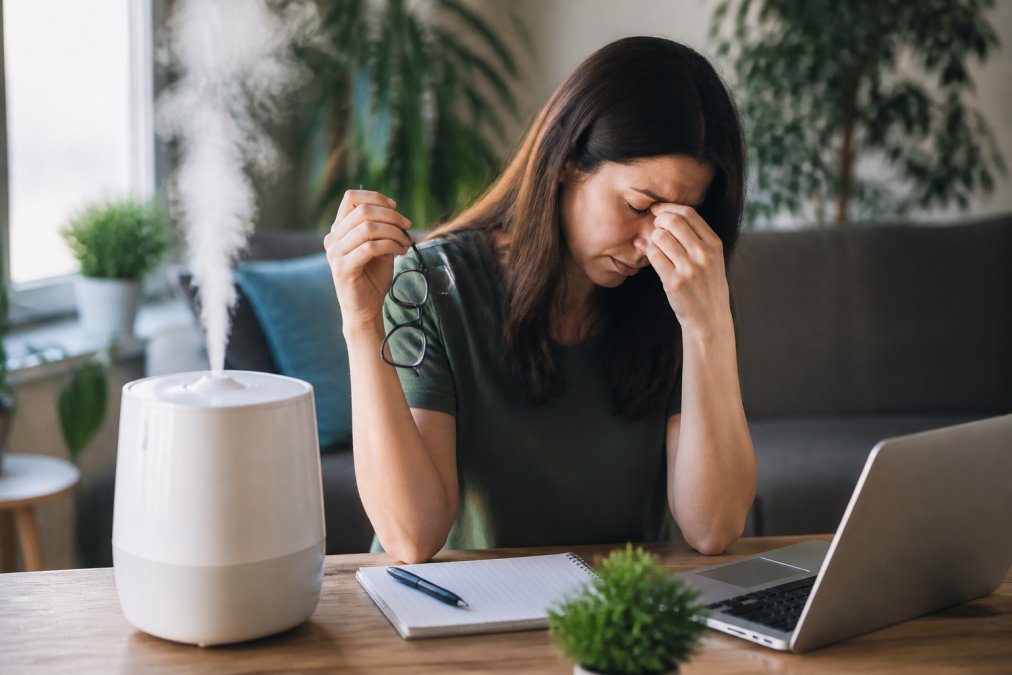
Learning how to improve indoor air quality for dry eyes starts with one uncomfortable fact: the air inside your home may be working against your tear film all day. At Wilck Schwartz & Novak OD PC, we see patients every week who have tried drop after drop without ever examining the room they sit in for eight hours. Dry eye syndrome is a multifactorial condition, and the American Optometric Association's dry eye resources confirms that environmental factors play a significant role in how the ocular surface behaves. Fix the air, and many patients find their symptoms become far more manageable.
How Dry Air Breaks Down Your Tear Film
Your tear film has three layers, and the outermost lipid layer is the one that slows tear film evaporation. When relative humidity drops, that layer thins and destabilizes. The meibomian glands along your eyelids cannot keep up, tear production falls behind evaporation, and the ocular surface dries out. A common mistake is treating this purely with lubricating eye drops while ignoring a room sitting at 25% relative humidity.
Airborne Irritants That Trigger Flare-Ups
Particulate matter, dust, pet dander, and volatile organic compounds all land on the eye and provoke inflammation. That inflammation worsens blepharitis and interrupts the corneal health that keeps your eyes comfortable. Environmental triggers like tobacco smoke and cooking fumes are especially punishing because they combine chemical irritation with dryness.
The Ideal Indoor Humidity for Dry Eyes
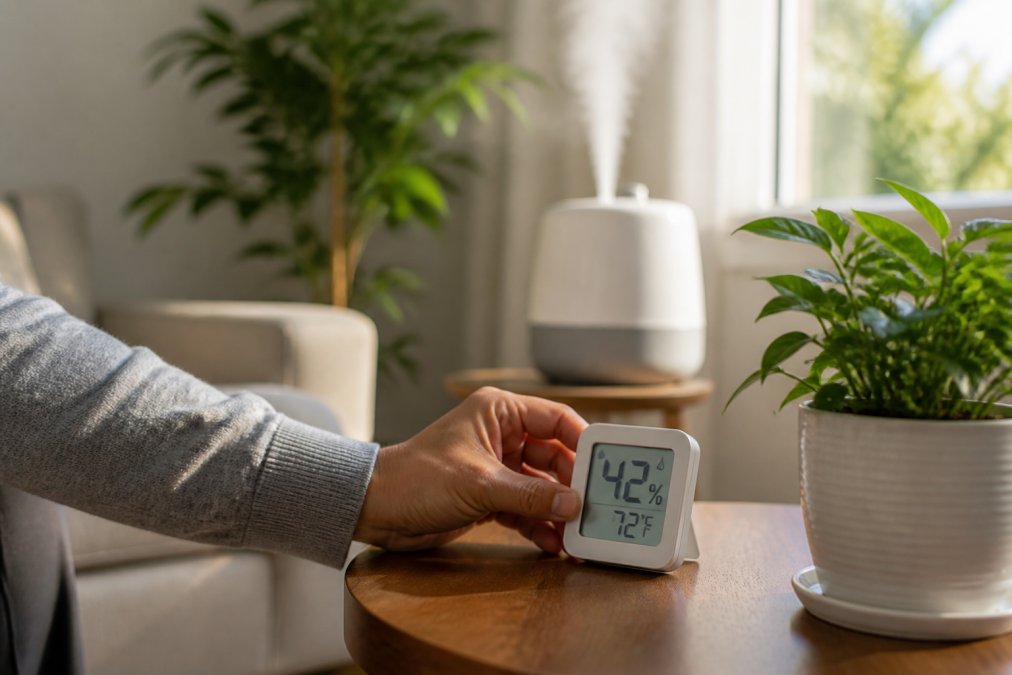
The ideal indoor humidity for dry eyes sits between 40% and 60% relative humidity. Below 40%, tear film evaporation accelerates; above 60%, you invite mold and dust mites, which are themselves airborne irritants.
The practical move is buying an inexpensive hygrometer and placing it where you actually sit, not in a hallway. Many homes run dry in winter and overly damp in summer, so the number changes with the season. A whole-house humidifier is convenient, but a single-room unit near your desk often solves the problem faster and costs less to run.
Choosing the Best Air Purifier for Dry Eyes
The best air purifier for dry eyes is one that combines HEPA filtration with an activated carbon stage, sized correctly for the room. HEPA filtration captures fine particulate matter, while activated carbon handles gases and odors that HEPA alone lets through. Oversized units waste money; undersized units leave the room half-cleaned.
HEPA Filtration and Activated Carbon: What Actually Helps
A true HEPA filter traps the particles that land on your eyes and aggravate symptoms. Activated carbon matters more than most buyers realize because it addresses volatile organic compounds released by paint, furniture, and cleaning products. Skip "ionizing" or "ozone generator" models entirely. Ozone is a respiratory and ocular irritant, and the EPA's guidance on ozone generators is clear that these devices do not belong in an occupied home.
Smart Home Automation for Humidity Control
Smart hygrometers and connected humidifiers let you hold a target humidity range automatically rather than guessing. This is the single biggest gap in most dry eye advice: nobody tells you that humidity swings overnight, exactly when your eyes are most vulnerable. A unit that adjusts itself at 3 a.m. does more for you than any manual routine.
| Solution | What It Addresses | Best For |
|---|---|---|
| HEPA + carbon purifier | Particulate matter, VOCs, odors | Bedrooms, home offices |
| Smart humidifier | Relative humidity below 40% | Overnight comfort, winter months |
| Hygrometer | Measurement and monitoring | Every dry eye household |
| Ozone generator | Nothing useful | Nobody |
Natural Remedies for Dry Eyes at Home
Natural remedies for dry eyes at home work best as a supporting layer, not a replacement for diagnosis, but the ones that actually move the needle are the ones that interact with your indoor air, not the ones that sit in a medicine cabinet.
1. Warm compress, done correctly. A compress held at roughly 104°F to 113°F for 8 to 10 minutes softens the meibum clogging your meibomian glands so the lipid layer can spread again. A washcloth rinsed under hot tap water cools below therapeutic range within two minutes; a microwaveable bead mask or a controlled-temperature device holds the range for the full session. Do it before bed, not after you have already been staring at a screen for three hours.
Managing Ventilation, Air Drafts, and HVAC Systems
Air circulation keeps indoor pollutants from concentrating, but it must not blow across your eyes. That tension, ventilate the room, but don't dry out the person in it, is where most dry eye advice stops, and it is where the practical work actually starts.
Filter Ratings That Matter for Eye Irritation
HVAC and purifier filters are rated on the MERV scale, and the number is not a marketing label. A MERV 8 filter captures the bulk of pollen, dust mite debris, and pet dander. A MERV 11 to MERV 13 filter captures finer particulate, the size range that stays airborne longest and lands on the ocular surface. Above MERV 13, you start restricting airflow in a typical residential system, which can force the blower to work harder and, in some homes, reduce the total air exchanges per hour.
Ventilation Without the Draft
Kitchens and bathrooms are the two rooms where ventilation matters most, because moisture and combustion fumes build up fast. A range hood vented to the exterior, not a recirculating model, pulls cooking fumes out of the air before they spread. Bathroom exhaust fans should run for 15 to 20 minutes after a shower to clear humidity, but if the room already sits above 60% relative humidity, that fan is fighting a losing battle and you need to address the source.
HVAC Settings and Seasonal Adjustments
Heating and air conditioning both remove moisture from the air, just by different mechanisms. A furnace raises the temperature of cold outdoor air, which drops its relative humidity sharply, a home at 45% in October can sit at 20% by January with the heat running. Air conditioning condenses moisture on the evaporator coil and drains it away, so a tightly sealed home in summer can also run dry.
Seasonal Air Quality Adjustments and Cleaning Chemicals
Winter brings low humidity and closed windows; summer brings air conditioning and pollen. Adjust your humidity target and filter schedule with the season rather than setting it once. Cleaning chemicals deserve particular attention: ammonia-based glass cleaners, aerosol air fresheners, and bleach fumes are common flare triggers, and switching to fragrance-free, low-VOC products reduces exposure without much effort. Clean while ventilating, and keep the purifier running afterward.
When to See an Eye Doctor for Dry Eye Relief
Persistent dryness, burning, redness, or blurring that fluctuates with blinking deserves a proper evaluation rather than another over-the-counter drop. An eye exam can identify blepharitis, meibomian gland dysfunction, or an underlying condition that air quality changes alone will not resolve. At Wilck Schwartz & Novak OD PC, our team uses advanced optometric equipment to diagnose and manage dry eye syndrome precisely, and we have served Brooklyn families since 1964.
Frequently Asked Questions
Does low humidity cause dry eyes?
Yes, low humidity is a major contributor to dry eye syndrome. When indoor relative humidity drops below 30%, the air pulls moisture from your tear film faster than your eyes can replace it. This speeds up tear film evaporation and leaves the ocular surface exposed. Using a hygrometer to monitor humidity levels and keeping your home between 40% and 60% relative humidity can help reduce symptoms significantly.
Can air purifiers help with dry eyes?
Air purifiers with HEPA filtration can reduce airborne irritants like dust, pollen, and smoke that trigger dry eye flare-ups. While a purifier does not add moisture to the air, it removes particulate matter that can settle on the ocular surface and worsen irritation. For best results, pair a HEPA air purifier with a humidifier to address both air quality and humidity levels in your home environment.
How can I naturally lubricate my dry eyes at home?
Natural remedies for dry eyes at home include using a warm compress on closed eyelids for 5 to 10 minutes to stimulate meibomian glands, blinking consciously during screen time, and following the 20-20-20 rule. Staying hydrated, running a humidifier, and avoiding direct air drafts from fans or HVAC vents also help. If symptoms persist, lubricating eye drops or artificial tears can supplement these habits.
What is the best climate for people with dry eyes?
A climate with moderate humidity, typically between 40% and 60% relative humidity, is ideal for people with dry eyes. Extremely dry, windy, or high-altitude environments worsen tear film evaporation. Indoors, you can recreate this climate by using a humidifier, sealing drafty windows, and avoiding prolonged exposure to air conditioning or heating vents that blow directly on your face.
Improving your home's air is a project you can start this weekend, but dry eye syndrome often has more than one driver. Wilck Schwartz & Novak OD PC offers comprehensive eye exams, dry eye management, and emergency eye care for infections and injuries, all with the diagnostic technology to pinpoint what is actually irritating your eyes. Get started with Wilck Schwartz & Novak OD PC and build an eye care plan around your home, your screen habits, and your symptoms.