 listicle
Alternatives to Glasses for Children with Myopia
Table of Contents
- Why Consider Alternatives to Glasses for Myopia?
- Orthokeratology for Children: Overnight Lenses, Daytime Freedom
- Atropine Drops for Myopia Control: A Non-Invasive Option
- Soft Multifocal Contact Lenses: Daily Disposables That Slow Progression
- Specialized Glasses Lenses: Myopia Control Without Contacts
- Pediatric Eye Exam Requirements: What to Expect at the Optometrist
- Cost, Compliance, and Success Rates: Making an Informed Choice
- Frequently Asked Questions
Last Updated: September 14, 2026
Why Consider Alternatives to Glasses for Myopia?
Standard single-vision glasses correct blur, but they do not slow the underlying elongation of the eye that drives worsening nearsightedness. For families searching for alternatives to glasses for children with myopia, the goal is different: control progression, not just sharpen vision. At Wilck Schwartz & Novak OD PC, we explain to Brooklyn families that myopia management is a therapeutic intervention, not a cosmetic preference.
The distinction matters because a child's refractive error can climb steadily through the school years. Myopia is typically detected in childhood and progresses as the eye grows, which is why early intervention is worth discussing with an eye doctor.
| Option | How It Works | Worn | Best For |
|---|---|---|---|
| Ortho-K | Reshapes cornea overnight | Night | Sports, daytime freedom |
| Atropine drops | Slows eye growth | Once daily | Contact-averse kids |
| Multifocal lenses | Peripheral defocus optics | Daytime | Active daily wearers |
| Specialty glasses | Defocus lens segments | Daytime | Young or hesitant kids |
Orthokeratology for Children: Overnight Lenses, Daytime Freedom
Orthokeratology for children uses custom gas permeable lenses worn overnight to temporarily reshape the cornea, providing clear daytime vision without glasses or contacts. Your child removes the lenses each morning and sees clearly through the school day and sports.
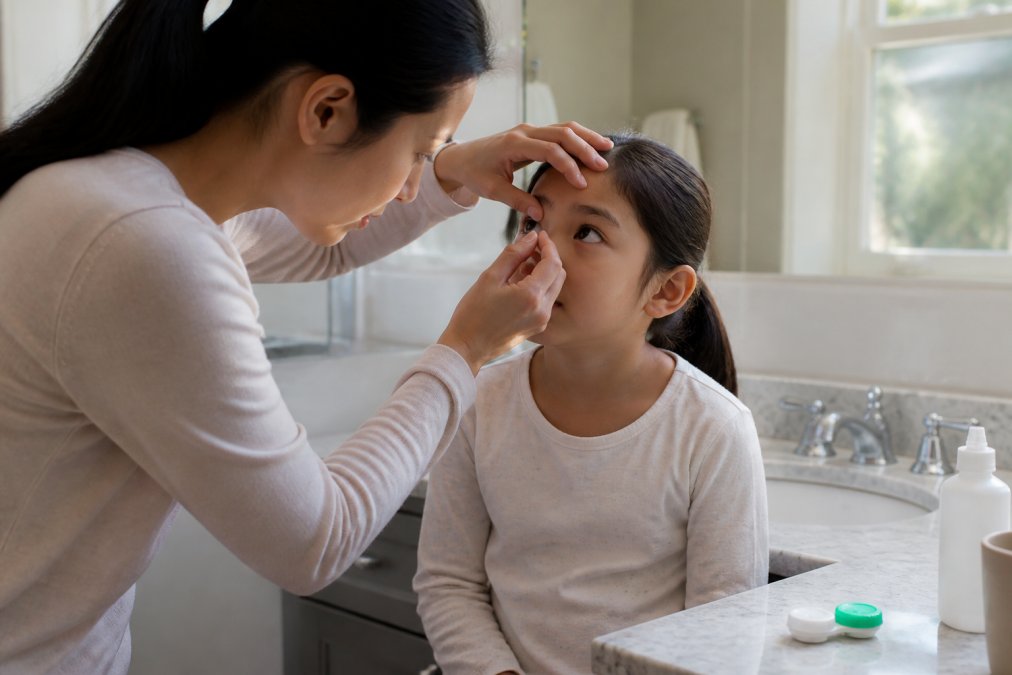
What most guides miss is the discipline requirement. Ortho-K demands strict nightly wear and cleaning. The FDA information on contact lens safety is clear that improper lens hygiene raises infection risk. A rushed bedtime routine is where problems start.
Atropine Drops for Myopia Control: A Non-Invasive Option
Atropine drops for myopia control are low-dose medicated eyedrops applied once daily to slow progression of nearsightedness. They involve no physical contact with the eye surface, making them attractive for children who dislike lenses or who are too young for contact lens wear.
How Atropine Actually Works
Atropine is a muscarinic antagonist. In myopia control, it is believed to act on receptors in the retina and sclera rather than simply paralyzing the focusing muscle. The result is a measurable slowing of axial elongation, the front-to-back growth of the eye that drives worsening nearsightedness. Because the effect is on eye growth, not just on the pupil, atropine is considered a disease-modifying therapy rather than a vision correction.
Low-Dose vs. Higher Concentrations
Historically, 1% atropine was used but caused significant light sensitivity and blurred near vision, so it was rarely tolerated for routine childhood use. Modern myopia management favors low-dose formulations, most commonly 0.01%, 0.025%, and 0.05%.
Your optometrist may start low and step up if annual axial length measurements show the eye is still growing too quickly.
What the ATOM Studies Established
The Atropine for the Treatment of Myopia (ATOM) studies, conducted in Asia and published in peer-reviewed ophthalmology journals, are the most-cited body of evidence for low-dose atropine in children. ATOM 1 compared 1% atropine to placebo; ATOM 2 compared 0.5%, 0.1%, and 0.01% and found 0.01% produced the best balance of efficacy and tolerability. These trials are why 0.01% became the default starting point in many pediatric practices.
The Daily Routine Parents Should Expect
Atropine is typically instilled once in each eye at bedtime. A common pattern:
- Wash hands.
- Have the child lie down or tilt the head back.
- Pull the lower lid down to form a small pocket.
- Place one drop in the pocket without touching the dropper tip to the eye or lashes.
- Have the child close the eyes for about 30 seconds and press gently at the inner corner to reduce drainage into the nose and throat.
- Replace the cap and store per the pharmacy label.
Because the drop is given at night, most children sleep through the peak effect. Sunglasses and a hat help on bright days, and reading glasses may be offered if near vision is noticeably blurred.
Side Effects and Safety
The most common side effects are light sensitivity, mild near blur, and occasional redness or irritation. Serious reactions are uncommon. Parents should call the prescribing eye doctor if a child develops eye pain, sudden vision change, or a rash. Atropine is a prescription medication, it should never be shared between siblings or purchased without an exam.
Who Atropine Is Best For
Atropine tends to be a strong fit for:
- Children too young for contact lenses.
- Kids who refuse or cannot tolerate lens insertion.
- Families who want a no-touch option.
- Children whose progression is fast enough that a second therapy (like multifocal lenses) may be layered on top.
A common approach is combination therapy: low-dose atropine plus multifocal contact lenses or specialty glasses.
Soft Multifocal Contact Lenses: Daily Disposables That Slow Progression
Soft multifocal contact lenses use multifocal optics and peripheral defocus to correct vision while slowing axial elongation.
How Peripheral Defocus Works
Standard single-vision contacts focus light sharply on the center of the retina but leave peripheral light focused behind the retina. That peripheral hyperopic defocus is thought to be one of the signals that tells the eye to keep growing. Multifocal myopia-control lenses flip this: they keep the central vision clear while deliberately pushing peripheral light in front of the retina. The eye reads that as 'stop growing,' and axial elongation slows.
MiSight 1 Day: The First FDA-Approved Option
MiSight 1 day (CooperVision) was the first soft contact lens to receive FDA approval specifically for myopia control in children, cleared for children aged 8 to 12 at the start of treatment. It is a daily disposable with a concentric dual-focus design, alternating zones of distance correction and treatment optics across the lens surface. Because it is a daily disposable, there is no cleaning regimen, no lens case, and no multipurpose solution to manage.
Other soft multifocal designs (including center-distance and extended-depth-of-focus geometries) are also prescribed off-label for myopia control by many eye doctors.
The Daily Wear Routine
A typical schedule:
- Wash and dry hands thoroughly.
- Remove the lens from its blister pack (or case, for reusable designs).
- Insert using the 'taco test', if the lens folds into a taco shape, it is inside out; if it forms a bowl, it is correct.
- Wear for the prescribed hours per day, generally at least 10 hours for the treatment effect.
- Remove and discard daily disposables at the end of the day; reusable lenses go into fresh solution.
- Never sleep in lenses unless the prescriber has specifically approved it.
Hygiene Rules That Actually Matter
Contact lens-related eye infections in children are almost always tied to hygiene lapses. The non-negotiables:
- No tap water. Ever. Not for rinsing, not for storage.
- No swimming or showering with lenses in.
- Fresh solution every time for reusable lenses, never top off old solution.
- Replace the case at least every three months.
- Stop and call the eye doctor if the eye is red, painful, or light-sensitive.
The FDA information on contact lens safety is clear that improper lens hygiene raises infection risk, and that risk applies to children just as it does to adults.
Cost and Compliance Reality
Soft multifocal lenses typically cost more per year than standard single-vision contacts because of the specialized optics and the need for more frequent follow-up. Daily disposables also cost more than reusable lenses on a per-year basis, but they eliminate solution and case costs and remove the biggest source of hygiene error.
Compliance drives results. A child who wears the lenses fewer than the prescribed hours, or who skips days, will not get the full progression-slowing effect.
Who Multifocal Lenses Are Best For
Soft multifocal lenses tend to be a strong fit for:
- Children aged 8 and older who are comfortable with lens handling.
- Active kids who play sports and want clear vision without glasses.
- Families who prefer a daily disposable with no cleaning routine.
- Children whose progression is fast enough that a single therapy may not be enough.
They are a poor fit for very young children, kids who cannot tolerate insertion, or families who cannot commit to the daily wear and follow-up schedule. In those cases, atropine drops or specialty glasses are usually the better starting point.
Specialized Glasses Lenses: Myopia Control Without Contacts
Specialized spectacle lenses bring myopia control to children who prefer glasses. Essilor Stellest uses H.A.L.T. lenslet technology, while MiYOSMART relies on D.I.M.S. segments to create peripheral defocus. Both correct vision and manage progression in one pair.
The upside is familiarity: no hygiene routine, no lens handling. The catch is that effectiveness depends on consistent wear, and MiYOSMART in particular needs correct frame fitting.
Pediatric Eye Exam Requirements: What to Expect at the Optometrist
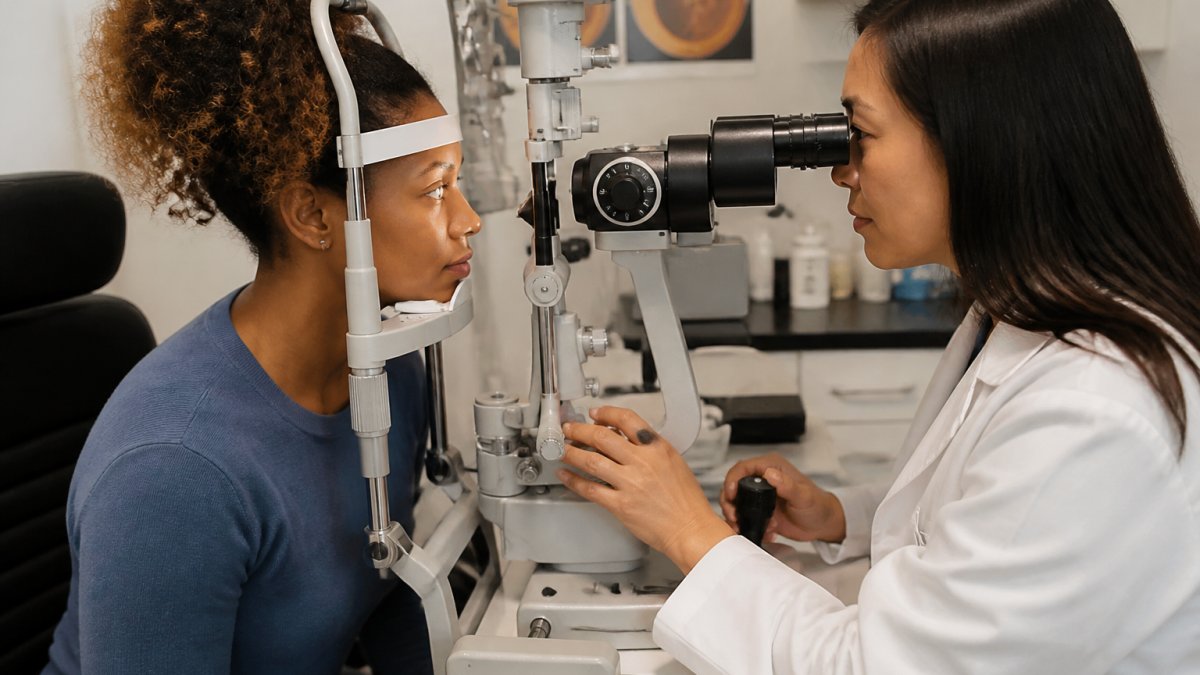
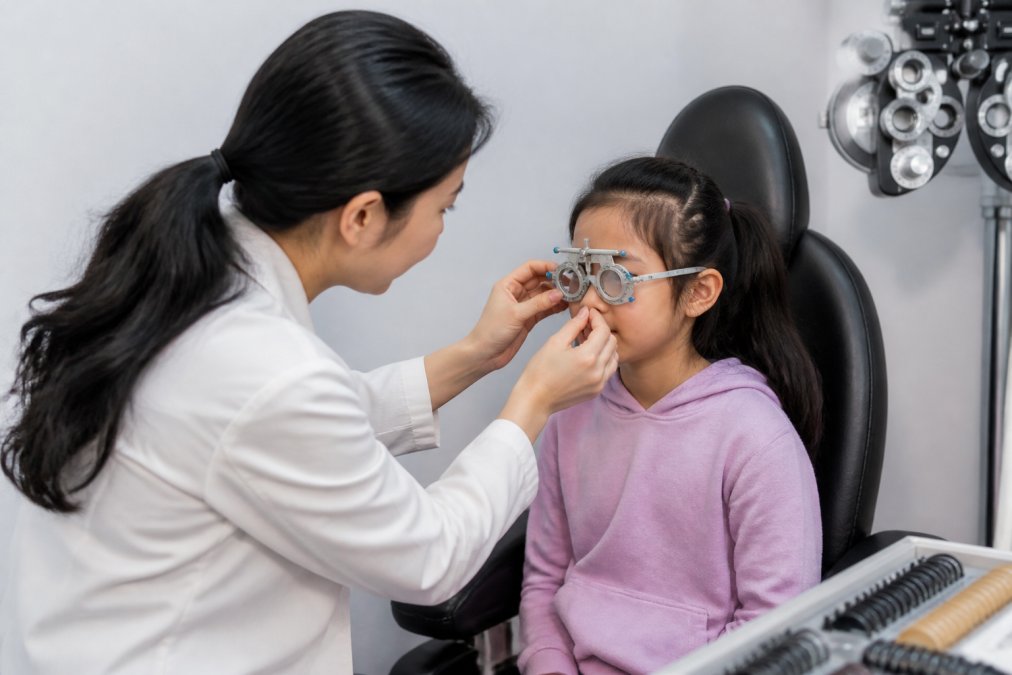
A pediatric eye exam goes beyond the basic screening many schools provide. A comprehensive exam assesses visual acuity, refractive error in diopters, eye alignment, and overall eye health, and it can catch problems a screening misses.
This is where Wilck Schwartz & Novak OD PC differs from a quick vision check. Our team uses advanced optometric equipment to measure eye growth and retinal health, then builds a management plan around your child. If your daughter complains of headaches when reading despite a "fine" school screening, a full exam is the right next step.
Cost, Compliance, and Success Rates: Making an Informed Choice
Myopia management is a long-term commitment, and pricing varies by option, prescription, and provider, so ask your eye doctor for a clear quote rather than assuming.
| Factor | What to Watch | Why It Matters |
|---|---|---|
| Cost | Annual lens or drop supply | Budget for ongoing care |
| Compliance | Daily or nightly routine | Drives effectiveness |
| Follow-up | Scheduled progress checks | Tracks eye growth |
Success is measured in slowed progression, not a one-time result. The American Optometric Association on children's vision and the CDC on children's eye health both stress regular professional exams as the foundation of pediatric eye care.
Myopia in children rarely stays still, and the right choice depends on your child's age, lifestyle, and tolerance for routines. At Wilck Schwartz & Novak OD PC, we combine advanced diagnostic equipment with a family-friendly approach to build a plan that fits your child, from contact lens fittings to ongoing management of ocular health. Serving Brooklyn families since 1964, we offer comprehensive exams and a free LASIK consultation with pre- and post-operative care when appropriate. Schedule an appointment with Wilck Schwartz & Novak OD PC and give your child the clearest path forward.
Frequently Asked Questions
How can I correct my child's myopia without traditional glasses?
Several alternatives to glasses can correct vision and slow myopia progression. Options include soft multifocal contact lenses, orthokeratology (Ortho-K) overnight lenses, low-dose atropine drops, and specialized spectacle lenses like MiYOSMART or Essilor Stellest. The best choice depends on your child's age, lifestyle, and prescription. An optometrist can help determine which method suits your child's needs and whether they meet pediatric eye exam requirements for treatment.
Are orthokeratology (Ortho-K) lenses safe for children?
Ortho-K is generally safe when worn and cared for correctly. These custom lenses are worn overnight to reshape the cornea temporarily, providing clear vision during the day. The main risks are infection or corneal irritation if hygiene routines are not followed. Children mature enough to handle nightly cleaning and insertion are typically good candidates. Regular follow-ups with an eye doctor are essential to monitor eye health and lens fit.
How do atropine drops for myopia control work?
Low-dose atropine eye drops are applied once daily to slow the progression of nearsightedness. They work by relaxing the eye's focusing mechanism and reducing axial elongation. Atropine drops for myopia control are non-invasive and do not require touching the eye surface. Side effects can include temporary light sensitivity or blurred near vision, but these are usually manageable. An optometrist can prescribe the appropriate concentration and monitor results.
Do myopia management treatments actually stop vision from getting worse?
Myopia management treatments are designed to slow the progression of myopia, not stop it completely. This means your child's prescription may still change, but at a slower pace. Early intervention and consistent use are key to achieving the best outcomes.