 blog
MGD vs Blepharitis: Symptoms & Key Differences
Table of Contents
- Understanding Meibomian Gland Dysfunction and Blepharitis
- Meibomian Gland Dysfunction Symptoms Explained
- Blepharitis Symptoms: Front and Back of the Eyelid
- Key Differences: MGD vs Blepharitis Symptoms by Location
- Can You Have MGD and Blepharitis at the Same Time?
- MGD and Blepharitis Treatment Options
- MGD, Blepharitis, and Dry Eye: Understanding the Connection
- Conclusion
- Frequently Asked Questions
Last Updated: October 6, 2026
Understanding Meibomian Gland Dysfunction and Blepharitis
Meibomian gland dysfunction (MGD) and blepharitis both affect the eyelids and cause similar symptoms, but they're different conditions requiring different approaches. Understanding MGD blepharitis symptoms helps distinguish between them.
Both involve inflammation and eye discomfort, and many people have both at once. The key difference is where the inflammation happens and what's causing it. Getting the diagnosis right matters because treatment depends on it: a warm compress may help one condition but not the other, and eyelid cleaning technique differs.
Meibomian Gland Dysfunction Symptoms Explained
Meibomian gland dysfunction is a problem with the oil glands in your eyelids, which produce oil that's part of your tear film. When they don't work right, your tears evaporate too fast.
MGD happens when the meibomian glands become blocked or produce poor-quality oil, leading to dry eye symptoms: gritty, sandy, uncomfortable eyes, sometimes with burning.
Where MGD Occurs on the Eyelid
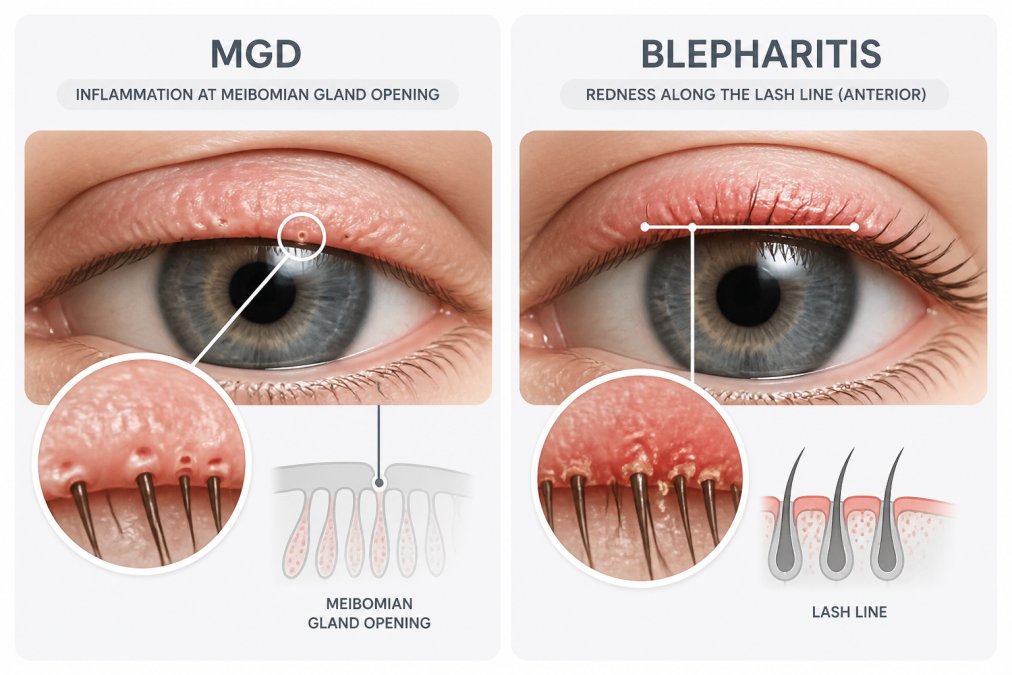
The meibomian glands sit along the back of the eyelid margin, inside the eyelid rather than on the surface. With MGD, the problem is at the back of the eyelid, along the inner rim. You won't see obvious redness or swelling on the front of the eyelid with MGD alone, one key way to tell MGD apart from blepharitis.
Common MGD Symptoms and Their Appearance
MGD symptoms focus on dryness and discomfort rather than visible inflammation:
- Gritty or sandy sensation in the eyes
- Burning or stinging
- Blurred vision that comes and goes
Your eyelids may look normal outside while the glands inside fail to produce enough oil. Some people notice slightly greasy eyelid margins from poor-quality oil.
Blepharitis Symptoms: Front and Back of the Eyelid
Blepharitis is inflammation of the eyelid itself. Unlike MGD, it causes visible changes to how your eyelid looks and feels, on the front, the back, or both. There are two main types based on location, and knowing which you have helps guide treatment.
Anterior Blepharitis: Front of the Eyelid
Anterior blepharitis affects the front of the eyelid where lashes attach, usually from bacteria or skin conditions like rosacea or seborrheic dermatitis. Visible signs include:
- Red, swollen eyelid margins
- Crusty buildup along the lash line
- Flaking or scaling on the eyelid
Eyelashes may look irregular or shed more than normal, and some people develop overnight crust.
Posterior Blepharitis: Back of the Eyelid
Posterior blepharitis affects the inner rim of the eyelid, where the meibomian glands are, when they become inflamed and blocked. Symptoms include:
- Red, inflamed eyelid margin (inner rim)
- Swollen eyelids
- Crusty or greasy eyelid margins
The key difference from anterior blepharitis is location: inflammation sits at the back of the eyelid, not the front where the lashes are.
Key Differences: MGD vs Blepharitis Symptoms by Location
Location is the clearest way to tell these conditions apart: MGD affects the oil glands at the back of the eyelid, while blepharitis causes inflammation you can see on or around the eyelid itself.
| Symptom | MGD | Anterior Blepharitis | Posterior Blepharitis |
|---|---|---|---|
| Visible redness | Usually none | Front of eyelid, along lash line | Inner eyelid margin |
| Crusty buildup | Rare | Common at lash line | Along inner rim |
| Eyelid swelling | Mild or none | Front of eyelid | Back of eyelid |
| Gritty sensation | Yes | Yes | Yes |
| Itching | Mild | Significant | Mild to moderate |
| Watery eyes | Yes | Sometimes | Yes |
| Blurred vision | Yes | Sometimes | Yes |
| Eyelashes affected | No | Yes, may fall out | No |
| Greasy eyelid | Sometimes | Often | Sometimes |
The table shows how these conditions differ by location: MGD is primarily an oil production problem, while blepharitis is a visible inflammation problem.
In the mirror, anterior blepharitis shows redness and crusting along the lash line, MGD shows no obvious surface changes, and posterior blepharitis shows redness along the inner rim.
A Practical Symptom-Based Decision Guide
Symptoms alone cannot confirm a diagnosis, but they can point you toward the right conversation with an eye care professional. Use these clues as a starting point, not a verdict.
- If your eyelids look normal but your eyes feel dry, gritty, or burn by the end of the day, MGD is a strong possibility. The problem is behind the lid margin, so there is little to see.
- If you wake up with crust along the lash line, flaking skin, or lashes that seem to shed more than usual, anterior blepharitis is more likely. This pattern often tracks with rosacea or seborrheic dermatitis.
- If the inner rim of your eyelid looks red or thickened and your eyes feel gritty and watery, posterior blepharitis or combined posterior blepharitis and MGD is likely.
A common pattern: a patient treats "dry eye" for months with artificial tears and gets only partial relief, because the real driver was an eyelid condition, not tear volume.
How Clinicians Distinguish the Conditions
A comprehensive eye exam separates MGD from blepharitis more reliably than symptoms alone. Your eye care professional typically:
- Examines the external eyelid and lash line under magnification for crusting, collarettes (crust rings around the base of lashes), redness, and swelling.
- Everts (gently rolls) the lower eyelid to inspect the meibomian gland openings along the inner margin for blockage, thickening, or capped openings.
- Applies gentle pressure to the eyelid margin to see whether expressed oil is clear and flowing or thick, cloudy, or absent.
Most patients find the exam quick and non-painful; the main discomfort is the bright light and brief pressure used to express the glands.
Can You Have MGD and Blepharitis at the Same Time?
Yes, many people have both MGD and blepharitis, and they often develop together because they share common causes.
Posterior blepharitis can lead to MGD over time: when the meibomian glands stay inflamed, they stop producing quality oil, the exact problem that defines MGD.
The symptoms overlap significantly when both conditions are present:
- Gritty, sandy sensation
- Burning and irritation
- Watery eyes
When you have both, treatment must address the inflammation (blepharitis) and restore oil production (MGD), usually eyelid cleaning, warm compresses, and sometimes medication.
MGD and Blepharitis Treatment Options
Treatment depends on which condition you have and how severe it is. Both improve with proper eyelid care, but technique and timeline differ.
Self-Care and Lid Hygiene
Eyelid cleaning is the foundation for treating both MGD and blepharitis. The technique matters because it targets the problem area.
For MGD, focus on warming and expressing the oil glands:
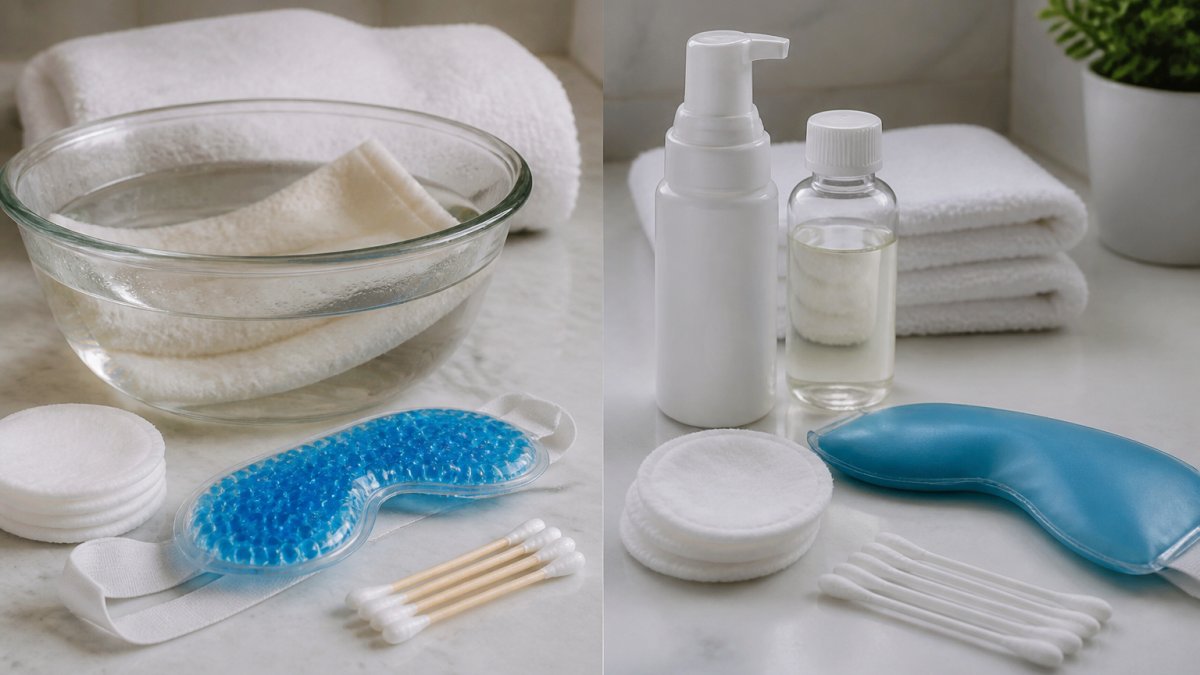
- Use a warm compress on closed eyes for 10-15 minutes
- Gently massage the eyelid margins in small circles
- Clean the eyelid margin with a soft cloth
For anterior blepharitis, focus on removing bacteria and debris:
- Soak a clean cloth in warm water
- Gently scrub along the lash line
- Use a commercial eyelid cleanser if recommended
For posterior blepharitis, combine both approaches:
- Warm compress first to soften blocked oil
- Gentle massage to help express the glands
- Careful cleaning of the eyelid margin
Many people find relief with these steps alone. Consistency matters more than intensity. Daily eyelid hygiene prevents symptoms from returning.
Symptom Timelines and Recurrence
MGD and blepharitis are typically chronic, managed rather than cured. Realistic expectations help you stick with a routine long enough to see results.
- Early improvement: Many people notice less crusting and less morning irritation within the first one to two weeks of consistent lid hygiene.
- Meaningful change: Improvements in oil quality, tear stability, and day-to-day comfort often take four to eight weeks of daily care.
- Long-term control: Because both conditions tend to recur when care stops, most practitioners recommend ongoing maintenance even after symptoms settle.
Symptoms commonly improve, then flare when lid hygiene is dropped for a few weeks. Flares are also more likely in dry, windy, or low-humidity conditions and with increased screen time.
When to Seek Professional Evaluation
See an eye care professional if symptoms don't improve after two weeks of home care, or if:
- Symptoms are severe or getting worse
- Your vision is affected
- You have signs of infection (increasing redness, discharge, pain)
A comprehensive eye exam can identify whether you have MGD, blepharitis, or both. At Wilck Schwartz & Novak OD PC, we use advanced optometric equipment to examine the meibomian glands and eyelid margins in detail, diagnose precisely, and tailor a treatment plan to your needs.
Professional treatment options may include:
- Prescription eye drops for dry eye
- Antibiotic drops for bacterial blepharitis
- Oral antibiotics for severe cases
Red Flags That Warrant Prompt Care
Most eyelid discomfort isn't an emergency, but some signs need prompt care:
- Sudden vision changes, including new blurring that does not clear with blinking
- Severe eye or eyelid pain, especially pain that wakes you or worsens quickly
- Marked light sensitivity that makes normal lighting uncomfortable
These signs can indicate an infection, a stye or chalazion needing treatment, or another condition that shouldn't be managed with home remedies alone.
MGD, Blepharitis, and Dry Eye: Understanding the Connection
Both MGD and blepharitis are closely linked to dry eye disease, which helps explain why the symptoms feel similar.
Your tear film has three layers: water, oil, and mucus (Tear Film).
Many people with MGD develop dry eye symptoms, many with blepharitis also have dry eye, and some have all three conditions at once.
The good news: treating MGD and blepharitis also improves dry eye symptoms, since better oil production and less inflammation mean a healthier tear film.
According to the American Academy of Ophthalmology's guidance on meibomian gland disease, proper eyelid hygiene and warm compresses are first-line treatments for both MGD and blepharitis-related dry eye.
Conclusion
MGD and blepharitis are different conditions often confused because their symptoms overlap. MGD is an oil gland function problem at the back of the eyelid; blepharitis is inflammation of the eyelid itself, front or back.
The key difference is location: MGD causes internal oil production problems, while blepharitis causes visible inflammation. Many people have both.
If you're experiencing persistent eyelid discomfort, redness, or dry eye symptoms, a professional evaluation is the best next step. With the right diagnosis, you can get targeted treatment that actually works. Schedule an appointment with our team to assess your eyelid health and develop a personalized care plan.
Frequently Asked Questions
What is the main difference between MGD and blepharitis symptoms?
MGD affects the meibomian glands on the back of the eyelid, causing poor oil secretion that leads to a gritty or sandy sensation and watery eyes. Blepharitis inflames the eyelid margin itself, producing crusty, flaky eyelids and sore, red edges. MGD creates an oil layer problem; blepharitis creates a bacterial or inflammatory problem at the lash line. Both conditions can cause irritation and burning, but their location and appearance differ significantly.
Can you have MGD and blepharitis at the same time?
Yes, many people experience both conditions simultaneously. Posterior blepharitis, which affects the back of the eyelid where meibomian glands sit, can occur alongside MGD. When blocked glands cause poor oil secretion and inflammation develops at the eyelid margin, symptoms overlap and compound. This coexistence is common and requires evaluation to identify which condition is dominant so treatment can address both effectively.
How do I know if my symptoms are MGD or blepharitis?
Look at your eyelid appearance and where you feel symptoms. MGD typically causes watery eyes, a gritty sensation, and intermittent blurry vision without visible eyelid changes. Blepharitis shows crusty, flaky, or greasy eyelids with red, swollen, or puffy eyelid margins. If your eyelid edge looks inflamed or has visible debris, blepharitis is likely. If your main complaint is dryness despite watery eyes and your eyelid looks relatively normal, MGD is more probable. An eye examination can confirm the diagnosis.
Can MGD and blepharitis cause dry eye?
Both conditions contribute to dry eye. MGD disrupts the oil layer of your tear film, which is essential for preventing evaporation and maintaining eye moisture. Blepharitis causes inflammation that interferes with tear production and quality. When either condition is present, your tears don't coat your eye properly, leading to dryness, irritation, light sensitivity, and blurred vision. Treating the underlying condition often improves dry eye symptoms.