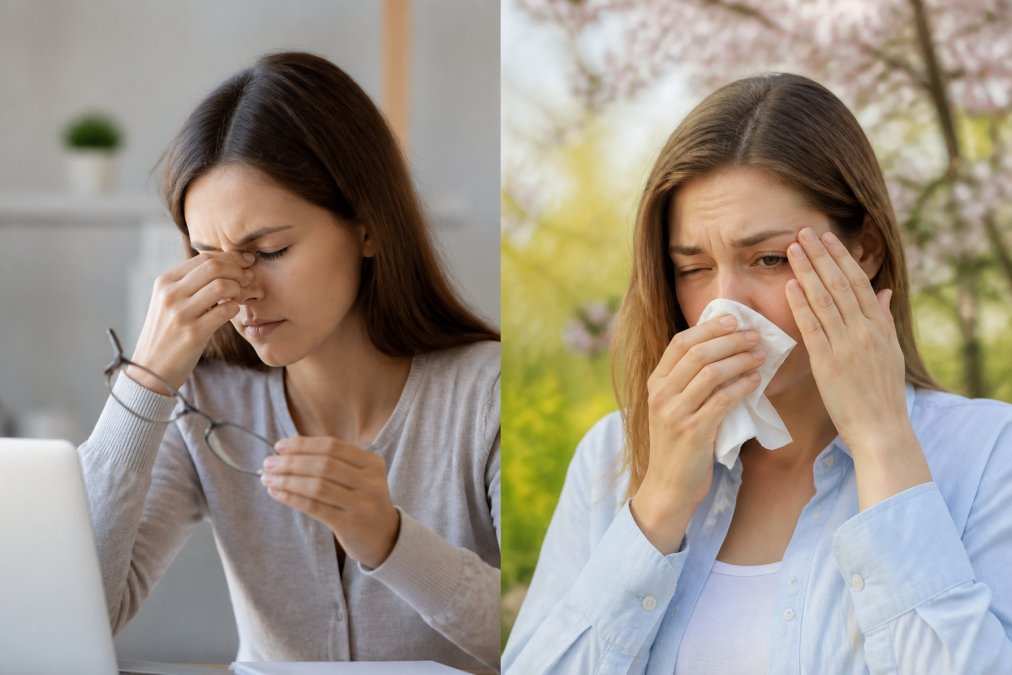
 comparison
Chronic Dry Eye vs Seasonal Allergies: Symptoms
Table of Contents
- Why Dry Eye and Allergies Feel the Same
- Chronic Dry Eye vs Seasonal Allergies: Key Symptom Differences
- Allergic Conjunctivitis vs Dry Eye Syndrome: The Overlap
- Can Seasonal Allergies Cause Chronic Dry Eye?
- Over-the-Counter Eye Drops for Allergies vs Dry Eye
- When to See an Eye Doctor for Eye Irritation
- How an Eye Exam Provides a Definitive Diagnosis
- Find Lasting Relief for Your Ocular Surface
- Frequently Asked Questions
Last Updated: September 9, 2026
Why Dry Eye and Allergies Feel the Same
Scratchy, burning, watery eyes send countless people to the pharmacy aisle each spring and fall. The frustrating part is that two very different conditions produce nearly identical sensations. Chronic dry eye vs seasonal allergies symptoms overlap so heavily that even diligent patients often treat the wrong problem for months.
The root difference comes down to mechanism. Seasonal allergies trigger a histamine response when pollen or dander contacts the ocular surface, causing blood vessels to dilate and tissues to swell. Chronic dry eye, by contrast, stems from tear film instability, where the eye either does not produce enough tears or the tears evaporate too quickly. Both leave the eye inflamed and uncomfortable, but they demand different treatments.
This guide breaks down how to tell them apart, when self-care works, and when you need a slit lamp examination to know for sure.
Chronic Dry Eye vs Seasonal Allergies: Key Symptom Differences
The fastest way to separate chronic dry eye vs seasonal allergies symptoms is to track when discomfort strikes and what makes it worse. Allergy symptoms appear suddenly when allergen exposure spikes, while dry eye builds gradually and persists regardless of the season.
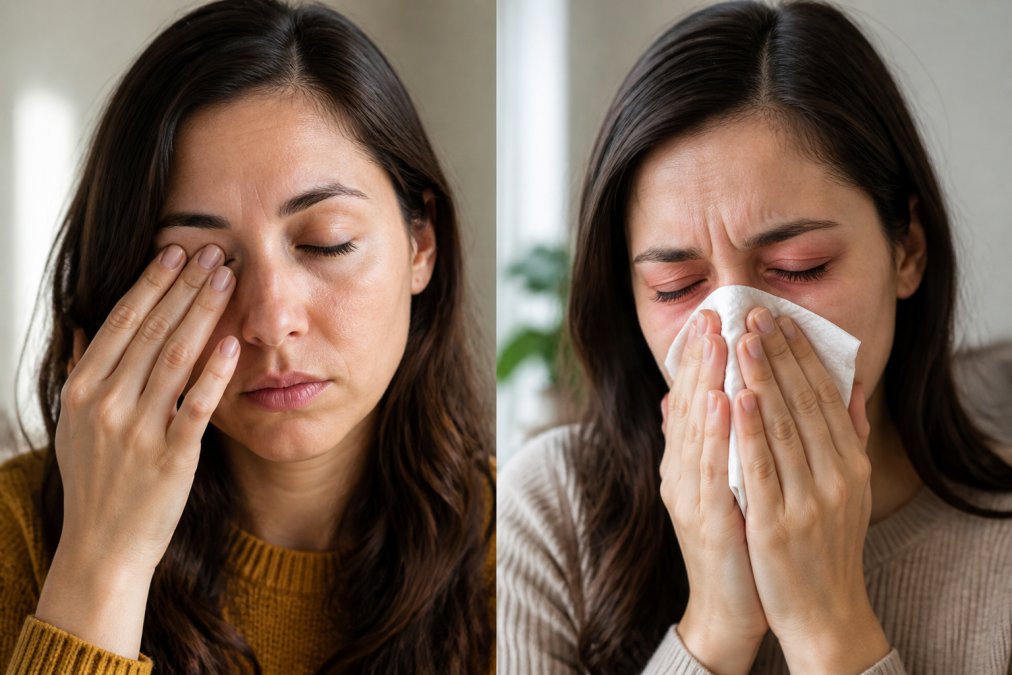
Dry eye often worsens after screen use, in air-conditioned rooms, or late in the day as tear production naturally declines. Allergy flares correlate with pollen count, pet exposure, or dusty environments. If your eyes bother you every afternoon at work but clear up on weekend mornings, dry eye is the likely culprit.
Itching: The Defining Clue
Intense itching is the single most reliable differentiator. Allergic conjunctivitis produces a powerful urge to rub the eyes, driven by histamine release. Dry eye typically causes burning and stinging rather than that deep, insistent itch.
Patients with allergies often describe wanting to "scratch their eyeballs out." Dry eye patients more commonly report a gritty sensation, as if sand is trapped under the lid, or a foreign body sensation that blinking does not resolve. If itching dominates your symptoms, allergy treatment should come first.
Burning, Grittiness, and Foreign Body Sensation
While allergies itch, dry eye burns and grinds. The ocular surface depends on a healthy tear film to stay lubricated, and when that film breaks down, every blink creates micro-friction against the cornea. This produces the hallmark gritty sensation and hyperemia that many patients mistake for an infection.
Photophobia, or light sensitivity, also appears more frequently with dry eye. Patients find themselves squinting at screens or dimming lights they once tolerated. Allergy sufferers may experience mild light sensitivity, but it rarely reaches the intensity seen in moderate to severe dry eye.
Discharge Type and Visual Impact
Examining what comes out of your eye offers another clue. Allergic discharge is typically thin and watery, sometimes accompanied by chemosis, the swelling of the conjunctiva that makes the eye look puffy. Dry eye discharge tends to be stringy and mucus-like, a sign that the tear film's mucin layer is struggling.
Chronic dry eye vs seasonal allergies symptoms also diverge in how they affect vision. Dry eye causes fluctuating vision that sharpens after blinking or improves momentarily with artificial tears. This happens because an uneven tear film scatters light before it reaches the cornea. Allergies rarely cause blurring unless swelling becomes severe, though puffy eyelids can temporarily distort the eye's shape.
Allergic Conjunctivitis vs Dry Eye Syndrome: The Overlap
Here is where the picture gets complicated. Allergic conjunctivitis vs dry eye syndrome are not always separate problems, and many patients experience both simultaneously. The ocular inflammation from chronic allergies can damage the meibomian glands, the oil-producing structures along the eyelid margin, accelerating evaporative dry eye.
Research from the American Academy of Ophthalmology's patient education resources emphasizes that untreated allergic conjunctivitis can compromise the tear film's lipid layer, making the eye more prone to dryness. The reverse also holds: a compromised tear film allows allergens to linger longer on the ocular surface, intensifying the allergic response. This bidirectional relationship explains why some patients improve only when both conditions are addressed.
The overlap also creates a diagnostic trap. A patient with allergic conjunctivitis may develop secondary dry eye from chronic antihistamine use. Oral antihistamines, in particular, reduce tear production systemically, converting a seasonal problem into a year-round one.
Can Seasonal Allergies Cause Chronic Dry Eye?
The short answer is yes, though the mechanism takes time. Repeated allergic inflammation on the ocular surface can lead to meibomian gland dysfunction, where the glands that secrete the tear film's oily layer become blocked or produce poor-quality oil. Without that protective lipid layer, tears evaporate too quickly, producing the hallmark symptoms of evaporative dry eye.
This progression explains why some patients notice their "allergies" no longer respond to antihistamine drops. The allergic component may have quieted down, but the structural damage to the tear film persists. Clinical guidance from the National Eye Institute notes that chronic ocular surface inflammation, regardless of its origin, can permanently alter tear production and quality.
The practical takeaway: if your allergy symptoms have shifted from itchy to gritty, or if they now last well past pollen season, the problem may have evolved into dry eye disease. Treatment needs to shift accordingly.
Over-the-Counter Eye Drops for Allergies vs Dry Eye
Choosing the right drop comes down to matching the active ingredient to the underlying problem. Using an antihistamine drop for dry eye will not help, and relying solely on artificial tears during an active allergy flare will leave the histamine response unchecked.
| Drop Type | Active Ingredient | Best For | Limitation |
|---|---|---|---|
| Antihistamine (Pataday) | Olopatadine 0.2% | Itchy eyes from pollen, dander | Not formulated for chronic dryness |
| Antihistamine (Zaditor) | Ketotifen | Acute allergy flares, itch-rub cycle | Requires twice-daily use |
| Lubricant (Systane Complete) | Nano-droplet technology | Daily dry eye relief, contact lens wear | Higher price than basic saline |
| Moist heat compress (Bruder) | MediBeads technology | Meibomian gland dysfunction | Needs consistent daily use |
Pataday Once Daily Relief, containing olopatadine, blocks histamine receptors in the eye for 24 hours with a single drop. It is the right choice when itching dominates and you are confident allergens are the trigger. Zaditor, with ketotifen, works similarly but requires two doses daily and is better suited for short-term seasonal flares. causes of red eyes.
For dry eye, Systane Complete Preservative-Free Lubricant Eye Drops support all layers of the tear film and are safe for sensitive eyes and contact lens wearers. The preservative-free formulation matters if you use drops more than four times daily, since preservatives can further irritate the ocular surface.
The Bruder Moist Heat Eye Compress takes a different approach entirely. Instead of adding tears, it unblocks the meibomian glands so your own oil production improves. For patients with meibomian gland dysfunction, consistent daily use of moist heat is often the single most effective home treatment for chronic dry eye.
The Medication Paradox: When Allergy Pills Make Dry Eye Worse
Here is the safety angle most comparison articles miss entirely. If you are treating seasonal allergies with an oral antihistamine, cetirizine (Zyrtec), loratadine (Claritin), fexofenadine (Allegra), or diphenhydramine (Benadryl), you may be quietly worsening your dry eye symptoms.
Oral antihistamines work systemically by blocking histamine receptors throughout the body, including the lacrimal gland. This gland produces the aqueous (water) layer of your tear film. When antihistamines suppress its output, tear volume drops, and the ocular surface loses its primary lubrication. A patient who starts the spring allergy season with mild dry eye can find themselves with moderate-to-severe dryness by June, simply because their allergy medication reduced tear production.
A common clinical pattern: a patient takes a daily oral antihistamine for pollen allergies, notices increasing grittiness and burning by mid-afternoon, and assumes their allergies are getting worse. They add more allergy drops, which may contain preservatives that further destabilize the tear film. The cycle continues until an eye exam reveals evaporative dry eye driven by a compromised lipid layer and reduced aqueous output.
The trade-off is real. Oral antihistamines effectively control systemic allergy symptoms, sneezing, runny nose, itchy throat, but they are not selective for the eye. If your primary complaint is ocular itching, topical antihistamine drops (like olopatadine or ketotifen) deliver the medication directly to the ocular surface without the systemic tear-suppression effect. This is why many eye care practitioners recommend topical therapy as the first line for eye allergies, reserving oral antihistamines for patients with significant nasal or respiratory symptoms.
If you must take an oral antihistamine and have dry eye, consider these adjustments:
- Use a preservative-free artificial tear 2-4 times daily to supplement reduced tear volume
- Apply a warm compress in the evening to support meibomian gland function
- Ask your doctor about newer-generation antihistamines that may have less pronounced anticholinergic effects
- Track your symptoms: if grittiness worsens within a week of starting an oral antihistamine, the medication is likely the culprit
The Bruder Moist Heat Eye Compress takes a different approach entirely. Instead of adding tears, it unblocks the meibomian glands so your own oil production improves. For patients with meibomian gland dysfunction, consistent daily use of moist heat is often the single most effective home treatment for chronic dry eye.
When to See an Eye Doctor for Eye Irritation
Self-treatment has limits. If symptoms persist beyond two weeks despite consistent use of appropriate drops, or if you experience significant eye pain, vision changes, or thick discharge, professional evaluation is warranted. When to see an eye doctor for eye irritation is not always obvious, but certain red flags should prompt an appointment quickly.
Schedule an exam if you notice any of the following:
- Worsening pain or photophobia that interferes with daily activities
- Fluctuating vision that does not clear with blinking
- Contact lens intolerance that develops suddenly
- Symptoms that persist despite correct use of over-the-counter treatments
- Redness accompanied by crusting or thick discharge
How an Eye Exam Provides a Definitive Diagnosis
A comprehensive eye exam distinguishes these conditions with tools you cannot replicate at home. The slit lamp examination allows your eye doctor to inspect the ocular surface under high magnification, revealing subtle signs of inflammation that distinguish allergic conjunctivitis from dry eye disease.
Two tests matter most. Tear breakup time measures how quickly your tear film destabilizes after a blink; rapid breakup indicates evaporative dry eye. Corneal staining, where a special dye highlights damaged areas of the cornea, reveals the severity of ocular surface damage. The American Optometric Association's clinical practice guidelines describe these diagnostic procedures as standard for evaluating tear film dysfunction.
The exam also checks for blepharitis, a common eyelid inflammation that mimics both conditions, and assesses whether meibomian gland dysfunction is contributing to your symptoms. This information shapes a targeted treatment plan rather than guesswork.
Find Lasting Relief for Your Ocular Surface
Distinguishing chronic dry eye vs seasonal allergies symptoms comes down to pattern recognition: itching points to allergies, grittiness points to dry eye, and persistent symptoms despite treatment point to a need for professional evaluation. The overlap between these conditions means many patients need a combination approach addressing both the allergic component and the tear film.
Serving the Brooklyn area since 1964, Wilck Schwartz & Novak OD PC uses advanced optometric equipment to diagnose and manage dry eye syndrome, eye allergies, and related ocular surface conditions. Our team treats eye infections, allergies, corneal abrasions, and chronic dry eye.
Frequently Asked Questions
How do I know if it's dry eyes or allergies?
The primary clue is the type of itch. Seasonal allergies produce an intense, persistent urge to rub your eyes, often paired with nasal congestion and sneezing. Chronic dry eye typically causes a burning or gritty sensation, like sand in your eye, rather than a deep itch. Allergies also tend to cause puffy, swollen eyelids and stringy discharge, while dry eye leads to fluctuating vision that blurs with prolonged screen use.
Can seasonal allergies lead to chronic dry eye symptoms?
Yes. The ocular inflammation from seasonal allergies can disrupt the tear film and damage meibomian glands over time. Antihistamines, a common allergy treatment, also reduce tear production. This combination can trigger or worsen evaporative dry eye, creating a cycle where allergy symptoms and dry eye symptoms coexist. If you rely on daily antihistamine eye drops or pills and still feel gritty, ask your eye doctor about testing for meibomian gland dysfunction.
What is the difference between allergic conjunctivitis and dry eye syndrome?
Allergic conjunctivitis is an immune response where histamines cause blood vessels in the conjunctiva to swell, producing intense itching, redness, and watery discharge. Dry eye syndrome is a tear film disorder, often from meibomian gland dysfunction or insufficient tear production. Its symptoms center on a gritty, burning sensation and fluctuating vision. The two frequently overlap, which is why an eye doctor uses a slit lamp examination and tear breakup time test to tell them apart.
When should I seek professional medical advice for persistent eye irritation?
Schedule an eye exam if over-the-counter eye drops provide relief for less than two hours, if you have eye pain or photophobia, or if your vision fluctuates throughout the day. Also seek care if you wear contact lenses and experience intolerance, or if your eyes feel worse each allergy season. A slit lamp examination can reveal corneal staining and meibomian gland blockages that self-treatment cannot address.
The challenge is that eye irritation rarely fits neatly into one diagnostic box. At Wilck Schwartz & Novak OD PC, we combine slit lamp examination, tear film assessment, and a thorough review of your symptoms to identify what is actually driving your discomfort. Schedule an appointment and get a treatment plan built for your specific ocular surface, not a guess.