 how-to
Chronic Dry Eyes from Screens: Relief and Prevention
Table of Contents
- Why Screens Cause Chronic Dry Eyes
- Recognizing Symptoms of Screen-Related Dry Eye
- The 20-20-20 Rule for Eyes Explained
- Best Artificial Tears for Screen Use
- Meibomian Gland Dysfunction Treatment and Management
- Ergonomics, Lighting, and Environmental Factors
- Dietary and Hydration Impact on Ocular Health
- When to See an Eye Doctor
- Frequently Asked Questions
Last Updated: August 23, 2026
Why Screens Cause Chronic Dry Eyes
Chronic dry eyes from screens is one of the most common complaints among professionals who spend their workday staring at monitors. The problem isn't just discomfort, it's a physical disruption in how your eyes produce and maintain the tear film that keeps them healthy. At Wilck Schwartz & Novak OD PC, we understand this pattern: patients arrive with burning, gritty sensations and assume they need stronger drops, when the real issue is what screens do to their blinking behavior and tear chemistry.
When you focus on a screen, your blink rate drops by roughly 60 percent compared to normal reading or conversation (peer-reviewed research). A normal blink takes about 150 milliseconds and fully refreshes the tear film across your eye's surface (peer-reviewed research). On screens, you're blinking less frequently and less completely, leaving larger portions of your eye exposed to air for extended periods.
How screen time affects tear film evaporation
The tear film is a three-layer structure: an outer lipid layer (produced by meibomian glands), a middle aqueous layer (from the lacrimal glands), and an inner mucus layer. The lipid layer stops tears from evaporating too quickly. When you blink less, that lipid layer doesn't get replenished properly, and the aqueous layer underneath begins to evaporate faster than your tear glands can replace it.
Screen glare and brightness also contribute. Your pupils constrict slightly in response to bright light, affecting how completely your eyelids close during a blink. The meibomian glands, small oil-producing glands along your eyelid margins, become sluggish when blinking is incomplete. These glands need the mechanical stimulation of a full blink to express their oils into the tear film. Without it, the lipid layer thins, evaporation accelerates, and the tear film breaks apart faster. This is why people with chronic dry eyes from screens often find that their symptoms worsen as the day progresses.
The link between blinking and screen use
Your brain doesn't consciously control your blink rate, it's automatic. But screens hijack this automation. The combination of reduced blinking and increased visual focus creates a state sometimes called computer vision syndrome. For people working 8 to 10 hours daily at screens, this compounds into chronic tear film depletion.
Monitor positioning is often overlooked. If your screen is positioned too high or too low, your eyelids open wider to maintain your line of sight. A wider eye opening exposes more of the ocular surface to air and accelerates evaporation. Proper ergonomics, screen at eye level, about 20 to 26 inches away, reduces the eyelid opening and helps preserve the tear film.

Recognizing Symptoms of Screen-Related Dry Eye
The symptoms of chronic dry eyes from screens often mimic allergies, but they're distinct. You'll notice a gritty or sandy sensation, as if there's debris in your eye. Redness is common, particularly around the conjunctiva (the clear membrane covering the white of your eye). Blurred vision, especially toward the end of the workday, happens because tear film instability distorts light refraction across the corneal surface.
Some people experience paradoxical tearing, excessive watering, because the ocular surface is irritated. When the tear film breaks down, your eye responds by producing reflex tears, which are watery and don't have the right lipid-to-aqueous ratio.
Light sensitivity is another symptom. When your tear film is compromised, the cornea becomes more exposed and reactive to bright light. You might find yourself squinting more than usual or experiencing discomfort in bright environments. If your symptoms are mild in the morning and severe by evening, screen time is likely the culprit.
The 20-20-20 Rule for Eyes Explained
The 20-20-20 rule is simple: every 20 minutes, look at something 20 feet away for 20 seconds. This breaks the accommodation cycle and, critically, triggers a more complete blink. When you shift your gaze to a distant object, your eye muscles relax, your accommodation resets, and your blinking pattern normalizes. That 20-second window allows your tear film to stabilize and your meibomian glands to function more normally.
The distance matters. Twenty feet is far enough that your eye's focusing system essentially powers down (aoa.org). Anything closer than 10 feet won't provide the same reset. The frequency matters equally. Every 20 minutes is a reasonable interval for most people. Set a phone reminder if you're prone to forgetting.
The 20-20-20 rule doesn't replace other interventions, but it's the most effective preventative habit you can adopt. For people with chronic dry eyes from screens, this single change often produces noticeable improvement within a week.
| Intervention | Frequency | Duration | Primary Benefit |
|---|---|---|---|
| 20-20-20 rule | Every 20 minutes | 20 seconds | Resets accommodation and restores blinking |
| Artificial tears | As needed or 3-4x daily | 1-2 drops per eye | Supplements tear film temporarily |
| Blinking exercises | 2-3 times daily | 1-2 minutes | Strengthens meibomian gland expression |
| Screen position adjustment | Once during setup | Ongoing | Reduces eyelid opening and evaporation |
| Humidifier use | During work hours | Continuous | Increases ambient moisture |
Best Artificial Tears for Screen Use
Not all artificial tears are created equal. The wrong choice can actually worsen chronic dry eyes from screens if it doesn't address the underlying tear film instability.
What to look for in lubricating eye drops
The best artificial tears for screen use contain a balance of water, electrolytes, and mucopolysaccharides that closely match your natural tear composition. Look for drops labeled as "preservative-free" if you're using them more than four times daily. Preservatives like benzalkonium chloride can irritate the ocular surface with repeated use.
Osmolarity matters. Isotonic drops (matching your eye's natural salt concentration) are gentler and more effective than hypertonic drops. Some drops contain lipid-based components designed to supplement the lipid layer of your tear film, which are particularly useful for people with meibomian gland dysfunction. The viscosity of the drop affects duration, thicker drops stay on your eye longer but can cause temporary blurred vision.
Avoid drops with vasoconstrictors (ingredients that reduce redness by constricting blood vessels). These provide temporary cosmetic improvement but can worsen underlying dryness and shouldn't be used long-term.
Meibomian Gland Dysfunction Treatment and Management
Meibomian gland dysfunction (MGD) is often the hidden driver of chronic dry eyes from screens. These glands line your eyelids and produce the lipid layer of your tear film. When they become sluggish or clogged from incomplete blinking during screen use, your tear film loses its protective outer layer, and evaporation accelerates.
The first line of treatment is heat and expression. Warm compresses applied to the eyelids for 5 to 10 minutes soften the meibum (the oil produced by these glands). After warming, gentle massage of the eyelids using a clean finger to apply light pressure along the lid margins helps express the accumulated meibum. This restores the lipid layer and provides immediate relief for many people. Doing this twice daily can produce noticeable improvement within a week.
For more severe cases, in-office treatments exist. Thermal pulsation devices use controlled heat and gentle pressure to clear gland blockages more effectively than home treatment. The underlying cause, incomplete blinking from screen use, must be addressed simultaneously. Without changing your blinking pattern and screen habits, meibomian gland dysfunction will recur even after successful treatment.
Ergonomics, Lighting, and Environmental Factors
Your workspace setup directly influences tear film stability and blinking patterns. Screen position, ambient lighting, and air quality all play roles in chronic dry eyes from screens.
Monitor height should place the top of the screen at or slightly below eye level. This encourages a more natural eyelid position and reduces the eyelid opening needed to see the screen. Distance matters too, the standard recommendation is 20 to 26 inches away, roughly an arm's length.
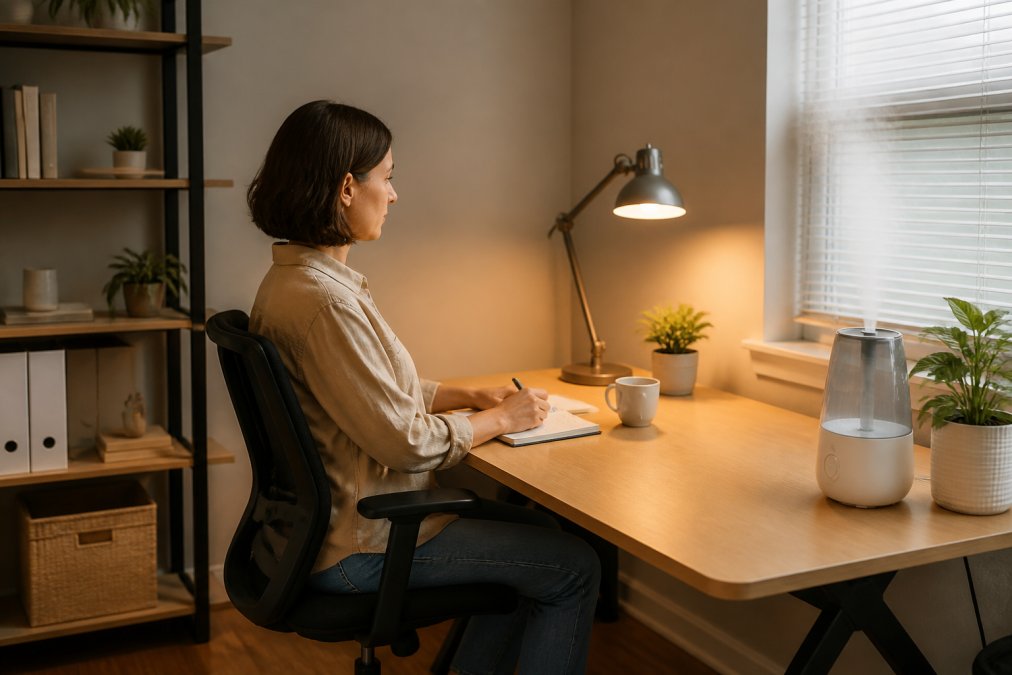
Lighting should be indirect and even. Screen glare forces your pupils to constrict and your eyes to work harder. Position your monitor perpendicular to windows when possible, or use indirect overhead lighting. Ambient humidity affects evaporation rate. A humidifier in your workspace increases ambient moisture and can significantly reduce symptoms. Aim for 40 to 50 percent relative humidity. Air flow matters too, position vents and fans so they don't blow directly across your face.
Dietary and Hydration Impact on Ocular Health
Your tear film composition depends partly on systemic hydration and nutritional status. Water intake is the foundation. Dehydration reduces tear production and makes existing tears more concentrated, which can irritate the ocular surface. Drinking adequate water, roughly half your body weight in ounces daily, adjusted for climate and activity, supports tear production and overall ocular health.
Omega-3 fatty acids are particularly important for tear film quality. These fats are incorporated into the lipid layer of your tears and into the cellular membranes of your meibomian glands. Sources include fatty fish (salmon, sardines, mackerel), flaxseeds, chia seeds, and walnuts. If you don't eat these regularly, a fish oil supplement may help.
Vitamin A is essential for corneal health and tear production. Sources include dark leafy greens, sweet potatoes, carrots, and liver. Vitamin D plays a role in tear production and immune function in the eye. Sunlight exposure, fatty fish, egg yolks, and fortified dairy products are sources. A diet rich in antioxidants and anti-inflammatory compounds, leafy greens, berries, olive oil, turmeric, may support tear health and reduce symptoms.
When to See an Eye Doctor
Mild screen-related dry eye often responds to preventative measures and over-the-counter drops. But certain signs indicate you need professional evaluation.
If symptoms persist despite consistent use of the 20-20-20 rule, artificial tears, and ergonomic adjustments, an eye doctor can identify underlying issues. Meibomian gland dysfunction, blepharitis, allergic conjunctivitis, or other conditions can mimic simple screen-related dryness but require different management.
Sudden changes in symptoms, worsening over days or weeks despite unchanged habits, warrant evaluation. Blurred vision that doesn't improve with blinking or artificial tears, significant light sensitivity, or redness that worsens need professional assessment.
At Wilck Schwartz & Novak OD PC, we use advanced optometric equipment to assess tear production, tear film quality, and the health of your meibomian glands. This diagnostic precision allows us to identify the specific cause of your dry eye and recommend targeted treatment. A comprehensive eye exam also screens for other conditions that might be contributing to your symptoms.
If you work long hours at screens and experience chronic dry eyes, scheduling an appointment is the most direct path to relief. We can demonstrate proper techniques, recommend specific interventions tailored to your situation, and monitor your progress over time.
Chronic dry eyes from screens don't have to be a permanent part of your workday. The combination of environmental adjustments, preventative habits, and targeted treatment addresses the root causes: incomplete blinking, tear film instability, and meibomian gland dysfunction. Most people see significant improvement within two to four weeks of consistent effort. If your symptoms persist or worsen, professional evaluation from Wilck Schwartz & Novak OD PC provides access to advanced diagnostics and specialized treatments. Schedule an appointment today to get a comprehensive evaluation and personalized care plan for your ocular health.
Frequently Asked Questions
Q: How can I fix chronic dry eyes from screens?
A: Start by applying the 20-20-20 rule: every 20 minutes, look at something 20 feet away for 20 seconds to reduce eye strain and allow tear film to stabilize. Use artificial tears formulated for screen use several times daily. Adjust your monitor to eye level, maintain 20-25 inches of distance, and reduce glare. If symptoms persist after two weeks of these changes, schedule an eye exam to rule out meibomian gland dysfunction or other underlying conditions requiring professional treatment.
Q: Is dry eye from screen time reversible?
A: Yes, mild to moderate screen-related dry eye is often reversible with consistent prevention and relief strategies. Increasing blink frequency, taking regular breaks, and using appropriate lubricating eye drops typically resolve symptoms within days to weeks. However, if chronic dry eye develops into meibomian gland dysfunction or corneal damage, professional treatment may become necessary. Early intervention can help prevent progression and protect your ocular surface long-term.
Q: What are the best artificial tears for screen use?
A: Look for lubricating eye drops that mimic natural tear film composition and provide sustained relief. Products labeled for screen use or digital eye strain typically contain ingredients that reduce evaporation and support tear film stability. Avoid drops with vasoconstrictors (which temporarily whiten eyes but worsen dryness). If over-the-counter options don't help after one week, consult an eye care professional who can recommend suitable formulations or assess whether meibomian gland dysfunction requires targeted treatment.
Q: How often should I take breaks from my computer to prevent eye strain?
A: Follow the 20-20-20 rule: every 20 minutes, look at an object 20 feet away for 20 seconds. This breaks the cycle of incomplete blinking and allows your tear film to rehydrate. For extended work sessions (more than 2 hours), take a 5-10 minute break every hour to step away from your screen entirely. This dual approach reduces visual fatigue, helps prevent tear film instability, and supports your corneal health during prolonged screen exposure.
This article was written using GrandRanker