 how-to
Contact Lens Fitting Cost: What to Expect in 2026
Table of Contents
- What Is a Contact Lens Fitting and Why Does It Cost Separately?
- What Happens During a Contact Lens Fitting
- How Long Does a Contact Lens Fitting Take
- Factors That Influence Contact Lens Fitting Costs
- Does Vision Insurance Cover Contact Lens Fittings
- Contact Lens Fitting vs. Comprehensive Eye Exam
- Hidden Costs and What to Budget For
- How Often You Need a Contact Lens Fitting
- Frequently Asked Questions
Last Updated: August 24, 2026
What Is a Contact Lens Fitting and Why Does It Cost Separately?
A contact lens fitting is a specialized eye care procedure distinct from a standard comprehensive eye exam. During this appointment, an eye care professional measures your eye's unique shape, evaluates how lenses will sit on your cornea, and determines the precise prescription needed for comfortable contact lens wear. Your eye's corneal curvature, tear film quality, and lid anatomy all influence how a contact lens will perform, and the fitting cost reflects the professional expertise required to match lens specifications to your individual eye anatomy.
A glasses prescription corrects vision at a distance from your eye; a contact lens sits directly on the cornea and requires different calculations. The optometrist or ophthalmologist uses specialized equipment like a keratometer to measure corneal curvature and conducts trial fittings with actual lenses to ensure proper fit. The separate fee also covers professional time spent on follow-up care, typically including at least one visit to assess comfort and vision after a few days of wear. At Wilck Schwartz & Novak OD PC, our team uses advanced optometric equipment to ensure every contact lens fitting is tailored to your specific eye anatomy and visual needs.
What Happens During a Contact Lens Fitting
A contact lens fitting involves several distinct steps designed to evaluate your eye's shape, measure precise lens specifications, and confirm comfort and vision quality before you take lenses home.
Measurements and Evaluation
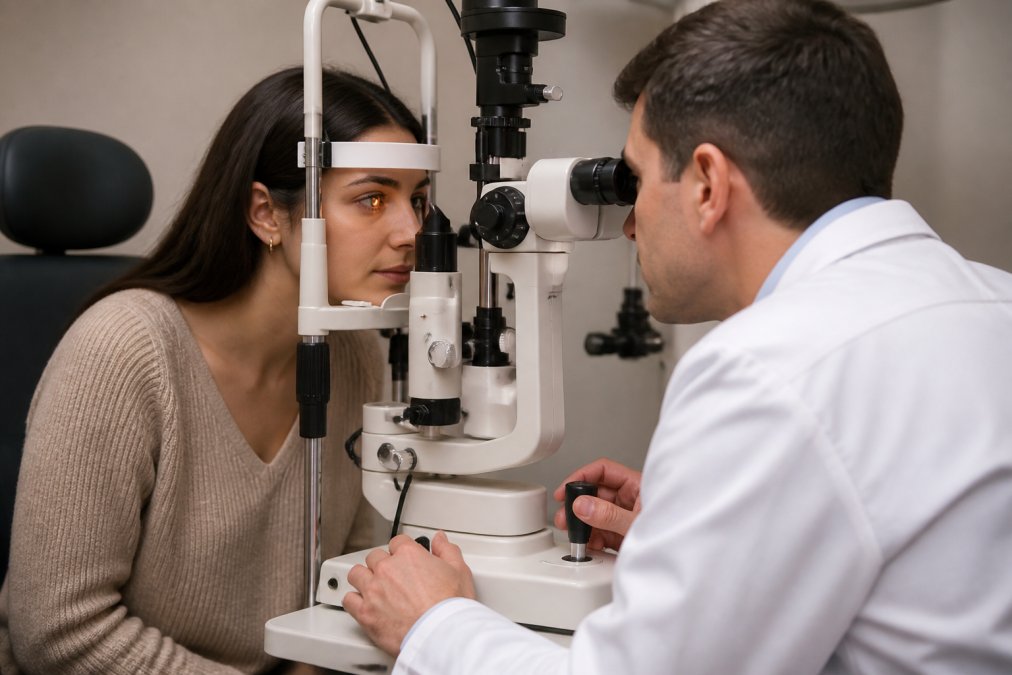
Your eye care professional begins with a slit lamp examination to assess the health of your cornea, conjunctiva, and tear film. They measure corneal curvature using keratometry, a painless procedure that maps the shape of your cornea's front surface. This measurement, expressed as the base curve of the lens, determines how the lens will fit on your eye. Lens diameter measurement follows, affecting how much of your eye the lens covers and influencing comfort and oxygen flow to the cornea. Your tear film is evaluated to ensure adequate moisture for lens wear; dry eyes may require special lens materials or different wearing schedules.
The professional also reviews your lifestyle, work environment, and visual demands. Do you work at a computer all day? Spend time outdoors? Play sports? These factors influence which lens materials and designs will work best for you. People with dry eye syndrome, for example, may benefit from silicone hydrogel materials that allow more oxygen to reach the cornea (peer-reviewed research).
Trial Lenses and Adjustment
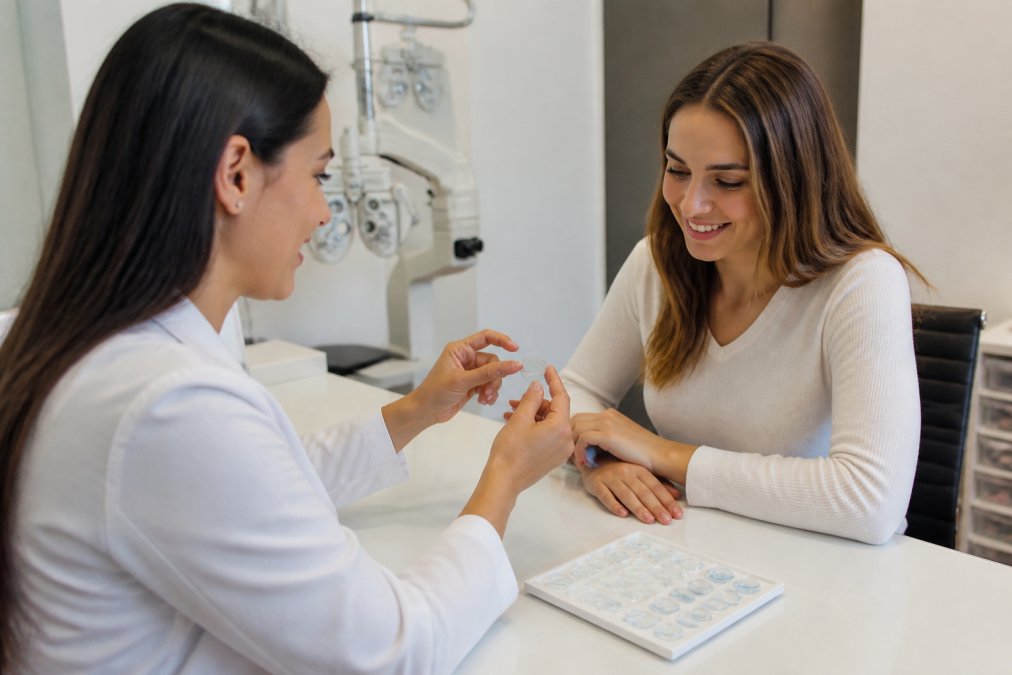
Once measurements are complete, trial lenses are placed on your eye. These sample lenses let you experience how different specifications feel and perform. Your vision is tested with each trial lens to confirm the prescription provides sharp, comfortable sight. The eye care professional observes how the lens moves on your eye with each blink; proper movement indicates good fit.
You might try multiple lens options if your eyes have astigmatism, require multifocal lenses for presbyopia, or need specialty designs. Toric lenses correct astigmatism by aligning to a specific axis on your eye. Multifocal lenses provide vision correction at multiple distances for people over 40. The lens should feel stable without excessive movement or tightness, and you should not experience irritation, excessive tearing, or blurred vision. If discomfort occurs, different base curves, materials, or designs are tested until an optimal fit is achieved.
How Long Does a Contact Lens Fitting Take
A contact lens fitting typically requires 45 minutes to 90 minutes, depending on the complexity of your prescription and eye anatomy (aoa.org). Standard fittings for people with straightforward prescriptions may take closer to 45 minutes, while specialty fittings for astigmatism, presbyopia, keratoconus, or other corneal irregularities often extend toward 90 minutes or longer.
The time investment includes measurements, trial lens selection and placement, vision assessment, comfort evaluation, and patient education about lens care and wearing schedules. Expect a follow-up appointment 3 to 7 days after your initial fitting to ensure the lenses feel comfortable during real-world wear and that your vision remains stable. This second appointment typically takes 20 to 30 minutes.
Factors That Influence Contact Lens Fitting Costs
Several variables affect what you'll pay for a contact lens fitting.
Standard vs. Specialty Lens Fittings
Standard contact lens fittings for people with myopia (nearsightedness) or hyperopia (farsightedness) use conventional spherical lenses and involve basic measurements and trial fitting. Specialty lens fittings cost more because they require additional expertise, more trial lenses, and longer appointment times. Toric lenses for astigmatism demand precise axis alignment and may require multiple trial attempts.
Some patients have corneal irregularities like keratoconus, post-LASIK corneas, or scarring. These cases require custom-designed or rigid gas-permeable lenses, and fitting costs reflect the additional clinical time and expertise required.
Complexity and Follow-Up Visits
A straightforward fitting with minimal follow-up costs less than a complex case requiring multiple adjustment visits. If your eyes achieve optimal fit and comfort on the first try, you may need only one follow-up appointment. Some patients require two or three follow-up visits to fine-tune the fit. Clarify whether follow-up visits are included in the fitting cost or billed separately when scheduling.
Does Vision Insurance Cover Contact Lens Fittings
Vision insurance coverage for contact lens fittings varies significantly by plan. Many vision plans distinguish between the eye exam and the contact lens fitting, covering each separately or with different copays and deductibles. Some plans include contact lens fitting as part of routine eye care benefits, while others require a separate fee that you pay out-of-pocket.
Review your specific plan documents to understand your coverage. Call your insurance provider or visit their website to confirm whether your plan covers fittings and at what percentage. Even if your plan doesn't cover the fitting, the contact lenses themselves may be covered under a separate lens benefit, typically including an annual allowance toward lens purchase.
Contact Lens Fitting vs. Comprehensive Eye Exam
A comprehensive eye exam and a contact lens fitting address different clinical questions, which is why they're billed separately and why having both is important for contact lens wearers.
A comprehensive eye exam evaluates your overall eye health and vision. The eye care professional tests your visual acuity, checks your eye pressure to screen for glaucoma, assesses your eye's focusing ability, and examines the health of your retina and optic nerve. The refraction, determining your precise glasses prescription, is part of the comprehensive exam.
A contact lens fitting focuses specifically on how contact lenses will perform on your eye. It measures corneal curvature and diameter, evaluates tear film quality, tests specific lens designs on your eye, and confirms comfort and vision with actual trial lenses. You need both: the comprehensive exam ensures your eyes are healthy and establishes your baseline refraction, while the contact lens fitting adapts that refraction to contact lens wear, accounting for the different optical properties of lenses that sit on your eye versus glasses that sit in front of your eye.
At Wilck Schwartz & Novak OD PC, we perform both services to ensure you receive complete eye care.
Hidden Costs and What to Budget For
Beyond the fitting fee itself, several additional costs may apply when you start wearing contact lenses. Contact lenses themselves represent the primary ongoing expense, with costs varying by lens type, brand, and prescription. Specialty lenses for astigmatism or presbyopia typically cost more than standard lenses.
Lens care supplies add to your budget. If you wear reusable lenses, you need solution for cleaning and storage. Different lens materials may require specific solutions; some lenses need hydrogen peroxide-based systems rather than multipurpose solutions.
Follow-up visits beyond the initial fitting may carry separate charges. Some patients experience discomfort or complications requiring unscheduled visits. Replacement lenses if you lose or damage a lens during the year also represent potential expenses. Insurance deductibles and copays apply to the fitting and follow-up visits, and your out-of-pocket responsibility may be substantial depending on your plan's terms.
How Often You Need a Contact Lens Fitting
Contact lens prescriptions require periodic renewal, which involves updated measurements and fitting confirmation. Most eye care professionals recommend annual contact lens fittings to ensure your prescription remains accurate and your lenses continue to fit properly (aoa.org).
Your eyes change over time. Corneal shape can shift slightly, tear film quality may decrease, and your refractive error can drift. An annual fitting confirms your current prescription is optimal and your lenses still fit well. If you change lens brands or types, a new fitting is necessary, as different lenses have different base curves and diameters even within the same prescription power.

Some patients need more frequent fittings. People with dry eye syndrome, allergies, or other ocular surface conditions may require fitting adjustments more often than annually. Your eye care professional will recommend an appropriate fitting schedule based on your individual eyes, prescription stability, and comfort. At Wilck Schwartz & Novak OD PC, we track your fitting history and recommend optimal timing for your next appointment to maintain healthy, comfortable contact lens wear.
Understanding what a contact lens fitting involves and why it costs separately helps you make informed decisions about your eye care. The fitting process is thorough because your comfort and vision depend on precise measurements and professional expertise. When you're ready to start wearing contact lenses or update your current prescription, schedule a consultation with an experienced eye care provider who can evaluate your specific needs and ensure you receive a fitting tailored to your eye anatomy. Wilck Schwartz & Novak OD PC offers comprehensive contact lens fitting services using advanced optometric equipment and modern technologies. Our team is committed to finding the right lens fit for your lifestyle and visual needs. Schedule an appointment and discover how properly fitted contact lenses can enhance your vision and comfort.
| Fitting Type | Typical Duration | Complexity Level | Follow-Up Visits |
|---|---|---|---|
| Standard spherical | 45 minutes | Low | 1 included |
| Toric (astigmatism) | 60-75 minutes | Medium | 1-2 included |
| Multifocal | 60-75 minutes | Medium | 1-2 included |
| Specialty/irregular cornea | 90+ minutes | High | 2-3 typical |
Frequently Asked Questions
Why is there a separate fee for contact lens fittings instead of including it with the eye exam?
A contact lens fitting requires specialized measurements and evaluation beyond a standard eye exam. Your optometrist measures corneal curvature, determines the correct base curve and lens diameter, evaluates your tear film, and conducts multiple trial lens fittings to ensure proper fit and vision. This additional time and expertise justifies a separate professional fee. The comprehensive eye exam assesses your overall eye health, while the fitting focuses specifically on ensuring contacts work for your eyes.
Does vision insurance cover the cost of contact lens fittings?
Coverage varies by insurance plan. Some vision plans include fitting fees as part of contact lens benefits, while others require you to pay out-of-pocket. Many plans cover the fitting evaluation but not the ongoing adjustments. Check your specific plan's benefits, contact your insurance provider, or ask your eye care provider's office staff to verify coverage before your appointment. They can often check your benefits and provide an estimate of your out-of-pocket expenses.
How long does a contact lens fitting take?
A typical contact lens fitting appointment takes 60 to 90 minutes. This includes time for corneal curvature measurement (keratometry), tear film evaluation, trial lens insertion and removal, vision assessment with different lenses, and comfort evaluation. First-time fittings often take longer because your optometrist may need to try multiple lens options to find the best fit. Follow-up adjustments are usually shorter, typically 20 to 30 minutes.
What factors make some contact lens fittings more expensive than others?
Fitting costs depend on lens complexity, your eye's characteristics, and the number of follow-up visits needed. Standard soft lens fittings are typically less expensive than specialty fittings for toric lenses (astigmatism), multifocal or bifocal lenses, or complex prescriptions. Additional factors include keratometry complexity, the need for multiple trial lenses, corneal irregularities, and whether adjustments or refits are necessary. Regional variation and the specific practice also influence pricing.
This article was written using GrandRanker