 listicle
Is Vision Therapy Worth It for Lazy Eye?
Table of Contents
- What Is Vision Therapy for Lazy Eye?
- How Vision Therapy Works for Amblyopia
- Vision Therapy vs. Patching for Amblyopia
- How Long Does Vision Therapy Take for Lazy Eye?
- Pediatric Eye Exam Requirements and When to Seek Vision Therapy
- Pros and Cons: Is Vision Therapy Right for You?
- Common Myths About Vision Therapy for Lazy Eye
- Conclusion: Making an Informed Decision
- Frequently Asked Questions
Last Updated: August 31, 2026
What Is Vision Therapy for Lazy Eye?
Vision therapy is a personalized program of visual exercises and activities designed to improve how the eyes and brain work together, particularly for conditions like amblyopia, commonly called lazy eye. Unlike glasses or contacts that simply correct focus, vision therapy retrains the visual system through repeated, targeted exercises that strengthen eye coordination, depth perception, and binocular vision.
Amblyopia occurs when one eye develops weaker visual acuity than the other, usually because the brain has learned to rely more on the stronger eye. This affects roughly 2-3 percent of the population, making it one of the most common vision problems in childhood (peer-reviewed research). At Wilck Schwartz & Novak OD PC, we assess whether vision therapy is appropriate by conducting a comprehensive eye exam to understand the underlying cause, whether strabismus (eye misalignment), refractive error, or another factor.
Whether vision therapy is worth it for lazy eye depends on the individual's age, severity, and how long amblyopia has been present. Early intervention, ideally before age 7 when the visual system is still highly plastic, tends to produce better outcomes (aao.org). However, emerging research has expanded the window for effective therapy into adulthood, challenging the old assumption that lazy eye is untreatable after childhood.
Vision therapy can take many forms: in-office sessions with a trained optometrist, home-based computer programs, specialized devices, or a combination approach. The goal is always to restore balanced binocular vision and improve visual function in the weaker eye.
How Vision Therapy Works for Amblyopia
Vision therapy works by using the brain's neuroplasticity, its ability to form new neural connections and reorganize visual processing pathways. When one eye is significantly weaker, the brain essentially "ignores" input from that eye and relies almost entirely on the stronger one. Over time, this suppression deepens, and the weaker eye's visual acuity fails to develop normally.
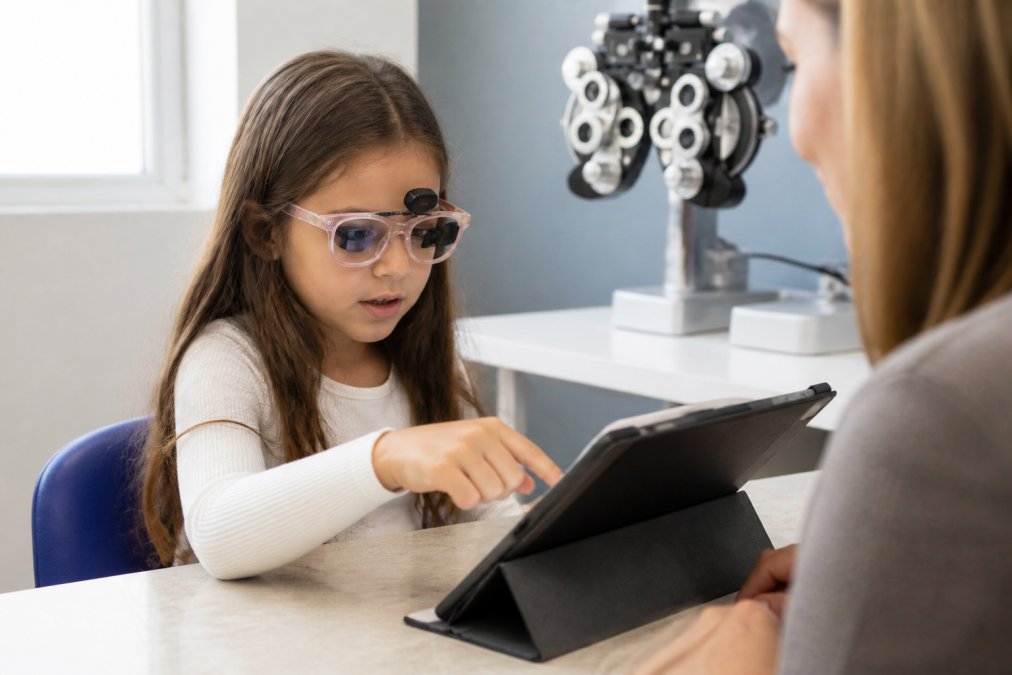
Therapeutic exercises force both eyes to work together in ways that make suppression impossible. For example, dichoptic training presents different images to each eye simultaneously using red-green glasses or polarized lenses, so the brain cannot ignore one eye without missing part of the visual task. This forces the weaker eye to engage and strengthens its neural connections to the visual cortex.
The exercises target specific deficits: convergence insufficiency (difficulty turning eyes inward), accommodation (focusing flexibility), saccadic control (smooth eye tracking), and stereopsis (depth perception). A trained vision therapist designs a program tailored to the patient's specific visual deficits, progressing from easier tasks to more complex ones as improvement occurs.
Neuroplasticity is the foundation of why vision therapy can work at any age, though the timeline differs significantly between children and adults. Children's brains are more responsive to retraining, often requiring 12 to 24 weeks of consistent therapy (peer-reviewed research). Adults may need 6 months to a year or more, but documented cases show that even adults in their 60s and 70s can achieve measurable improvement in visual acuity and binocular function with commitment to the program.
Vision Therapy vs. Patching for Amblyopia
Patching has been the gold standard for amblyopia treatment for decades and remains effective, particularly in young children. The concept is straightforward: cover the stronger eye with a patch, forcing the weaker eye to work and develop.
However, patching has significant limitations that vision therapy addresses. Patching is monocular; it strengthens the weaker eye's acuity but does nothing to develop binocular vision or depth perception. A child who patches for months may achieve 20/20 vision in the weaker eye but still lack the ability to use both eyes together effectively, resulting in poor depth perception and reduced peripheral awareness.
Vision therapy explicitly targets binocular integration. Exercises force both eyes to work as a coordinated pair, developing stereopsis and balanced eye coordination. This produces more complete visual rehabilitation than patching alone.
Evidence increasingly suggests that combining approaches yields the best results. Some patients benefit from initial patching to boost the weaker eye's basic acuity, followed by vision therapy to develop binocular function. Others skip patching entirely and go straight to therapy, especially if older or if patching has already been tried without success.
Compliance is another critical difference. Patching requires children to wear a patch for hours daily, and many resist this, leading to poor adherence. Vision therapy, particularly gamified home-based programs, tends to have higher compliance rates because the exercises feel more like play than punishment.
How Long Does Vision Therapy Take for Lazy Eye?
The timeline for vision therapy varies significantly based on age, severity, and consistency of treatment. How long does vision therapy take for lazy eye depends on multiple factors.
For children under age 7 with mild to moderate amblyopia, noticeable improvement often appears within 8 to 12 weeks of consistent therapy, with more substantial gains within 12 to 24 weeks. Severe cases may require 6 months or longer.
Adults generally need more time. Because adult brains are less plastic, vision therapy typically requires 6 to 12 months of consistent treatment to achieve meaningful results.
Vision therapy typically requires 30 to 60 minutes of exercises, performed 5 to 7 days per week. Missing sessions or inconsistent practice significantly extends the timeline. Home-based programs allow scheduling flexibility but demand self-discipline; office-based therapy provides professional oversight and accountability.
Results are gradual and cumulative. Patients should expect steady but modest progress over weeks, not dramatic overnight changes. Realistic expectations, set during an initial consultation, are crucial for maintaining motivation.
Pediatric Eye Exam Requirements and When to Seek Vision Therapy
A comprehensive pediatric eye exam is the essential first step in determining whether a child is a candidate for vision therapy. This exam goes far beyond a school screening, which typically only checks visual acuity at distance.
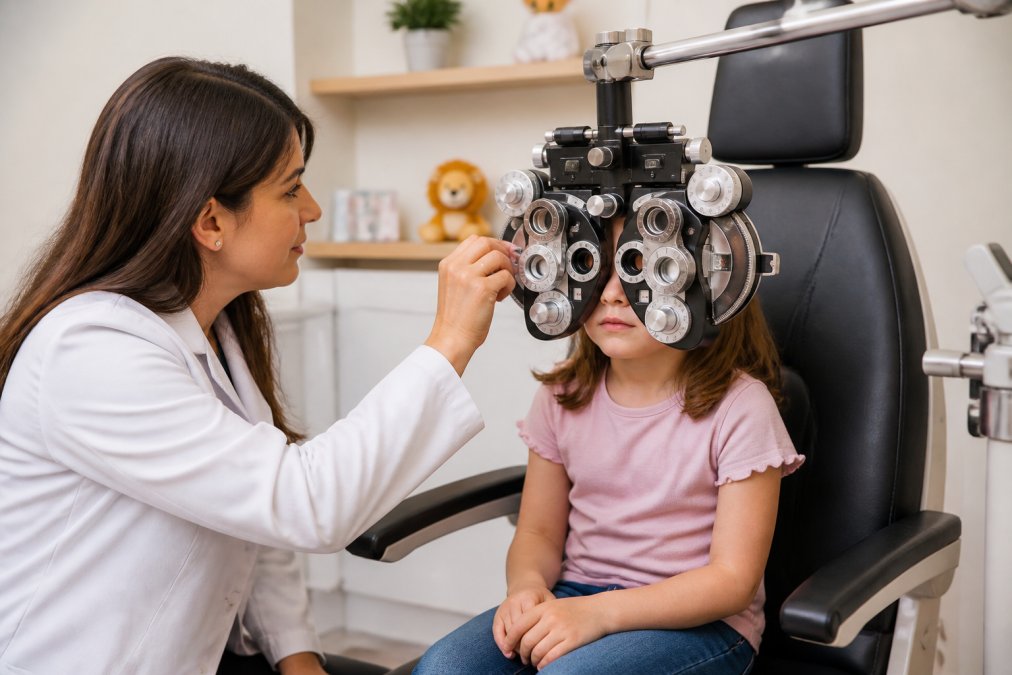
A thorough exam includes assessment of visual acuity at multiple distances, eye alignment and eye movement control, focusing ability, binocular vision function, and eye structure health. The optometrist evaluates suppression, whether the child's brain is ignoring input from one eye, and measures refractive error to rule out uncorrected myopia, hyperopia, or astigmatism as contributors to poor vision.
Many children pass school eye screenings but still have undetected vision problems. A school screening typically checks only distance acuity and may miss convergence insufficiency, mild strabismus, focusing problems, or early amblyopia. If a child complains of headaches while reading, struggles with sports, or seems to have difficulty with visual tasks despite passing a school screening, a comprehensive exam is warranted.
Vision therapy is typically recommended when a child has been diagnosed with amblyopia, strabismus, convergence insufficiency, or other binocular vision disorders that cannot be fully corrected with glasses or contacts alone. The earlier therapy begins, ideally before age 7, the faster and more complete the response tends to be. However, children and adolescents up to age 17 or 18 often respond well to therapy, and some adults benefit significantly as well.
Pros and Cons: Is Vision Therapy Right for You?
Pros of Vision Therapy:
Vision therapy can produce meaningful improvements in visual acuity, binocular vision, and depth perception, outcomes that glasses or contacts alone cannot achieve. For patients with convergence insufficiency or strabismus, vision therapy often eliminates symptoms like eye strain, headaches, and double vision. It addresses the root cause rather than simply compensating for it.
The approach is non-invasive and non-pharmaceutical, making it a low-risk option compared to surgery. For children, it avoids the discomfort and compliance challenges of patching. Improvements can occur at any age, not just in young children. Home-based programs offer convenience and flexibility, and gamified programs increase engagement, especially for children.
Cons of Vision Therapy:
Vision therapy requires significant time commitment, typically 30 to 60 minutes per day, 5 to 7 days per week, for weeks or months. This demands discipline and consistency; missing sessions substantially slows progress.
Results are gradual. Patients should expect modest improvements over weeks, not dramatic changes overnight. Some patients plateau after initial gains, particularly if they have severe or long-standing amblyopia. Severe amblyopia with very poor baseline acuity, or amblyopia that has gone untreated into adulthood, may show limited improvement regardless of effort.
Costs vary widely depending on the program and insurance coverage. Office-based therapy can be expensive; home-based programs are often more affordable but require more self-direction. Insurance coverage is inconsistent, and many plans require prior authorization or have limits on covered sessions.
Common Myths About Vision Therapy for Lazy Eye
Myth: Vision therapy only works in young children.
Reality: While children's brains are more plastic and respond faster, adults can achieve significant improvements in visual acuity and binocular vision through vision therapy. Documented cases show adults in their 50s, 60s, and 70s improving visual acuity and stereopsis. The timeline is longer, but the potential for improvement does not disappear with age.
Myth: Vision therapy can eliminate the need for glasses entirely.
Reality: Vision therapy addresses binocular vision problems and can improve visual acuity, but it cannot change the eye's refractive power. If a person has myopia, hyperopia, or astigmatism, they will still need corrective lenses unless they choose refractive surgery like LASIK.
Myth: One or two sessions per week is enough.
Reality: Vision therapy requires consistent, frequent practice, typically 5 to 7 days per week. Sporadic sessions produce minimal results. The brain needs repeated exposure to strengthen new neural pathways.
Myth: If vision therapy hasn't worked after a few weeks, it won't work at all.
Reality: Vision therapy results are cumulative and gradual. Meaningful improvements often take 8 to 12 weeks to become apparent. Judging success too early leads to premature abandonment of an approach that might have worked with continued effort.
Myth: Vision therapy is painful or uncomfortable.
Reality: Vision therapy exercises should not cause pain. Some patients experience mild eye strain if they push too hard, but this is not the goal. Exercises should be challenging but comfortable.
Conclusion: Making an Informed Decision
Deciding whether is vision therapy worth it for lazy eye requires understanding your specific diagnosis, realistic expectations for improvement, and your willingness to commit time and effort to consistent practice.
Vision therapy is a scientifically-supported approach to treating amblyopia and other binocular vision disorders. It works by retraining the visual system through targeted exercises that use the brain's neuroplasticity. For many patients, particularly children and younger adults, it produces measurable improvements in visual acuity, binocular vision, and depth perception that glasses or patching alone cannot achieve.
However, success depends on several factors: early diagnosis, appropriate patient selection, realistic expectations, and consistent adherence to the prescribed program. Vision therapy is not a quick fix, nor is it effective for all presentations of amblyopia. Severe cases or amblyopia secondary to significant strabismus may require a combination of approaches, including surgery.
The best first step is a comprehensive eye exam with an eye care professional who can assess your specific condition, explain the underlying cause, discuss treatment options, and set realistic expectations. At Wilck Schwartz & Novak OD PC, we provide thorough pediatric and adult eye exams using advanced optometric equipment to diagnose binocular vision disorders with precision. We assess whether vision therapy is appropriate for your situation and help you understand what to expect and how to maximize your chances of success.
If you or your child has been diagnosed with amblyopia, convergence insufficiency, strabismus, or another binocular vision problem, schedule an appointment to discuss whether vision therapy is the right approach for your unique circumstances.
Frequently Asked Questions
Q: Does vision therapy actually fix lazy eye?
A: Vision therapy can improve lazy eye, but results depend on age, severity, and consistency. Clinical studies show that binocular vision therapy approaches can improve visual acuity and depth perception in amblyopia patients. However, outcomes vary: some patients achieve significant improvement in visual function, while others see modest gains. Success is highest when treatment starts early in childhood, before the visual system fully develops. Vision therapy works by retraining the brain and eyes to work together through targeted exercises and therapeutic activities, addressing the neurological component of amblyopia that traditional patching alone may not fully resolve.
Q: How long does vision therapy take to show results for lazy eye?
A: Most patients begin noticing measurable changes within 4 to 12 weeks of consistent treatment, though the timeline varies based on age, amblyopia severity, and compliance. Younger children often respond faster than older children or adults. Some vision therapy devices recommend 1 hour daily for 6 days per week, while others suggest 30-minute sessions. Total treatment duration can range from 3 months to over a year depending on the program and individual progress. Regular monitoring by an eye care professional helps track improvement and adjust the therapy plan as needed. Stopping treatment too early may result in regression, so completing the full recommended course is important.
Q: Is vision therapy covered by insurance?
A: Insurance coverage for vision therapy varies significantly by plan and provider. Some insurance companies cover vision therapy when it is prescribed by an eye care professional and deemed medically necessary, while others classify it as experimental or exclude it entirely. Coverage may depend on the type of therapy (office-based versus home-based software) and the specific diagnosis. It is essential to contact your insurance provider before starting treatment to understand your coverage, out-of-pocket costs, and any prior authorization requirements. Many optometry and ophthalmology offices can assist with insurance verification and may offer payment plans for uncovered services.
Q: Can adults benefit from vision therapy for lazy eye?
A: Yes, adults can benefit from vision therapy, though results are often more modest than in children because the visual system is fully developed. Neuroplasticity, the brain's ability to form new neural connections, continues throughout life, allowing adults to improve binocular vision, depth perception, and visual processing. Programs like RevitalVision are specifically designed for adults and older children who have not responded to other treatments or who have nystagmus. Success in adults typically requires high compliance and longer treatment duration than in children. An eye care professional can assess whether an adult candidate is likely to benefit based on the type and severity of amblyopia.
Vision therapy offers real potential for improving visual function and quality of life, but it requires informed decision-making and realistic expectations. The investment of time and effort can pay off significantly, particularly when started early and pursued consistently, but only when the right patient is matched with the right treatment plan. Your eye care provider is your best resource for making this determination and guiding you through the process.
This article was written using GrandRanker