 ultimate-guide
Omega-3 for Dry Eyes: Benefits, Dosage, and Results
Table of Contents
- How Omega-3 Fatty Acids Support Dry Eye Relief
- What the Research Says About Omega-3 and Dry Eye Disease
- How Long Does Omega-3 Take to Work for Dry Eyes?
- Omega-3 Dosage for Dry Eye: What to Look For
- Best Fish Oil for Dry Eyes: Quality and Purity Standards
- Plant-Based Alternatives and Synergistic Treatments
- Conclusion: When to Seek Professional Eye Care
- Frequently Asked Questions
Last Updated: September 13, 2026
How Omega-3 Fatty Acids Support Dry Eye Relief
Omega-3 fatty acids support dry eye relief by improving the lipid layer of the tear film, calming inflammation on the ocular surface, and helping the meibomian glands release the oils that keep tears from evaporating too quickly. At Wilck Schwartz & Novak OD PC, we understand that nutrition can influence tear film stability, which is crucial for patients with chronically irritated, tired eyes.
Dry eye disease (DED) is not simply a matter of not making enough tears. For many people, tears are produced but evaporate too fast because the oil layer is unstable. That distinction decides whether omega-3 supplementation is likely to help you or not.
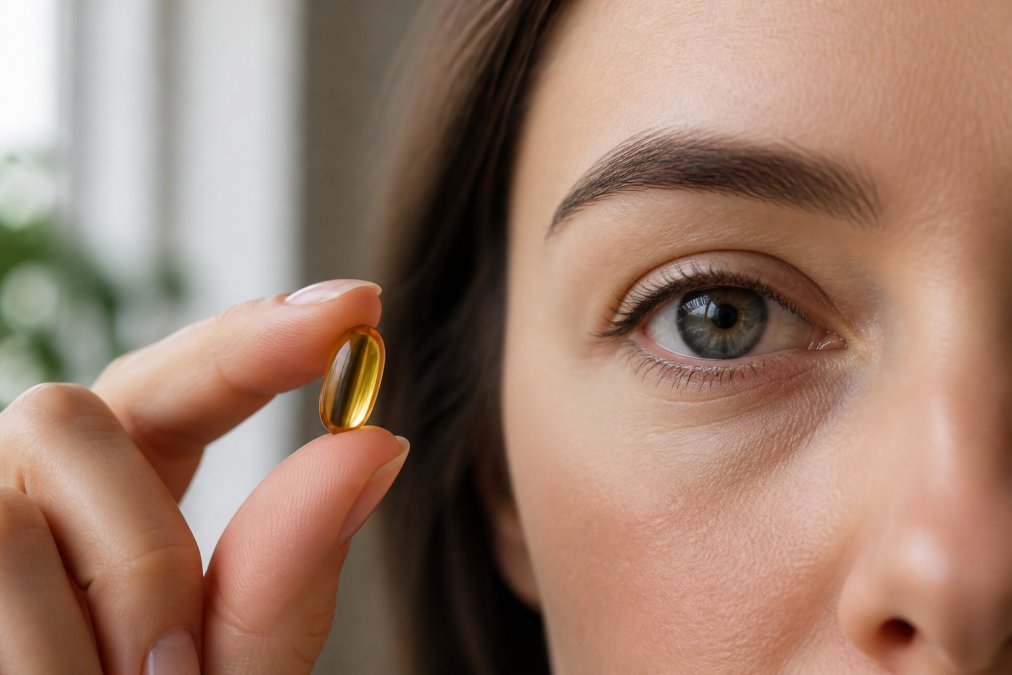
The Tear Film and Meibomian Glands
The tear film is the thin, three-layer coating that keeps the ocular surface moist, clear, and comfortable. The outermost lipid layer, produced by the meibomian glands along the eyelid margins, slows tear evaporation.
When those glands are blocked or the oil they secrete is too thick, tears break up between blinks. The result is the familiar burning, grittiness, and blurred vision that flares up during long screen sessions. Fatty acids feed into the production of that oil, which is why dietary intake matters for tear stability.
EPA, DHA, and Inflammation on the Ocular Surface
EPA and DHA are the two long-chain omega-3 fatty acids most studied for eye health. Both influence the inflammatory signaling that runs along the eyelid margins and ocular surface, where chronic low-grade inflammation keeps DED going.
A common mistake is treating fish oil as a lubricant. It is not. It works upstream, on the inflammation and gland function that produce the irritation in the first place. That is also why it takes weeks, not minutes, to notice a difference.
What the Research Says About Omega-3 and Dry Eye Disease
The evidence on omega-3 for dry eyes is mixed, and that is the honest answer. Some clinical trials show meaningful improvement in symptoms and tear stability with supplementation; others show results no better than placebo. The American Academy of Ophthalmology's dry eye guidance and the National Eye Institute's dry eye information both treat omega-3s as a reasonable, low-risk option rather than a guaranteed fix.
The most-cited trial on this question, the DREAM study published in the New England Journal of Medicine in 2018, found that a daily dose of 3,000 mg of fish oil was no more effective than a placebo (olive oil) at reducing dry eye symptoms over twelve months (PubMed). That result surprised a lot of people, and it is worth understanding why it does not close the book on omega-3s.
Why the Trials Disagree
Study design is the biggest reason results diverge. When you compare the trials side by side, the differences cluster in a few predictable places:
- Dose. Trials have ranged from roughly 600 mg to over 3,000 mg of combined EPA and DHA per day. A trial using a low dose may simply not deliver enough fatty acid to shift membrane composition.
- Subtype of dry eye. Evaporative dry eye driven by meibomian gland dysfunction is the subtype most likely to respond to omega-3s, because the oil layer is the problem. A trial that enrolls a mixed group, some aqueous-deficient, some evaporative, some mixed, can dilute a real effect in the responders.
- The placebo. Olive oil is not inert. It contains its own fatty acids and polyphenols, which may produce mild anti-inflammatory effects and shrink the gap between groups.
- Duration. Fatty acids take weeks to incorporate into cell membranes. Trials that measure outcomes at four or eight weeks may stop before the biological effect matures.
- Outcome measures. Symptom questionnaires, tear break-up time, and ocular surface staining do not always move together. A trial can show improvement on one measure and not another.
What This Means for You
A negative trial does not mean omega-3s do nothing. It means the study did not detect a benefit in that particular population at that dose. The practical takeaway is that omega-3s are most likely to help if your dry eye is evaporative, if you take a meaningful dose of EPA and DHA, and if you give it eight to twelve weeks. If your dry eye is purely aqueous-deficient, the expected benefit is smaller.
This is also why the right move is to get your dry eye subtype identified before you spend months on a supplement. An eye doctor can tell the difference between evaporative and aqueous-deficient dry eye with a tear film evaluation, and that distinction changes what is worth trying.
How Long Does Omega-3 Take to Work for Dry Eyes?
Most people should expect to wait eight to twelve weeks before judging whether omega-3 for dry eyes is working. Fatty acids have to accumulate in cell membranes before they shift inflammatory signaling, and that is a slow process.
A few practical markers of progress:
- Symptoms ease gradually rather than overnight
- Improvement often shows up first in how long you can read or work before irritation starts
- Effects plateau after roughly three months of consistent intake
If you stop and restart, you reset the clock. Consistency matters more than any single high dose. Anyone whose symptoms are severe, one-sided, or worsening should not wait out a supplement trial before being evaluated.
Omega-3 Dosage for Dry Eye: What to Look For
There is no single official omega-3 dosage for dry eye, so treat any confident number you see online with suspicion. That said, the clinical trials that have shown benefit tend to cluster in a range, and knowing that range helps you read a label intelligently.
A Practical Range
Most trials that reported improvement used roughly 1,000 mg to 2,000 mg per day of combined EPA and DHA. The DREAM study used 3,000 mg per day and did not beat placebo, which is one reason some practitioners now favor the middle of the range rather than the top. A common starting point many eye doctors suggest is around 1,000 mg to 1,500 mg of combined EPA and DHA daily, adjusted based on your response and your health history. Determining the appropriate dosage requires careful consideration of the overall efficacy of oral supplements when integrated into a broader nutritional strategy for ocular health.
The number that matters is the combined EPA and DHA, not the total "fish oil" figure on the front of the bottle.
Reading the Label
When you turn the bottle around, look for these on the back panel:
- EPA + DHA per capsule, not total oil weight
- Triglyceride form versus ethyl ester, which affects bioavailability
- Serving size, since "per serving" often means two or more softgels
- Third-party testing, such as USP or NSF marks
A typical 1,000 mg fish oil softgel often delivers only about 180 mg of EPA and 120 mg of DHA, roughly 300 mg of the active fatty acids. To reach 1,000 mg of combined EPA and DHA, you may need three or more of those softgels per day, or a concentrated product that delivers more per capsule.
Timing and Consistency
Take your dose with a meal that contains fat. Omega-3s are fat-soluble, and absorption improves when they are taken alongside food rather than on an empty stomach. Splitting the dose across two meals can also reduce reflux and improve tolerance.
Consistency matters more than any single high dose. Fatty acids accumulate in cell membranes over weeks, so a steady daily intake outperforms sporadic large doses.
Who Should Be Careful
Because dose depends on your health history, medications, and the subtype of dry eye you have, the right number is a conversation, not a label. Ask your eye doctor before starting, especially if you take blood thinners, have a bleeding disorder, or are scheduled for surgery. High doses of fish oil can increase bleeding risk, and your doctor may want to adjust the dose or timing around a procedure.
Best Fish Oil for Dry Eyes: Quality and Purity Standards
Quality and purity separate a supplement that helps from one that just costs money. Two products with identical EPA and DHA numbers can perform differently if one has oxidized during storage or carries contaminants.
What to check before buying:
- Third-party purity testing (heavy metals, PCBs, oxidation)
- A freshness or oxidation value, not just a "molecularly distilled" claim
- A harvest and expiration date on the package
- Enteric coating if reflux is an issue for you
- Storage instructions, since heat degrades oils quickly
Plant-Based Alternatives and Synergistic Treatments
Algal oil is the strongest plant-based alternative for omega-3 for dry eyes, because it delivers preformed DHA and often EPA directly, without the conversion step that limits flaxseed and chia. If you are vegetarian, vegan, or allergic to fish, algal oil is the option worth discussing.
Omega-3s also work better alongside other measures than alone. A synergistic approach typically includes:
- Warm compresses and lid hygiene to unblock meibomian glands
- Preservative-free artificial tears for daytime comfort
- Screen breaks and deliberate blinking habits
- Humidity and airflow adjustments at home and at work
- In-office evaluation and treatment when gland function is the main problem
Supplements are one input. Gland function, environment, and screen habits carry equal weight.
Conclusion: When to Seek Professional Eye Care
Dry eye has many causes, and some of them, including blepharitis, meibomian gland dysfunction, and medication side effects, need a proper diagnosis before any supplement will help. If your symptoms persist after several weeks of consistent omega-3 intake, or if you notice pain, light sensitivity, or vision changes, that is a signal to get evaluated rather than keep adjusting your dose.
At Wilck Schwartz & Novak OD PC, our team uses advanced optometric equipment to assess tear film quality, meibomian gland function, and overall ocular health, then builds a plan that fits your eyes rather than a generic protocol. We have served the area since 1964, and many of our patients come to us through referrals from families we have cared for across generations. Get started with Wilck Schwartz & Novak OD PC and schedule an appointment to find out what is actually driving your dry eye.
Frequently Asked Questions
How long does it take omega-3 to work for dry eyes?
Most people notice improvements in dry eye symptoms after 4 to 12 weeks of consistent omega-3 supplementation. Clinical studies often use 8 to 12 weeks as a benchmark. However, results vary based on dosage, the severity of dry eye disease, and individual factors like baseline omega-3 index. It is important to continue taking omega-3 regularly and to combine it with other treatments your eye doctor recommends.
What is the best supplement for extremely dry eyes?
There is no single best supplement for everyone. For severe dry eye, a high-quality fish oil with a high concentration of EPA and DHA is often recommended. Some people may benefit from algal oil if they prefer a plant-based option. Look for supplements that are third-party tested for purity and freshness. Your eye care provider can help determine the right type and dosage for your specific condition.
Can omega-3 capsules help with dry eyes?
Yes, omega-3 capsules can help with dry eyes by reducing inflammation on the ocular surface and supporting the lipid layer of the tear film, which helps prevent tear evaporation. Studies show that regular intake may improve symptoms like irritation and blurred vision. However, capsules are not a quick fix; they work best as part of a comprehensive dry eye management plan that includes proper hydration and eyelid hygiene.
Are there side effects to taking high-dose omega-3 for eye health?
High doses of omega-3 (typically above 3,000 mg per day) can cause mild side effects such as fishy burps, indigestion, or loose stools. In rare cases, they may increase bleeding risk, especially if you take blood-thinning medications. Always consult your doctor before starting high-dose omega-3, particularly if you have a bleeding disorder or are scheduled for surgery.