 how-to
Can You Get Contact Lenses Without an Eye Exam?
Table of Contents
- Can You Get Contact Lenses Without an Eye Exam?
- Why a Valid Prescription Is Required for Contact Lenses
- How Long Is a Contact Lens Prescription Valid?
- What Happens During a Contact Lens Fitting
- Can I Use My Glasses Prescription for Contacts?
- Renewing Your Contact Lens Prescription Online
- Health Risks of Wearing Incorrect Contact Lenses
- Conclusion
- Frequently Asked Questions
Last Updated: August 30, 2026
Can You Get Contact Lenses Without an Eye Exam?
The short answer is no. You cannot legally obtain contact lenses without a valid eye exam and prescription in the United States. Contact lenses are classified as medical devices by the FDA, and federal law requires that anyone dispensing them verify a current, valid prescription from a licensed eye care professional (the FDA). This is a critical safety requirement that protects your vision and eye health.
Many patients are surprised to learn this requirement, assuming their glasses prescription is sufficient or that they can skip the exam if they've worn contacts before. Understanding why this requirement exists and how to navigate it efficiently can save you time, money, and potential complications.
Why a Valid Prescription Is Required for Contact Lenses
Contact lenses sit directly on your cornea, unlike glasses, which sit about a half-inch away. This direct contact creates a seal that can trap bacteria and alter oxygen flow to your eye, making proper fitting essential. The FDA classifies contact lenses as medical devices because they can cause serious injury if prescribed without proper clinical assessment.
A contact lens fitting involves evaluating your corneal shape, tear film quality, eye health, and overall suitability for contact lens wear. Some people have dry eyes, astigmatism, or other conditions that make certain contacts unsuitable or require special fitting techniques.
The Fairness to Contact Lens Consumers Act also mandates that your eye care professional provide you with a copy of your contact lens prescription after an exam, even if you purchase lenses elsewhere. Without a proper fitting, you risk corneal abrasions, infections, reduced oxygen to the eye, and in severe cases, vision loss.
How Long Is a Contact Lens Prescription Valid?
A contact lens prescription typically remains valid for one year from the date of your exam, though a few states allow up to two years (the FDA). This timeframe exists because your eyes change, refractive errors can shift, your corneal shape can evolve, and new eye health issues can emerge. Annual exams catch these changes early, which is especially important for daily contact lens wearers.
If your prescription has expired, you cannot legally purchase contacts. Retailers are required to verify your prescription's validity before fulfilling an order.
What Happens During a Contact Lens Fitting
A contact lens fitting is distinct from a standard eye exam. During the exam, your eye care professional measures your vision and assesses whether you're a candidate for contacts. The fitting determines the specific lens parameters that will work best for your eyes.
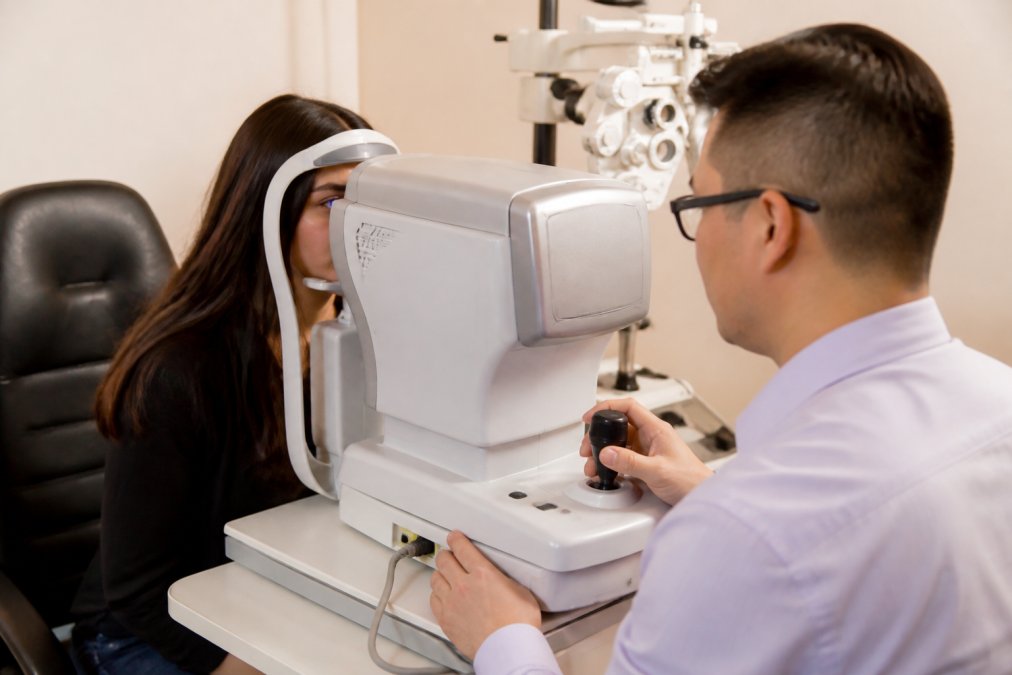
Your eye care professional will measure your corneal curvature using a keratometer or corneal topographer. This measurement is critical because contact lenses must match your cornea's shape to fit safely and comfortably. They'll also measure your iris diameter and overall eye dimensions to ensure appropriate lens size.
The tear film evaluation is equally important. Your eyes must produce enough tears with the right composition to support contact lens wear. If you have dry eye, certain lens materials or wearing schedules may be recommended.
Your eye care professional will have you try on different lens brands and parameters to assess comfort and vision clarity. Once the right lens is identified, your prescription will specify the power, base curve, diameter, and lens material. You'll receive hands-on training in insertion, removal, cleaning, and storage.
Can I Use My Glasses Prescription for Contacts?
Your glasses prescription and contact lens prescription are not interchangeable, even though they may look similar on paper.
The Distance Problem
Glasses sit approximately 12 millimeters in front of your eye (aao.org). Contact lenses sit directly on your cornea. This distance difference means the same refractive power won't produce the same visual result.
Example: A person with a glasses prescription of -6.00 diopters may need a contact lens prescription of approximately -5.75 diopters. For someone with -10.00 diopters, the difference could be 0.50 diopters or more, which is significant enough to cause blurred vision or eye strain.
The Missing Parameters
Your glasses prescription includes sphere (SPH), cylinder (CYL), and axis. Your contact lens prescription includes all of these plus:
- Base curve (BC): The curvature of the back surface of the lens. This must match your corneal curvature to fit safely and comfortably.
- Diameter (DIA): The width of the lens, which determines how much of your cornea it covers and affects comfort and oxygen flow.
- Lens material and water content: The material affects oxygen permeability and compatibility with your tear film.
Without these parameters, a contact lens cannot be safely dispensed.
Why Retailers Reject Orders with Glasses Prescriptions
If you attempt to order contact lenses using your glasses prescription, the retailer will reject the order. Under federal law, contact lens retailers must verify that a prescription includes all required parameters. A glasses prescription lacks the base curve and diameter, so the retailer's system will automatically flag it as invalid.
What to Do If You Only Have Your Glasses Prescription
- Schedule a contact lens exam and fitting with your eye care provider. This can often be done in a single appointment.
- Ask about telehealth options. Many providers offer telehealth refraction with a brief in-person fitting.
- Expect separate billing for the fitting. Ask about the total cost upfront.
Once you have a valid contact lens prescription with all required parameters, you can order lenses from any retailer.
Renewing Your Contact Lens Prescription Online
If your prescription has expired, renewing it doesn't necessarily require an in-person visit. Many states now allow telehealth eye exams, which can be faster and more convenient.
How Online Vision Exams Work
Automated refraction exams use a device that measures your refractive error in 10-15 minutes with minimal training.
Live telehealth exams connect you via video with a licensed optometrist or ophthalmologist who guides you through vision tests using equipment at home or at a partner location.
Hybrid exams combine automated measurements with a brief video consultation.
Technical Requirements for Home-Based Exams
Lighting is critical. You'll need a well-lit room with consistent, non-glare lighting. Avoid backlit environments or harsh shadows.
Distance matters for certain tests. Some refraction apps require you to hold your device at a specific distance from your eyes, typically 10-16 inches. Follow the platform's instructions precisely.
Device quality affects results. Smartphone-based exams work best on newer phones with high-resolution cameras. If you're using a partner location's equipment, this isn't a concern.
Internet connection should be stable for live video exams.
What Online Exams Can and Cannot Do
What they can do: A telehealth refraction can accurately measure your sphere and cylinder, and determine your axis if you have astigmatism. If you're renewing a contact lens prescription for a lens type you've worn successfully before with no changes in comfort or vision, a telehealth refraction may be sufficient.
What they cannot do: A telehealth exam cannot measure your corneal curvature or perform a contact lens fitting. It cannot assess tear film quality in detail or evaluate how a specific lens will fit on your eye. If you're switching to a new contact lens brand, experiencing discomfort, or haven't had a fitting in more than two years, an in-person fitting is necessary.
:::warning Some online services advertise "contact lens prescriptions" based purely on refraction, without corneal measurements or fitting assessment. Even if you receive a prescription, wearing contacts that haven't been properly fitted can cause corneal abrasion, infection, or oxygen deprivation. Always verify that the service includes or requires a corneal measurement and fitting assessment. ::: legal requirements for prescriptions.
Insurance Coverage for Telehealth Eye Exams
Most vision insurance plans cover telehealth refraction exams at the same rate as in-person exams, typically with a copay of $0-$50. However, coverage is usually limited to refraction only; a contact lens fitting may require an in-person visit and may be billed separately.
If you don't have vision insurance, telehealth exams typically range from $40-$100 for a refraction.
When to Choose Telehealth vs. In-Person
Choose telehealth if:
- You're renewing a prescription for contacts you've worn successfully for at least one year with no comfort issues.
- You're time-constrained and need a quick refraction update.
- You live far from an eye care provider.
Choose in-person if:
- You're new to contact lenses or haven't been fitted in more than two years.
- You're experiencing discomfort, dryness, or vision changes.
- You want to switch to a different contact lens brand or type.
- You have a complex prescription or eye health concerns.
Health Risks of Wearing Incorrect Contact Lenses
Attempting to wear contact lenses without a proper prescription or fitting exposes you to serious health risks.
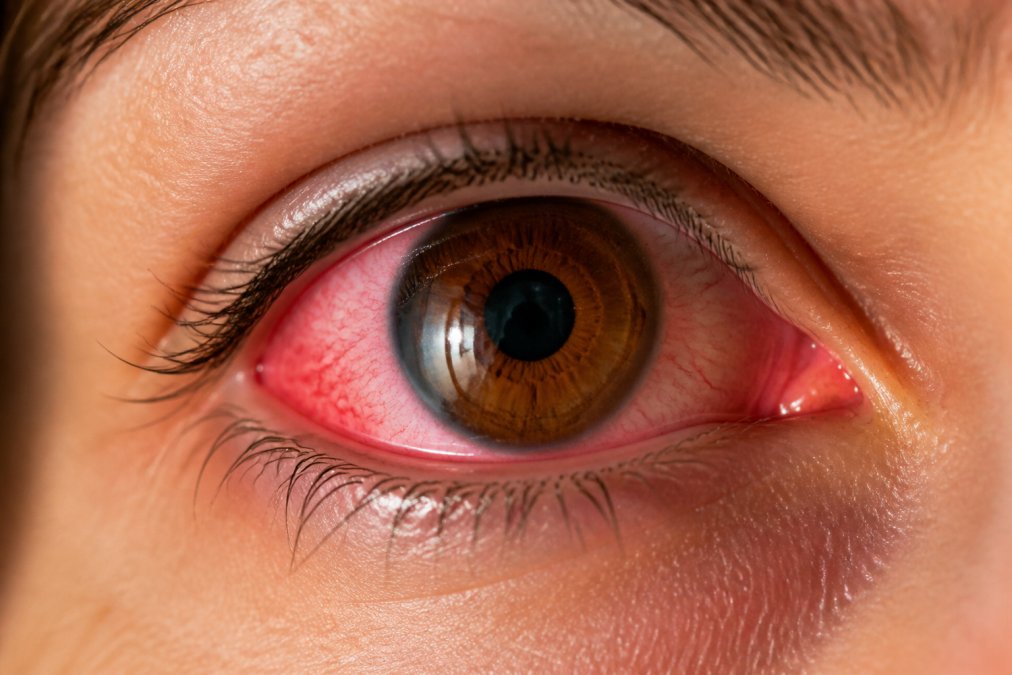
Corneal abrasion occurs when a contact lens doesn't fit properly and rubs against your cornea, causing a scratch. This is painful and can become infected, potentially leading to scarring and vision loss.
Corneal infection (keratitis) is a serious complication. Contact lenses create a moist environment that can trap bacteria if the lens is contaminated or not cleaned properly. An infection can develop rapidly and cause permanent vision damage if untreated.
Oxygen deprivation occurs when a lens doesn't allow enough oxygen to reach your cornea. A poorly fitted lens that's too tight or made of low-oxygen-permeability material can cause corneal swelling, discomfort, and vision changes.
Dry eye can be exacerbated by contacts that don't match your tear film. If your tears aren't compatible with the lens material, you'll experience persistent dryness, discomfort, and blurred vision.
Allergic reactions can occur if you're sensitive to lens solutions or materials. Wearing the wrong type of lens can trigger inflammation and discomfort.
These complications are largely preventable with a proper exam and fitting.
Conclusion
You cannot get contact lenses without an eye exam in the United States, and that requirement exists to protect your vision. The exam and fitting process determines whether you're a suitable candidate for contacts and which specific lenses will work safely for your eyes. Your glasses prescription cannot be used as a contact lens prescription, and an expired prescription cannot be used to order new lenses.
If your prescription has expired or you're looking to start wearing contacts, the fastest path forward is often an online vision exam for the refraction combined with an in-person fitting, or a comprehensive in-person exam if you're new to contacts or experiencing fit issues.
At Wilck Schwartz & Novak OD PC, we use advanced optometric equipment to ensure your contact lens fitting is precise and your prescription is tailored to your eyes. Whether you need a new fitting, a prescription renewal, or guidance on contact lens care, we're here to help you find a solution that works for your lifestyle and protects your eye health.
Frequently Asked Questions
Can I get contact lenses without a contact lens exam?
No. Federal law requires a valid contact lens prescription from an eye care professional before you can purchase contact lenses. The prescription must include specific measurements unique to contact lens fitting, such as base curve and diameter. An eye exam alone is not sufficient; you need a clinical assessment that includes lens fitting and verification of your corneal health.
How long is a contact lens prescription valid?
Contact lens prescriptions are typically valid for one year from the date of your exam. After that time, you'll need a new eye exam and fitting to renew your prescription. Some prescriptions may expire sooner if your eye health changes or if your optometrist recommends more frequent monitoring due to specific conditions.
Can I use my glasses prescription for contacts?
No. A glasses prescription and a contact lens prescription are different. Glasses sit about 12 millimeters from your eye, while contacts rest directly on your cornea. This difference requires different power measurements. Additionally, a contact lens prescription includes base curve and diameter measurements that a glasses prescription does not have. You need a separate contact lens fitting and prescription.
What are the risks of wearing contact lenses without a valid prescription?
Wearing incorrect contact lenses can cause eye infections, corneal abrasions, dry eye syndrome, and other serious ocular surface damage. Improper fit and power can also result in blurred vision and eye strain. In severe cases, infections from non-sterile or incorrectly fitted lenses can lead to permanent vision loss. A proper fitting ensures your lenses are safe for your specific eye health needs.
If you're ready to get properly fitted for contact lenses or renew an expired prescription, schedule an appointment with Wilck Schwartz & Novak OD PC. Our team will perform a comprehensive eye exam, assess your corneal shape and tear film, and fit you with lenses that provide clear vision and all-day comfort. We also offer guidance on lens care, troubleshooting fit issues, and exploring alternatives like LASIK if contacts aren't the right fit for you.
This article was written using GrandRanker