 how-to
Eye Exams After 40: Signs You Need One Now
Table of Contents
- Why Age 40 Is a Critical Milestone for Eye Health
- Common Vision Changes and Eye Diseases After 40
- Warning Signs That You Need an Eye Exam
- How Often Should Adults Over 40 Get Eye Exams
- What Happens During a Comprehensive Eye Exam
- Cost of Comprehensive Eye Exam and Insurance Coverage
- How to Prepare for Your Eye Appointment
- Digital Eye Strain and Blue Light Impact After 40
- Frequently Asked Questions
Last Updated: September 2, 2026
Why Age 40 Is a Critical Milestone for Eye Health
Turning 40 marks a significant shift in your vision. At this threshold, the natural aging process accelerates changes that affect how clearly you see. An eye exam after 40 isn't optional, it's essential preventative care.
The lens inside your eye begins to lose flexibility around age 40, a condition called presbyopia, making it harder to focus on close objects (aao.org). But presbyopia is just one of several vision changes that emerge at this age. Your eye's ability to adapt to light changes diminishes, and blood vessels in the eye can show early signs of systemic health issues like diabetes or high blood pressure before symptoms appear elsewhere in your body.
At Wilck Schwartz & Novak OD PC, we emphasize that age 40 is your baseline moment. This is when you establish a comprehensive eye exam record that becomes your reference point for future changes. Early detection of conditions like glaucoma, cataracts, and macular degeneration can preserve your vision for decades. Undetected eye disease is a leading cause of preventable vision loss, and a comprehensive eye exam after 40 can catch problems when treatment is most effective.
Common Vision Changes and Eye Diseases After 40
Your eyes change predictably as you age, but the rate and severity vary from person to person. Understanding what's normal and what requires attention helps you recognize when you need professional evaluation.
Presbyopia Symptoms After 40
Presbyopia is the age-related difficulty focusing on near objects. It occurs because the lens loses elasticity over time, making it harder for your eye's focusing muscles to adjust. You'll notice this first when reading small text, checking your phone in dim light, or doing detail work. The condition affects nearly everyone by age 50, it's not a sign of weak eyes, it's a universal part of aging (nei.nih.gov).
Presbyopia affects near vision specifically. Distance vision may remain sharp. An eye exam after 40 will determine whether you have presbyopia and what correction, if any, you need.
Age-Related Eye Diseases
Several serious eye conditions become more common after 40. Early detection through regular comprehensive eye exams makes treatment more effective and can prevent vision loss.
Glaucoma is called the "silent thief of sight" because it often develops without symptoms. Elevated intraocular pressure damages the optic nerve gradually, and by the time you notice vision loss, significant damage has already occurred. A comprehensive eye exam includes intraocular pressure measurement and optic nerve assessment, which can catch glaucoma in its earliest, most treatable stages.
Cataracts are clouding of the lens that develops slowly over years. Early cataracts may cause no symptoms, though you might notice slightly dimmer vision or difficulty seeing at night. Cataracts are extremely common after 60, but they can begin forming in your 40s. Early detection allows you to monitor progression and plan treatment when necessary.
Age-related macular degeneration (AMD) affects the macula, the central part of the retina responsible for sharp, detailed vision. Early signs include blurred central vision or straight lines appearing wavy. AMD is a leading cause of vision loss in people over 50 (nei.nih.gov). Early detection and treatment can slow progression significantly.
Diabetic retinopathy develops in people with diabetes when high blood sugar damages blood vessels in the retina. Early stages often have no symptoms, which is why people with diabetes need regular eye exams.
Warning Signs That You Need an Eye Exam
Certain symptoms indicate you should schedule an eye exam immediately. Blurry or cloudy vision at any distance suggests a refractive error or could indicate cataracts, glaucoma, or retinal problems. Sudden vision changes, especially if they occur in one eye only, require prompt attention. A sudden increase in floaters combined with flashing lights can signal retinal detachment, a medical emergency.
Difficulty seeing at night suggests your eyes aren't adapting well to low-light conditions or that cataracts are developing. Halos around lights often indicate elevated intraocular pressure. Eye pain, redness, or discharge can signal infection or inflammation. Headaches combined with vision changes warrant investigation, as uncorrected refractive error can cause eye strain and headaches. Peripheral vision loss can indicate glaucoma or retinal problems.
If you experience any of these warning signs, don't wait for your scheduled eye exam. Contact an eye care professional immediately. At Wilck Schwartz & Novak OD PC, we accommodate urgent appointments for patients experiencing sudden vision changes or eye symptoms.
How Often Should Adults Over 40 Get Eye Exams
The frequency of comprehensive eye exams depends on your individual risk factors, current eye health, and whether you have existing conditions.
For adults over 40 with no eye disease and no significant risk factors, many eye care professionals recommend a comprehensive eye exam every 1-2 years. However, if you have risk factors, the recommendation changes. People with diabetes, high blood pressure, or a family history of eye disease should have annual comprehensive eye exams. If you're already being treated for an eye condition like glaucoma or macular degeneration, your eye care provider will recommend more frequent visits to monitor progression and treatment effectiveness.
The key is establishing a baseline comprehensive eye exam after 40, then working with your eye care provider to determine the right schedule for your individual situation.
What Happens During a Comprehensive Eye Exam
A comprehensive eye exam is far more thorough than a quick vision screening. It assesses not just how clearly you see, but the overall health of your eyes and how they function together.
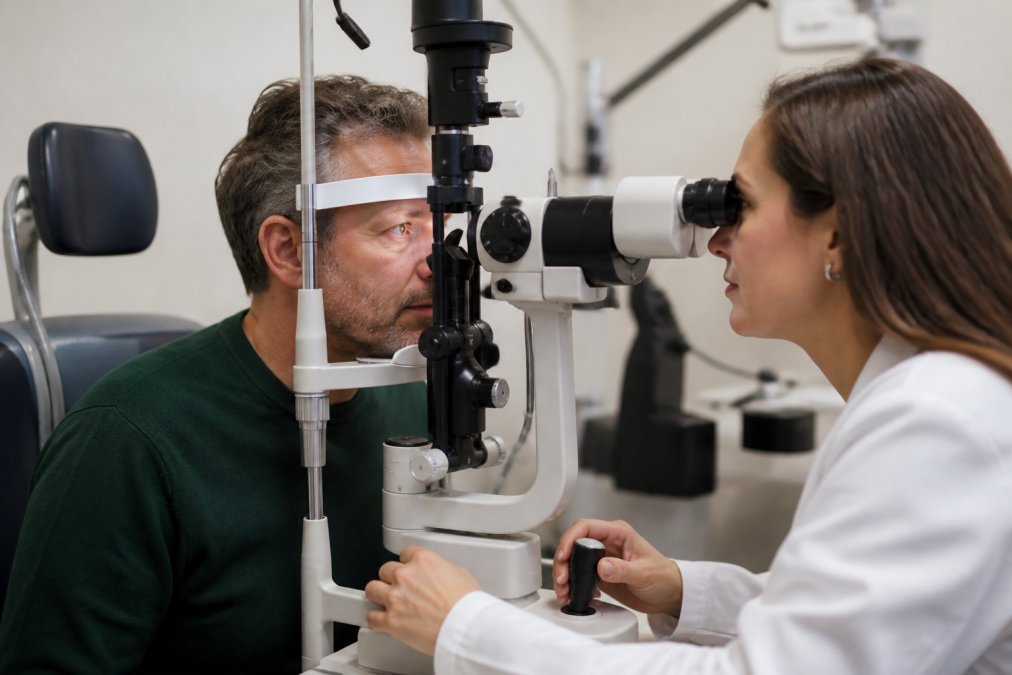
The exam typically begins with a review of your medical history, including any eye problems, medications, and family history of eye disease. Your eye care provider will ask about your vision concerns and daily visual demands.
Visual acuity testing measures how clearly you see at distance and near. Your provider will refine the prescription using a phoropter to determine the sharpest correction.
Intraocular pressure measurement checks the fluid pressure inside your eye. Elevated pressure is a risk factor for glaucoma.
Dilated eye exam involves dilating drops that enlarge your pupils, allowing your provider to examine the retina, optic nerve, and blood vessels at the back of your eye. This is essential for detecting glaucoma, macular degeneration, and diabetic retinopathy.
Visual field testing measures your peripheral vision, detecting early glaucoma and retinal problems.
Optical coherence tomography (OCT) uses light waves to create detailed cross-sectional images of the retina, detecting subtle changes that indicate macular degeneration or other retinal conditions.
The entire comprehensive eye exam typically takes 45-60 minutes. At Wilck Schwartz & Novak OD PC, we use advanced optometric equipment and modern technologies to ensure thorough assessment of your eye health. changes in your forties.
Cost of Comprehensive Eye Exam and Insurance Coverage
The cost of a comprehensive eye exam varies depending on your location, the provider's experience, and the technology used. For specific pricing information for your situation, contact Wilck Schwartz & Novak OD PC directly or visit their website for current rates and insurance details.
Most health insurance plans cover routine eye exams as part of preventative care. Medicare covers one comprehensive dilated eye exam every 24 months for people with diabetes, and one baseline comprehensive exam for people over 65 without diabetes. Vision insurance often covers routine eye exams and provides allowances toward glasses or contact lenses.
The investment in a comprehensive eye exam after 40 is worthwhile. Early detection of glaucoma, cataracts, or macular degeneration can save you from vision loss and expensive treatment later.
How to Prepare for Your Eye Appointment
Preparing for your comprehensive eye exam ensures you get the most value from your appointment.
Gather your medical history before your appointment. Write down any medications you're taking, as some affect your eyes. Note any medical conditions like diabetes or high blood pressure. List any eye problems you've experienced. Bring your current glasses or contact lenses to your appointment.
Arrange transportation if you're concerned about the temporary effects of dilating drops. Write down any vision concerns or questions before your appointment. Wear comfortable clothing and avoid heavy makeup around your eyes. Plan to spend 45-60 minutes at your appointment.
Digital Eye Strain and Blue Light Impact After 40
Digital eye strain has become one of the most common complaints among adults over 40. If you spend hours daily looking at screens, your eyes are working harder than they did in previous generations at the same age.

Digital eye strain develops when your eyes focus on a screen for extended periods. Your eyes make thousands of tiny focusing adjustments as you read text and track movement. Additionally, when concentrating on screens, you blink less frequently, your blink rate drops by about 50%. Less blinking means less tear distribution, leading to dry eyes.
Blue light from screens doesn't damage your eyes directly, but it can disrupt your sleep-wake cycle if you use screens in the evening. After 40, presbyopia makes digital eye strain worse, as your lens is already struggling to focus on near objects.
Practical strategies reduce digital eye strain significantly. The 20-20-20 rule is simple and effective: every 20 minutes, look at something 20 feet away for 20 seconds. Position your screen at arm's length and slightly below eye level. Increase text size so you don't have to lean forward to read. Use artificial tears designed for dry eyes.
If digital eye strain persists despite these strategies, discuss it during your comprehensive eye exam after 40. Your eye care provider can assess whether you need vision correction specifically for screen work or whether underlying dry eye syndrome requires treatment. At Wilck Schwartz & Novak OD PC, we diagnose and manage dry eye syndrome with advanced techniques and can recommend solutions tailored to your work environment.
Protecting your vision after 40 starts with understanding what changes to expect and recognizing warning signs that warrant professional evaluation. A comprehensive eye exam after 40 establishes your baseline eye health and detects conditions early, when treatment is most effective. Schedule your comprehensive eye exam with Wilck Schwartz & Novak OD PC and take control of your long-term eye health. Our advanced optometric equipment and commitment to early detection ensure you receive thorough assessment and personalized care for your vision needs.
Frequently Asked Questions
What are the first signs that you need an eye exam after 40?
Common early signs include difficulty focusing on close objects (presbyopia), blurry vision at any distance, eye fatigue after screen time, and floaters or flashing lights. You may also notice headaches during reading or need more light for detailed tasks. If you experience any of these, schedule a comprehensive eye exam to rule out age-related conditions like glaucoma or cataracts, which often develop without noticeable symptoms.
How often should adults over 40 get eye exams?
The American Academy of Ophthalmology recommends a baseline comprehensive eye exam at age 40 for adults without eye disease or risk factors. After that, adults should have exams every 1-2 years, depending on eye health status. If you have diabetes, high blood pressure, or family history of eye disease, your eye care professional may recommend more frequent exams to catch conditions like diabetic retinopathy or glaucoma early.
What is presbyopia and why does it happen after 40?
Presbyopia is age-related difficulty focusing on close objects. After 40, the eye's lens becomes less flexible, making it harder to change focus from distant to near objects. This is a normal part of aging and affects nearly everyone. You may notice you need reading glasses, hold materials at arm's length, or struggle with small print. A comprehensive eye exam can confirm presbyopia and determine the right correction for your needs.
Can a school eye screening catch everything a comprehensive eye exam would?
School screenings test basic visual acuity but miss many conditions. A comprehensive eye exam includes dilated eye exams to assess the retina and optic nerve, intraocular pressure testing for glaucoma, and evaluation of overall eye health. These additional tests catch early-stage diseases like glaucoma and macular degeneration that screenings miss. If someone complains of symptoms despite passing a screening, a comprehensive exam is essential to identify the real issue.
This article was written using GrandRanker