 listicle
Vision Correction for Active Lifestyles: Beyond Glasses
Table of Contents
- LASIK vs PRK for Active Lifestyles
- Daily Disposable Contact Lenses Benefits
- Orthokeratology for Athletes
- Sport-Specific Eyewear: Protection Meets Prescription
- Material Science: What Makes Active Eyewear Durable
- Maintenance and Field Repair for Active Users
- Comparison Table: Which Option Fits Your Activity
- Frequently Asked Questions
Why Traditional Glasses Fall Short for Active People
Traditional glasses present real challenges for anyone with an active lifestyle. They slip during sweat-inducing activities, fog up in humid conditions, and can break or damage easily during contact sports. For athletes and fitness enthusiasts, the constant adjustment, the risk of losing them mid-activity, and the limited peripheral vision create genuine friction. The fundamental issue isn't the prescription correction itself, it's that standard frames and lenses weren't engineered for movement, impact, or the demands of athletic performance.
When you're running, playing basketball, or swimming, glasses become a liability. They obstruct peripheral vision, which matters for situational awareness in sports. They shift with body movement. In water, they're useless without special adaptations. And for people with active lifestyles, the cost of replacing broken frames adds up fast.
This is where alternatives to traditional glasses for active lifestyles become essential. Wilck Schwartz & Novak OD PC helps patients move beyond the constraints of standard eyewear by exploring options specifically designed for movement and impact. The good news: you have several proven alternatives, each with distinct advantages depending on your activity level and vision correction needs.
LASIK vs PRK for Active Lifestyles
For people serious about eliminating glasses entirely, refractive surgery offers a permanent solution. Both LASIK and PRK reshape the cornea using laser technology to correct refractive errors (aao.org). The key difference lies in recovery time and suitability for high-impact activities.
LASIK: Fast Recovery and Long-Term Clarity
LASIK creates a corneal flap, lifts it, reshapes the underlying tissue with a laser, and replaces the flap. The result: most patients achieve clear vision within 24 hours. Many return to normal activities within a few days.
For active people, the appeal is obvious. You wake up with better vision than you've had in years. No more glasses slipping during a run. No more contacts drying out during intense workouts. The procedure is quick, each eye takes about 15 minutes, and the recovery is fast enough that you're back to your routine almost immediately.
The tradeoff: the corneal flap creates a structural vulnerability. In high-contact sports like boxing, football, or martial arts, a direct eye impact could theoretically disrupt the flap. This isn't common, but it's a real consideration if your activity involves regular face contact. Athletes in lower-impact sports like running, cycling, or swimming face minimal risk.
LASIK also corrects many prescriptions and can address astigmatism. For most people seeking vision correction for active lifestyles, LASIK delivers the fastest path to clear vision without eyewear.
PRK: The Flap-Free Option for High-Impact Sports
PRK skips the flap entirely. Instead, the surgeon removes the outer corneal layer (epithelium), reshapes the cornea beneath, and lets the epithelium regenerate naturally over several days.
This approach has a significant advantage for contact-sport athletes: there's no flap to disrupt. Your cornea is structurally intact. For boxers, martial artists, rugby players, or anyone in sports where eye contact is a real risk, PRK eliminates that concern.
The cost is a longer recovery. Your vision stabilizes over 3-7 days, and full clarity can take several weeks. During recovery, your eyes may be sensitive to light and experience fluctuating vision. You'll need to be more cautious about eye protection during this period.
PRK also works well for people with thinner corneas or dry eyes, conditions that might make LASIK less ideal. If you've been told your corneas are too thin for LASIK, PRK is often the answer.
Daily Disposable Contact Lenses Benefits
For athletes who want to avoid surgery or need a reversible solution, daily disposable contact lenses offer a practical middle ground. You wear a fresh pair each day and discard them at night, no cleaning, no storage solutions, no accumulated buildup.
Hygiene and Comfort During Intense Activity
The hygiene advantage is substantial. Each lens is sterile and unused, eliminating the risk of bacteria accumulation that comes with reusable lenses. For swimmers and water-sport athletes, this matters: you can remove them before entering the water, avoiding the infection risk of wearing contacts in chlorinated or salt water.
Daily disposables provide a full field of vision without obstruction. Unlike glasses, they move with your eye, not your head. They don't fog, slip, or catch sweat. For runners, cyclists, and team-sport athletes, this freedom is transformative.
Comfort during intense activity is another strength. Modern daily disposables use advanced hydrogel materials that retain moisture, reducing the dry-eye sensation that can plague athletes during long workouts. High-oxygen-permeable lenses keep your eyes comfortable even during extended wear.
Toric Options for Astigmatism Correction
If you have astigmatism, toric daily disposables like Acuvue Oasys 1-Day with HydraLuxe provide stable, clear vision throughout movement. The lens orientation stays consistent even during intense activity, so you get reliable clarity whether you're sprinting or playing soccer.
The primary drawback is cost. Daily disposables are more expensive than reusable lenses or glasses over time, since you're buying a new pair every single day. For serious athletes, though, the convenience and performance often justify the expense.
Orthokeratology for Athletes
Orthokeratology, often called Ortho-K, takes a completely different approach. You wear specially designed rigid contact lenses overnight. While you sleep, they gently reshape your cornea. You remove them in the morning and enjoy clear vision all day without any corrective eyewear.
This is particularly valuable for young athletes who aren't candidates for LASIK. Since Ortho-K is reversible, it's an excellent option for teenagers and children in sports. If they stop wearing the lenses, their cornea returns to its original shape within days.
The freedom during the day is exceptional. No glasses to break. No contacts to manage. Full peripheral vision. No fogging or drying. For swimmers, the advantage is especially clear: you can swim without worrying about contacts washing out or glasses falling off.
The catch: you must wear the lenses consistently every night. If you skip a night, your vision gradually returns to its uncorrected state. Results are temporary and reversible, so this isn't a permanent solution like LASIK or PRK. You're also limited to correcting moderate prescriptions, very high myopia or significant astigmatism may not be suitable.
Sport-Specific Eyewear: Protection Meets Prescription
For athletes who want to keep glasses but need serious protection, sport-specific eyewear combines durable frames, impact-resistant lenses, and secure fit designed for movement.
High-Impact Sports Frames and Goggles
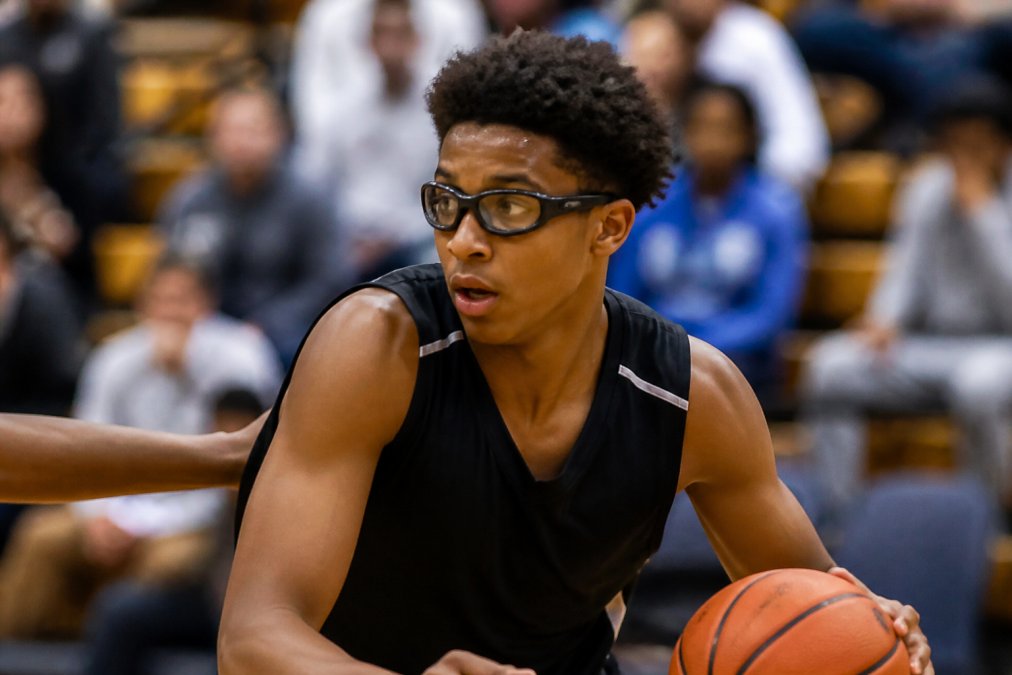
Rec Specs and PROGEAR Eyeguard represent the gold standard for high-impact protection. These frames are ASTM F803 certified, meaning they've been tested for impact resistance at levels far exceeding standard eyewear (astm.org). The frames are unbreakable polycarbonate, and the lenses are shatterproof.
Prescription options are available, so you get both protection and clear vision corrected to your exact needs. The fit is engineered for security, adjustable straps and temple grips keep them locked in place during intense movement. Many models are helmet-compatible, critical for sports like ice hockey or football.
The tradeoff is aesthetics and weight. Sport-specific goggles look distinctly athletic. They're bulkier than regular glasses. For some athletes, this is a feature, not a bug. For others, it's a barrier to adoption.
PROGEAR Eyeguard specifically excels for basketball and similar court sports. The design accommodates strong prescriptions, including astigmatism. The secure strap ensures they stay put during jumping, cutting, and rapid directional changes.
Prescription Swimming Goggles
Swimmers face a unique problem: standard contact lenses wash out in water, and glasses are useless underwater. Prescription swimming goggles solve this entirely.
Liberty Sport and Speedo Vanquisher both offer prescription options. You select the diopter strength for each eye, and the goggles arrive pre-fitted with your prescription lenses. They're comfortable, secure, and provide clear underwater vision.
Aquagoggles take this further with tinted lenses that reduce glare and improve clarity in bright pool or open-water conditions. The anti-fog coating prevents the internal fogging that plagues standard goggles.
The limitation: prescription swimming goggles work best for moderate prescriptions. Very high prescriptions may be difficult to accommodate in goggle form. You also need to know your exact diopter strength, which your optometrist can provide during a fitting.
Material Science: What Makes Active Eyewear Durable
The materials behind active eyewear determine whether your glasses survive your lifestyle or shatter on impact.
Polycarbonate and Trivex Lenses
Polycarbonate is the standard for impact-resistant eyewear. It's 10 times more impact-resistant than standard plastic lenses and naturally blocks 99% of UV radiation (the FDA). For athletes, this matters: UV exposure during outdoor activities can accelerate eye aging and increase disease risk.
Trivex is a newer material that offers similar impact resistance with slightly better optical clarity and lighter weight. Both materials are suitable for active use, though polycarbonate remains the more affordable option.
Standard glass or plastic lenses shatter easily. Polycarbonate and Trivex don't. For anyone engaged in contact sports, this difference is the entire point of sport-specific eyewear.
Coatings That Handle Sweat and Moisture
Anti-reflective coatings reduce glare and improve visual clarity, especially important for outdoor athletes. Scratch-resistant coatings protect against the inevitable contact with sweat, dirt, and environmental debris.
Hydrophobic coatings repel water and sweat, keeping your lenses clearer during intense activity. This is particularly valuable for runners and outdoor athletes who work up significant perspiration.
The best active eyewear combines all three: polycarbonate or Trivex lenses with anti-reflective, scratch-resistant, and hydrophobic coatings. This combination handles the harsh environment of athletic activity without degrading optical quality.
Maintenance and Field Repair for Active Users
Even the best eyewear requires care. Understanding how to maintain and repair your vision correction in the field keeps you active without interruption.
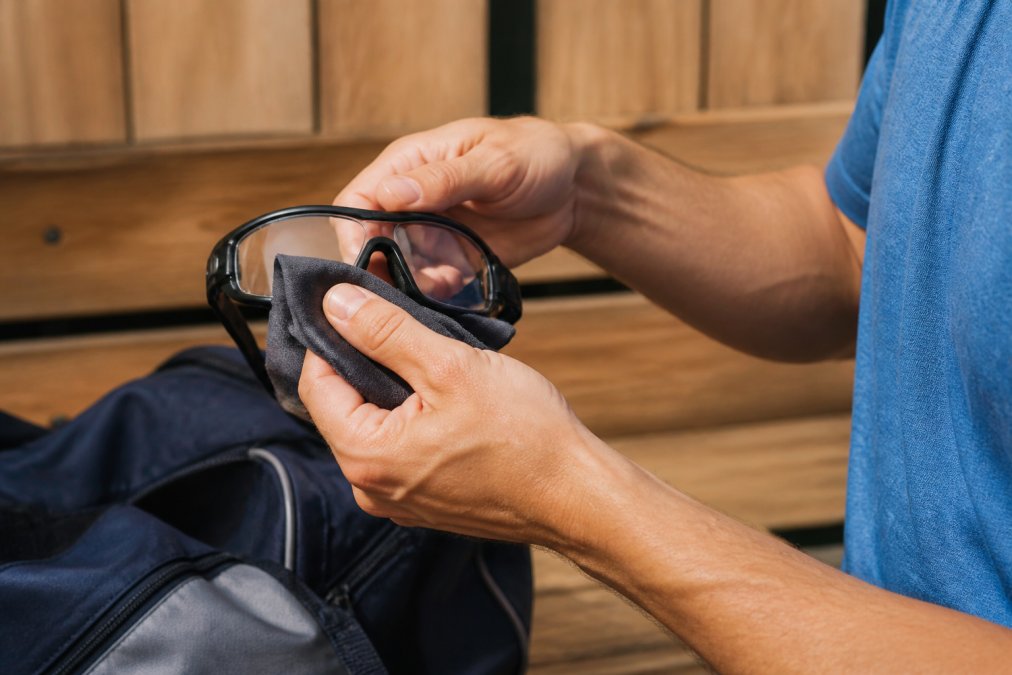
Always carry a microfiber cloth. Sweat and dirt accumulate on lenses during activity. A microfiber cloth removes them without scratching. Avoid paper towels and t-shirts, they're abrasive and damage coatings over time.
For daily disposable contacts, maintenance is minimal. You discard them at night, so degradation isn't an issue. For reusable contacts or glasses, rinse them with solution or clean water regularly, especially after sweaty activity.
Store eyewear in a protective case when not in use. This prevents scratches and impact damage. For athletes traveling to competitions, a hard case is essential.
If a lens scratches or a frame cracks during activity, temporary field repairs keep you going. Clear tape can hold a cracked frame temporarily. For scratched lenses, some athletes use anti-scratch polish designed for eyewear, though this is a stopgap measure. Plan for professional repair or replacement as soon as possible.
Contact lens wearers should carry backup lenses and solution in their gym bag. A lost or torn lens doesn't have to end your workout if you have a replacement pair.
Comparison Table: Which Option Fits Your Activity
| Option | Best For | Recovery Time | Permanence | Cost Barrier |
|---|---|---|---|---|
| LASIK | Low-impact athletes seeking permanent clarity | 1-2 days for most activities | Permanent | High upfront, low long-term |
| PRK | Contact-sport athletes, thin corneas | 3-7 days to stability | Permanent | High upfront, low long-term |
| Ortho-K Lenses | Young athletes, reversible correction | None (overnight wear) | Temporary, reversible | Moderate ongoing |
| Daily Disposables | Athletes prioritizing hygiene and convenience | None (daily wear) | Temporary | Moderate to high ongoing |
| Sport-Specific Goggles | High-impact sports requiring protection | None | Temporary | Moderate upfront |
| Prescription Swimming Goggles | Swimmers and water-sport athletes | None | Temporary | Moderate upfront |
The choice depends on your sport, your prescription, your timeline, and your budget. A swimmer needs prescription goggles or Ortho-K. A boxer benefits from PRK's flap-free structure. A runner might choose LASIK for permanent clarity. A young athlete might start with Ortho-K and reassess as they age.
At Wilck Schwartz & Novak OD PC, we assess your specific activity, vision needs, and lifestyle to recommend the best path forward. Some athletes benefit from a combination approach, LASIK for their primary sport and backup daily disposables for travel or secondary activities. Others find that sport-specific goggles with their exact prescription provide the security and clarity they need.
The key is recognizing that traditional glasses don't have to be your only option. Vision correction for active lifestyles has evolved significantly. Whether you choose surgery, contacts, Ortho-K, or specialized eyewear, the goal is clear: participate fully in the activities you love without the friction of managing your vision.
If you're serious about optimizing your vision for athletic performance, schedule a consultation with Wilck Schwartz & Novak OD PC. We'll evaluate your prescription, discuss your specific sports and activities, review your lifestyle demands, and recommend the vision correction approach that eliminates the barriers between you and your performance. From LASIK consultations to sport-specific eyewear fittings, we handle the full range of alternatives to traditional glasses. Contact us to explore which option fits your active lifestyle best.
Frequently Asked Questions
Q: What are the best vision correction options for high-impact sports?
A: For high-impact sports, PRK surgery or prescription sports goggles offer strong protection. PRK eliminates the flap-related complications of LASIK during contact, while ASTM F803-certified sports eyewear like Rec Specs or PROGEAR Eyeguard provides immediate impact resistance with prescription lenses. Orthokeratology offers another path, reshaping your cornea overnight so you have clear vision during the day without eyewear. Daily disposable contact lenses work well for lower-contact activities where comfort and hygiene matter most.
Q: Are daily disposable contact lenses better for active lifestyles?
A: Daily disposable contact lenses offer significant advantages for active people: fresh sterile lenses each day reduce infection risk, no solutions or cases to carry, and they provide a full field of vision without fogging or slipping. Toric options like Acuvue Oasys 1-Day with HydraLuxe correct astigmatism while maintaining comfort during physical activity. The main trade-off is higher ongoing cost compared to reusable lenses, but for athletes prioritizing hygiene and convenience, the benefits often outweigh the expense.
Q: What is the difference between LASIK and PRK for active patients?
A: LASIK creates a corneal flap before reshaping the cornea, offering faster visual recovery, often within a day. PRK removes the outer corneal layer entirely, avoiding flap-related risks from eye trauma during contact sports. PRK has a longer healing period (1-2 weeks of discomfort and light sensitivity), but the long-term visual outcomes are comparable. For athletes in high-impact sports like basketball or lacrosse, PRK's flap-free design provides superior safety, while LASIK suits those in lower-contact activities seeking minimal downtime.
Q: Can orthokeratology help me avoid glasses during sports?
A: Yes. Orthokeratology (Ortho-K) uses specially designed rigid contact lenses worn overnight to temporarily reshape your cornea, giving you clear vision throughout the day without glasses or daytime contacts. This eliminates fogging, slipping, and breakage during sports. The vision is reversible, results fade if you stop wearing the lenses nightly, and it works best for mild to moderate nearsightedness and astigmatism. Ortho-K is particularly popular with younger athletes not yet eligible for LASIK and those in water sports where daytime contacts pose hygiene risks.
Q: How do I know which vision correction option is right for my activity?
A: Consider impact level, water exposure, and recovery time tolerance. High-impact sports (basketball, lacrosse, martial arts) favor PRK surgery or ASTM-certified sports goggles. Water sports (swimming, surfing) benefit from prescription goggles or orthokeratology. Runners and cyclists tolerate daily disposables or LASIK well. Contact your eye care provider for a comprehensive exam to assess your prescription strength, corneal thickness, and eye health, these factors determine eligibility for each option. A professional consultation ensures you choose an option that corrects your vision while protecting your eyes during your specific activities.
This article was written using GrandRanker