 listicle
Cheap Eye Exam Without Insurance: 7 Ways to Save
Table of Contents
- What a Cheap Eye Exam Without Insurance Really Costs
- Retail Chains vs. Private Practices: Where to Look
- How to Ask for a Cash Discount at a Private Practice
- Community Health Centers and Sliding Scale Fees
- EyeCare America Eligibility: Free Exams for Seniors
- Optometrist vs. Ophthalmologist: Which One Do You Need?
- Hidden Costs to Watch For in Low-Cost Exams
- Conclusion
- Frequently Asked Questions
Last Updated: September 5, 2026
What a Cheap Eye Exam Without Insurance Really Costs
A routine comprehensive eye exam typically includes a refraction, a visual acuity test, and an eye health assessment, but out-of-pocket costs vary dramatically by provider. At Wilck Schwartz & Novak OD PC, we believe cost should never be the reason someone skips preventative care.
Alternatives include warehouse optical centers, community health clinics with sliding scale fees, charitable programs for seniors, and negotiation tactics at private practices. Below, we walk through each option, what it costs, and the hidden fees that can turn a "budget" exam into an expensive one.
Retail Chains vs. Private Practices: Where to Look
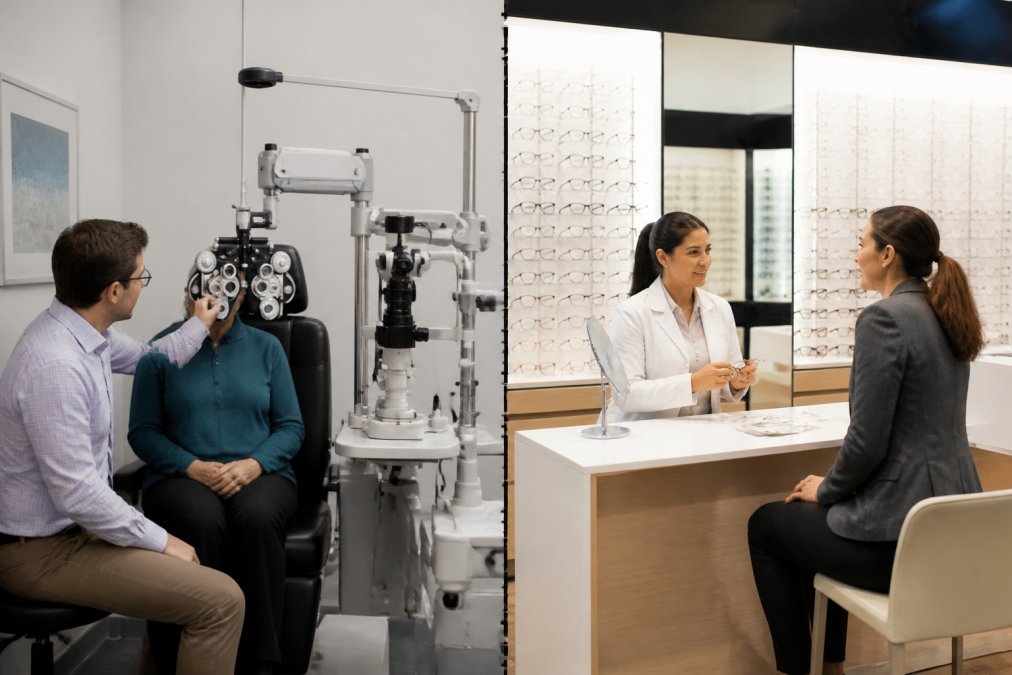
Retail optical centers offer the most predictable pricing for a cheap eye exam without insurance. Walmart Vision Center and America's Best Contacts & Eyeglasses are known for competitive base rates, while Costco Optical offers exams through independent optometrists at transparent self-pay prices. These chains work well for straightforward routine vision testing but generally focus on basic care rather than comprehensive diagnostics.
Private practices, by contrast, often include retinal imaging and more thorough diagnostic testing, which matters if you have risk factors for ocular disease. The trade-off is price transparency, since independent practices rarely advertise self-pay rates. A common mistake is assuming the retail exam price covers everything, ask what the base fee includes before you schedule.
| Provider Type | Typical Exam Focus | Best For | Watch Out For |
|---|---|---|---|
| Retail Chain (Walmart, Costco) | Routine vision testing, prescription renewal | Budget-conscious patients with healthy eyes | Additional fees for retinal imaging |
| Retail Optical (America's Best, Visionworks) | Exams bundled with eyewear deals | People needing glasses right away | Promotional pricing varies by location |
| Private Practice | Full eye health assessment, disease management | Families, seniors, complex needs | Higher base fee, but often more inclusive |
How to Ask for a Cash Discount at a Private Practice
Asking for a cash discount feels awkward, but it works more often than you'd expect. Private practices pay processing fees on credit cards and spend significant staff time on insurance billing, so many offer a reduced rate for patients who pay at the time of service.
Call ahead and say: "I'm planning to pay out of pocket. Do you offer a discount for cash or self-pay patients?" Some practices have an unpublished self-pay rate lower than their standard fee. If the first person says no, ask to speak with the office manager. A locally-owned practice like Wilck Schwartz & Novak OD PC can be surprisingly flexible, since decisions don't require corporate approval.
Community Health Centers and Sliding Scale Fees
Community health centers are one of the most underused resources for affordable eye care. These are federally qualified health centers (FQHCs) that receive federal funding to provide care on a sliding scale based on your income. You provide proof of income, and the center calculates your fee as a percentage of the federal poverty level (FPL).
How the sliding scale actually works:
Most FQHCs use a fee schedule tied to the Department of Health and Human Services poverty guidelines. A household at or below 100% of the FPL typically qualifies for the lowest fee tier, often covering the exam at a nominal charge or no charge (hrsa.gov). As income rises to 150% or 200% of the FPL, the fee increases proportionally but remains far below retail rates. You must ask for the sliding scale, it is not automatically applied.
What to expect when you call:
When you contact a community health center, do not ask for an "eye exam price." Instead, say: "I need to establish care and I'd like to apply for the sliding fee discount program. What documentation do I need to bring?" You will typically need:
- Proof of income (pay stubs, tax return, or a letter from your employer)
- Proof of household size (this affects your FPL calculation)
- A photo ID
The hidden advantage: comprehensive medical exams
Unlike retail chains that focus on refraction for glasses, FQHCs often provide a more comprehensive medical eye exam. Many employ optometrists who check for diabetic retinopathy, glaucoma, and cataracts, conditions that retail chains may refer out for.
The trade-off you need to plan for:
Appointment wait times at FQHCs can stretch from two to six weeks. If you need a prescription urgently, this is not your fastest option. However, if you can plan ahead, the savings are substantial: a typical self-pay exam at an FQHC with sliding scale discount ranges from $30 to $80, compared to $150 to $250 at a private practice.
How to find your local FQHC:
Use the Health Resources and Services Administration (HRSA) search tool at findahealthcenter.hrsa.gov, the official federal directory of all FQHCs. Search by ZIP code, then filter for centers that list "eye care" or "optometry" as a service. Not every FQHC has an on-site optometrist, so you may need to call a few centers.
A unique angle most guides miss: the "look-alike" clinic
Beyond FQHCs, there are "FQHC look-alikes", clinics that meet the same federal standards but do not receive the same grant funding. They still offer sliding scale fees, but their discounts may be less generous. If an FQHC near you has a long waitlist, ask if they can refer you to a look-alike clinic in the same network.
EyeCare America Eligibility: Free Exams for Seniors
EyeCare America is a public service program of the American Academy of Ophthalmology that connects eligible seniors with volunteer ophthalmologists for no-cost medical eye exams. This is not a vision screening or a glasses prescription service, it's a medical exam focused on detecting and managing eye disease. EyeCare America program details and eligibility criteria
Eligibility generally requires that you are a senior, a U.S. citizen or legal resident, and have not seen an ophthalmologist in three or more years. The program targets seniors who lack access to an ophthalmologist and does not cover glasses, contact lenses, or routine vision correction. If you're managing cataracts or glaucoma, this program can be a genuine path to free medical eye care.
Optometrist vs. Ophthalmologist: Which One Do You Need?
Understanding the difference between optometrist and ophthalmologist is the single most important factor in controlling your out-of-pocket costs, and in avoiding a dangerous delay in care.
The financial breakdown:
An optometrist (OD) completes a four-year doctoral program after college and is your primary care provider for routine eye exams, vision correction, and common ocular conditions like dry eye, conjunctivitis, and mild glaucoma. An ophthalmologist (MD or DO) completes medical school plus a four-year residency and is a surgical specialist. That extra training shows up in the bill: an ophthalmologist's self-pay exam can run $200 to $350, while an optometrist's routine exam typically runs $100 to $200.
When the optometrist is the right call:
For a routine exam, a glasses prescription, or a contact lens fitting, an optometrist is almost always the right and more affordable choice. Optometrists are trained to recognize early signs of systemic disease, diabetes, hypertension, and certain neurological conditions can show up in the retina, and will refer you to a specialist if they find something beyond their scope. Choosing an optometrist for routine care is not a compromise; it is the standard of care.
When you must see an ophthalmologist:
You should seek an ophthalmologist when you have a medical condition that requires surgical expertise or advanced disease management. This includes:
- Cataracts (clouding of the lens that requires surgery)
- Glaucoma that is not responding to first-line treatments
- Retinal detachment or macular degeneration
- Eye trauma or sudden vision loss
If you have any of these, do not let cost drive your decision. A $200 exam at a retail chain will not diagnose or manage these conditions. Delaying care for a retinal issue can lead to permanent vision loss, which is far more expensive than any exam.
The online vision testing alternative, and its limits:
A growing alternative for prescription renewals is online vision testing services like 1-800-Contacts' online eye exam or Opternative-style platforms. These services use a smartphone or computer to measure your refractive error and generate a glasses or contact lens prescription for $20 to $60.
But here is the safety analysis most guides skip:
Online vision testing is not a medical eye exam. It measures how well your eyes focus but cannot detect glaucoma, cataracts, diabetic retinopathy, or macular degeneration, conditions that often have no early symptoms. The American Optometric Association has raised concerns because these services bypass the eye health assessment that is the core purpose of a comprehensive exam.
The legal reality:
Online vision testing is legal in most states, but the prescription you receive is typically valid only for a limited time and may not be accepted by every optical retailer. Some states require the online provider to have a physical presence in your state or that you have had an in-person exam within a certain timeframe. Before you pay, check your state's board of optometry rules.
The hybrid approach:
If you are healthy, have no family history of eye disease, and your prescription has been stable for years, an online renewal can be a reasonable bridge between in-person exams. But if you are over 40, have diabetes, or have not had an in-person exam in more than two years, the online test is not a substitute.
| Provider | Training | Scope | Self-Pay Cost Range | Best For |
|---|---|---|---|---|
| Optometrist (OD) | 4-year doctoral program | Routine exams, vision correction, common eye conditions | $100-$200 | Annual checkups, glasses, contact lenses |
| Ophthalmologist (MD) | Medical school + 4-year residency | Surgery, complex disease management | $200-$350 | Cataracts, glaucoma, retinal issues, eye emergencies |
| Online Vision Test | Software-based refraction | Prescription renewal only | $20-$60 | Stable prescriptions, healthy eyes, budget bridge |
:::warning Online vision tests do not check for eye disease. If you have diabetes, high blood pressure, a family history of glaucoma or macular degeneration, or are over 40, an in-person exam is not optional, it is the only way to protect your long-term vision.
Hidden Costs to Watch For in Low-Cost Exams
A cheap eye exam without insurance can stop being cheap the moment the doctor finds something. The base price at a retail chain often covers only the refraction and basic vision testing. Retinal imaging, diagnostic testing, and contact lens fittings typically cost extra.
Before you book, ask: Does the exam price include retinal imaging? What does a contact lens fitting cost on top of the exam? Is there an additional fee for the eye health assessment portion? A practice that advertises a rock-bottom exam price may recover its margin through add-ons, while a private practice with a higher base fee might include more comprehensive testing in that single price.
- Confirm what the base fee includes before scheduling
- Ask about retinal imaging and diagnostic testing costs separately
- Clarify whether a contact lens fitting is bundled or additional
- Check if the prescription is valid for online glasses ordering
- Ask how long the prescription remains valid for future purchases
Conclusion
Finding affordable eye care without insurance requires knowing where to look and what questions to ask. Retail chains offer predictable pricing for routine exams, community health centers provide sliding scale fees for those who qualify, and charitable programs like EyeCare America serve eligible seniors. The most expensive mistake is choosing a provider based solely on the advertised exam price without understanding what's included.
At Wilck Schwartz & Novak OD PC, we've served the Brooklyn area since 1964 with comprehensive eye exams that assess your overall eye health, not just your prescription. Our practice uses advanced optometric equipment for early detection and precise treatment, and we're happy to discuss self-pay options when you call. American Optometric Association guidance on exam frequency Schedule an appointment and see the difference that a locally-owned practice with multigenerational referrals can make for your family's eye care.
Frequently Asked Questions
What is the cheapest eye exam without insurance?
Retail chains typically offer the lowest published rates for a routine comprehensive eye exam. Prices for a standard exam and refraction start around $60 to $80 at major retailers. These exams are performed by independent optometrists who lease space in the store. Keep in mind that a contact lens fitting or additional diagnostic testing will add to that base cost, so confirm what the quoted price includes before you book.
Are there government programs for free or low-cost eye exams?
Yes, but eligibility varies. EyeCare America, a program of the American Academy of Ophthalmology, provides no-cost medical eye exams to qualifying seniors. Community health centers often use sliding scale fees based on your income, making exams more affordable. For specific income thresholds and program requirements, check the official program website or contact the health center directly, since funding and eligibility criteria can change.
What is the difference between an optometrist and an ophthalmologist regarding exam costs?
An optometrist provides routine vision care, performs comprehensive eye exams, and writes prescriptions for glasses and contacts. An ophthalmologist is a medical doctor who performs eye surgery and treats complex eye diseases. For a routine check-up and glasses prescription, an optometrist usually costs less. If you have a medical condition like glaucoma or need surgery, an ophthalmologist is the right choice, and those visits may be billed as medical care.
Is it worth paying out-of-pocket for an eye exam?
For most people, yes. Vision problems like refractive error are common, and a current prescription is required to buy glasses or contacts. A comprehensive exam also checks for silent conditions like glaucoma and diabetic retinopathy. Catching these early can prevent vision loss and avoid far higher medical costs later. Skipping exams to save money now can lead to more expensive problems down the road.
This article was written using GrandRanker